Target player
Someone with 200+ hours in Satisfactory or Factorio who has started skipping their own creative-mode saves. An empty field stops being interesting once you already know the belt patterns that solve it. They still want the spatial-logistics puzzle — routing belts, balancing throughput, hunting bottlenecks — they just want a reason those decisions still matter after the hundredth hour, and they'd rather that reason be operational pressure than another tower-defense wave.
Core loop
The Diagnostic Scope flags the one true bottleneck on the line. Arm a splice, drop the replacement, hit Confirm. A 4–11 second countdown starts; the upstream buffer covers the gap. Run dry before the countdown ends and everything downstream starves, cascading a red STARVED tag machine to machine. The game won't let you confirm a splice your buffer can't survive — it shows you the exact shortfall instead.
The Ledger tracks contracts against a grace window and a three-strike fail state. You trace bottlenecks back through an inherited wing, stockpile buffer ahead of each cut, and discover the "solved" wing next door shares a raw-ore belt with the one you're upgrading — so fixing one just broke the other. Clear enough contracts and the bank unlocks the next wing, exactly as tangled, just bigger.
Standout systems
- The Diagnostic Scope
Colors every belt by live throughput and outlines wear with a pulsing failure countdown. It always names the true bottleneck — no hidden causes to hunt for.
- Splice & buffer economy
Every upgrade opens a real disconnect window covered only by stockpiled buffer. The Confirm button is mathematically gated against a starve-out.
- Wear, jams & cross-wing contention
Machines degrade even on wings you're not touching, and shared upstream resources mean a "finished" wing can break again because of a decision made three rooms over.
- Emergency Orders
Sub-two-second-grace contracts that scale with reputation — too tight for full buffer coverage, forcing an honest partial strike instead of a clean fix.
Differentiators
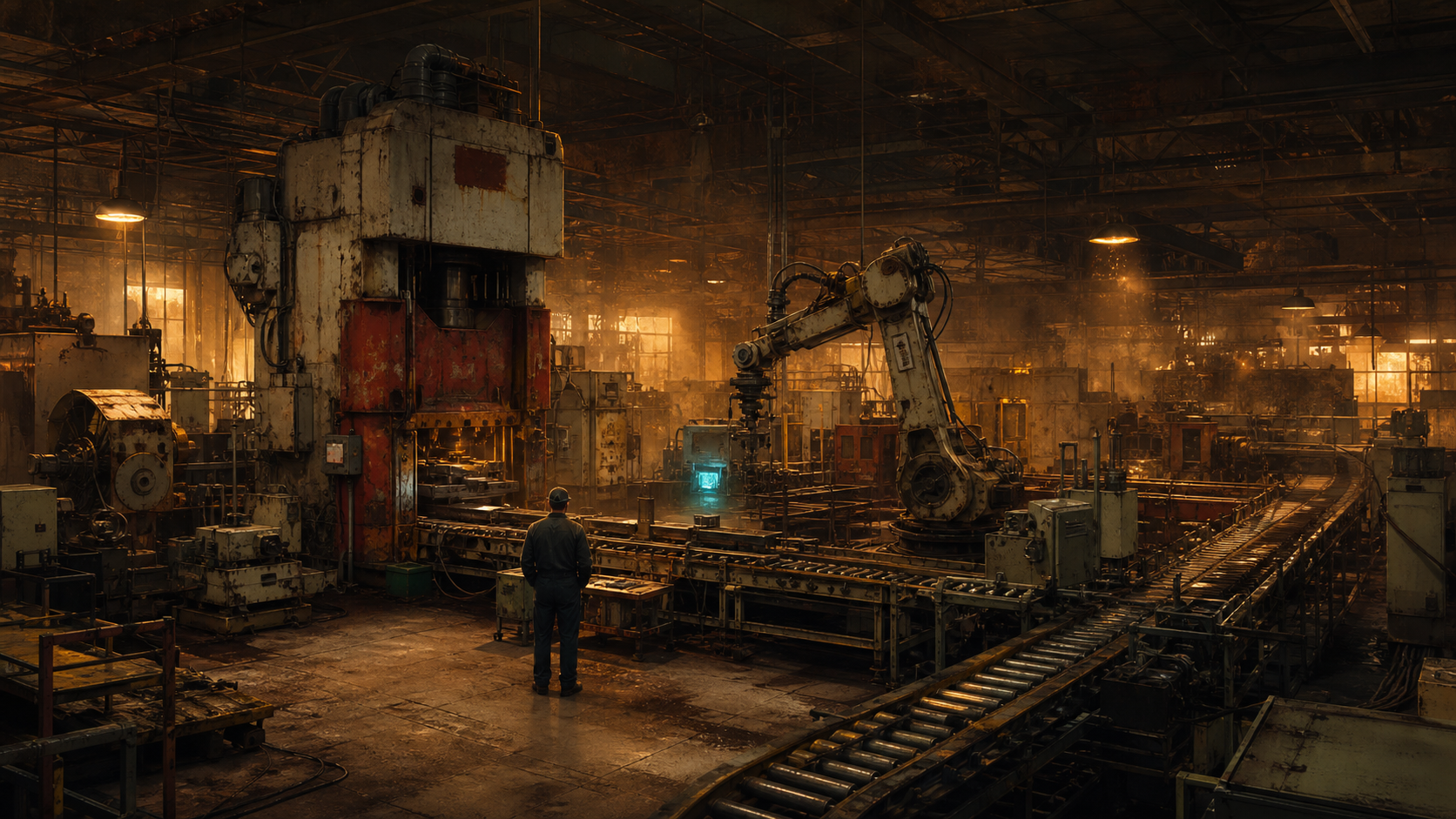
- You inherit a tangled, already-running factory instead of an empty field, and it must never fully stop producing while you rebuild it — spaghetti is the day-one condition, not the mistake other factory games teach you to avoid.
- Every upgrade is a hot-swap with a real disconnect window that buffer stock has to cover, so the core skill is stockpiling insurance ahead of a cut, not just routing belts for peak throughput.
- Wear, jams, and shared upstream resources mean a wing you already fixed can come back broken because of a decision you made somewhere else — nothing you build ever gets to stay solved and forgotten.
Key features
- Hot-swap machines mid-production under a real, buffer-covered disconnect window
- Diagnostic Scope auto-flags the true bottleneck — no blind hunting
- Inherit an already-tangled factory that must keep running while you rebuild it
- Cross-wing resource contention keeps "finished" sections genuinely at risk
- Emergency Orders and rising wear keep the pressure from ever fully switching off
- Blueprint Mode strips the clock for players who want the puzzle without the pressure