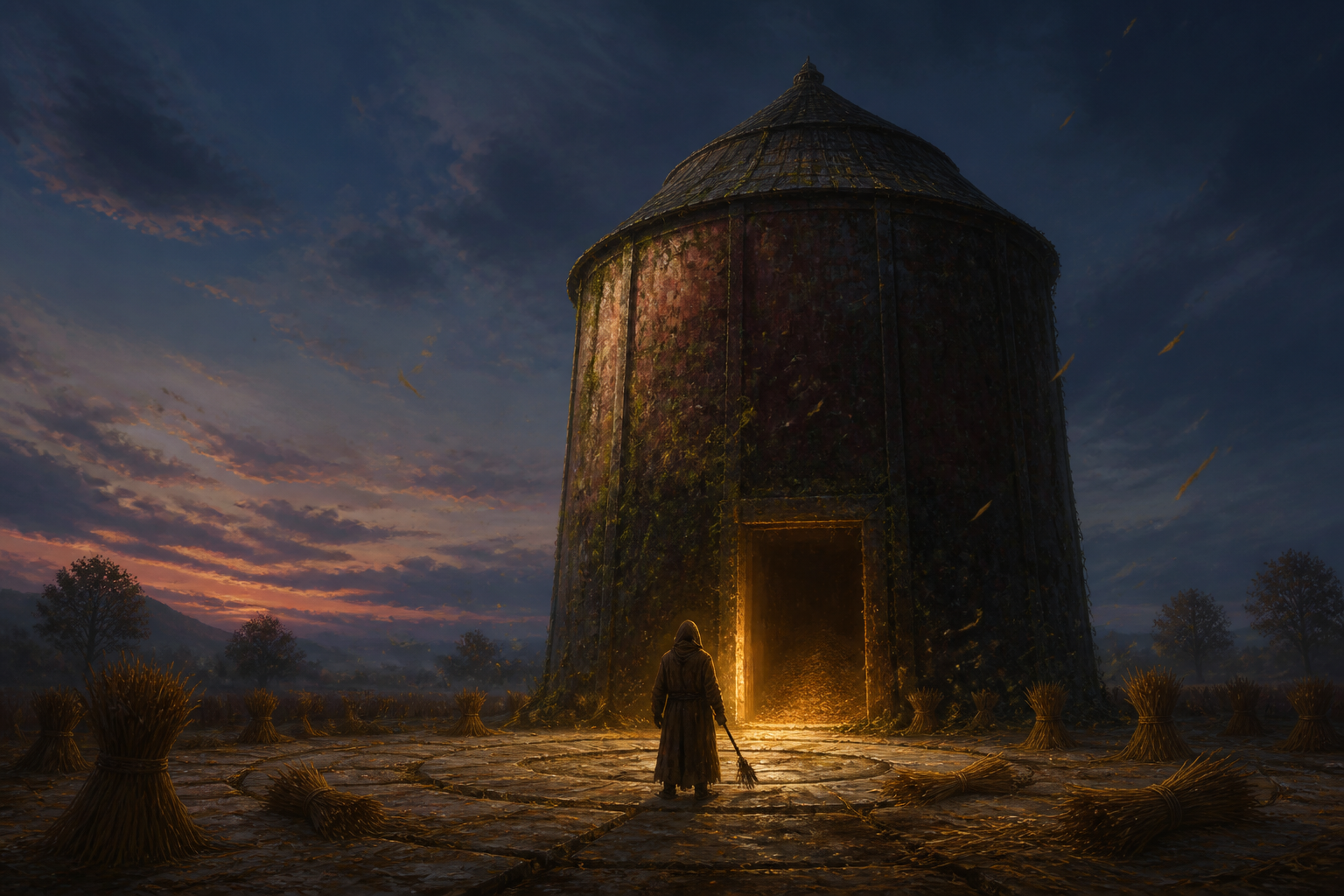
Someone who liked the Ironclad's Corruption/exhaust build more than any other archetype in the original game, not because it hit harder, but because a fifteen-card deck felt like a weapon instead of a pile. By act three of most deckbuilders their deck is thirty-five cards deep and half of it is filler they've stopped reading. This is the game where a lean deck is the entire design, not one build tucked into a menu of stat-stick options.
Play a five-card hand against a single enemy. Every hit you take jams a Chaff card, dead weight, into your draw pile. Kill inside the enemy's Patience counter and chain multi-kills on one turn to earn Flail Points, then spend them mid-fight to exhaust Chaff on sight.
Fight through a Season's field map, stopping at Threshing Floor nodes to permanently cut cards from your deck with the Flail Points you've banked. Grain Purity tracks the live-to-total ratio; let it drop to 50% and your best cards lock. Four Seasons, one Warden apiece.
- Chaff Injection — enemies don't just deal damage on a hit, they jam a dead card into your draw pile, so deck bloat is a weapon they're using against you, not background pacing.
- Grain Purity & Spoilage — the live-to-total card ratio your whole run protects; drop below 50% and your biggest cards lock out until you cut your way back above it.
- Flail Points & Chain Kills — earned by killing fast and killing multiple enemies on one turn, spent on permanent cuts, so pruning your deck is something you fight for instead of a shop menu.
- The Threshing Floor — the only place cards leave your deck for good, with a strict use-it-or-lose-it clock on the Flail Points that pay for it.
- Vocations — alternate starting decks unlocked with Harvest Tally that reframe the Purity math instead of just inflating stats, from the nine-card Gleaner to the heavier, Chaff-resistant Miller.
- Four Seasons, Four Wardens — each boss introduces a new kind of pressure on your Purity, not just bigger numbers, culminating in a Warden that force-adds Chaff copies of your own best cards.
- Deck bloat is an enemy weapon, not a player mistake. Chaff arrives because you got hit, turning what most games in the genre treat as late-run pacing into an opposing force fighting you every combat.
- Pruning is a skill expression, not a shop menu. Flail Points come from aggressive, chain-kill play and vanish if you don't spend them, so cutting cards is something you fight for.
- Your best cards can go stale. Spoilage punishes hoarding power picks without staying lean, a direct inversion of the "always take the next upgrade" habit this genre trains into players.
- No spatial grid, no chess clock. Combat stays single-lane on purpose, so the Purity system is the headline mechanic instead of competing with a second layer of tactics.
Week 1 builds the core combat shell with no art. Week 2 isolates Chaff injection and Grain Purity against placeholder combat, to confirm the bloat pressure itself reads as tense before building the tools that solve it. Week 3 adds Flail Points and chain-kill timing. Week 4 wires the Threshing Floor and a full Season 1 map. Week 5 layers in Season 2's Bloat Reaper enemy and the mandatory-cull rule. Week 6 delivers a two-Season vertical slice for external playtesting, checking specifically whether Purity anxiety plays as tense or as punishing.
Premium, one-time purchase: $19.99 at 1.0, with a discounted Early Access entry around $14.99, mirroring where Slay the Spire 2 landed for its March 2026 Early Access launch. The market isn't open water. Slay the Spire 2, Monster Train 2, and Balatro dominate genre attention right now, so Winnow leads with one sharp, marketable hook rather than a feature list, and targets Steam's roguelike deckbuilder festival window directly.