Recipes
Texas Smoked Brisket Recipe
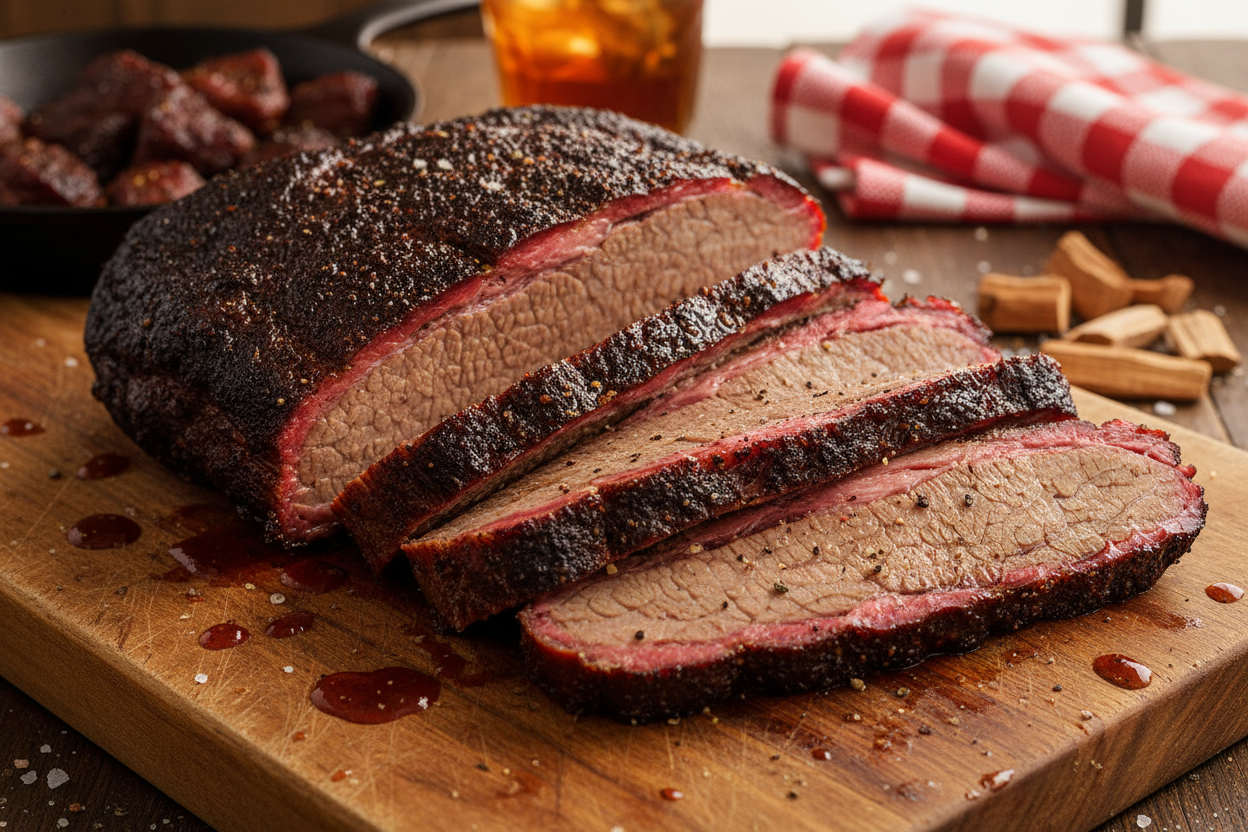
Texas Smoked Brisket Recipe
Achieving a tender, flavorful Texas-style smoked brisket requires patience and adherence to a few key principles: quality meat, a simple rub, consistent smoke, and proper resting.
Yields: 10-12 servings Prep time: 20-30 minutes (plus 12-36 hours refrigeration) Cook time: 12-20 hours (depending on brisket size and smoker)
Ingredients:
- 1 (10-12 pound) whole packer brisket, USDA Prime or Choice, fat cap trimmed to 1/4 inch
- For the Rub (Traditional Texas Style):
- 1/3 cup (45g) coarse kosher salt
- 2 tablespoons freshly ground black pepper (16 mesh preferred for bark)
- Optional Rub Additions (for more flavor complexity):
- 1½ tablespoons smoked paprika
- 1½ tablespoons garlic powder
- 1½ tablespoons onion powder
- 1½ tablespoons instant espresso powder (optional, enhances bark)
- 2 teaspoons dry mustard
- 1 teaspoon cayenne pepper
- 5 (3-inch) wood chunks, such as post oak, hickory, or pecan (avoid resinous woods like pine or fir)
- 1 cup beef tallow (optional, for wrapping)
- Yellow mustard (optional, as a binder)
Equipment:
- Smoker (offset, pellet, kamado, or kettle grill with indirect heat setup)
- Digital meat thermometer (with wired probe recommended)
- Unwaxed butcher paper or heavy-duty aluminum foil
- Large cutting board
- Sharp carving knife
Instructions:
- Trim the Brisket: Trim the hard, excess fat and any loose meat from the brisket. Aim for a uniform 1/4-inch fat cap across the surface. This helps protect the meat and renders during cooking.
- Apply the Rub:
- In a small bowl, mix your chosen rub ingredients (salt and pepper for traditional, or include optional spices).
- Optional binder: Apply a light coat of yellow mustard to the brisket; this helps the rub adhere.
- Generously coat the entire brisket with the rub. It may seem like a lot, but use it all.
- Place the seasoned brisket on a wire rack set in a rimmed baking sheet. Refrigerate uncovered for 12 to 24 hours (or up to 36 hours) to allow the salt to penetrate and create a dry surface for bark development.
- Prepare the Smoker:
- Preheat your smoker to a consistent temperature between 225°F and 275°F (105-135°C).
- Add 3-5 wood chunks to your coals or heat source. Post oak is a classic choice for Texas brisket. Maintain a steady flow of thin blue smoke.
- Initial Smoke (The First Smoke):
- Place the brisket directly on the grates of your smoker, fat side up or towards the main heat source to protect the meat.
- Smoke for 6 to 10 hours, or until the internal temperature reaches 165°F to 170°F (74-77°C) and a deep mahogany bark has formed. Avoid opening the smoker frequently.
- During this phase, you are building smoke flavor and softening connective tissue, not cooking until tender.
- Optional: Spritz the brisket with apple cider vinegar or water if it appears to be drying out, though some pitmasters find this unnecessary with a fat-side-up brisket.
- The Stall and Wrapping:
- Around 145-165°F, the brisket may enter "the stall," where its temperature plateaus due to evaporative cooling.
- Once the bark is set and the internal temperature is around 165-170°F, remove the brisket from the smoker.
- Lay out two overlapping sheets of butcher paper (or heavy-duty aluminum foil). Butcher paper is often preferred for maintaining bark, while foil can be easier to master and ensures juiciness.
- Optional: Drizzle beef tallow over the butcher paper and on top of the brisket before wrapping.
- Wrap the brisket tightly, ensuring it's fully enclosed.
- Return the wrapped brisket to the smoker, seam side down.
- Second Smoke (Finishing the Cook):
- Increase the smoker temperature to 275°F (135°C) if desired, to help render fats and finish cooking.
- Continue cooking until the brisket is "probe tender." This means a thermometer or probe should slide into the thickest part of the meat with very little resistance, like sticking a toothpick into a cake. This typically occurs when the internal temperature reaches 202°F to 203°F (94-95°C). This can take an additional 3-8 hours.
- Resting is Critical:
- Once probe tender, remove the brisket from the smoker.
- Rest the still-wrapped brisket at ambient temperature for at least 1-2 hours. For best results, many pitmasters rest it in an insulated cooler for 2-4 hours, or even longer. This allows the juices to redistribute, resulting in a more tender and moist brisket.
- Slice and Serve:
- Unwrap the brisket. Separate the flat and the point sections.
- Slice both the flat and the point against the grain for maximum tenderness. The grain runs in different directions in each muscle.
- Serve immediately. Texas-style brisket is traditionally served without sauce, allowing the meat and smoke flavor to shine.