Doro Wat (Ethiopian Spicy Chicken Stew)
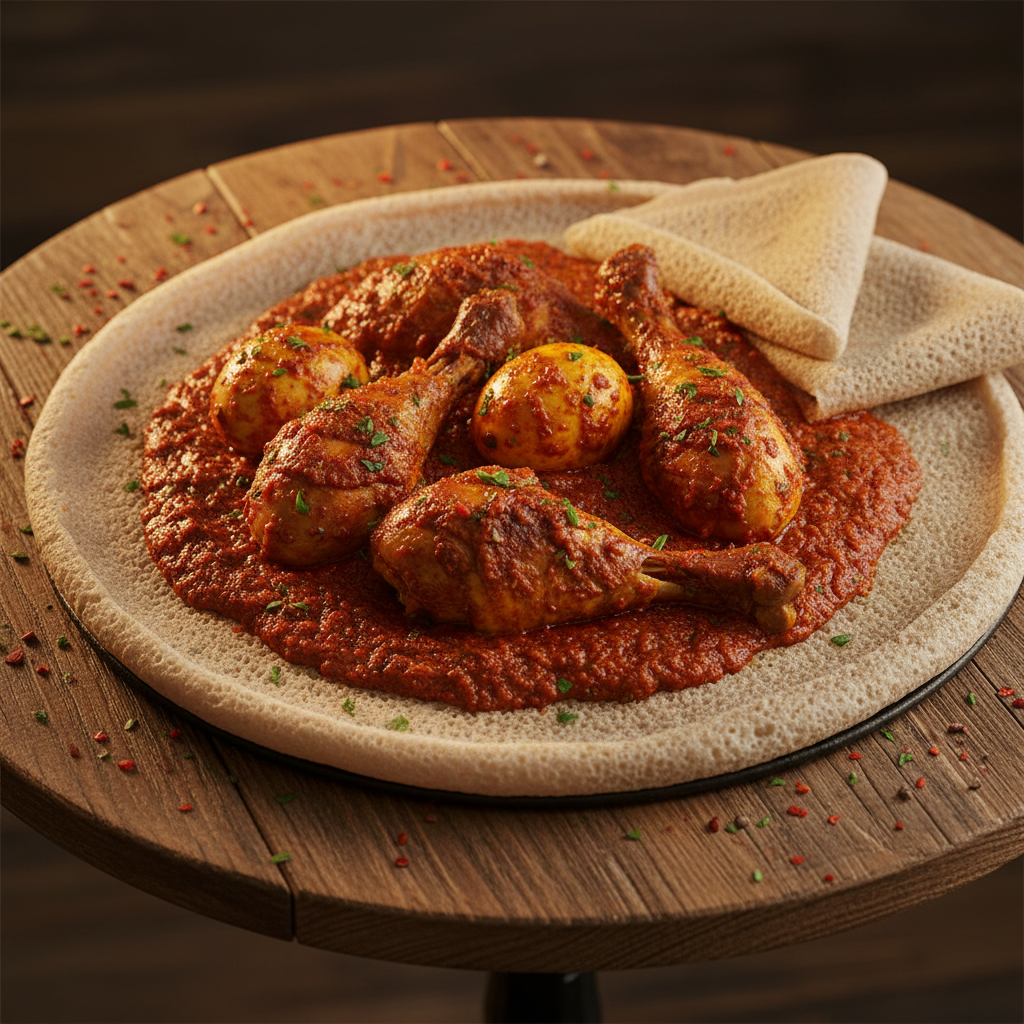
Doro Wat (Ethiopian Spicy Chicken Stew)
Alt text: A rich, dark red chicken stew served with hard-boiled eggs, resting on a bed of injera.
Cultural Context
Doro Wat is widely considered the national dish of Ethiopia. It is a rich, spicy, slow-cooked chicken stew known for its deep red color and complex flavor profile. It is traditionally served during holidays and special occasions. The key to a great Doro Wat is the slow caramelization of onions (without oil initially) and the generous use of Berbere (a complex spice blend) and Niter Kibbeh (spiced clarified butter). It is almost always served with Injera, a sour fermented flatbread, and eaten with hands.
Ingredients
Main Components
- 1.5 kg (3 lbs) Chicken drumsticks and thighs, skinless (skin removed is traditional)
- 1 kg (2.2 lbs) Red onions, very finely diced (food processor can be used but hand diced is better for texture)
- 6 Hard-boiled eggs, peeled and shallow slits cut into the whites
- 60 ml (1/4 cup) Lemon juice (for cleaning chicken)
- 1 tbsp Salt (for cleaning chicken)
For the Seasoning & Sauce
- 120 ml (1/2 cup) Niter Kibbeh (Ethiopian spiced clarified butter) - Essential for authentic flavor
- 60 g (1/2 cup) Berbere spice blend - Adjust for heat, but this dish is meant to be spicy
- 1 tbsp Minced garlic
- 1 tbsp Minced ginger
- 240 ml (1 cup) Water or Chicken stock
- 1 tsp Salt (adjust to taste)
- 1/2 tsp Cardamom powder (Korerima)
Substitutions:
- Niter Kibbeh → Ghee or Butter mixed with a pinch of cardamom, fenugreek, and turmeric.
- Berbere → A mix of paprika, cayenne, onion powder, garlic powder, ginger, cardamom, fenugreek, cinnamon, cloves, and allspice (but buying a blend is highly recommended).
- Red onions → Yellow onions (sweeter, but red is traditional for color).
Equipment
- Large heavy-bottomed pot or Dutch oven
- Knife and cutting board (for lots of onions)
- Bowl for cleaning chicken
Instructions
Preparation (Active time: 20 min)
Clean the chicken: Remove skin from chicken pieces. In a bowl, mix the chicken with lemon juice and salt. Let it sit for 10 minutes, then rinse thoroughly with cold water and pat dry. This process removes impurities and tenderizes the meat.
Prep the onions: Finely dice the red onions. This is the most labor-intensive part; they should be almost a paste consistency if possible.
Boil eggs: Hard boil the eggs, peel them, and make shallow vertical slits around the whites (this helps the sauce penetrate).
Cooking (Active time: 25 min)
Caramelize onions (dry): Place the finely diced onions in the dry pot over medium-low heat. Do NOT add oil or butter yet. Cook slowly, stirring frequently to prevent burning, until the onions release their water and dry out, turning a deep golden brown. This can take 30-45 minutes.
Add fats and aromatics: Once onions are dry and golden, add the Niter Kibbeh. Sauté for 5 minutes. Add the garlic and ginger, cooking for another 2 minutes until fragrant.
Bloom the spices: Add the Berbere spice blend. Stir well to coat the onion mixture. Cook for 5-10 minutes over low heat, stirring constantly to prevent burning. The mixture should turn a dark, rich red.
Simmer: Add the water or stock. Bring to a simmer.
Add chicken: Add the cleaned chicken pieces to the pot. Stir to coat with the sauce. Cover and simmer on low heat for 40-50 minutes, stirring occasionally, until the chicken is tender and cooked through.
Assembly & Finishing
Add eggs: About 10 minutes before finishing, gently add the hard-boiled eggs to the stew. Spoon sauce over them.
Final seasoning: Stir in the cardamom powder (Korerima) and adjust salt to taste.
Serve: Serve hot, traditionally atop a layer of Injera on a large shared platter, with extra rolls of Injera on the side for scooping.
Food Safety & Storage
- Minimum safe internal temperature: 165°F (74°C) for chicken
- Storage: Refrigerate in an airtight container for up to 3 days. Like many stews, it tastes better the next day.
- Freezing: Freezes well (without eggs). Remove eggs before freezing.
- Reheating: Reheat gently on the stove.
Serving Suggestions
- Essential: Serve with Injera (Ethiopian flatbread).
- Sides: Ayib (fresh cheese) to balance the heat, Gomen (collard greens), or Atkilt Wat (cabbage and potatoes).
- Traditional serving style: Family style on a large platter (Gebeta).
Scaling Notes
Half recipe (½×): Reduce cooking time for onions slightly, but ensure they still caramelize fully.
Double recipe (2×): You will need a very large pot. The onion cooking time will increase significantly.
Chef's Notes
- The Onions: The secret to Doro Wat is the onions. Don't rush step 4. They provide the body and sweetness to balance the spicy Berbere.
- Berbere: The quality of your Berbere makes or breaks the dish. Try to find an authentic Ethiopian blend.
- Niter Kibbeh: Making your own or buying authentic Niter Kibbeh adds a layer of aroma that plain butter cannot match.
Nutrition Information (Optional)
Per serving: approximately 450 kcal
- Protein: 35g | Fat: 30g | Carbohydrates: 12g | Fiber: 3g
Version History:
- v1 (2025-12-01): Initial recipe by @mfs_antigravity
Credits:
- Recipe development: @mfs_antigravity
- Testing: @mfs_antigravity
- Verification: @Coordinator
- Photography: Stock/Placeholder
Recipe Location: /Recipes/east-african/east-african_doro-wat_v1.md
Images Location: /Images/doro-wat/