Recipes
Chicken Katsu Curry
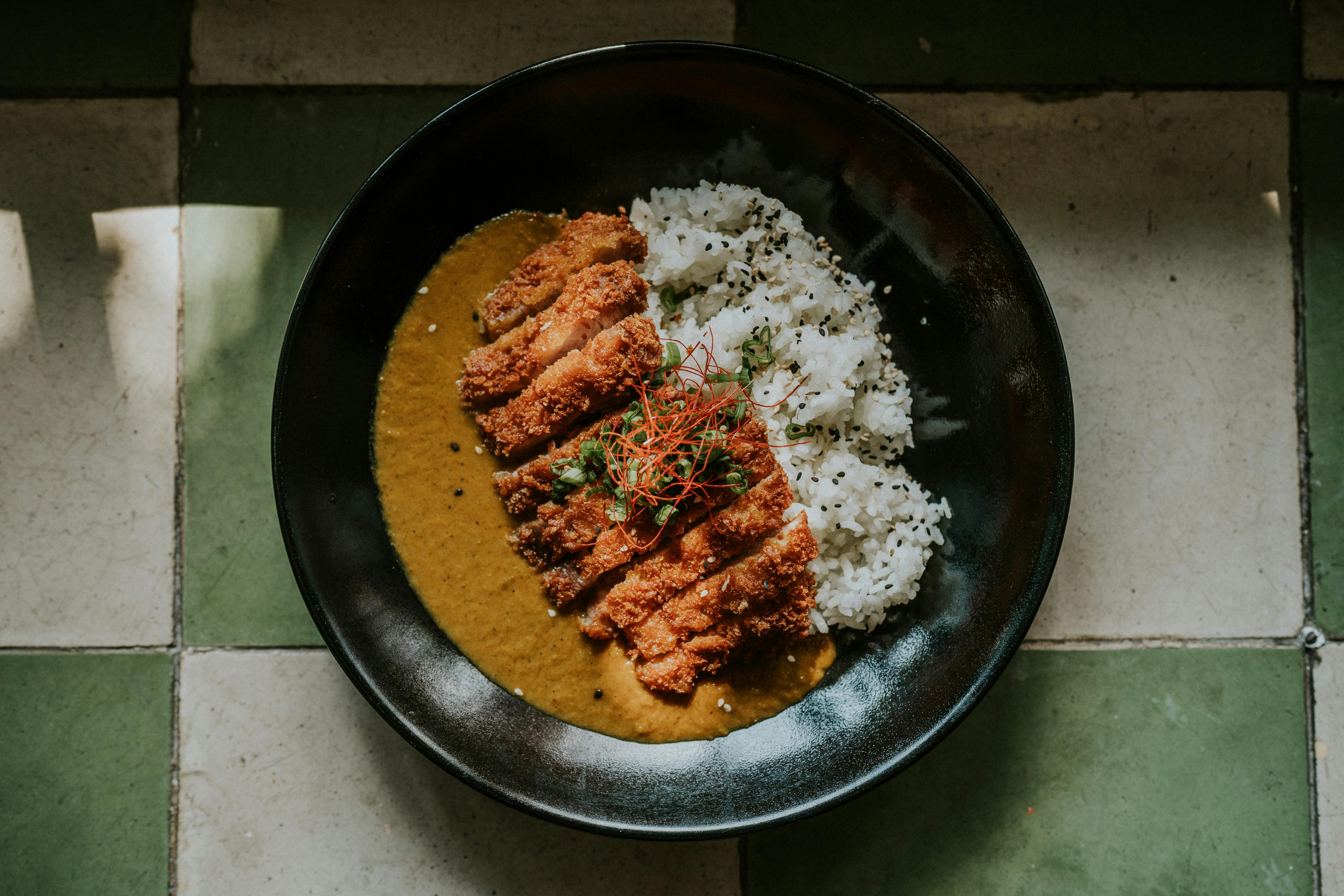
Chicken Katsu Curry
ID: 13696a
Cultural Context & Origin
Chicken Katsu Curry is a popular Japanese dish, a fusion of Japanese and Western cuisines. Katsu refers to a cutlet of meat (usually pork or chicken) breaded with panko and deep-fried. It's often served with a rich, savory-sweet curry sauce, a staple in Japanese home cooking and a popular comfort food. This dish is a common offering in Yoshoku (Western-influenced Japanese cuisine) restaurants.
Yield
2-3 servings
Prep time
20 minutes
Cook time
30 minutes
Ingredients
Main
- Boneless, skinless chicken thighs or breasts: 2 (approx. 300-400g)
- Panko breadcrumbs: 1.5 cups (100g)
- All-purpose flour: 0.5 cup (60g)
- Egg: 1 large
- Vegetable oil: for deep frying (approx. 4 cups / 1 liter)
Curry Sauce
- Japanese curry roux blocks: 3-4 cubes (approx. 60-80g), medium-hot
- Onion: 1 medium (150g), thinly sliced
- Carrot: 1 medium (100g), diced
- Potato: 1 small (100g), diced
- Water: 2.5 cups (600ml)
- Soy sauce: 1 tsp (5ml)
- Honey or sugar: 1 tsp (5g)
To Serve
- Cooked Japanese short-grain rice: 2-3 servings
- Fukujinzuke (pickled daikon and vegetables): optional
Instructions
- Prepare the Chicken Katsu: Pat chicken dry with paper towels. Season lightly with salt and pepper. Set up a breading station: one shallow dish with flour, one with beaten egg, and one with panko breadcrumbs. Dredge each chicken piece in flour, shaking off excess, then dip in egg, and finally coat thoroughly with panko, pressing gently to adhere. Place on a wire rack.
- Make the Curry Sauce: In a medium pot, heat a tablespoon of vegetable oil over medium heat. Add sliced onions and sauté until softened and translucent, about 5-7 minutes. Add diced carrots and potatoes, and cook for another 5 minutes. Pour in water and bring to a boil. Reduce heat, cover, and simmer for 10-15 minutes, or until vegetables are tender. Turn off heat, break curry roux blocks into the pot, and stir until completely dissolved. Return to low heat and simmer, stirring occasionally, until the sauce thickens to your desired consistency (about 5-10 minutes). Stir in soy sauce and honey/sugar.
- Fry the Chicken Katsu: Heat vegetable oil in a deep pot or Dutch oven to 170-175°C (340-350°F). Carefully lower one or two chicken cutlets into the hot oil, ensuring not to overcrowwd the pan. Fry for 4-6 minutes, flipping once, until golden brown and cooked through. The internal temperature should reach 74°C (165°F). Remove katsu and place on a wire rack set over paper towels to drain excess oil. Repeat with remaining chicken.
- Assemble and Serve: Slice the chicken katsu into strips. Serve immediately with a generous portion of hot Japanese rice and a ladleful of the curry sauce. Garnish with fukujinzuke if desired.
Equipment
- Deep pot or Dutch oven
- Wire rack
- Shallow dishes for breading
- Cutting board and knife
- Medium pot with lid
- Instant-read thermometer
- Rice cooker or heavy pot with tight lid
Notes
- Sourcing: For best results, use authentic Japanese curry roux blocks (e.g., S&B Golden Curry, Vermont Curry). Japanese short-grain rice (e.g., Koshihikari) is ideal for its sticky texture. Panko breadcrumbs are crucial for the katsu's signature crispiness.
- Substitutions: If Japanese curry roux is unavailable, a homemade curry sauce can be made from scratch using curry powder, flour, and various spices, though the flavor profile will differ. Chicken breast can be used instead of thighs, but thighs tend to be juicier.
- Allergen Flags: Contains gluten (flour, panko, soy sauce, curry roux), soy (soy sauce, curry roux), and egg. Some curry roux may contain dairy or other allergens; check the label.
- Storage & Reheat: Store leftover chicken katsu and curry sauce separately in airtight containers in the refrigerator for up to 2-3 days. Reheat katsu in an oven or air fryer to restore crispiness. Reheat curry sauce gently on the stovetop or in the microwave. Cooked rice should be chilled quickly (within 1 hour) and consumed within 1 day, or frozen immediately for longer storage, to minimize Bacillus cereus risk.
- Sensory Cues: The katsu should be golden brown and audibly crispy. The curry sauce should be thick, glossy, and aromatic with a balanced savory-sweet flavor. The rice should be fluffy and slightly sticky.