Kimchi Jjigae (Kimchi Stew)
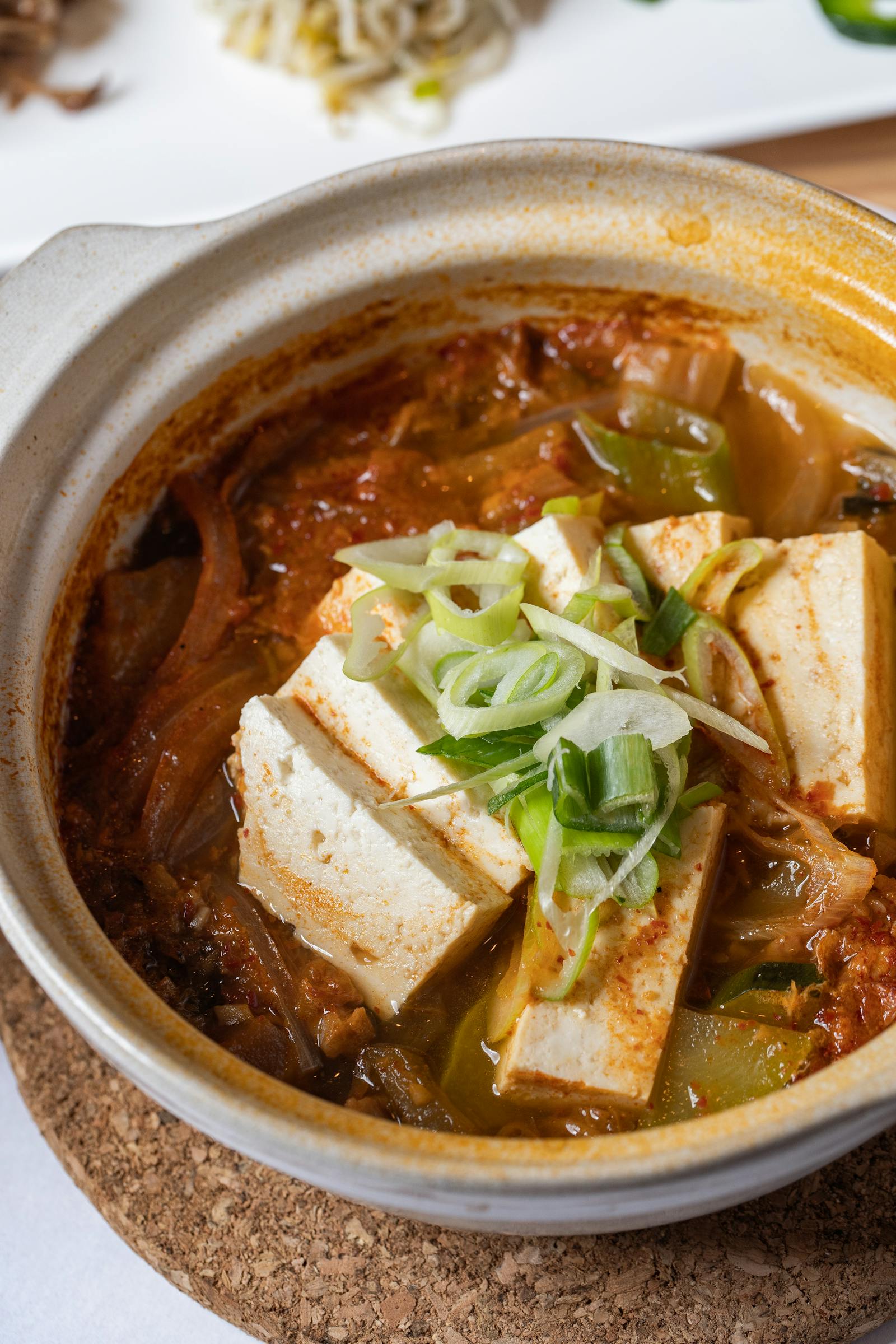
Kimchi Jjigae (Kimchi Stew)
Alt text: A bubbling stone pot filled with spicy red kimchi stew, tofu, and pork belly, topped with green onions.
Cultural Context
Kimchi Jjigae is one of the most loved dishes in Korean cuisine, a staple comfort food found in homes and restaurants alike. It is a spicy, savory stew made primarily with ripened kimchi, pork, and tofu. Historically, it was a way to use up aged, sour kimchi that was too pungent to eat raw, transforming it into a rich, deep-flavored broth. It is often shared at the table, served bubbling hot with a bowl of steamed rice.
Ingredients
Main Components
- 450 g (1 lb / 2 cups) Aged Kimchi (sour), chopped - Essential: use old, sour kimchi for depth
- 225 g (8 oz) Pork belly or pork shoulder, sliced into bite-sized pieces
- 1 package (approx. 400g / 14 oz) Firm or medium-firm tofu, sliced into 1cm thick rectangles
- 1/2 medium Onion, sliced
- 2 stalks Green onion, sliced diagonally
- 60 ml (1/4 cup) Kimchi brine (liquid from the kimchi jar)
- 475 ml (2 cups) Water or anchovy kelp stock (stock preferred for better flavor)
For the Seasoning
- 1 tbsp Gochugaru (Korean chili flakes) - Adjust for spice level
- 1 tbsp Gochujang (Korean chili paste)
- 1 tbsp Soy sauce (soup soy sauce or regular)
- 1 tsp Sugar (to balance the sourness of the kimchi)
- 1 tbsp Minced garlic
- 1 tsp Minced ginger
- 1 tsp Sesame oil
Substitutions:
- Pork belly → Canned tuna (add at the end) or Spam (common modern variation)
- Anchovy stock → Rice water (water used to rinse rice) or Chicken stock
- Gochugaru → Crushed red pepper flakes (different flavor profile, but workable in a pinch)
Equipment
- Medium pot or Ttukbaegi (Korean earthenware pot)
- Cutting board and knife
- Ladle
Instructions
Preparation (Active time: 10 min)
Prep the ingredients: Slice the pork belly and kimchi into bite-sized pieces. Slice the tofu, onion, and green onions.
Make the base: In a bowl, mix the kimchi and pork belly with the minced garlic, ginger, and sesame oil. Let it sit for 5-10 minutes while you prepare the stock if not already ready.
Cooking (Active time: 10 min)
Sauté the base: Heat your pot over medium heat. Add the kimchi and pork mixture. Sauté for 5-7 minutes until the kimchi softens and the pork is cooked through. You should smell the savory aroma of fried kimchi.
Simmer the stew: Pour in the kimchi brine and water (or stock). Add the onion, gochugaru, gochujang, soy sauce, and sugar. Bring to a boil over medium-high heat.
Cook through: Once boiling, reduce heat to medium-low and cover. Simmer for 15-20 minutes to let the flavors meld. The broth should turn a deep, rich red.
Assembly & Finishing
Add Tofu: Uncover and gently lay the tofu slices on top of the stew. Simmer for another 5 minutes until the tofu is heated through and absorbs some of the broth.
Garnish and serve: Top with sliced green onions. Turn off the heat. Serve immediately, ideally in the cooking pot if using earthenware, with a side of steamed white rice.
Food Safety & Storage
- Minimum safe internal temperature: 145°F (63°C) for pork
- Storage: Refrigerate in an airtight container for up to 3 days. The flavor often improves the next day.
- Freezing: Can be frozen, but tofu texture may change (become spongy). Remove tofu before freezing if desired.
- Reheating: Reheat on the stove over medium heat until bubbling.
Serving Suggestions
- Serve with steamed short-grain white rice.
- Pairs well with other banchan (side dishes) like seasoned bean sprouts, spinach, or rolled omelet (Gyeran-mari).
- Traditional serving style: Shared from a central pot or served in individual ttukbaegi.
Scaling Notes
Half recipe (½×): Use a smaller pot. Cooking times remain similar, but watch for evaporation.
Double recipe (2×): Use a large dutch oven or stockpot. Increase simmering time by 5-10 minutes to ensure depth of flavor.
Chef's Notes
- Sourcing: Look for "Mat Kimchi" or whole cabbage kimchi at Asian grocery stores. If buying fresh, leave it out at room temperature for a day or two to ferment and sour before using for stew.
- Make-ahead: The stew tastes even better the next day as the flavors have more time to meld.
- Variations: Add mushrooms (enoki or shiitake) or glass noodles for extra texture.
- Common pitfalls: Using fresh kimchi will result in a flat, cabbage soup taste. If you must use fresh kimchi, add a splash of vinegar to mimic the sourness.
Nutrition Information (Optional)
Per serving: approximately 350 kcal
- Protein: 20g | Fat: 25g | Carbohydrates: 15g | Fiber: 4g
Version History:
- v1 (2025-12-01): Initial recipe by @mfs_antigravity
Credits:
- Recipe development: @mfs_antigravity
- Testing: @mfs_antigravity
- Verification: @Coordinator
- Photography: Pexels (free license)
Recipe Location: /Recipes/east-asian/east-asian_kimchi-jjigae_v1.md
Images Location: /Images/kimchi-jjigae/