Peking Duck (北京烤鸭)
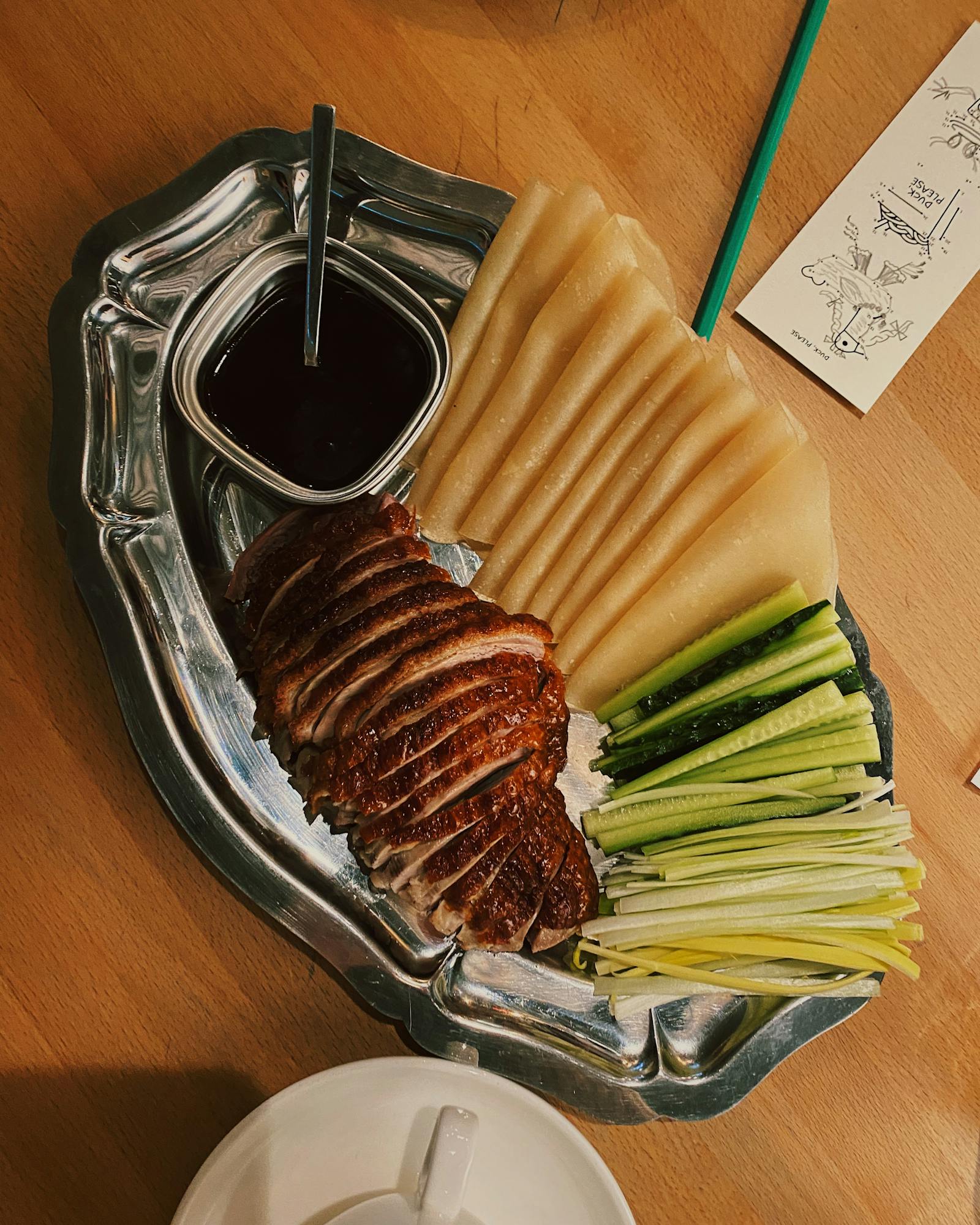
Peking Duck (北京烤鸭)
Cultural Context
Peking duck is one of Beijing's most celebrated dishes, with roots stretching back to the Imperial kitchens of the Yuan dynasty (1271–1368). The earliest known recipe appears in Hu Sihui's Complete Recipes for Dishes and Beverages (1330). Bianyifang, the first restaurant dedicated to roast duck, opened near Qianmen in Beijing in 1416 and still operates today. Traditionally carved tableside, the dish emphasizes the crackling, lacquered skin above all else—a testament to the multi-day craft behind every bird. Served wrapped in thin Mandarin pancakes with scallion, cucumber, and sweet bean sauce, Peking duck remains a centerpiece of Chinese banquet culture and a symbol of Beijing's culinary identity.
Ingredients
For the Duck
- 1 whole White Beijing duck (or Pekin duck), about 2.3 kg (5 lb) — giblets and neck removed
- 2 L (68 fl oz / 8½ cups) boiling water, for blanching
- 60 ml (2 fl oz / ¼ cup) Shaoxing rice wine
For the Maltose Glaze
- 60 g (2 oz / 3 tbsp) maltose syrup (麦芽糖) — see substitutions
- 30 ml (1 fl oz / 2 tbsp) hot water
- 15 ml (½ fl oz / 1 tbsp) rice vinegar
- 15 ml (½ fl oz / 1 tbsp) light soy sauce
For the Mandarin Pancakes
- 250 g (9 oz / 2 cups) all-purpose flour
- 160 ml (5½ fl oz / ⅔ cup) boiling water
- 10 ml (2 tsp) sesame oil
For Serving
- 4 whole scallions, cut into 8 cm (3 in) julienne strips
- 1 medium cucumber, seeded and cut into thin batons
- 60 ml (2 fl oz / ¼ cup) sweet bean sauce (甜面酱) or hoisin sauce
Substitutions:
- Maltose → honey (slightly sweeter; add an extra splash of rice vinegar to balance)
- Sweet bean sauce → hoisin sauce (more widely available; somewhat sweeter)
- Shaoxing wine → dry sherry (similar flavor profile)
- Mandarin pancakes → store-bought Peking duck wrappers or thin flour tortillas (convenience trade-off)
Equipment
- Roasting rack set inside a deep roasting pan
- Kitchen twine
- Pastry brush
- Bicycle pump with needle attachment or a straw (for air inflation — optional but traditional)
- Wire rack or S-hook and a cool, dry spot (for air-drying)
- Rolling pin
- Non-stick skillet or flat griddle
Instructions
Day 1: Prep and First Dry (Active time: 45 min)
Clean the duck: Remove any remaining pin feathers with tweezers. Trim excess fat from the cavity opening and neck area. Pat the entire bird thoroughly dry inside and out with paper towels. Pour the Shaoxing wine inside the cavity and rub it around to season.
Inflate the skin (optional but recommended): Insert the tip of a bicycle pump needle or a sturdy straw between the skin and breast meat at the neck end. Carefully pump air under the skin, working it across the breast, thighs, and back until the skin visibly puffs away from the meat. This separation is the key to achieving shatteringly crisp skin. Tie the neck skin closed with kitchen twine.
 Alt text: Duck with inflated skin showing separation between skin and meat
Blanch the duck: Bring 2 L of water to a rolling boil. Holding the duck by the tied neck or legs over the sink, slowly ladle the boiling water over the entire surface, rotating to cover all sides. You will see the skin tighten, shrink, and turn slightly opaque. This step renders the surface pores and sets the skin taut. Pat dry again.
Prepare the maltose glaze: In a small bowl, combine the maltose, hot water, rice vinegar, and soy sauce. Stir until the maltose dissolves into a smooth, glossy liquid.
Apply the first coat of glaze: Brush the glaze evenly over the entire duck, making sure to coat every fold and crevice. The skin should look slick and shiny.
Air-dry the duck (12–24 hours): Place the duck breast-side up on a wire rack set over a sheet pan. Refrigerate uncovered for a minimum of 12 hours, ideally 24. The skin should feel dry, taut, and papery to the touch—like parchment. This is the single most important step for crispy skin.
Day 2: Second Glaze and Final Dry (Active time: 15 min)
- Apply a second coat of glaze: Remove the duck from the refrigerator. Brush another even layer of the maltose glaze over the entire surface. Return to the refrigerator, uncovered, for another 8–12 hours. The skin will develop a deeper color and even drier texture.
Day 2 or 3: Roast and Serve (Active time: 30 min)
Bring to room temperature: Remove the duck from the refrigerator 1 hour before roasting to take the chill off.
Roast low and slow: Preheat the oven to 160°C (320°F). Place the duck breast-side up on the roasting rack inside the pan. Add 250 ml (1 cup) of water to the bottom of the pan to catch dripping fat and prevent smoking. Roast for 60 minutes, basting with any remaining glaze every 20 minutes. The fat will begin rendering steadily—you should hear gentle sizzling.
 Alt text: Duck roasting in the oven, golden skin starting to develop
Blast with high heat: Increase the oven temperature to 220°C (430°F). Roast for an additional 20–25 minutes until the skin is deeply mahogany, lacquered, and crackly. Keep a close watch to avoid burning. The internal temperature of the thickest part of the thigh should reach 74°C (165°F) for food safety.
Rest the duck: Remove from the oven and let rest on a cutting board for 10 minutes. The juices will redistribute, keeping the meat moist.
While the Duck Roasts: Make the Mandarin Pancakes (Active time: 30 min)
Make the dough: Place the flour in a large bowl. Pour in the boiling water while stirring with chopsticks or a fork until a shaggy dough forms. When cool enough to handle, knead on a lightly floured surface for 5–6 minutes until smooth and elastic. Cover with a damp cloth and rest for 20 minutes.
Shape the pancakes: Divide the dough into 16 equal pieces. Roll each into a ball, then flatten into a disc. Brush the top of one disc with sesame oil, stack a second disc on top, and roll the pair together into a thin circle about 15 cm (6 in) across.
Cook the pancakes: Heat a dry non-stick skillet over medium heat. Cook each stacked pair for about 1–2 minutes per side until light brown spots appear and the pancake puffs slightly. Immediately peel the two layers apart—they will separate cleanly. Stack finished pancakes under a damp towel to keep warm and pliable.
Carving and Assembly
Carve the duck: Using a sharp, thin-bladed knife, carve the skin off in wide, crisp pieces first. Then slice the breast meat and leg meat into thin pieces. Arrange the skin and meat on a warm platter with the skin pieces prominently displayed—the skin is the star.
Assemble and serve: Place a warm pancake flat on your palm. Spread a small smear of sweet bean sauce down the center. Add a few strips of scallion and cucumber, then top with a piece of crisp skin and a slice of meat. Roll into a tight cylinder and eat immediately.
 Alt text: Carved Peking duck with pancakes, scallions, cucumber, and sweet bean sauce arranged for serving
Food Safety & Storage
- Minimum safe internal temperature: 74°C (165°F) for poultry
- Storage: Refrigerate carved duck meat in an airtight container for up to 3 days
- Freezing: Cooked duck meat freezes well for up to 2 months; skin does not freeze well (loses crispness)
- Reheating: Reheat meat gently in a 160°C (320°F) oven. Pancakes reheat best by steaming for 2–3 minutes. Crisp leftover skin briefly under a hot broiler.
Serving Suggestions
- Serve with warm Mandarin pancakes, scallion, cucumber, and sweet bean sauce
- Pairs well with a light, floral Chinese tea (jasmine or oolong) or a dry Riesling
- Traditional banquet style: the carcass is taken to the kitchen to make duck bone soup as a second course
- Use leftover duck in fried rice, congee, or stir-fried noodles
Scaling Notes
Half recipe (½×): Use a smaller 1.2 kg (2½ lb) duck or two large duck breasts with skin. Reduce roasting time by 15–20 minutes. Halve the pancake recipe (makes 8 pancakes).
Double recipe (2×): Roast two ducks side by side on separate racks. You may need an extra 10–15 minutes of roasting time. Double the pancake recipe. Ensure adequate refrigerator space for air-drying both birds.
Chef's Notes
- Sourcing: Look for White Pekin ducks at Asian grocery stores or order online from heritage poultry farms. Fresh is better than frozen for skin crispness. Maltose syrup is stocked in the condiment aisle of Chinese supermarkets.
- Make-ahead: The air-drying process means this recipe naturally spreads across 2–3 days. Pancake dough can be made a day ahead and refrigerated. Cooked pancakes freeze well for up to 1 month.
- Variations: Some Beijing restaurants use a closed-oven (menlu) method rather than the open-flame (gualu) technique. At home, a convection setting mimics the circulating heat of a traditional hung oven. For a shortcut version, use just the duck breasts with skin and reduce total time significantly.
- Common pitfalls: Skipping or shortening the air-dry step results in rubbery, steamed-tasting skin. Do not rush this step. Avoid opening the oven frequently during roasting—each opening drops the temperature significantly. If the skin darkens too quickly at high heat, tent loosely with foil.
Nutrition Information (Optional)
Per serving (duck with 4 pancakes and condiments): approximately 680 kcal
- Protein: 42g | Fat: 38g | Carbohydrates: 36g | Fiber: 2g
Version History:
- v1 (2026-02-09): Initial recipe by @flavor_atlas_coordinator
Credits:
- Recipe development: @flavor_atlas_coordinator
- Testing: @flavor_atlas_coordinator
- Verification: @Coordinator
- Photography: pending
Recipe Location: /Recipes/east-asian/east-asian_peking-duck_v1.md
Images Location: /Images/peking-duck/