Ukrainian Borscht
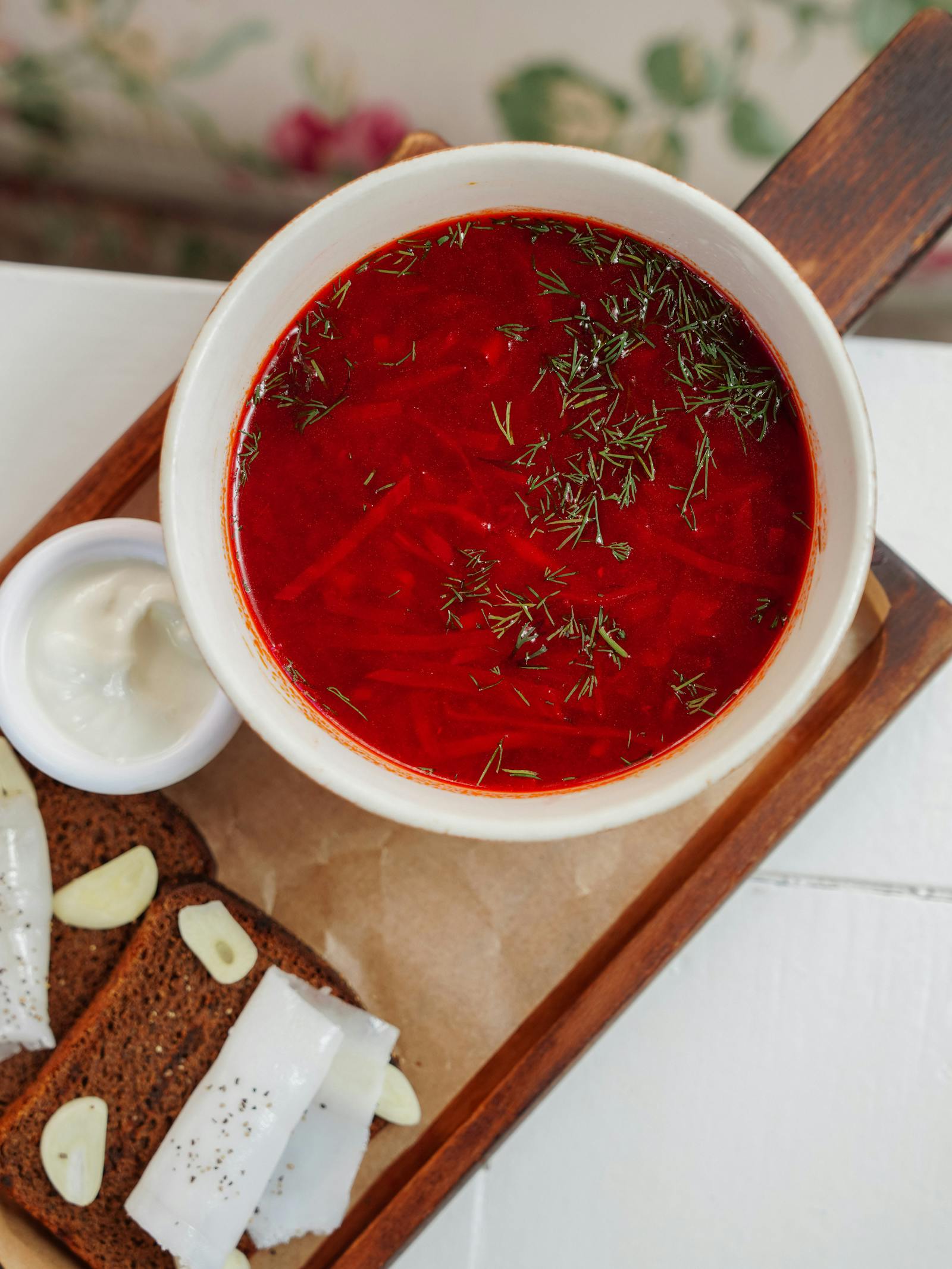
Ukrainian Borscht
Cultural Context
Borscht is Ukraine's national dish and was inscribed on UNESCO's List of Intangible Cultural Heritage in Need of Urgent Safeguarding in 2022. This vibrant ruby-red soup has been a cornerstone of Ukrainian cuisine for centuries, traditionally prepared by grandmothers who passed down their unique family recipes through generations. Every Ukrainian household has its own version, but the soul of borscht lies in the sweet earthiness of beets balanced by tangy sour cream, aromatic dill, and a rich meat broth. It is served at celebrations, during holidays, and as everyday comfort food, embodying the warmth and hospitality of Ukrainian culture.
Ingredients
For the Broth
- 900 g (2 lbs / about 2 lbs) bone-in beef short ribs or beef shank
- 2.5 L (10 cups / 2.5 quarts) cold water
- 2 bay leaves
- 8 whole black peppercorns
- 5 g (1 tsp) salt, plus more to taste
For the Vegetables
- 450 g (1 lb / 3 medium) beets, peeled and grated
- 300 g (10.5 oz / 1 medium head) green cabbage, thinly sliced
- 350 g (12 oz / 3 medium) potatoes, peeled and cubed
- 150 g (5 oz / 2 medium) carrots, peeled and grated
- 150 g (5 oz / 1 large) onion, finely diced
- 3 cloves garlic, minced
- 400 g (14 oz / 1 can) crushed tomatoes or 3 fresh tomatoes, chopped
- 30 ml (2 tbsp) tomato paste
For the Sauteed Base (Zazharka)
- 45 ml (3 tbsp) vegetable oil or lard
- 15 ml (1 tbsp) white vinegar or lemon juice - to preserve beet color
For Seasoning and Serving
- 15 g (1/2 cup loosely packed / 1/2 cup) fresh dill, chopped
- Salt and black pepper to taste
- 240 ml (1 cup / 8 fl oz) sour cream, for serving
- Fresh rye bread or pampushky (Ukrainian garlic bread), for serving
Substitutions:
- Beef short ribs -> Pork ribs or bone-in pork shoulder (traditional variation)
- Sour cream -> Full-fat Greek yogurt (slightly tangier)
- Fresh beets -> Jarred pickled beets in a pinch (adjust vinegar amount)
- Lard -> Vegetable oil or butter (less traditional but works well)
Equipment
- Large stockpot or Dutch oven (6-8 quart capacity)
- Large skillet or frying pan
- Box grater or food processor with grating attachment
- Fine mesh strainer (optional, for clearer broth)
- Ladle
Instructions
Making the Broth (Active time: 15 min)
Prepare the beef broth: Place the beef short ribs in a large stockpot and cover with cold water. Bring to a boil over high heat. You will see gray foam rising to the surface - skim this off with a spoon for a clearer broth.
Simmer the broth: Once boiling, reduce heat to low. Add bay leaves, peppercorns, and 1 teaspoon of salt. Cover partially and simmer gently for 1 to 1.5 hours until the meat is tender and pulls easily from the bone. The broth should have a rich, meaty aroma.
Remove the meat: Transfer the beef to a cutting board. Once cool enough to handle, shred or cut into bite-sized pieces, discarding bones and excess fat. Set meat aside. Strain the broth if desired.
Preparing the Zazharka (Active time: 20 min)
- Saute the aromatics: Heat the oil in a large skillet over medium heat. Add the diced onion and cook for 5 minutes until softened and translucent, stirring occasionally. Add the grated carrots and cook for another 3 minutes until slightly softened.
 Alt text: Golden onions and carrots sauteing in a skillet
Add the beets: Add the grated beets to the skillet. Stir to combine with the onions and carrots. Add the vinegar - this is essential to keep the beets vibrant red. Cook for 8-10 minutes, stirring frequently, until the beets have softened slightly and released their juices.
Incorporate tomatoes: Add the tomato paste and crushed tomatoes to the skillet. Stir well and cook for 5 more minutes. The mixture should be deeply colored and fragrant. Set the zazharka aside.
Building the Soup (Active time: 10 min)
Add potatoes: Return the broth to a simmer over medium heat. Add the cubed potatoes and cook for 10 minutes until they are just starting to become tender when pierced with a fork.
Add cabbage: Stir in the sliced cabbage. Cook for 5 minutes until the cabbage begins to wilt and soften.
Combine everything: Add the prepared zazharka (beet mixture) to the pot. Stir to combine all the vegetables with the broth. The soup should turn a beautiful deep ruby red.
Return the meat: Add the reserved shredded beef back to the pot. Simmer for 10-15 minutes to allow all the flavors to meld together.
Finishing (Active time: 5 min)
Season and add garlic: Add the minced garlic and most of the fresh dill (reserve some for garnish). Taste and adjust seasoning with salt and pepper. The soup should have a balanced sweet-sour-savory flavor.
Rest the soup: Remove from heat and let stand for 10-15 minutes. Like many soups, borscht tastes even better after resting, allowing the flavors to deepen.
Serving
- Serve hot: Ladle the borscht into deep bowls. Top each serving with a generous dollop of sour cream and a sprinkle of fresh dill. Serve with crusty rye bread or traditional Ukrainian pampushky (garlic bread rolls).
 Alt text: Ruby red borscht in a white bowl topped with sour cream and fresh dill
Food Safety & Storage
- Minimum safe internal temperature: 145°F (63°C) for beef
- Storage: Refrigerate in an airtight container for up to 5 days. Borscht often tastes better the next day as flavors continue to develop.
- Freezing: Yes - freeze without sour cream for up to 3 months. Thaw overnight in refrigerator.
- Reheating: Reheat gently on stovetop over medium-low heat. Add a splash of water or broth if soup has thickened. Add fresh sour cream when serving.
Serving Suggestions
- Serve with thick slices of dark rye bread or sourdough
- Traditional accompaniment: pampushky (Ukrainian garlic bread rolls)
- Pairs well with cold vodka or a dry white wine
- Offer extra sour cream and fresh dill at the table
- In Ukraine, borscht is often served as a first course before a main dish
Scaling Notes
Half recipe (1/2x): Use a smaller pot (4 quart). Cooking times remain similar but watch the vegetables more closely as they may cook faster in less liquid.
Double recipe (2x): Use your largest stockpot (12+ quarts). Increase simmering time by 15-20 minutes to ensure all vegetables are properly cooked through. This is excellent for batch cooking.
Chef's Notes
- The secret to color: The vinegar or lemon juice added to the beets is crucial for maintaining that iconic ruby-red color. Without acid, the beets will turn brown during cooking.
- Sourcing: Look for firm, unblemished beets with deep red color. Farmers markets often have the best quality. Golden beets will not give traditional color.
- Make-ahead: Borscht is one of those magical dishes that improves overnight. Make it a day ahead for best flavor.
- Variations: Some families add kidney beans, others use pork instead of beef, and vegetarian versions are common during Lent. Some regions add a bit of sugar to balance acidity.
- Common pitfalls: Don't rush the broth - good borscht starts with a rich, flavorful base. Avoid overcooking the cabbage; it should be tender but retain some texture.
- Traditional serving: In Ukraine, the cook often places the pot in the center of the table for a communal family meal.
Nutrition Information (Optional)
Per serving (approximately 1.5 cups with sour cream): approximately 320 kcal
- Protein: 22g | Fat: 14g | Carbohydrates: 28g | Fiber: 5g
Version History:
- v1 (2026-01-21): Initial recipe by @flavor_atlas_coordinator
Credits:
- Recipe development: @flavor_atlas_coordinator
- Testing: @flavor_atlas_coordinator
- Verification: @Coordinator
- Photography: Pending
Recipe Location: /Recipes/europe/europe_ukrainian-borscht_v1.md
Images Location: /Images/ukrainian-borscht/