Classic Deviled Eggs
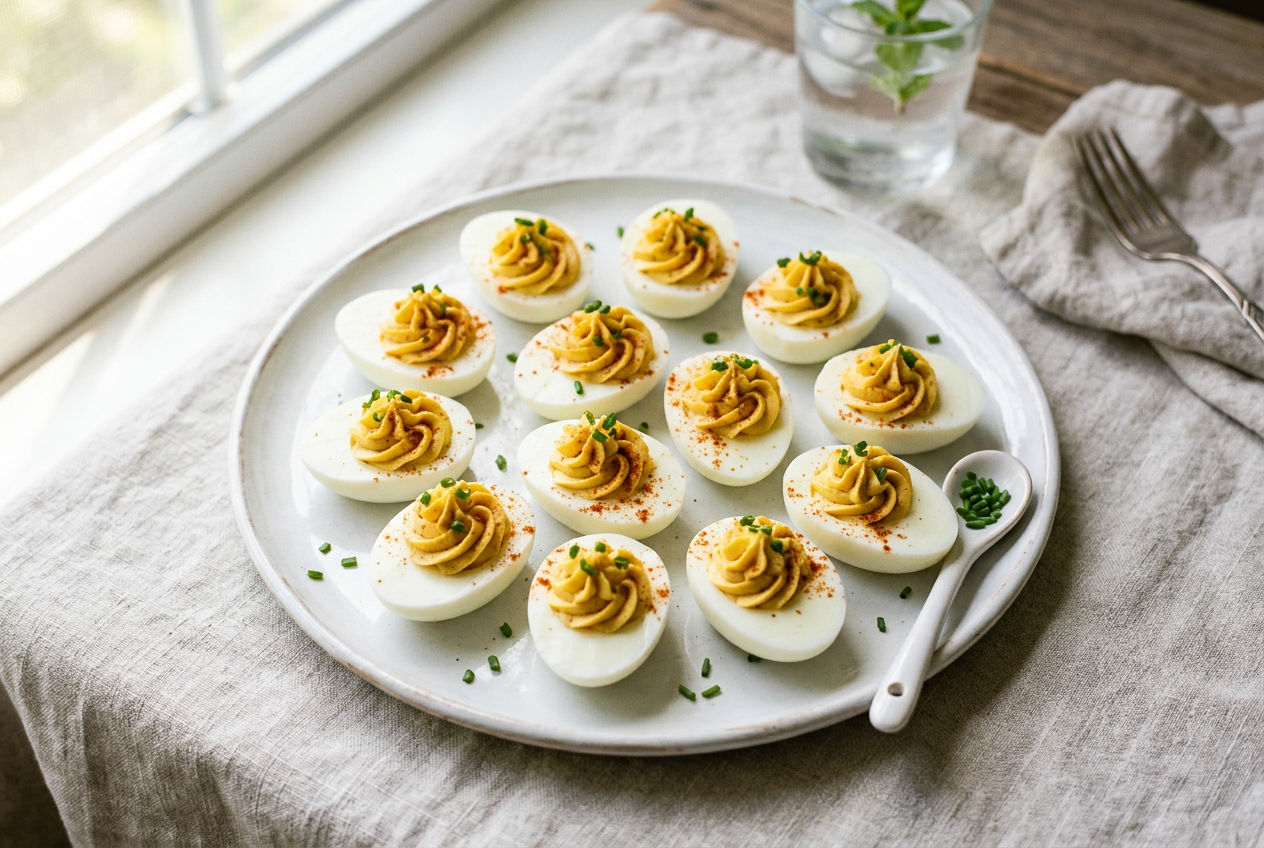
Classic Deviled Eggs
Cultural Context
Deviled eggs are the undisputed queen of the Midwestern potluck table. The term "deviled" dates back to the 18th century, referring to any food seasoned with mustard or pepper, but the dish found its spiritual home in the church basements, family reunions, and covered-dish suppers of America's heartland. In the Midwest, every family guards their own ratio of mayo to mustard, and showing up to a gathering without a deviled egg plate is practically unthinkable. The iconic paprika dusting is non-negotiable — it's both tradition and garnish.
Ingredients
For the Eggs
- 12 large eggs, at room temperature
- 15 ml (1 tbsp) white distilled vinegar (for boiling water)
- Ice water, for ice bath
For the Filling
- 80 g (2.8 oz / ⅓ cup) mayonnaise — full-fat preferred
- 15 ml (1 tbsp / 1 tbsp) yellow mustard
- 10 ml (2 tsp / 2 tsp) white distilled vinegar or dill pickle brine
- 5 ml (1 tsp / 1 tsp) granulated sugar
- 2 g (½ tsp) fine sea salt, plus more to taste
- 1 g (¼ tsp) freshly ground black pepper
For the Garnish
- 2 g (½ tsp) sweet Hungarian paprika
- Fresh chives, finely snipped (optional)
Substitutions:
- Mayonnaise → Greek yogurt (tangier, slightly lighter) or Miracle Whip (sweeter, more Midwestern tang)
- Yellow mustard → Dijon mustard (sharper, more refined flavor)
- White vinegar → Dill pickle brine (adds subtle garlic-dill complexity)
- Sugar → omit if using Miracle Whip, which is already sweetened
Equipment
- Large saucepan or stockpot with lid
- Large bowl for ice bath
- Sharp paring knife
- Small mixing bowl
- Fork or potato masher
- Piping bag with large star tip, or zip-top bag with corner snipped (optional)
- Deviled egg serving plate (optional)
Instructions
Preparation (Active time: 10 min)
Prepare the ice bath: Fill a large bowl with ice and cold water. Set it near the stove. This stops cooking immediately and makes peeling much easier.
Boil the eggs: Place eggs in a single layer in a large saucepan. Cover with cold water by 2.5 cm (1 inch). Add the vinegar — this helps seal any cracks. Bring to a rolling boil over high heat uncovered.
Cook and shock: As soon as the water reaches a full boil, cover the pot and remove from heat. Let stand exactly 12 minutes. Using a slotted spoon, transfer eggs immediately to the ice bath. Let cool for at least 10 minutes. The shells should feel cold to the touch.
Assembly (Active time: 10 min)
Peel the eggs: Gently tap each egg on the counter to crack the shell all around, then peel under a thin stream of cool running water. The membrane should slip off cleanly. Pat dry with a clean towel.
Halve and separate yolks: Slice each egg in half lengthwise with a sharp knife. Gently pop the yolks into a small mixing bowl. Arrange the whites cut-side up on your serving plate.
Make the filling: Mash the yolks thoroughly with a fork until no large lumps remain. Add mayonnaise, mustard, vinegar, sugar, salt, and pepper. Stir vigorously until the mixture is completely smooth and creamy. Taste and adjust seasoning — it should be tangy, slightly sweet, and well-salted.
 Alt text: Smooth golden yolk filling being piped into bright white egg halves
Finishing
Fill the egg whites: Spoon or pipe the filling generously into each egg white half. For a polished look, transfer the filling to a piping bag fitted with a large star tip and pipe a rosette into each cavity. The filling should mound slightly above the rim.
Garnish and serve: Dust each egg lightly with paprika — a fine, even layer across the tops. Scatter snipped chives over the platter if desired. Serve immediately or chill until ready.
Food Safety & Storage
- Egg safety: Eggs are fully hard-cooked at the 12-minute standing time, reaching well above 71°C (160°F) internally
- Storage: Cover tightly with plastic wrap and refrigerate for up to 2 days. Best served within 24 hours for optimal texture
- Freezing: Not recommended — egg whites become rubbery when frozen
- Transport: Keep chilled in a cooler with ice packs. Do not leave at room temperature for more than 2 hours (1 hour if above 32°C / 90°F)
Serving Suggestions
- Serve as an appetizer at potlucks, picnics, and holiday gatherings
- Pairs well with iced tea, lemonade, or a crisp lager
- Traditional serving style: arranged on a dedicated deviled egg plate with indentations to cradle each half
Scaling Notes
Half recipe (½×): Use 6 eggs. Halve all filling ingredients. Same boiling method.
Double recipe (2×): Use 24 eggs. You may need to boil in two batches to keep eggs in a single layer. Double all filling ingredients. Allow extra time for peeling and assembly.
Chef's Notes
- Room-temperature eggs: Starting with room-temp eggs reduces cracking when they hit the hot water. Pull them from the fridge 30 minutes before boiling, or warm in a bowl of hot tap water for 5 minutes.
- The vinegar trick: Adding vinegar to the boiling water helps the whites set quickly if a shell cracks, preventing ugly streamers.
- Older eggs peel better: Eggs that are 7–10 days old peel far more easily than fresh-from-the-farm eggs. The air cell enlarges as eggs age, creating a gap between the membrane and shell.
- Make-ahead: Hard-boil and peel eggs up to 24 hours in advance. Store peeled eggs in a sealed container with a damp paper towel. Mix the filling and pipe just before serving for the best presentation.
- Variations: Add a teaspoon of sweet pickle relish to the filling for extra Midwestern charm. A dash of hot sauce or smoked paprika gives a modern twist. For a Southern take, fold in crumbled bacon.
- Common pitfalls: Overcooking creates a green ring around the yolk — stick to the 12-minute method. Under-seasoning is the biggest mistake; the filling should taste assertively flavored since it's eaten cold.
Nutrition Information (Optional)
Per serving (2 halves): approximately 130 kcal
- Protein: 7g | Fat: 10g | Carbohydrates: 1g | Fiber: 0g
Version History:
- v1 (2026-03-11): Initial recipe by @flavor_atlas_coordinator
Credits:
- Recipe development: @flavor_atlas_coordinator
- Testing: @flavor_atlas_coordinator
- Verification: @Coordinator
- Photography: Pending
Recipe Location: /Recipes/midwest/midwest_classic-deviled-eggs_v1.md
Images Location: /Images/classic-deviled-eggs/