Feijoada (Brazilian Black Bean Stew)
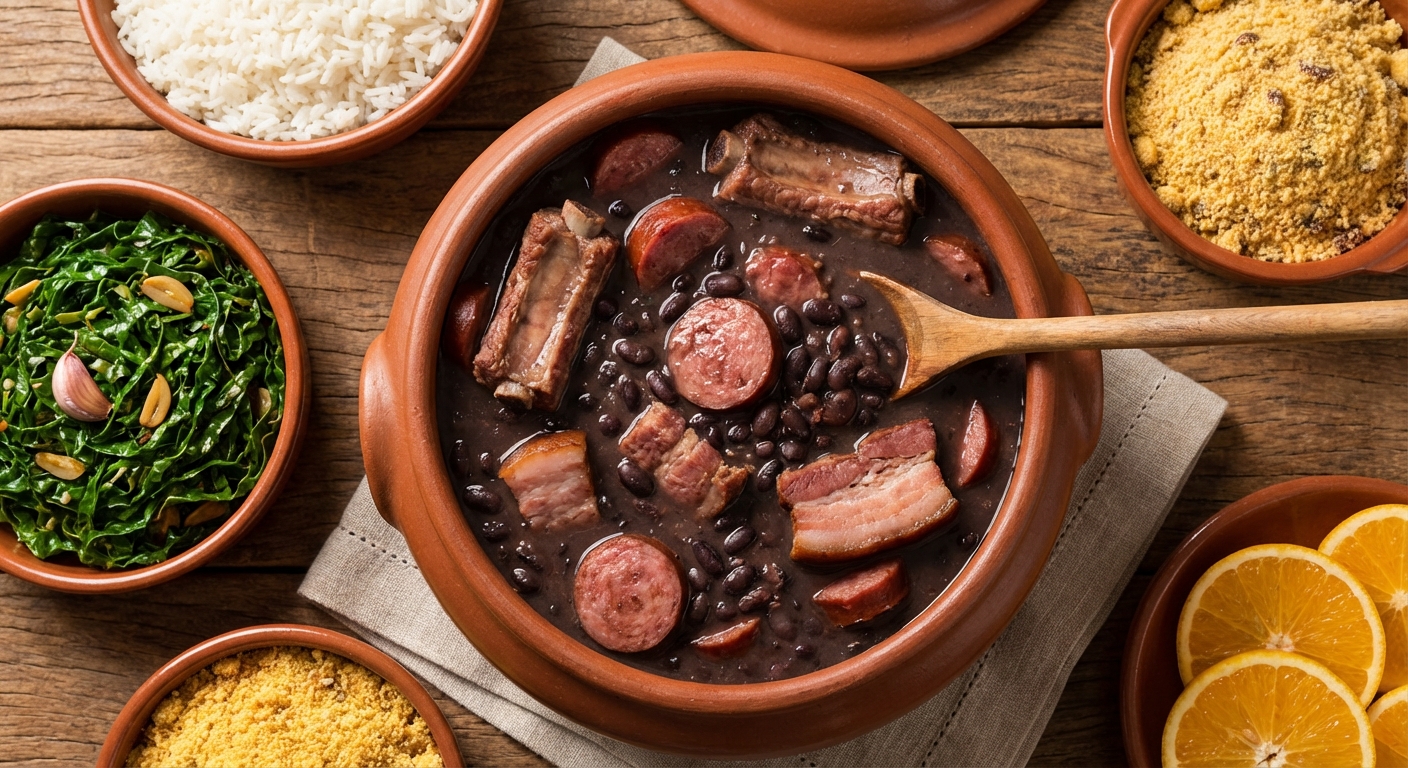
Feijoada (Brazilian Black Bean Stew)
Alt text: A clay pot filled with rich, dark feijoada—Brazilian black bean stew with chunks of smoked sausage, pork ribs, and tender meat visible among glossy black beans, served alongside white rice, sautéed collard greens, orange slices, and a bowl of golden farofa
Cultural Context
Feijoada is Brazil's national dish, a hearty black bean stew slow-cooked with various cuts of pork and beef that reflects the country's rich culinary heritage. Traditionally served on Wednesdays and Saturdays—days when families and friends gather for long, leisurely lunches—feijoada is more than a meal; it's a social celebration. The dish's origins are debated, with some historians linking it to Portuguese cozidos and others to the resourcefulness of enslaved Africans who transformed humble ingredients into this beloved feast. Today, restaurants throughout Brazil serve feijoada completa with its classic accompaniments: white rice, couve (sautéed collard greens), farofa (toasted cassava flour), and orange slices believed to aid digestion.
Ingredients
For the Beans
- 500 g (18 oz / 2½ cups) dried black beans, picked over and rinsed
- 2 bay leaves
- Water for soaking and cooking
For the Meats
- 300 g (10.5 oz) carne seca or beef jerky, cut into 5 cm (2 inch) pieces
- 300 g (10.5 oz) smoked pork ribs, separated
- 250 g (9 oz) slab bacon or smoked bacon, cut into 3 cm (1 inch) cubes
- 300 g (10.5 oz) linguiça or Portuguese smoked sausage, sliced into 2.5 cm (1 inch) rounds
- 200 g (7 oz) paio sausage or kielbasa, sliced into 2.5 cm (1 inch) rounds
- 150 g (5 oz) smoked pork loin or Canadian bacon, cubed (optional)
For the Sofrito
- 30 ml (2 tbsp) vegetable oil or lard
- 2 medium yellow onions, finely diced
- 8 cloves garlic, minced
- 2 bay leaves
- Freshly ground black pepper, to taste
- Salt, to taste
Traditional Accompaniments
- Cooked white rice
- Couve à mineira (sautéed collard greens with garlic)
- Farofa (toasted cassava flour with butter)
- Orange slices
- Molho de pimenta (Brazilian hot sauce)
Substitutions:
- Carne seca → corned beef or additional smoked beef (less authentic, saltier flavor)
- Linguiça → andouille or Spanish chorizo (smokier, slightly different spice profile)
- Paio → kielbasa or smoked pork sausage (milder garlic flavor)
- Lard → vegetable oil (traditional uses lard for deeper flavor)
Equipment
- Large heavy-bottomed pot or Dutch oven (at least 8L / 8 quart capacity)
- Large bowl for soaking beans
- Skillet for browning
- Slotted spoon
- Wooden spoon
Instructions
Day Before: Soaking (5 min active)
Soak the beans: Place black beans in a large bowl and cover with cold water by at least 10 cm (4 inches). Soak overnight or for at least 8 hours. The beans will double in size.
Desalt the meats: Place carne seca in a separate bowl, cover with cold water, and refrigerate overnight. Change the water 2-3 times if possible. This removes excess salt and rehydrates the meat.
 Alt text: Dried carne seca soaking in a bowl of water to remove excess salt
Cooking Day: Preparation (Active time: 20 min)
Drain and rinse: Drain the soaked beans and rinse thoroughly. Drain the carne seca and cut into bite-sized pieces if not already done.
Start the beans: Place drained beans in the large pot with the smoked pork ribs, carne seca, bacon cubes, and 2 bay leaves. Add enough cold water to cover by 8 cm (3 inches)—about 2.5L (10 cups). Bring to a boil over high heat.
 Alt text: Large pot with black beans and various meats beginning to simmer
Slow Cooking (Active time: 10 min, Total: 2-3 hours)
Simmer the stew: Once boiling, reduce heat to low, partially cover, and simmer for 2 hours, stirring occasionally. Add more water if the liquid level drops below the beans. The beans should be very tender and some should start breaking down to thicken the broth.
Add the sausages: After 2 hours, add the sliced linguiça and paio sausage. Simmer for an additional 30-45 minutes. The beans should now be creamy with some broken down, and the meats should be fall-apart tender. The stew should have a thick, gravy-like consistency.
 Alt text: Rich, dark feijoada simmering with sausage rounds visible among tender black beans
Making the Sofrito (Active time: 15 min)
Prepare the sofrito: In a skillet, heat oil or lard over medium heat. Add diced onions and sauté for 8-10 minutes until softened and golden. Add minced garlic and cook for 2 minutes more until fragrant. You should smell a rich, sweet onion aroma.
Thicken the stew: Ladle about 2 cups of cooked beans into the skillet with the sofrito. Mash roughly with a fork or the back of a spoon. This mixture will help thicken the feijoada.
Combine: Stir the bean-sofrito mixture back into the main pot along with 2 additional bay leaves. Simmer for another 15-20 minutes. Taste and season with salt and pepper as needed—be careful as the meats add significant salt.
Assembly & Finishing
Rest before serving: Remove from heat and let rest for 10-15 minutes. Remove and discard bay leaves. The flavors will meld and the consistency will thicken slightly as it rests.
Serve traditionally: Ladle the feijoada into a large serving bowl or traditional clay pot. Arrange the meats attractively on top. Serve family-style alongside bowls of white rice, couve à mineira, farofa, orange slices, and hot sauce.
 Alt text: Complete feijoada spread with the stew in a clay pot surrounded by traditional accompaniments
Food Safety & Storage
- Minimum safe internal temperature: All pork products should reach 145°F (63°C); ground meat products 160°F (71°C)
- Storage: Cool completely, then refrigerate in airtight containers for up to 4 days. Feijoada actually improves after a day as flavors meld.
- Freezing: Yes—freeze in portions for up to 3 months. Thaw overnight in refrigerator before reheating.
- Reheating: Reheat gently on stovetop over medium-low heat, adding a splash of water or stock if needed. Bring to a simmer and heat through completely. Do not microwave if possible as texture suffers.
Serving Suggestions
- Serve with fluffy white rice to absorb the rich, meaty broth
- Couve à mineira (collard greens sautéed with garlic) provides fresh contrast
- Farofa adds essential crunch and absorbs extra liquid
- Orange slices are traditional—their acidity cuts through the richness and aids digestion
- Offer caipirinha cocktails or cold Brazilian beer (Brahma, Skol) as traditional pairings
- Serve at room temperature rather than piping hot for best flavor
Scaling Notes
Half recipe (½×): Halve all ingredients and use a 4-quart pot. Reduce cooking time by 15-20 minutes as smaller quantity cooks faster. Still soak beans overnight.
Double recipe (2×): Use a very large pot (12+ quarts) or two pots. Increase simmering time by 30-45 minutes. Great for parties—feijoada is traditionally a communal feast.
Chef's Notes
- Sourcing: Look for carne seca at Brazilian markets or Latin grocers. Linguiça and paio are available at Portuguese or Brazilian specialty stores. In a pinch, quality smoked kielbasa works.
- Make-ahead: Feijoada is ideal make-ahead food. Cook a day before serving—the flavors intensify overnight. Reheat gently before serving.
- Variations: Feijoada completa in Rio traditionally includes pig's feet, ears, and tail for authentic texture. Northern Brazilian versions may include different regional sausages. Vegetarian feijoada substitutes smoked tofu and mushrooms for meats.
- Common pitfalls: Don't skip desalting the carne seca or your stew will be too salty. Avoid boiling vigorously—gentle simmering keeps beans intact and broth clear. Adding sausages too early makes them mushy.
Nutrition Information (Optional)
Per serving (based on 10 servings): approximately 520 kcal
- Protein: 38g | Fat: 28g | Carbohydrates: 32g | Fiber: 11g
Version History:
- v1 (2025-01-17): Initial recipe by @flavor_atlas_coordinator
Credits:
- Recipe development: @flavor_atlas_coordinator
- Testing: @flavor_atlas_coordinator
- Verification: @Coordinator
- Traditional Brazilian preparation methods referenced
Recipe Location: /Recipes/south-american/south-american_feijoada_v1.md
Images Location: /Images/feijoada/