Beef Rendang
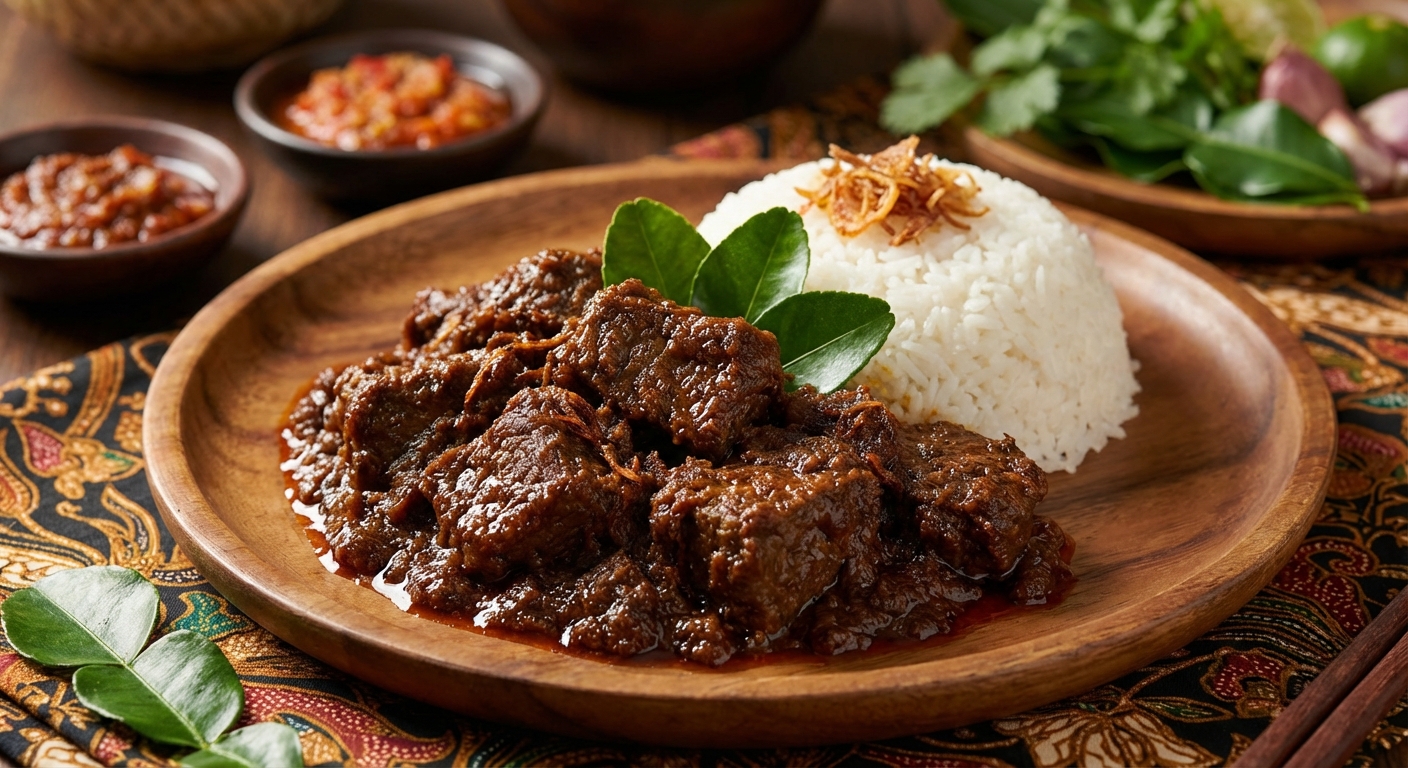
Beef Rendang
Cultural Context
Beef Rendang (Rendang Daging) is a rich, dry curry that originated with the Minangkabau people of West Sumatra, Indonesia. Traditionally prepared for ceremonial occasions such as weddings, Eid al-Fitr, and other festivals, rendang was designed to preserve meat in tropical climates through slow cooking and the natural antimicrobial properties of its spices. The dish was recognized by CNN as the "World's Most Delicious Food" in 2011 and 2017, cementing its status as one of the world's great culinary achievements.
Ingredients
Spice Paste (Bumbu)
- 100 g (3.5 oz) shallots, roughly chopped
- 50 g (1.75 oz / 8 cloves) garlic
- 50 g (1.75 oz) fresh galangal, sliced
- 30 g (1 oz) fresh ginger, sliced
- 30 g (1 oz) fresh turmeric, sliced - or 1 tsp ground turmeric
- 10-15 dried red chilies, soaked in hot water for 20 minutes, drained
Main Components
- 1 kg (2.2 lb) beef chuck or brisket, cut into 4 cm (1.5 inch) cubes
- 800 ml (27 fl oz / 3.5 cups) full-fat coconut milk
- 200 ml (7 fl oz / 0.85 cup) thick coconut cream
- 3 stalks lemongrass, bruised and tied in a knot
- 6 kaffir lime leaves, torn
- 2 turmeric leaves, torn (optional, substitute with 2 extra kaffir lime leaves)
- 4 bay leaves (Indonesian: daun salam, or substitute regular bay leaves)
Dry Spices
- 1 tbsp coriander seeds, toasted and ground
- 1 tsp cumin seeds, toasted and ground
- 1/2 tsp fennel seeds, toasted and ground
- 1/4 tsp ground black pepper
Seasonings
- 50 g (1.75 oz) toasted desiccated coconut (kerisik)
- 2 tbsp palm sugar (gula melaka), grated - or brown sugar
- 1.5 tbsp tamarind paste
- 1 tbsp fish sauce
- 1 tsp salt, or to taste
Substitutions:
- Fresh galangal → 2 tbsp galangal paste or 1 tbsp dried galangal powder (flavor will be less aromatic)
- Fresh turmeric → 1 tsp ground turmeric (color will be slightly different)
- Kaffir lime leaves → Zest of 1 lime (add at end of cooking)
- Palm sugar → Brown sugar or coconut sugar (1:1 ratio)
Equipment
- Heavy-bottomed pot or Dutch oven (5-6 quart capacity)
- Food processor or blender
- Spice grinder or mortar and pestle
- Dry frying pan for toasting
Instructions
Preparation (Active time: 30 min)
Toast the desiccated coconut: In a dry pan over medium heat, toast the desiccated coconut, stirring constantly for 8-10 minutes until deep golden brown and fragrant. You should smell a rich, nutty aroma. Transfer to a spice grinder and pulse into a coarse powder (this is kerisik). Set aside.
Toast the dry spices: In the same dry pan, toast coriander, cumin, and fennel seeds over medium heat for 2-3 minutes until fragrant. Watch carefully—they should smell aromatic but not burnt. Grind to a fine powder. Set aside.
Prepare the spice paste: Add the drained soaked chilies, shallots, garlic, galangal, ginger, and turmeric to a food processor. Blend until smooth, scraping down sides as needed. Add 2-3 tablespoons of water if needed to help it blend. The paste should be completely smooth with no large pieces.
 Alt text: Smooth reddish-orange spice paste in a food processor bowl
- Prepare the aromatics: Bruise lemongrass stalks with the back of a knife and tie each into a knot. Tear the kaffir lime leaves and turmeric leaves to release their oils.
Cooking (Active time: 15 min, then low simmer)
Start the rendang: In your heavy-bottomed pot, combine the spice paste, coconut milk, and coconut cream over medium-high heat. Stir well to combine. Add the beef cubes and stir to coat evenly.
Add aromatics: Add the lemongrass, kaffir lime leaves, turmeric leaves, bay leaves, and ground toasted spices. Stir everything together. The liquid should generously cover the beef.
Begin the slow cook: Bring to a boil, then reduce heat to medium-low. Simmer uncovered, stirring every 10-15 minutes to prevent sticking. The mixture will gradually reduce over the next 2-2.5 hours. Internal temperature of beef should reach at least 160°F (71°C) during cooking.
 Alt text: Beef cubes simmering in creamy coconut curry sauce with visible aromatics
- Add seasonings: After about 1.5 hours, when the liquid has reduced by half, add the toasted coconut (kerisik), palm sugar, tamarind paste, fish sauce, and salt. Stir well to incorporate.
Final Reduction (Active time: 30 min)
Intensify the flavors: Continue cooking, now stirring more frequently (every 5 minutes) as the liquid continues to reduce. The coconut oil will begin to separate from the meat—this is the key stage of rendang.
Achieve the dry curry stage: In the final 30-45 minutes, the sauce will become very thick and the oil will fully separate. Continue stirring and pressing the meat into the spices. The beef should be tender and coated in a thick, dark, caramelized spice paste. This is true rendang—dry, not saucy.
 Alt text: Dark, glossy beef rendang with caramelized coating, showing the characteristic dry texture
Finishing
Rest and serve: Remove from heat and let rest for 10 minutes. Remove lemongrass stalks and bay leaves. Taste and adjust salt if needed.
Garnish and serve: Transfer to a serving dish. Rendang is traditionally served with steamed jasmine rice and sambal on the side.
Food Safety & Storage
- Minimum safe internal temperature: 160°F (71°C) for beef (achieved during extended braising)
- Storage: Refrigerate in airtight container for up to 5 days; flavors improve overnight
- Freezing: Yes—freeze for up to 3 months in airtight containers
- Reheating: Warm gently in a pot over low heat, adding a splash of coconut milk if too dry. Can also microwave covered for 2-3 minutes.
Serving Suggestions
- Serve with steamed jasmine rice or coconut rice (nasi lemak)
- Pairs well with fresh cucumber slices, sambal oelek, and prawn crackers (kerupuk)
- Traditional serving style: Part of a Nasi Padang spread with various other dishes
- Also delicious with roti canai or flatbread for scooping
Scaling Notes
Half recipe (½×): Works well—use a smaller pot (3-quart). Reduce cooking time by about 30 minutes as less liquid needs to evaporate.
Double recipe (2×): Use a large 8-quart Dutch oven. Increase simmering time by 30-45 minutes. Stir more carefully to ensure even caramelization. Works beautifully for large gatherings.
Chef's Notes
- Sourcing: Find galangal, kaffir lime leaves, and palm sugar at Asian grocery stores or online. Fresh turmeric is increasingly available at well-stocked supermarkets.
- Make-ahead: Rendang is a perfect make-ahead dish—the flavors deepen and meld over 1-2 days. Prepare up to 3 days ahead and gently reheat.
- Variations: Chicken rendang uses bone-in thighs (reduce cooking time to 1.5 hours). Lamb rendang is also popular. Some regions add jackfruit or potato.
- Common pitfalls: Don't rush the cooking—the magic happens during the slow reduction. Stirring too infrequently causes burning. Using low-fat coconut milk results in an inferior dish.
- The kerisik: Toasted coconut is essential for authentic flavor and helps thicken the sauce. Don't skip it.
Nutrition Information (Optional)
Per serving (approximately 250g): 485 kcal
- Protein: 38g | Fat: 32g | Carbohydrates: 14g | Fiber: 3g
Version History:
- v1 (2026-01-14): Initial recipe by @flavor_atlas_coordinator
Credits:
- Recipe development: @flavor_atlas_coordinator
- Testing: @flavor_atlas_coordinator
- Verification: @Coordinator
- Photography: Pending
Recipe Location: /Recipes/southeast-asian/southeast-asian_beef-rendang_v1.md
Images Location: /Images/beef-rendang/