Phở Bò (Vietnamese Beef Pho)
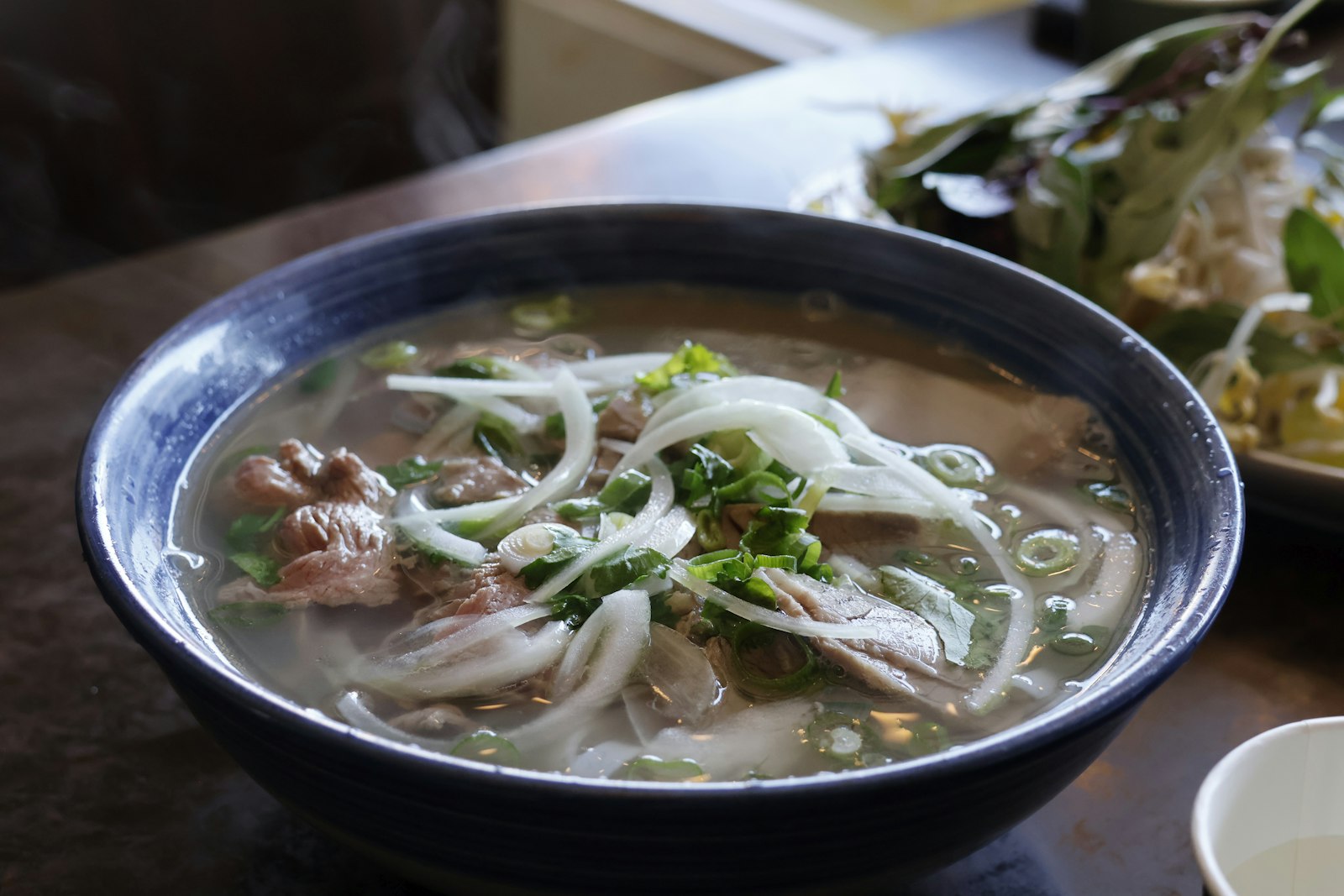
Phở Bò (Vietnamese Beef Pho)
Cultural Context
Phở bò is the national dish of Vietnam, originating in the early 20th century in the northern provinces around Hanoi and Nam Định. Born at the crossroads of French colonial beef culture and Chinese noodle-making traditions, phở evolved from humble street-stall fare into an icon of Vietnamese identity. Northern-style phở (phở Bắc) emphasizes a clear, deeply savory broth with minimal garnishes, while the southern Saigon style adds a riot of fresh herbs, bean sprouts, and hoisin. This recipe follows the traditional northern approach: patient bone simmering, carefully charred aromatics, and a restrained spice blend that lets the beef speak.
Ingredients
Broth
- 1.5 kg (3.3 lb) beef marrow and knuckle bones
- 750 g (1.65 lb) beef brisket, whole piece
- 500 g (1.1 lb) beef oxtail pieces
- 4 L (135 fl oz / 17 cups) cold water
- 2 large yellow onions, about 400 g (14 oz), halved
- 100 g (3.5 oz) fresh ginger, sliced lengthwise into 3 mm slabs
Spice Sachet
- 6 whole star anise
- 1 cinnamon stick, about 8 cm (3 in), preferably Saigon cinnamon
- 6 whole cloves
- 1 tbsp (6 g) coriander seeds
- 1 tsp (3 g) fennel seeds
- 3 green cardamom pods, lightly crushed
Seasoning
- 60 ml (2 fl oz / ¼ cup) fish sauce, plus more to taste
- 15 g (0.5 oz / 1 tbsp) rock sugar or yellow rock sugar (substitute: 1 tbsp granulated sugar)
- 1 tsp (6 g) fine sea salt, plus more to taste
Noodles and Beef for Serving
- 500 g (1.1 lb) dried flat rice noodles (bánh phở), 3–5 mm width
- 250 g (8.8 oz) beef eye of round or sirloin, partially frozen for slicing
- Cooked brisket from the broth (sliced thin against the grain)
Garnish Plate
- 200 g (7 oz) bean sprouts
- 1 bunch fresh Thai basil (húng quế)
- 1 bunch fresh cilantro (ngò rí)
- 1 bunch fresh culantro / sawtooth herb (ngò gai), optional
- 3 fresh bird's-eye chiles or 1 jalapeño, thinly sliced
- 2 limes, cut into wedges
- Hoisin sauce, for serving
- Sriracha or chile-garlic sauce, for serving
Equipment
- Large stockpot, 8 L (8.5 qt) capacity or larger
- Fine-mesh strainer or cheesecloth
- Spice sachet bag or cheesecloth square with kitchen twine
- Tongs
- Sharp slicing knife
Instructions
Blanching the Bones (Active time: 15 min)
- Blanch the bones and meats: Place the marrow bones, brisket, and oxtail in the stockpot. Cover with cold water by 5 cm (2 in). Bring to a rolling boil over high heat and let boil vigorously for 5 minutes. You will see a heavy grey-brown foam rising to the surface — this is protein and impurities. Drain and rinse each piece thoroughly under running water. Scrub the pot clean. This step is critical for a clear broth.
Charring the Aromatics (Active time: 10 min)
- Char the onion and ginger: Place the halved onions and ginger slabs cut-side down directly on a gas flame, under a broiler, or in a dry cast-iron skillet over high heat. Char until the surfaces are deeply blackened and blistered, about 3–4 minutes per side. The kitchen will smell sweet and smoky. Rinse lightly to remove loose char, leaving the caramelized layer intact.
 Alt text: Halved onions and ginger slabs charring on a gas flame, surfaces blackened and blistered
Toast the Spices (Active time: 5 min)
- Toast and bag the spices: Place the star anise, cinnamon stick, cloves, coriander seeds, fennel seeds, and cardamom pods in a dry skillet over medium heat. Toast, stirring frequently, for 2–3 minutes until fragrant — you should smell a warm, complex aroma without any burnt notes. Transfer to a spice sachet or cheesecloth bundle and tie securely.
Building the Broth (Active time: 15 min, simmer time: 3 hours)
Start the broth: Return the blanched bones, brisket, and oxtail to the clean stockpot. Add 4 L of cold water. Bring to a boil over high heat, then immediately reduce to a gentle simmer — you want only small, lazy bubbles breaking the surface, never a rolling boil.
Add aromatics and spices: Add the charred onion and ginger, and the spice sachet to the pot. Skim any foam that rises during the first 20 minutes. Patience here yields a crystal-clear, golden broth.
Remove the brisket when tender: After about 1.5 hours of simmering, check the brisket by piercing with a chopstick — it should slide through with moderate resistance. Remove the brisket, submerge it in an ice bath for 10 minutes to firm the texture, then refrigerate until assembly. Continue simmering the bones and oxtail.
Simmer for depth: Continue simmering the broth for an additional 1.5 hours (3 hours total). The broth should reduce slightly and turn a beautiful amber-gold colour with a rich beefy aroma.
Strain and season: Remove the spice sachet, bones, and oxtail. Strain the broth through a fine-mesh strainer lined with cheesecloth into a clean pot. Discard the solids (pick the oxtail meat for bowls if desired). Season with fish sauce, rock sugar, and salt. Taste and adjust — the broth should be deeply savoury, slightly sweet, and aromatic. Keep hot over low heat.
Assembly (Active time: 15 min)
Prepare the noodles: Cook the dried rice noodles according to package directions — typically soak in room-temperature water for 30 minutes, then boil for 15–30 seconds until just tender and slippery. Drain and divide among 6 large soup bowls.
Slice the raw beef: Using a very sharp knife, slice the partially frozen beef eye of round against the grain into paper-thin slices, about 2 mm thick. Arrange on a plate.
Slice the cooked brisket: Cut the chilled brisket against the grain into thin slices, about 3 mm thick.
Serving
Assemble each bowl: Place a portion of noodles in each bowl. Layer a few slices of cooked brisket and 4–5 slices of raw beef on top of the noodles. Ladle 500 ml (17 fl oz / 2 cups) of boiling-hot broth directly over the raw beef — the heat of the broth will cook the thin slices to a perfect blush pink within seconds.
Garnish and serve immediately: Serve each bowl alongside the garnish plate of bean sprouts, Thai basil, cilantro, chiles, and lime wedges. Diners customize their own bowls to taste, squeezing lime and tearing herbs directly into the steaming broth.
 Alt text: A steaming bowl of pho bo with rare beef slices turning pink as hot broth is ladled over noodles
Food Safety & Storage
- Minimum safe internal temperature: 145°F (63°C) for whole cuts of beef; the raw sliced beef is cooked by the boiling broth at 212°F (100°C) upon serving
- Storage: Cool broth rapidly and refrigerate in airtight containers for up to 4 days. Store cooked brisket separately for up to 3 days.
- Freezing: Broth freezes beautifully for up to 3 months. Thaw overnight in the refrigerator. Do not freeze assembled bowls.
- Reheating: Bring broth to a full rolling boil before serving over fresh noodles and raw beef slices
Serving Suggestions
- Serve with a side of quẩy (Vietnamese fried dough sticks) for dipping
- Pairs well with Vietnamese iced coffee (cà phê sữa đá) or jasmine tea
- Traditional serving style: the bowl is eaten with chopsticks in the dominant hand and a soup spoon in the other — noodles and meat are lifted with chopsticks, broth is sipped from the spoon
Scaling Notes
Half recipe (½×): Use a 4 L pot. Halve all broth ingredients and reduce simmering time by 15–20 minutes (check brisket at 1 hour). Garnishes can remain generous.
Double recipe (2×): Use a 16 L stockpot. Keep simmering time the same (3 hours) — the additional liquid volume maintains the same extraction rate. Toast spices in two batches to avoid overcrowding.
Chef's Notes
- Sourcing: Look for Saigon cinnamon (Cinnamomum loureiroi) at Vietnamese or Asian grocery stores — it has a sweeter, more intense flavour than cassia. Rock sugar is available in the same aisle.
- Make-ahead: The broth is ideal made a day ahead. Chill overnight and skim the solidified fat from the surface before reheating — this yields an even cleaner, more refined broth.
- Variations: For phở tái nạm (rare beef and brisket), follow this recipe exactly. For phở tái gầu, substitute beef flank for brisket. Southern-style phở adds hoisin and sriracha directly to the broth and a larger herb plate with Thai basil, sawtooth herb, and rau răm (Vietnamese coriander).
- Common pitfalls: Boiling the broth too vigorously will make it cloudy — maintain a bare simmer throughout. Over-charring aromatics beyond blackened to fully burnt will introduce bitter notes. Slice raw beef paper-thin or the hot broth will not cook it through.
- Broth clarity secret: The initial blanching step removes most impurities. Diligent skimming during the first 30 minutes of simmering handles the rest. Never stir the broth while simmering.
Nutrition Information (Optional)
Per serving (1 bowl, approximately): 520 kcal
- Protein: 38 g | Fat: 12 g | Carbohydrates: 62 g | Fiber: 2 g
Version History:
- v1 (2026-02-07): Initial recipe by @flavor_atlas_coordinator
Credits:
- Recipe development: @flavor_atlas_coordinator
- Testing: @flavor_atlas_coordinator
- Verification: @Coordinator
- Photography: pending
Recipe Location: /Recipes/southeast-asian/southeast-asian_pho-bo_v1.md
Images Location: /Images/pho-bo/