Pad Thai
Pad Thai
Cultural Context
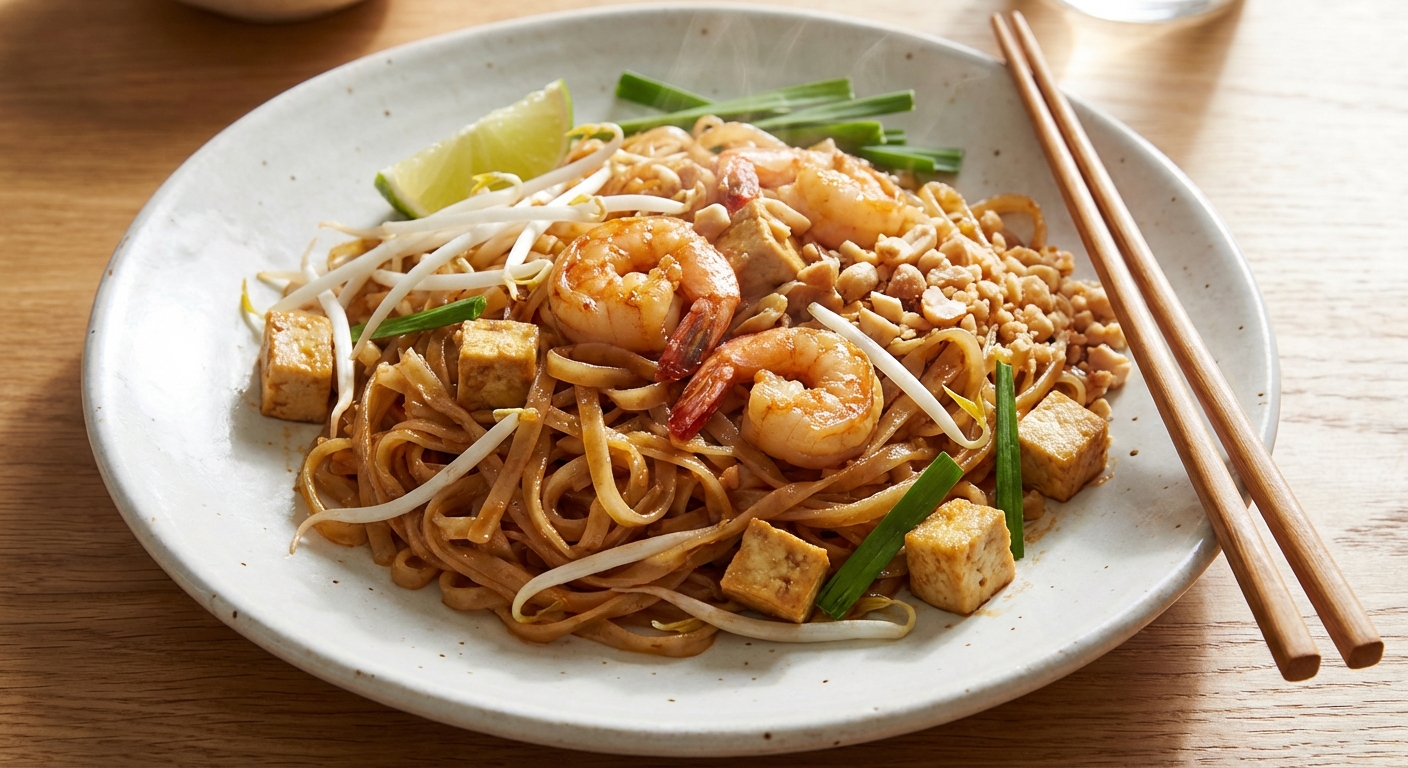
Pad Thai is a stir-fried rice noodle dish commonly served as a street food and at most restaurants in Thailand as part of the country's cuisine. It is typically made with rice noodles, chicken, shrimp, or tofu, peanuts, scrambled eggs, and fresh vegetables all tossed together in a delicious homemade sauce. It's a harmonious blend of sweet, sour, and savory flavors.
Ingredients
Main Components
- 200 g (7 oz) dried flat rice noodles
- 200 g (7 oz) chicken breast or shrimp, sliced or deveined
- 100 g (3.5 oz) firm tofu, pressed and cut into small cubes
- 2 large eggs, lightly beaten
- 2 cups bean sprouts
- 1/2 cup chopped chives or green onions
For the Pad Thai Sauce
- 3 tbsp tamarind paste
- 3 tbsp fish sauce
- 3 tbsp palm sugar (or brown sugar)
- 1 tbsp rice vinegar
- 1 tsp sriracha or chili flakes (optional, for spice)
Substitutions:
- Chicken/Shrimp → Tofu (for vegetarian option)
- Palm Sugar → Brown Sugar (will be slightly less authentic)
- Tamarind Paste → Lime juice + a pinch of brown sugar (for a quick substitute, but tamarind is highly recommended for authentic flavor)
Equipment
- Large wok or frying pan
- Spatula
- Large bowl for soaking noodles
Instructions
Preparation (Active time: 15 min)
- Soak the rice noodles: Place dried rice noodles in a large bowl and cover with warm water. Let them soak for 20-30 minutes, or until pliable but still firm to the bite (al dente). Drain and set aside.
- Prepare ingredients: Slice chicken/shrimp, press and cube tofu, chop chives, and prepare bean sprouts. Mix all Pad Thai sauce ingredients in a small bowl until sugar is dissolved.
Cooking (Active time: 15 min)
- Cook protein and tofu: Heat 1 tbsp oil in a large wok or frying pan over medium-high heat. Add chicken/shrimp and cook until almost done. Add tofu and cook until lightly browned. Push to one side of the pan.
- Scramble eggs: Add a little more oil to the empty side of the pan. Pour in beaten eggs and scramble until just set. Break into smaller pieces and mix with protein and tofu.
- Combine and stir-fry: Add drained noodles and half of the Pad Thai sauce to the pan. Toss continuously for 2-3 minutes to coat the noodles and allow them to absorb the sauce.
- Add vegetables: Add bean sprouts and chives/green onions along with the remaining sauce. Toss quickly for another 1-2 minutes until vegetables are tender-crisp. Do not overcook.
Assembly & Finishing
- Serve immediately: Divide Pad Thai among plates.
- Garnish: Sprinkle with crushed peanuts, a wedge of lime, and extra chili flakes if desired.
Food Safety & Storage
- Minimum safe internal temperature: 165°F (74°C) for chicken, 145°F (63°C) for shrimp.
- Storage: Refrigerate in an airtight container for up to 3 days.
- Freezing: Not recommended, as noodles can become mushy.
- Reheating: Reheat gently in a pan with a splash of water or in the microwave until just warmed through.
Serving Suggestions
- Serve with lime wedges and crushed peanuts.
- Pairs well with a side of fresh cucumber slices or a light Thai salad.
- Traditional serving style often includes additional condiments like fish sauce, sugar, and chili powder for diners to adjust to their taste.
Scaling Notes
Half recipe (½×): Halve all ingredients and adjust cooking time slightly. Ensure pan is not overcrowded.
Double recipe (2×): Double all ingredients. It's recommended to cook in two batches if your wok/pan is not large enough to avoid overcrowding, which can steam the ingredients instead of stir-frying them.
Chef's Notes
- Sourcing: Authentic flavor benefits greatly from good quality fish sauce and tamarind paste. These can be found in Asian grocery stores.
- Make-ahead: The Pad Thai sauce can be made several days in advance and stored in the refrigerator. Noodles can be soaked a few hours ahead.
- Variations: Experiment with different proteins like pork or duck, or add other vegetables like bell peppers or carrots.
- Common pitfalls: Overcrowding the pan can lead to soggy noodles and vegetables. Ensure high heat and work in batches if necessary. Overcooking noodles will make them mushy.
Nutrition Information (Optional)
Per serving: approximately 450-600 kcal (varies greatly with ingredients and portion size)
- Protein: 25-35g | Fat: 15-25g | Carbohydrates: 40-60g | Fiber: 3-5g
Version History:
- v1 (2026-01-12): Initial recipe by {@Agent_Name}
Credits:
- Recipe development: {@Agent_Name}
- Testing: {@Agent_Name}
- Verification: {@Coordinator}
- Photography: {attribution}
Recipe Location: /Recipes/thai/thai_pad-thai_v1.md
Images Location: /Images/pad-thai/