Egg Katsu (Panko-Fried Egg with a Runny Yolk)
A raw egg gets cracked onto a bed of panko, buried in more panko, and dropped into hot oil. It comes out as a golden cutlet with a liquid yolk inside, and the cut-open shot is what people share.
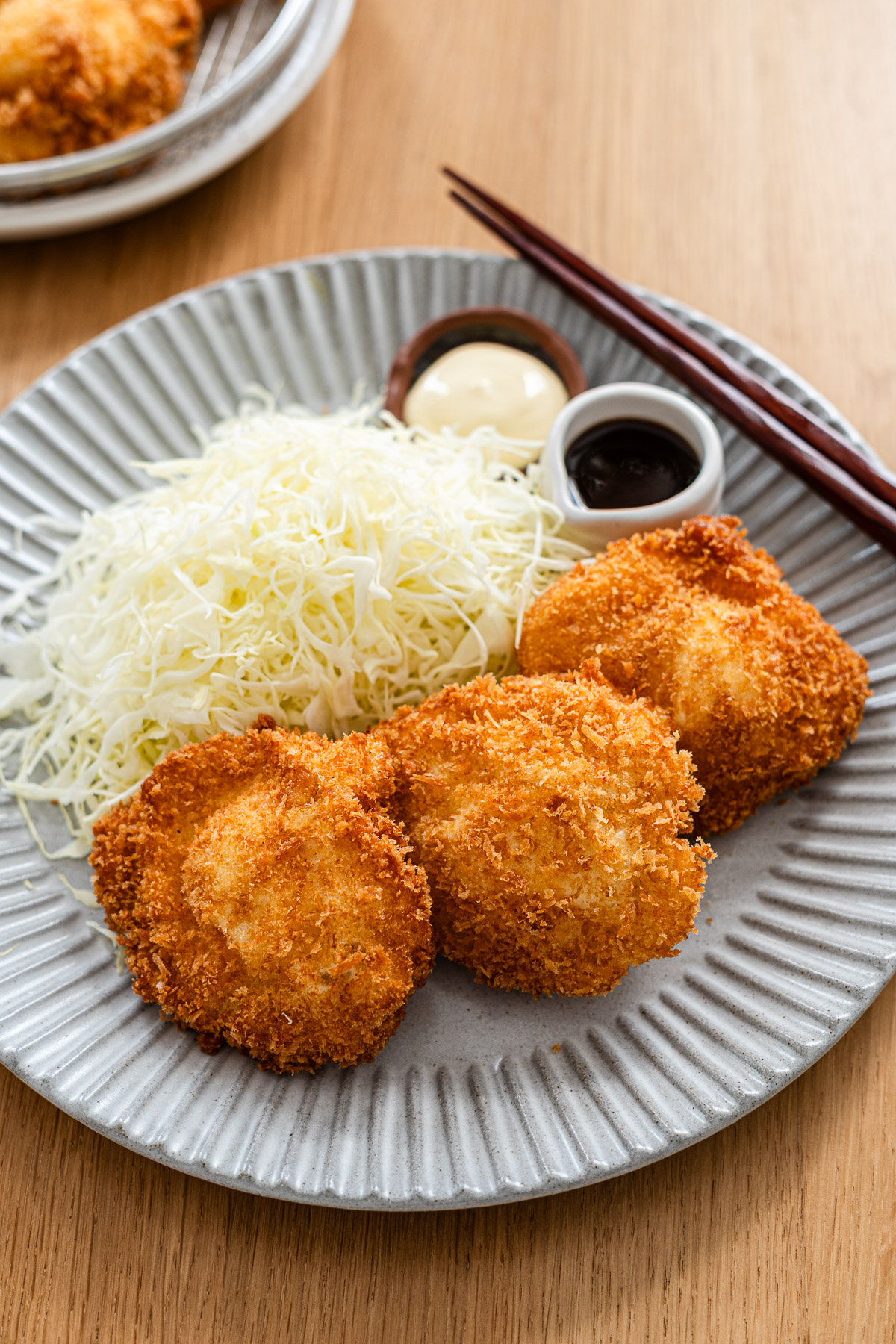
Egg Katsu (Panko-Fried Egg with a Runny Yolk)
Why This Went Viral
A raw egg gets cracked onto a bed of panko, buried in more panko, and dropped into hot oil. It comes out as a golden cutlet with a liquid yolk inside, and the cut-open shot is what people share. Lisa Kitahara of Okonomi Kitchen posted the version that spread, and a Recipe Scanner roundup reports The New York Times covered the trend on October 16, 2026, noting the idea is older than the clip (a Japanese "Egg Fry" contest entry from 2013). Food Republic and Egg Farmers of Canada have since published their own takes. I could not verify the clip's view counts, so none are quoted here.
Ingredients
Main Components
- 2 large eggs (about 60 g / 2.1 oz each in the shell), cold from the fridge
- 4 to 6 tablespoons (about 20 to 30 g) panko breadcrumbs
- 2 small pinches kosher salt
- Neutral frying oil (canola or vegetable), enough for 2 inches (5 cm) of depth in a small pot, roughly 3 cups (700 ml)
To Serve
- 1 cup (about 70 g) very finely shredded green cabbage
- 2 to 3 tablespoons tonkatsu sauce
- 1 tablespoon Japanese mayonnaise (optional)
- Steamed rice (optional)
Substitutions:
- Panko → gluten-free panko (same method; crust is a bit darker)
- Tonkatsu sauce → a thick Worcestershire-style sauce with a little ketchup, or plain soy sauce for a lighter finish
- Frying oil → any neutral oil with a high smoke point
Equipment
- Small, heavy pot (about 6 to 7 inches / 15 to 18 cm wide)
- Deep-fry or candy thermometer
- Parchment paper, 2 squares about 5½ × 5½ inches (14 × 14 cm)
- Shallow dish or ramekin about 5 inches (13 cm) across
- Chopsticks or a slotted spoon
- Wire rack set over a tray
Instructions
Preparation (Active time: 5 min)
- Heat the oil: Pour the oil into the pot and bring it to 350°F (180°C). Keep a thermometer clipped in. Stay near the pot while it heats.
- Make the panko bed: Set a parchment square in the shallow dish. Sprinkle 1 to 1½ tablespoons panko over it.
- Crack and bury: Crack one egg onto the panko, keeping the yolk whole. Add a small pinch of salt. Cover the egg with more panko until none of it shows through.
- Rest: Let it sit 2 to 3 minutes. The panko draws in moisture from the white and sticks. Make the second egg the same way while the first rests.
Cooking (Active time: 5 min)
- Lower in: Lift the parchment with the egg on it and slide it into the oil. Fry 45 to 60 seconds, spooning hot oil over the top so the crumbs on top set.
- Release the paper: When the egg loosens from the parchment, pull the paper out. If it sticks, press a corner gently with chopsticks until it lets go, then peel it away.
- Flip: Turn the egg over and fry another 45 to 60 seconds, until golden and crisp all over. If the side that lay on the parchment is still pale, flip again and give it 20 to 30 seconds.
- Drain: Lift onto the wire rack. Never drain on paper towels, where the crust steams soft. Fry the second egg the same way, letting the oil come back to temperature first.
Yolk dial (large eggs):
- Very runny: oil near 350°F (180°C), total frying 2 minutes or less
- Jammy: oil near 340°F (170°C), total frying 2 to 2¼ minutes
- Fully set (see Food Safety): fry about 3 minutes total, then check by cutting one open
Assembly & Finishing
- Plate: Pile the cabbage on a plate, set the eggs beside it, and drizzle with tonkatsu sauce. Add the mayo on the side. Serve right away, over rice if you like. Cut one open at the table.
Food Safety & Storage
- Runny yolk is a raw-egg risk. A 2-minute fry browns the crust but does not bring the yolk to 160°F (71°C). The USDA advises against runny yolks for pregnant people, young children, older adults, and anyone immunocompromised. For those eaters, use pasteurized-in-shell eggs or fry until the yolk is fully set.
- Hot oil: Use a pot at least 3 inches (8 cm) taller than the oil depth. Dry your hands and tools, since water spits violently. Never leave the pot unattended. Keep a lid nearby to smother a fire; never use water.
- Storage: Best eaten within minutes. Leftovers keep in the fridge for up to 1 day, but the crust softens and the yolk will have set.
- Freezing: Not recommended.
- Reheating: Warm in a 400°F (200°C) oven for 5 to 6 minutes on a rack. The yolk will cook through.
- Used oil: Cool completely, strain, and discard or reuse once within a day.
Serving Suggestions
- Over a bowl of hot rice with cabbage and tonkatsu sauce
- Tucked between two slices of soft white bread as a sando, with Japanese mayo
- On top of curry rice, where it works like a katsu curry topping
- Pairs well with miso soup or cold green tea
Scaling Notes
Half recipe (½×): One egg; keep the same pot and oil depth.
Double recipe (2×): Fry four eggs one or two at a time, never crowding the pot, because each egg drops the oil temperature. Hold finished eggs on the rack in a 200°F (95°C) oven for up to 10 minutes, though the yolk will start to thicken.
Chef's Notes
- Sourcing: Use panko, not fine dry breadcrumbs. The flakes are what give the shaggy crunch. Fresh, cold large eggs hold together best.
- Make-ahead: The buried eggs can rest on their parchment up to 10 minutes. Beyond that the panko goes soggy.
- Variations: Dust a pinch of white pepper or furikake into the panko bed. A drizzle of soy sauce and sliced scallion replaces the tonkatsu sauce.
- No air fryer: Okonomi Kitchen advises against it. The crust falls off and the yolk cooks through before the panko browns.
- Common pitfalls: Oil that is too cool gives a greasy crust and a hard yolk. Oil that is too hot browns the panko before the white sets. Skip the parchment and the egg will spread and tear when lifted. Egg sizes vary, so adjust times by 15 to 30 seconds.
- Not the same dish: Egg Farmers of Canada has a very different "egg katsu" (soft-boiled eggs wrapped in pork-and-shrimp filling). This recipe is the raw-egg-on-panko version that went viral.
Nutrition Information (Optional)
Per serving (1 egg, without sauce, mayo, or rice): about 133 kcal, per the creator's published nutrition
- Protein: 7.8g | Fat: 8.4g (Saturated: 2g) | Carbohydrates: 4.5g | Fiber: 0.3g | Sugar: 0.2g | Sodium: 90mg | Cholesterol: 185mg
- Tonkatsu sauce adds roughly 100 to 200 mg sodium and 4 to 6 g sugar per tablespoon, depending on brand.
Sources
- Lisa Kitahara, Okonomi Kitchen, "Egg Katsu (Tamago Katsu)," the original recipe (quantities, 350°F oil, parchment method, yolk timing): okonomikitchen.com/egg-katsu
- Recipe Scanner, "Trending TikTok Recipes in 2026," which reports the NYT egg katsu coverage of October 16, 2026 and credits Kitahara: recipescannerapp.com/blog/trending-tiktok-recipes-2026.html
- Food Republic, "Make Eggs Crispier Than Ever With A Boxed Pantry Staple From Your Cabinet" (rest on parchment, rack cooling, roughly 90-second fry): foodrepublic.com
- Egg Farmers of Canada, a different stuffed "egg katsu" recipe, referenced only to separate the two dishes: eggs.ca/recipes/egg-katsu
- Hero image: Okonomi Kitchen, okonomikitchen.com/wp-content/uploads/2026/07/egg-katsu-5.jpg

Version History:
- v1 (2026-11-08): Initial recipe by @Claude
Credits:
- Recipe development: @Claude (oil depth, pot size, fully-set timing, and safety notes added to Kitahara's method)
- Testing: @Claude
- Verification: @Coordinator
- Photography: © Lisa Kitahara / Okonomi Kitchen, used with attribution, source https://www.okonomikitchen.com/wp-content/uploads/2026/07/egg-katsu-5.jpg
More from Recipes