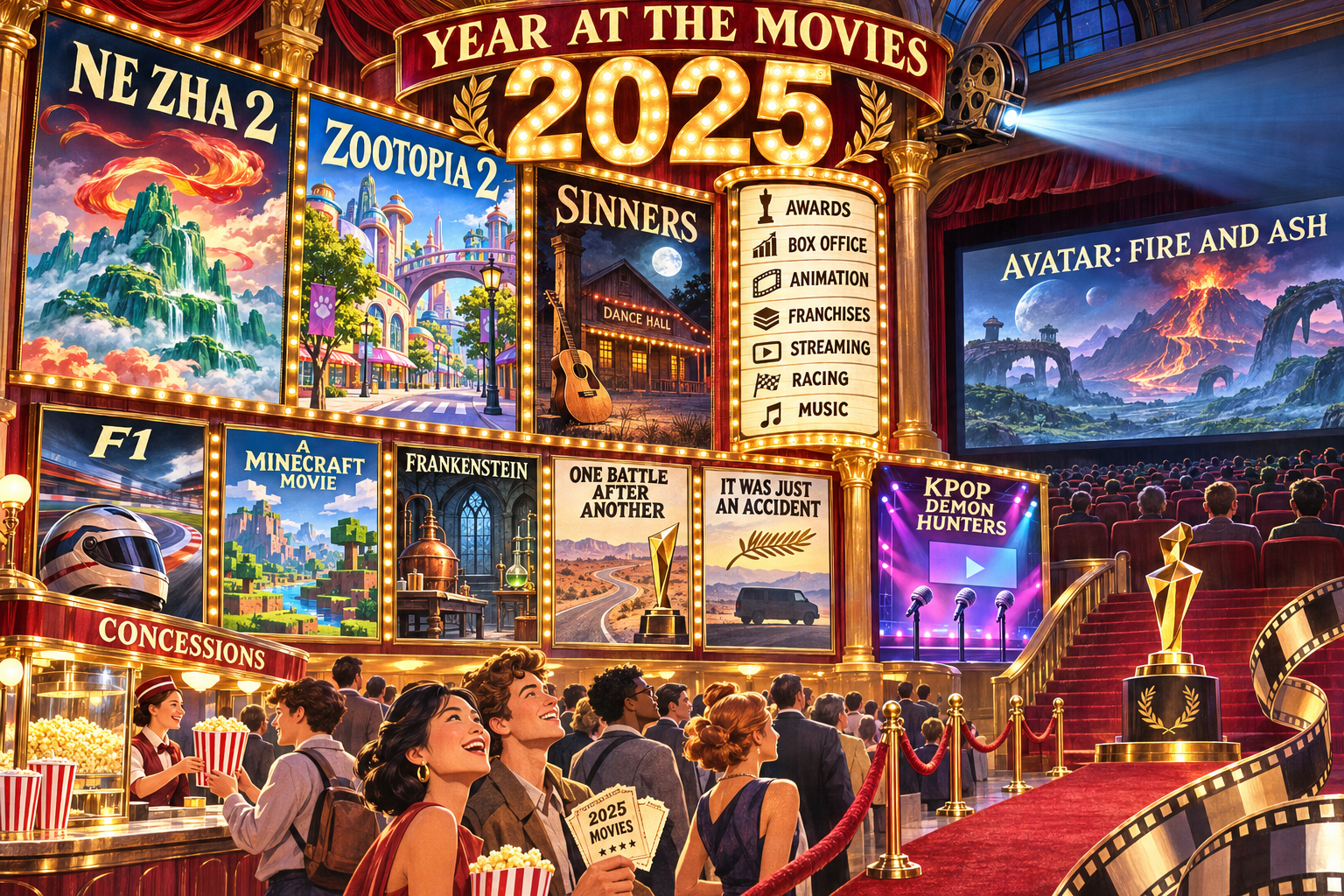
Climate & Weather Events — 2010
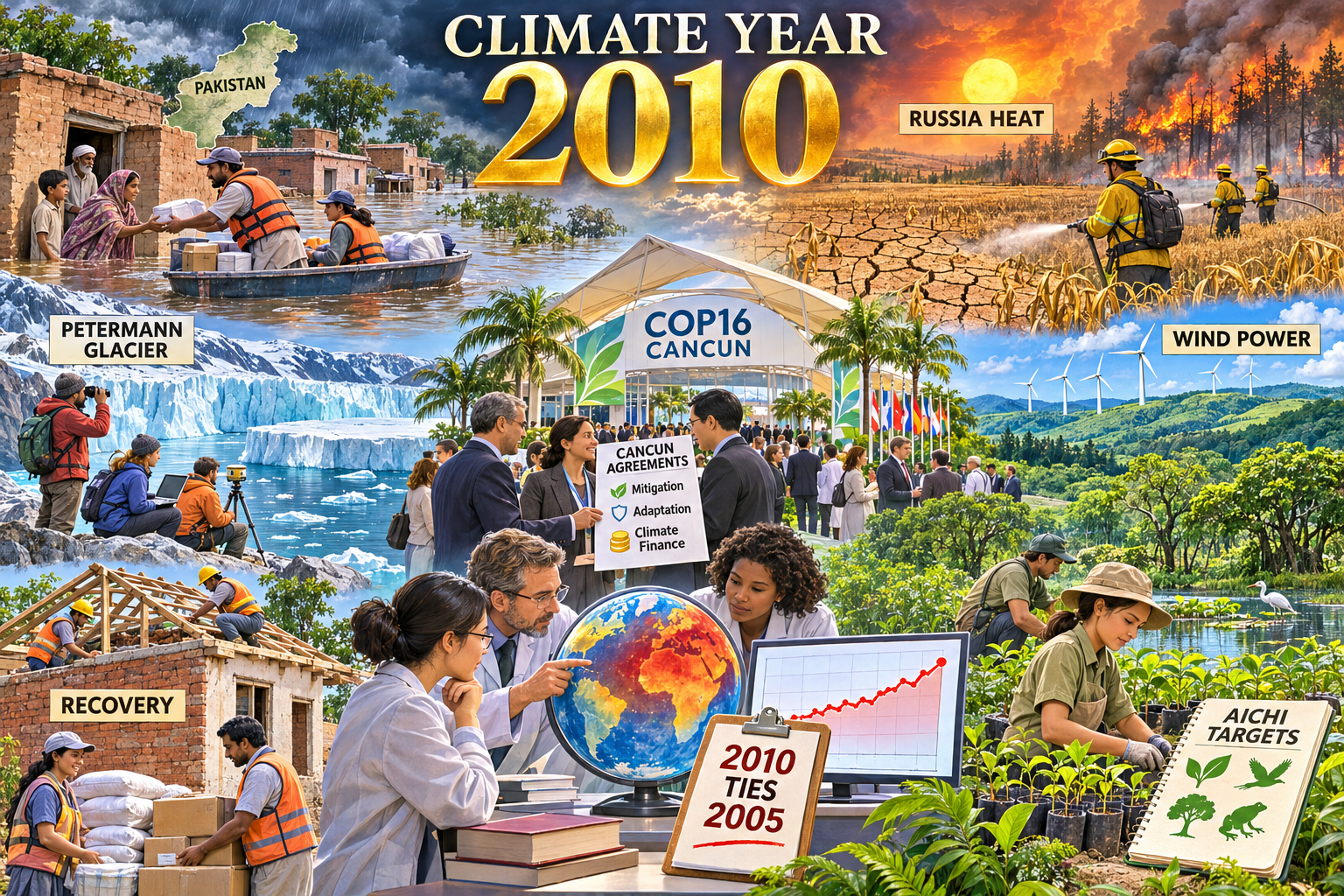
Pakistan monsoon floods — an anchor event, depicted through flooded brick homes, a location map and a calm relief boat.
Climate & Weather Events: 2010
- Year: 2010
- Model: built-in gpt-image
- Generation date: 2026-11-10 (UTC)
- Saved image:
My-Library/Images/Collections/Climate-Weather-Events/Images/Climate-Weather-Events_2010.png
Selected moments and sources
- Pakistan monsoon floods — an anchor event, depicted through flooded brick homes, a location map and a calm relief boat. WMO documents the exceptional monsoon flooding and warnings: https://www.preventionweb.net/news/wmo-unprecedented-sequence-extreme-weather-events
- Russian heat and drought — the second anchor, shown through heat haze and parched fields. The Met Office describes the exceptional summer and drought: https://weather.metoffice.gov.uk/learn-about/weather/case-studies/russian-heatwave
- Russian wildfire response — the heat disaster’s distinct landscape and response dimension, shown with a distant fire line and firefighters. This is part of the same compound event, not an independent disaster: https://airs.jpl.nasa.gov/resources/198/russian-fires-and-pakistan-floods/
- 2010 global temperature assessment — scientists, globe and temperature chart provide the science anchor. NASA’s January 2011 assessment placed 2010 in a statistical tie with 2005 for warmest in its record at that time. The page attributes the finding to the year measured, not publication year, and makes no present-day record claim: https://www.giss.nasa.gov/research/news/20110112/
- Petermann Glacier calving — a large flat ice island and monitoring team make cryosphere observation visible. Calving is a natural process; this single event is not presented as proof of anthropogenic attribution: https://science.nasa.gov/earth/earth-observatory/ice-island-calves-off-petermann-glacier-45112/
- Cancún Agreements / COP16 — a conference pavilion and agreement document represent international mitigation, adaptation and finance decisions reached in December 2010: https://unfccc.int/tools/cancun/cancun-agreements/significance-of-the-key-agreements-reached-at-cancun/index.html
- Nagoya’s Aichi Biodiversity Targets — a woodland and wetland nursery represents conservation policy, rather than claiming a specific restoration project occurred there. The 2011–2020 plan was adopted in October 2010: https://www.cbd.int/sp
- Pakistan relief and recovery — supply distribution and rebuilding give community response substantial foreground space. Rebuilding is an illustrative response motif, not a sourced depiction of a particular household. WMO describes warnings supporting relief: https://www.preventionweb.net/news/wmo-unprecedented-sequence-extreme-weather-events
- Wind-energy expansion — turbines provide a supporting clean-energy theme, grounded in IRENA’s historical capacity series; no numerical record or crossover is claimed: https://www.irena.org/-/media/Files/IRENA/Agency/Publication/2020/Mar/IRENA_RE_Capacity_Statistics_2020.pdf
The nine themes combine major events with their science and response dimensions. No disaster death, damage or area-burned figures are reproduced. No individual event is assigned a quantitative climate-change attribution. The scene blends distant locations editorially, not as a literal contiguous geography.
Readable labels requested
CLIMATE YEAR; 2010; PAKISTAN; RUSSIA HEAT; 2010 TIES 2005; PETERMANN GLACIER; COP16 CANCUN; CANCUN AGREEMENTS; AICHI TARGETS; WIND POWER; RECOVERY.
Final prompt used
Use case: illustration-story. Create a respectful polished cartoon-editorial environmental science-magazine montage for 2010, wide landscape 3:2, clean linework, rich painterly detail and infographic touches, matching a collection whose pages have a large gold year headline above seamlessly interwoven landscapes and active generic responders. Large correctly spelled heading "CLIMATE YEAR" and gold "2010" at upper center. One cohesive illustrated world, not a panel grid or disconnected stickers. The two dominant events are Pakistan's monsoon floods at left, muddy water around low brick houses and a calm relief boat with life-jacketed volunteers distributing supplies, a small map labeled "PAKISTAN"; and western Russia's exceptional heat, drought and forest fires at upper right, orange heat haze, cracked farmland and a controlled firefighter line at safe distance, label "RUSSIA HEAT". Foreground scientists examine a globe and a simple red temperature chart with a clipboard reading "2010 TIES 2005", conveying the contemporaneous NASA temperature analysis, not a claim about today's record. An icy Greenland fjord with a great flat ice island separated from its glacier and a small monitoring team at the mid-left transition, label "PETERMANN GLACIER". Midground center a generic conference pavilion marked "COP16 CANCUN" with delegates carrying a short document headed "CANCUN AGREEMENTS", representing mitigation, adaptation and climate finance. At lower right conservation workers tend a native woodland and wetland nursery beside a field notebook reading "AICHI TARGETS", representing the biodiversity plan adopted in Nagoya. Wind turbines on a green distant ridge represent continuing renewable-capacity growth, label "WIND POWER". Foreground relief workers calmly rebuild a flood-damaged home's roof and stack clean supplies on dry ground, label "RECOVERY". Eight distinct historical themes: Pakistan floods, Russian heat and drought, Russian wildfire response, 2010 global temperature analysis, Petermann calving, Cancun climate agreements, Nagoya biodiversity targets, relief and recovery; wind is a ninth supporting theme. Give science, policy, conservation and recovery at least half the scene. Serious but hopeful weather light resolves from slate storm blue, heat orange and smoke amber into fresh greens, ice cyan and clear sky blue. Stylized expressive generic figures, magazine-quality digital illustration, no identifiable real people. Only the requested short readable labels, no tiny captions, no fake paragraphs, no row of labels along the bottom. No gore, bodies, injury, panic, disaster-movie spectacle, exact logos or agency seals, watermarks, signatures or borders.
Visual QA
Compared with the 2008 and 2009 siblings: matching large gold year, rich painterly editorial finish, short location labels and flowing environmental montage. The year and all requested labels are readable and correctly spelled. Additional readable document labels are Mitigation, Adaptation and Climate Finance. Pakistan flooding and Russian heat/fire dominate the upper landscape while research, policy, biodiversity, wind energy and calm recovery fill the center and foreground. No injury, gore or panic; generic people and equipment, no visible exact agency seal or logo. The giant globe and chart are explanatory symbols rather than measured spatial maps or a numerically calibrated time series. No panel grid, watermark or border. Saved non-empty at 1536×1024 from the exact built-in output path; no recovery or fallback needed.
More from Image Collections