Image Collections
Exoplanets — 07 Kepler 442 b
High-gravity land animals, low-slung, powerful, armored, slow-moving but strong.
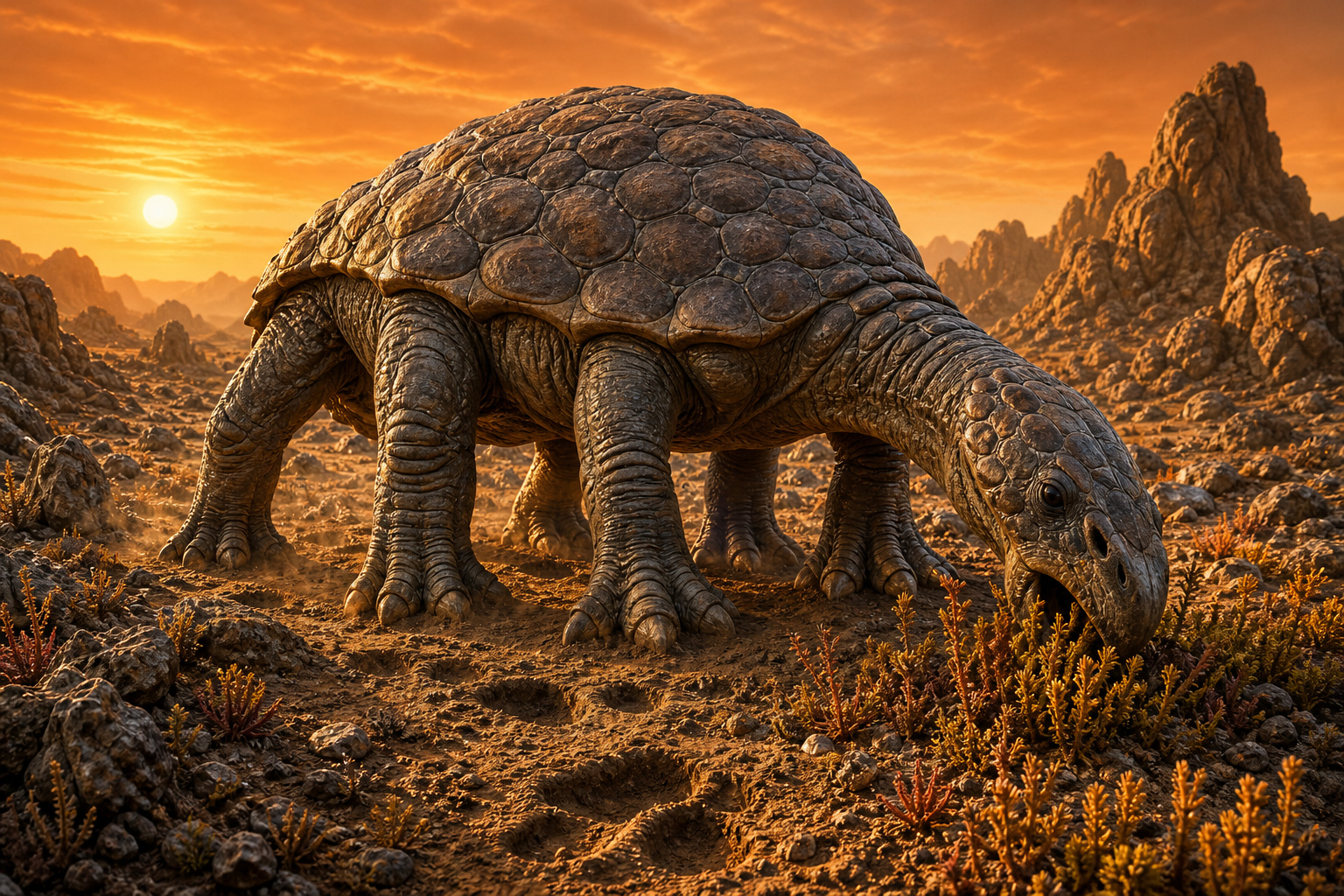
Exoplanets: Kepler-442 b
- Planet: Kepler-442 b
- Sequence: 07
- Saved image path:
My-Library/Images/Collections/Exoplanets/Images/Exoplanets_07-Kepler-442-b.png - Model: built-in gpt-image (recovered from session transcript)
- Generation date: 2026-07-08
Planet Profile
- Planet type: super-Earth
- Host star: K-type star
- Mass: 2.36 Earth masses
- Radius: 1.34 Earth radii
- Orbital period: 112.3 days
- Orbital distance: 0.409 AU
Environment
- Gravity: high
- Light: warmer orange K-star light
- Climate: potentially temperate
- Atmosphere: unknown
- Surface: likely rocky candidate
Creature Design Direction
High-gravity land animals, low-slung, powerful, armored, slow-moving but strong.
Planet / Habitat Depicted
A rocky temperate super-Earth habitat under warm orange K-star light, with dense ground-hugging vegetation analogues, heavy stones, a low horizon, and a powerful six-legged armored browser moving slowly through the landscape.
Sources
- Data provided in the collection plan (
Prompts/generate-exoplanets-collection.md); measurements are from published exoplanet catalogs. No web research performed for this collection.
Final Prompt Used
Create a scientifically plausible alien creature from Kepler-442 b.
A high-gravity alien megafauna creature from Kepler-442 b, orange K-star light, rocky temperate super-Earth, low-slung muscular body, six thick pillar legs, armored back plates, small protected eyes, browsing alien vegetation, realistic xenobiology field guide.

Requirements:
- Body plan reflects the planet's high gravity: short, broad, powerful, low-slung, muscular, and stable; sensory organs reflect warm orange K-star lighting; skin and armor reflect a potentially temperate rocky climate; locomotion fits heavy gravity and uneven rocky terrain.
- Depict the planet as well as the creature: show a rocky super-Earth surface, ground texture, warm orange sky light, atmospheric haze or clarity, horizon, terrain, lighting, and habitat features consistent with a potentially temperate rocky candidate.
- The environment should communicate what kind of world this is even without captions: a high-gravity rocky temperate super-Earth with tough ground-hugging alien vegetation, dense mineral outcrops, and a low, weighty landscape.
- Make creature and environment feel physically connected: heavy footprints pressed into soil, vegetation being browsed, sturdy legs braced against gravity, contact with rock and plants, and dust or pollen disturbed around its feet.
- Use a surface-level habitat view. Do not show the planet itself as a separate sphere in the sky; do not add unexplained moons or extra planets.
- Avoid humanoid anatomy unless scientifically justified.
- Show the creature in its natural habitat with enough space in the frame to read the world around it.
- Style: natural-history field-guide illustration, realistic scientific/anatomical detail, documentary lighting, one unified scene.
- Composition: 3:2 wide landscape; balance a clear creature portrait with a readable planetary landscape. Do not crop so tightly that the world is reduced to a blurred background.
- No text or labels baked into the image. No official logos, no photorealistic real people.
More from Image Collections

Internet Culture Timeline — 2025
2025-01-01

Music Yearbooks — 2025
2025-01-01

News & Culture — 2025
2025-01-01

NFL Super Bowls — 2025
2025-01-01

Science Breakthroughs — 2025
2025-01-01
Transportation & Mobility — 2025
2025-01-01

Video Game History — 2025
2025-01-01

Internet Culture Timeline — 2024
2024-01-01

Music Yearbooks — 2024
2024-01-01

News & Culture — 2024
2024-01-01

NFL Super Bowls — 2024
2024-01-01
Science Breakthroughs — 2024
2024-01-01