Future Cities — Mexico City
Mexico City in 2500 is the Valley of Living Water, a high-altitude metropolis that has repaired its ancient lake basin through restored wetlands, chinampa food belts, rain-capture plazas, and…
Future Cities: Mexico City
- City: Mexico City
- Year: 2500
- Title: The Valley of Living Water
- Style: wide cinematic 16:9 photorealistic future cityscape concept art
- Keywords: Mexico City, Valley of Mexico, Palacio de Bellas Artes, Torre Latinoamericana, Zócalo, Metropolitan Cathedral, Paseo de la Reforma, Xochimilco, chinampas, Popocatépetl, Iztaccíhuatl, aquifer restoration, seismic arcologies, maglev
- Saved image path:
My-Library/Images/Collections/Future-Cities/Images/Future-Cities_Mexico-City.png - Model: built-in gpt-image
- Generation date: 2026-07-25
Vision
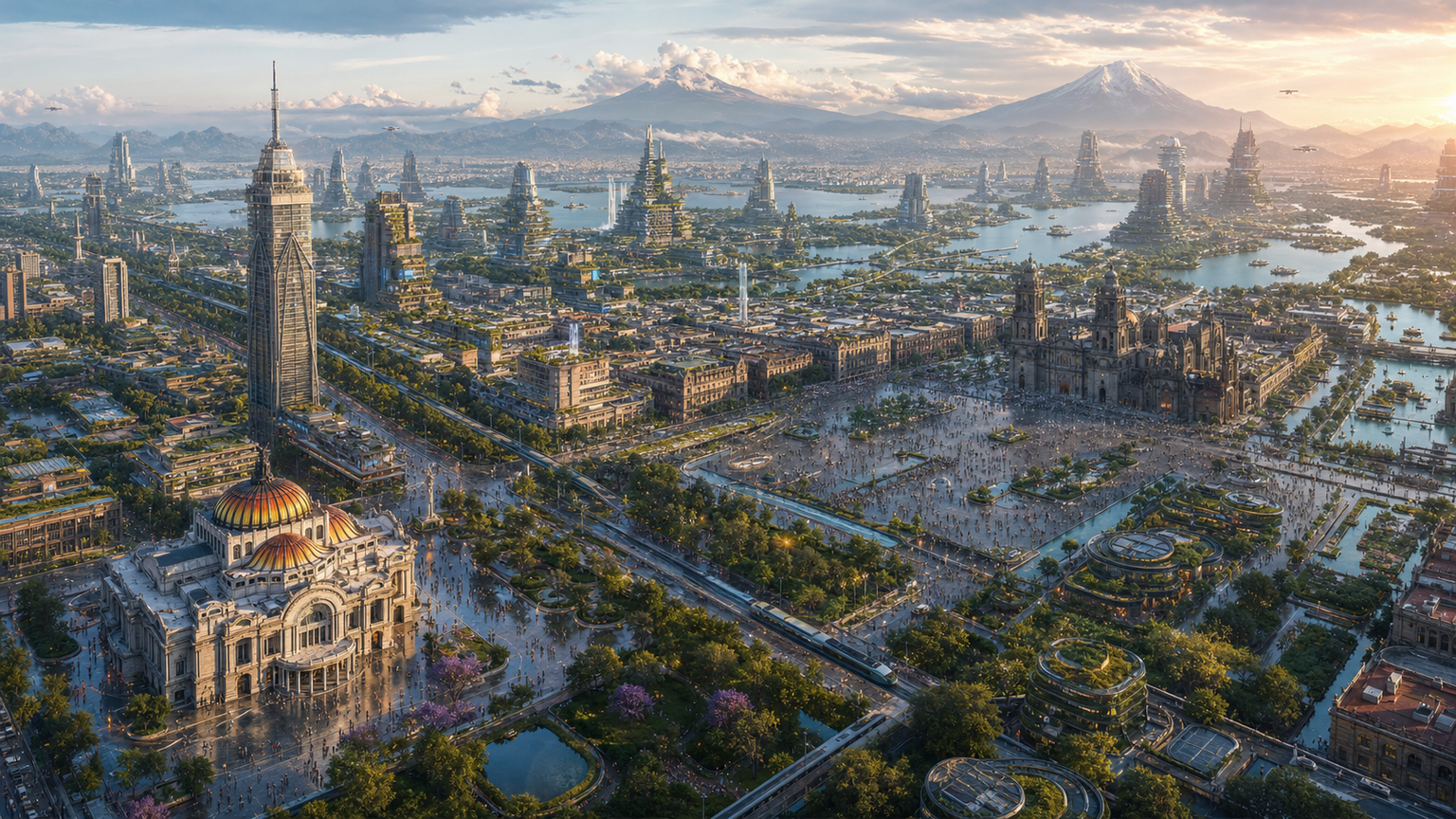
Mexico City in 2500 is the Valley of Living Water, a high-altitude metropolis that has repaired its ancient lake basin through restored wetlands, chinampa food belts, rain-capture plazas, and forested aquifer gardens. Dense seismic-resilient arcologies follow stable corridors while the Palacio de Bellas Artes, Torre Latinoamericana, Zócalo, Metropolitan Cathedral, Paseo de la Reforma, and the paired volcano horizon preserve the city's unmistakable identity. Mexica, colonial, modernist, and future layers coexist in one living civic landscape shaped by water stewardship, clean transit, public gardens, and volcanic materials.
Caption
In 2500, Mexico City restores the living water of its ancient basin, linking Bellas Artes and the Zócalo to chinampa wetlands, seismic arcologies, and the timeless volcano horizon.
Final Prompt Used
Use case: stylized-concept
Asset type: Future Cities collection cinematic cityscape
Primary request: Create ONE ultra-high-definition, photorealistic wide cinematic 16:9 LANDSCAPE cityscape of Mexico City in the year 2500, roughly 475 years in the future. It must remain unmistakably Mexico City rather than a generic science-fiction metropolis. Concept title only, do not bake it into the image: “The Valley of Living Water.”

Vision: In 2500, Mexico City has repaired its ancient lake basin and become a water-wise high-altitude megacity. A network of restored lakes, chinampa wetlands, rain-capture plazas, and forested aquifer gardens reverses centuries of subsidence while dense arcologies rise on geologically stable corridors. The city's layered Mexica, colonial, modernist, and contemporary identity remains visible, woven into seismic-resilient architecture, clean transit, public gardens, and monumental civic spaces.

Scene/backdrop and geography: A sweeping elevated vista from above Alameda Central looking east-southeast at luminous golden-blue dawn after summer rain. In the foreground, the white-marble Palacio de Bellas Artes with its recognizable warm orange-and-gold domed roof is respectfully preserved within lush rain gardens. Nearby, the slender historic Torre Latinoamericana remains a recognizable vertical marker, strengthened by elegant external seismic ribs. Beyond, the immense Zócalo reads clearly as the civic heart, with the Metropolitan Cathedral's twin bell towers and broad façade preserved at one edge, surrounded by layered future public terraces and archaeological gardens. Paseo de la Reforma extends diagonally through the urban fabric as a green transit boulevard, with a restrained distant echo of its famous winged victory monument but no logos or readable signs. Far beyond the dense basin, the paired volcanic silhouettes of Popocatépetl and Iztaccíhuatl define the horizon under clear high-altitude air. Integrate Xochimilco-inspired canals and chinampa geometry as a renewed water network threading through neighborhoods, without unrealistically placing all landmarks beside one canal.

Future systems: terraced seismic-resilient arcologies clad in pale volcanic stone, ceramic, glass, copper, and living vegetation; vast rain-harvesting roofs; restored lake fingers and porous plazas; aquifer recharge gardens; chinampa food belts; solar canopies; geothermal district energy; smog-filtering vertical forests; silent elevated maglev and ground transit following historic avenues; unbranded electric boats on restored waterways; a few restrained aerial maintenance craft; dense crowds at believable city scale; markets, cyclists, public gardens, and autonomous service vehicles. Honor Mexican architectural color and material traditions through deep terracotta, turquoise, volcanic basalt, warm stucco, patterned ceramic, and jacaranda violet, used elegantly rather than as theme-park decoration.

Composition/framing: Exact wide cinematic 16:9 establishing shot, one unified scene, no panels or collage. Dense layered detail from rain-polished Alameda paths and Bellas Artes in the foreground, across Torre Latinoamericana and the historic center, to Zócalo, water-wise arcologies, basin wetlands, and distant volcanoes. Use transit lines and restored waterways to guide the eye. Keep Bellas Artes, Torre Latinoamericana, Zócalo/Cathedral, the basin, and volcano horizon large and geographically legible. Enormous scale, deep atmospheric perspective, professional architectural concept-art composition.

Style/medium: ultra-high-resolution photorealistic architectural visualization blended with premium cinematic future-city concept art; hyper-detailed, sharp focus, physically plausible materials, water engineering, seismic structure, and future urban life. Awe-inspiring, humane, culturally layered, climate-adapted, optimistic; not a cartoon and not neon cyberpunk.

Lighting/mood: golden-blue dawn after monsoon rain, warm peach sunlight touching the Bellas Artes dome and cathedral stone, cool cyan reflections across restored water, jacaranda violet accents, wet basalt paving, thin mist over lake gardens, crisp mountain atmosphere and dramatic clouds opening around the volcanoes.

Color palette: volcanic basalt charcoal, pale limestone, terracotta, oxidized copper, lake turquoise, jacaranda violet, garden green, warm amber interiors, peach dawn, deep cobalt shadows; varied and natural, restrained technology lights.

Constraints: one coherent 16:9 landscape; Mexico City in 2500; recognizable real landmarks and Valley of Mexico geography; no text, no letters, no captions, no readable signs, no flags, no logos, no brands, no watermarks, no borders, no photorealistic real-person likenesses. Avoid generic sci-fi skyline, landmark duplication, incorrect coastal/ocean setting, tropical beach, erased mountains, excessive flying cars, hologram clutter, ruined dystopia, colonial nostalgia, giant pyramids dominating downtown, or placing the volcanoes unrealistically close.
More from Image Collections