Image Collections 1988-01-01
Music Yearbooks — 1988
Tracy Chapman's debut and Fast Car
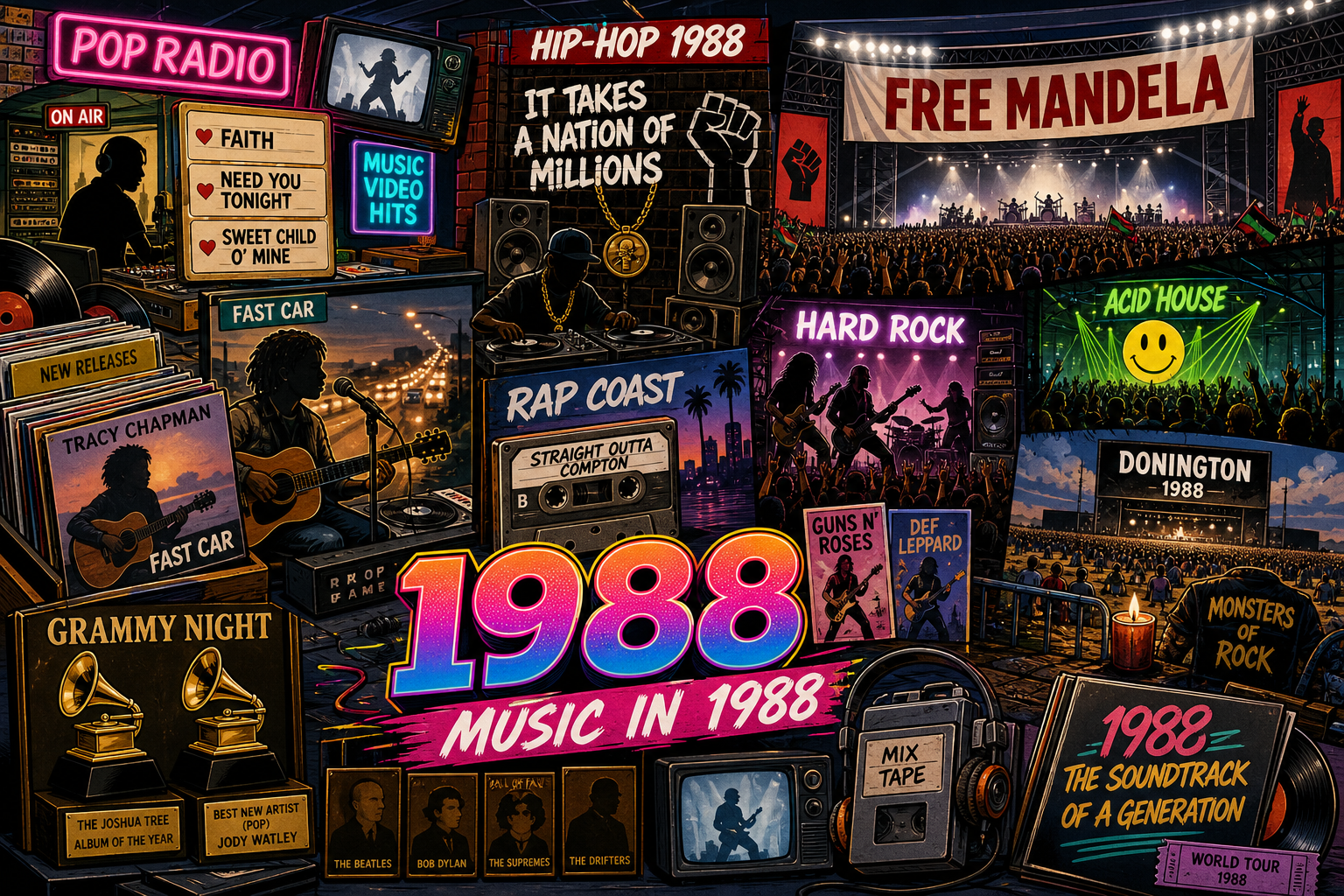
Music Yearbooks: 1988
- Year: 1988
- Generation date: 2026-07-01
- Model: built-in gpt-image (recovered from session transcript)
- Saved image path:
My-Library/Images/Collections/Music-Yearbooks/Images/Music-Yearbook_1988.png
Selected Music Moments
- Pop radio hits
- Category: Chart / radio
- Why selected: 1988's year-end hit landscape included pop, rock, dance-pop, and crossover singles such as
Faith,Need You Tonight, andSweet Child o' Mine. - Visual depiction: Jukebox/radio cards and generic performers.
- Rights/sensitivity notes: No artist likenesses or chart-list reproduction.
- Source: https://en.wikipedia.org/wiki/Billboard_Year-End_Hot_100_singles_of_1988
- Tracy Chapman's debut and
Fast Car- Category: Singer-songwriter / breakthrough album
- Why selected: Chapman's 1988 debut became a major folk-pop breakthrough and Grammy-recognized album.
- Visual depiction: Anonymous acoustic performer, guitar, and highway lights.
- Rights/sensitivity notes: No portrait likeness or album-cover reproduction.
- Source: https://www.allmusic.com/album/tracy-chapman-mw0000199023
- Public Enemy,
It Takes a Nation of Millions to Hold Us Back- Category: Hip-hop album
- Why selected: The 1988 album reshaped the sound and ambition of political hip-hop.
- Visual depiction: Wall of speakers, turntables, and bold civic poster energy.
- Rights/sensitivity notes: No exact album art or performer likenesses.
- Source: https://www.allmusic.com/album/it-takes-a-nation-of-millions-to-hold-us-back-mw0000196315
- N.W.A.,
Straight Outta Compton- Category: West Coast hip-hop
- Why selected: The late-1988 album became an underground breakthrough and a defining rap milestone.
- Visual depiction: Stylized street-studio cassette labeled
RAP COAST. - Rights/sensitivity notes: Avoids explicit lyric text and real-person likenesses.
- Source: https://www.allmusic.com/artist/nwa-mn0000314793
- Hard rock and arena metal on the charts
- Category: Rock / metal
- Why selected: Hard rock and glam-metal sounds remained highly visible in 1988 mainstream music.
- Visual depiction: Anonymous guitar silhouettes, amplifiers, and arena lights.
- Rights/sensitivity notes: Generic performers and props only.
- Sources: https://en.wikipedia.org/wiki/Billboard_Year-End_Hot_100_singles_of_1988 ; https://www.ukrockfestivals.com/donington-1988-vftmud.html
- Acid house / second summer of love
- Category: Dance / club culture
- Why selected: 1988 was a key year for UK acid-house and rave culture.
- Visual depiction: Warehouse dancers, lights, and neutral smiley-style dance symbols.
- Rights/sensitivity notes: Generic dance imagery.
- Source: https://www.allmusic.com/blog/post/allmusic-loves-1988
- Nelson Mandela 70th Birthday Tribute
- Category: Benefit concert / protest music
- Why selected: The Wembley concert connected pop music to the global anti-apartheid campaign.
- Visual depiction: Benefit stadium banner reading
FREE MANDELA. - Rights/sensitivity notes: Symbolic stage depiction; no artist likenesses.
- Source: https://www.aamarchives.org/archive/video/music/vid001-mandela-concert-at-wembley-1988.html
- 1988 Grammy night
- Category: Awards
- Why selected: The 30th Grammys recognized major 1987-1988 pop and rock achievements, including
The Joshua Treeand Jody Watley. - Visual depiction: Gold gramophone-style trophies and awards-night lights.
- Rights/sensitivity notes: Generic trophy, no official Grammy logo.
- Source: https://www.grammy.com/awards/30th-annual-grammy-awards/
- Monsters of Rock Donington 1988
- Category: Festival / live event
- Why selected: The festival is remembered for a major heavy-metal lineup and a tragic crowd-safety turning point.
- Visual depiction: Festival field, safety barrier, and candle, handled respectfully.
- Rights/sensitivity notes: No graphic tragedy or artist likenesses.
- Sources: https://www.ukrockfestivals.com/donington-1988-vftmud.html ; https://www.loudersound.com/features/monsters-of-rock-history-of-the-heavy-metal-festival
- Rock and Roll Hall of Fame 1988 inductees
- Category: Legacy / institutions
- Why selected: The 1988 induction class honored foundational rock and pop acts.
- Visual depiction: Vintage hall-of-fame plaques and oldies silhouettes.
- Rights/sensitivity notes: No likenesses or official marks.
- Sources: https://rockhall.com/inductees/beatles/ ; https://www.imdb.com/title/tt31895074/
Top Anchor Moments
- Pop radio and music-video-era hits
- Landmark hip-hop albums and dance-club culture
- Live music as political benefit, rock festival, and award-night spectacle
Final Prompt Used
Use case: illustration-story
Asset type: year-by-year music yearbook collection image, 3:2 landscape, final gallery image suitable for 1536x1024.
Primary request: Create a vibrant cartoon-editorial music-yearbook montage for the year 1988, showing the landmark albums, hit songs, dominant genres, festivals, awards, tours, and music-business moments that defined the year.

Scene/backdrop: a cohesive concert-poster-meets-record-shop-magazine montage: a neon 1988 record shop opening onto an arena stage and Wembley-style benefit concert, with cassette racks, vinyl bins, TV music-video screens, stage lights, crowd silhouettes, and award-night props. The scene should feel like one unified music world rather than disconnected stickers.

Subject: combine these selected 1988 moments into one unified illustrated montage: pop radio hits led by "Faith", "Need You Tonight", and "Sweet Child o' Mine" as generic jukebox/radio cards; Tracy Chapman's acoustic singer-songwriter breakthrough and "Fast Car" as an anonymous folk performer with guitar and highway lights; Public Enemy's It Takes a Nation of Millions as a bold political hip-hop wall of speakers and turntables; N.W.A.'s Straight Outta Compton as a stylized West Coast rap street-studio cassette, handled without explicit lyrics; Guns N' Roses and Def Leppard hard-rock chart dominance as anonymous guitar silhouettes and arena amps; acid house / second summer of love dance culture as smiley-neutral rave lights and warehouse dancers; Nelson Mandela 70th Birthday Tribute at Wembley as a large benefit stage banner reading "FREE MANDELA"; 1988 Grammy night as gold gramophone-style trophies for The Joshua Tree and Jody Watley-era pop; Monsters of Rock Donington 1988 as a symbolic heavy-metal festival field with a candle and safety barrier, respectful and non-graphic; Rock and Roll Hall of Fame 1988 inductees as vintage hall-of-fame plaques and oldies silhouettes.

Year text requirement: include clear readable text in the image that says: "1988".
Optional title text: include a short readable title: "MUSIC IN 1988".

Style/medium: polished vibrant cartoon-editorial illustration, concert-poster energy, magazine-quality digital art. Stages, instruments, crowds, festival fields, headphones, vinyl/cassette cues, award trophies, marquee text, genre-specific motifs, expressive anonymous performers, dynamic stage lighting.
Composition/framing: wide landscape image, one unified scene rather than separate panels. Use foreground performers, guitar, turntables, acoustic guitar, cassette and records; midground crowd, radio booth, and stage; background benefit-concert stadium, rave lights, and rock festival field. Make 1988's biggest music shifts most prominent: pop radio/video hits, hip-hop's landmark albums, and benefit/stadium live culture, with smaller references integrated as posters, marquees, record sleeves, trophies, TV screens, ticket stubs, and stage props.
Lighting/mood: energetic, celebratory, nostalgic, and readable, with stage-light glow, neon 80s colors, spotlights, and clear visual hierarchy.
Color palette: varied and era-aware: neon magenta and cyan, black vinyl, chrome, denim blue, cassette beige, protest-banner red, acoustic wood, gold trophies, and warehouse-rave green accents. Avoid a one-note palette.
Text constraints: short readable labels are allowed: "POP RADIO", "FAST CAR", "HIP-HOP 1988", "RAP COAST", "HARD ROCK", "ACID HOUSE", "FREE MANDELA", "GRAMMY NIGHT", "DONINGTON", "HALL OF FAME". Use 1-5 words per label. Keep text high-contrast, correctly spelled, and large enough to read. Do not use long captions, fake paragraphs, chart lists, or a row of labels at the bottom.
Avoid: official label/network/platform/brand logos, exact album-art reproduction, photorealistic real-artist likenesses, explicit lyric text, graphic depictions of tragedy, hateful imagery, cluttered sticker-collage layout, tiny unreadable labels, distorted lettering, fake full article text, and generic stock imagery.
More from Image Collections
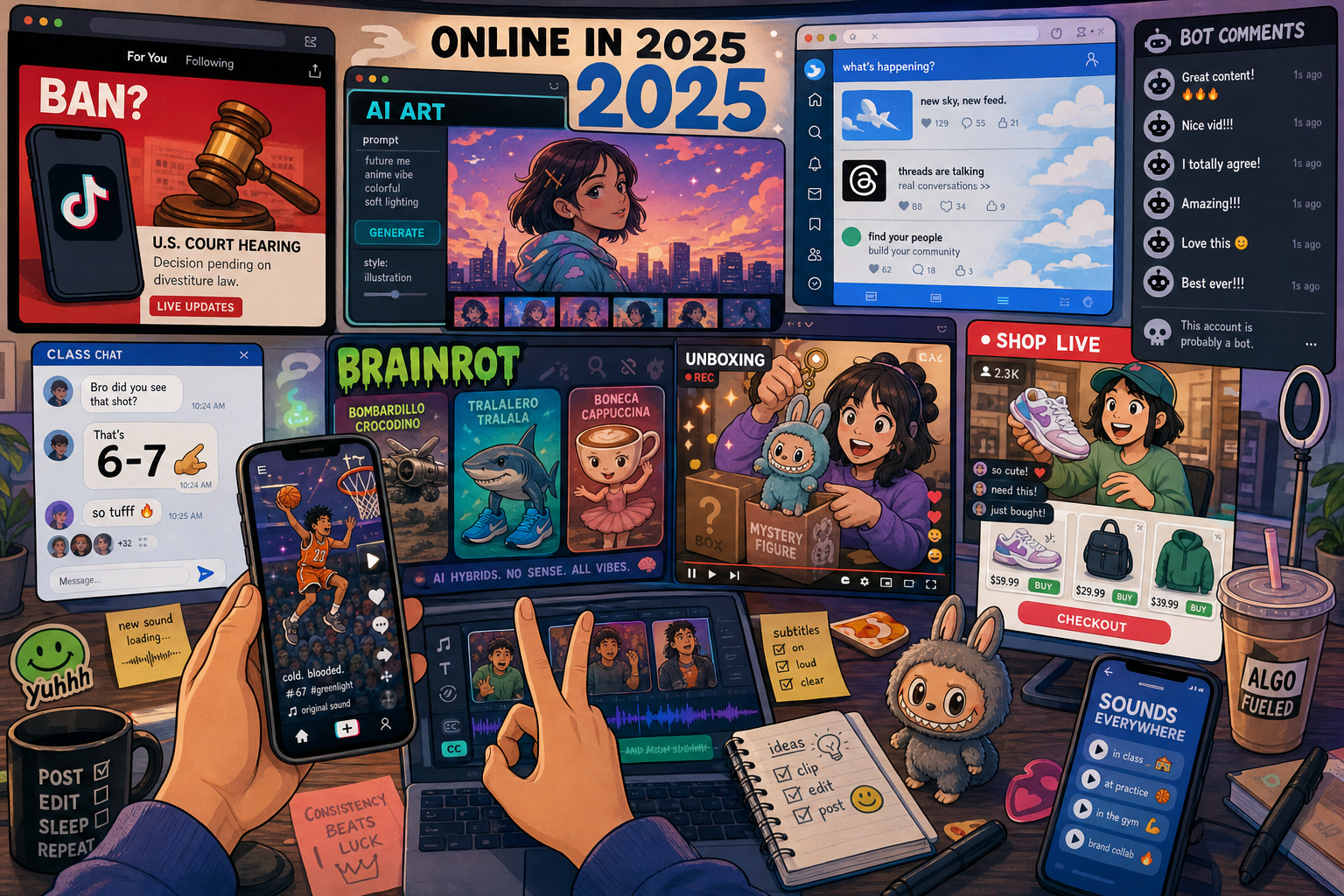
Internet Culture Timeline — 2025
2025-01-01
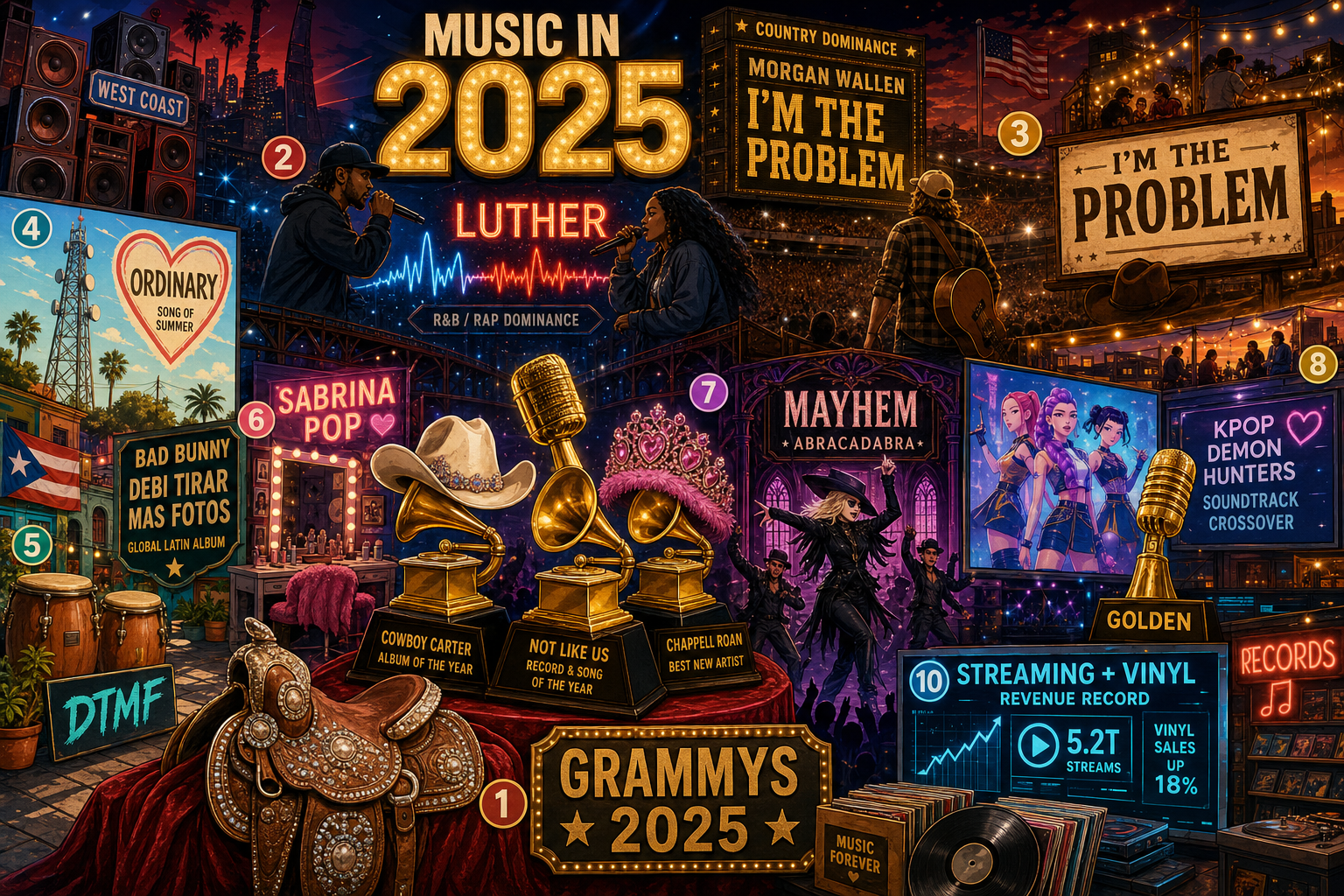
Music Yearbooks — 2025
2025-01-01
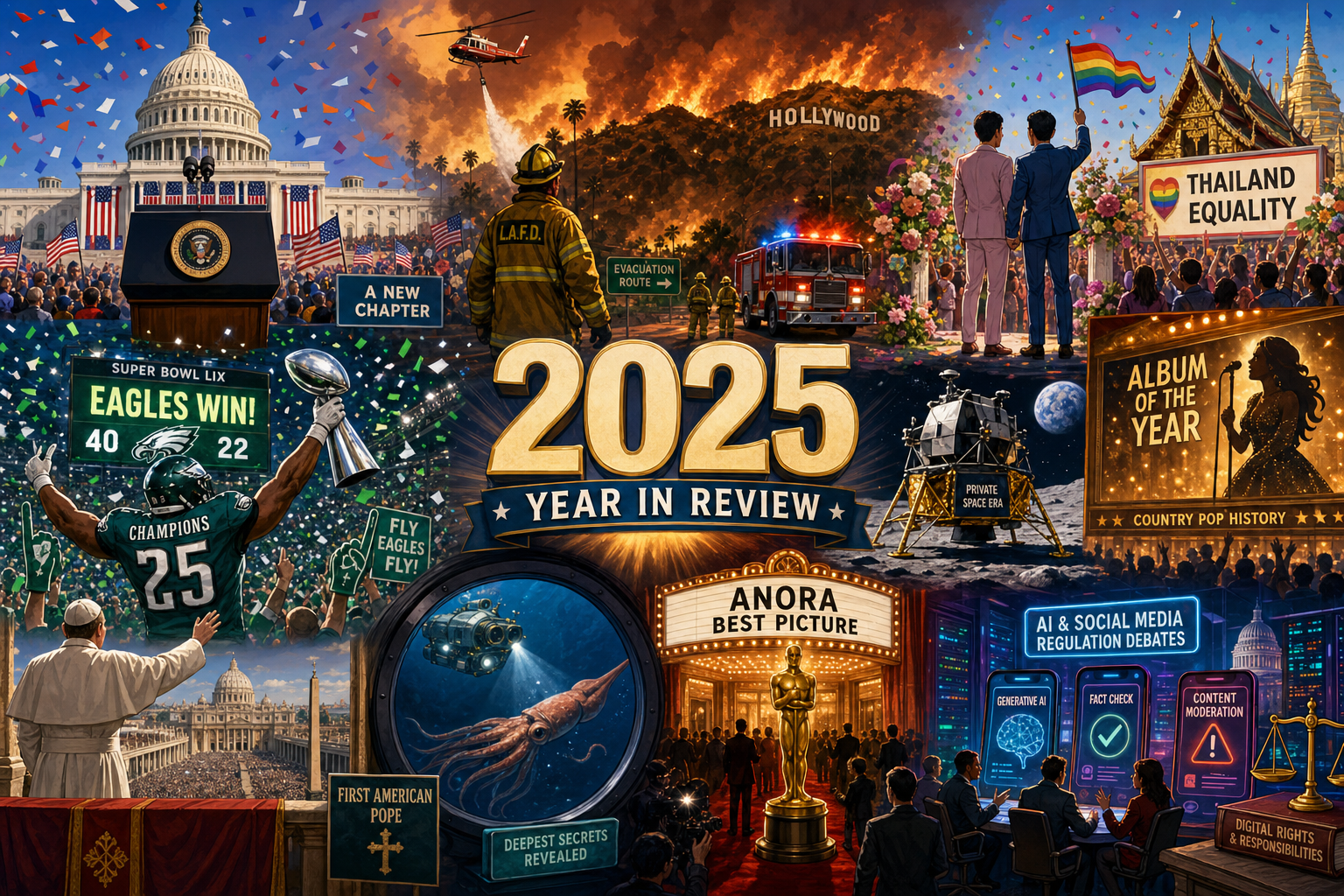
News & Culture — 2025
2025-01-01
NFL Super Bowls — 2025
2025-01-01

Science Breakthroughs — 2025
2025-01-01
Transportation & Mobility — 2025
2025-01-01

Video Game History — 2025
2025-01-01
Internet Culture Timeline — 2024
2024-01-01
Music Yearbooks — 2024
2024-01-01
News & Culture — 2024
2024-01-01
NFL Super Bowls — 2024
2024-01-01
Science Breakthroughs — 2024
2024-01-01