Technology Milestones — 05 Writing
Era / approximate date: Ancient Uruk / southern Mesopotamia, approximately 3300-3200 BCE
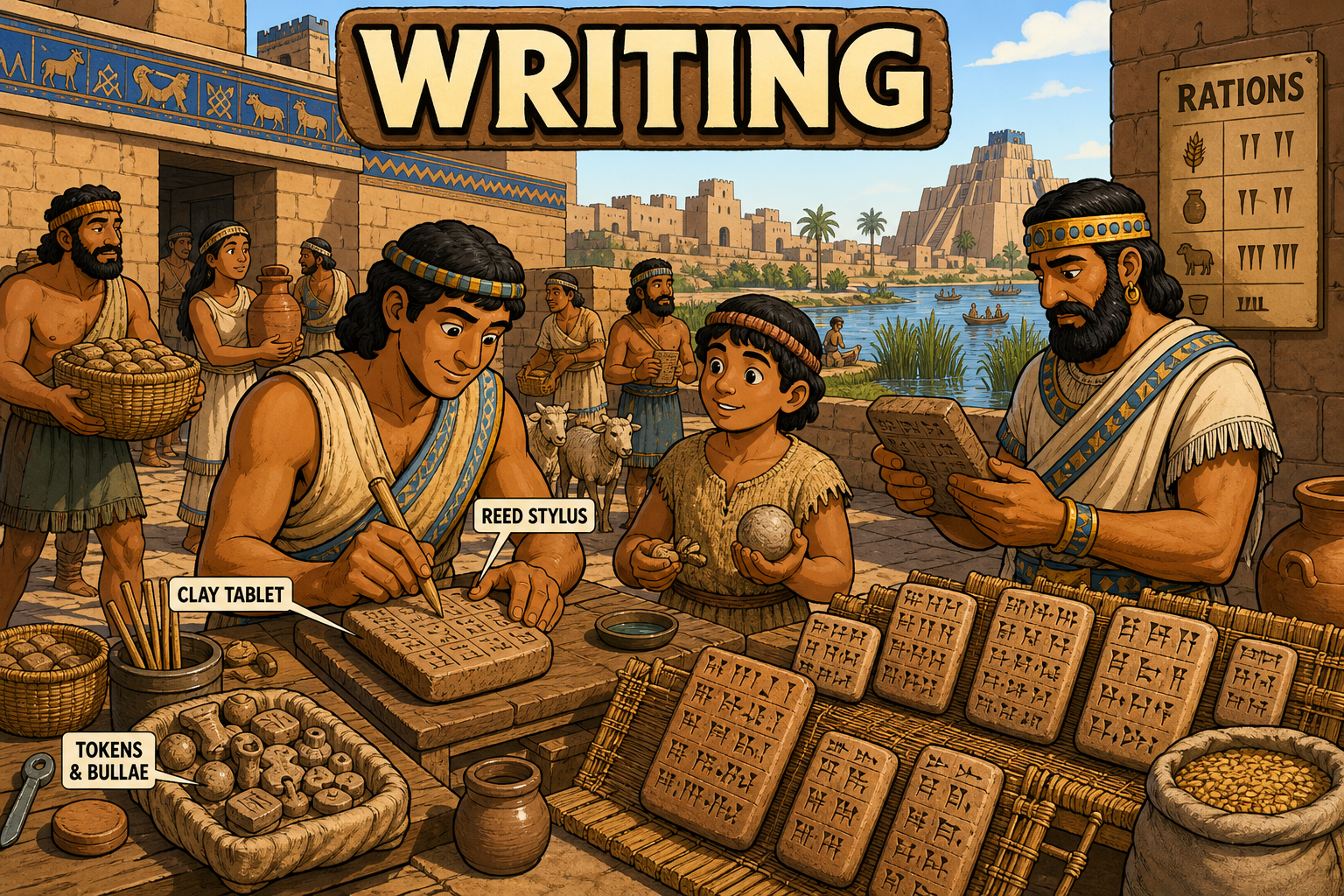
Technology Milestones: Writing
- Milestone slug:
Writing - Milestone name: Cuneiform and the birth of writing
- Era / approximate date: Ancient Uruk / southern Mesopotamia, approximately 3300-3200 BCE
- Likely setting depicted: Temple-administrative courtyard in southern Mesopotamia
- Generation date: 2026-06-27
- Model: built-in gpt-image (recovered from session transcript)
- Saved image path:
My-Library/Images/Collections/Technology-Milestones/Images/Technology-Milestones_05-Writing.png
Why It Is A Milestone
Writing transformed memory, accounting, law, literature, administration, and history by making language and records durable outside the human mind. Early Mesopotamian cuneiform began with economic recording on clay tablets and developed into a writing system used for thousands of years.
Key Visual Elements
- Scribe pressing a reed stylus into a damp clay tablet.
- Apprentice holding clay tokens and a round bulla.
- Workers delivering grain baskets and beer jars for record keeping.
- Temple official checking ration marks on a tablet.
- Tablets drying in the sun with pictographic and wedge-shaped signs.
- Mudbrick Uruk-style architecture, river reeds, baskets, jars, linen and wool garments.
- Readable embedded title:
WRITING.
Sources
- https://www.britishmuseum.org/blog/how-write-cuneiform
- https://www.metmuseum.org/art/collection/search/327385
- https://www.metmuseum.org/essays/the-origins-of-writing
- https://www.worldhistory.org/cuneiform/
- https://archaeology.org/collection/the-worlds-oldest-writing/
Final Prompt Used
Create a clean, friendly cartoon editorial illustration for the Technology Milestones "Writing" entry, depicting cuneiform and the birth of writing with people using, building, and discovering written records. Show ancient Uruk / southern Mesopotamia around 3300-3200 BCE in a temple-administrative courtyard with mudbrick walls, reed mats, woven baskets, grain sacks, beer jars, sheep/goat counters, wet clay tablets, clay bullae and tokens, sharpened reed styluses, simple linen and wool garments, a canal-side city backdrop, and early pictographic marks turning into wedge-shaped impressions. Include a seated scribe pressing a reed stylus into a damp clay tablet, an apprentice holding clay tokens and a round bulla, workers bringing grain baskets and beer jars to be recorded, a temple official checking ration marks on a tablet, tablets drying in the sun, and background mudbrick Uruk architecture and river reeds. Add readable WRITING title text and optional labels CLAY TABLET, REED STYLUS, and RATIONS. Use a clean friendly cartoon/editorial style, bold outlines, warm daylight, varied clay/linen/reed/grain/river colors, and avoid photorealism, modern logos, modern paper books, modern pens, alphabet letters, Egyptian hieroglyph-focused imagery, fake paragraphs, and disconnected symbols.
More from Image Collections