Classic American Meatloaf
Meatloaf became a fixture of American home cooking as meat grinders made inexpensive cuts easier to use.
Classic American Meatloaf
Cultural Context
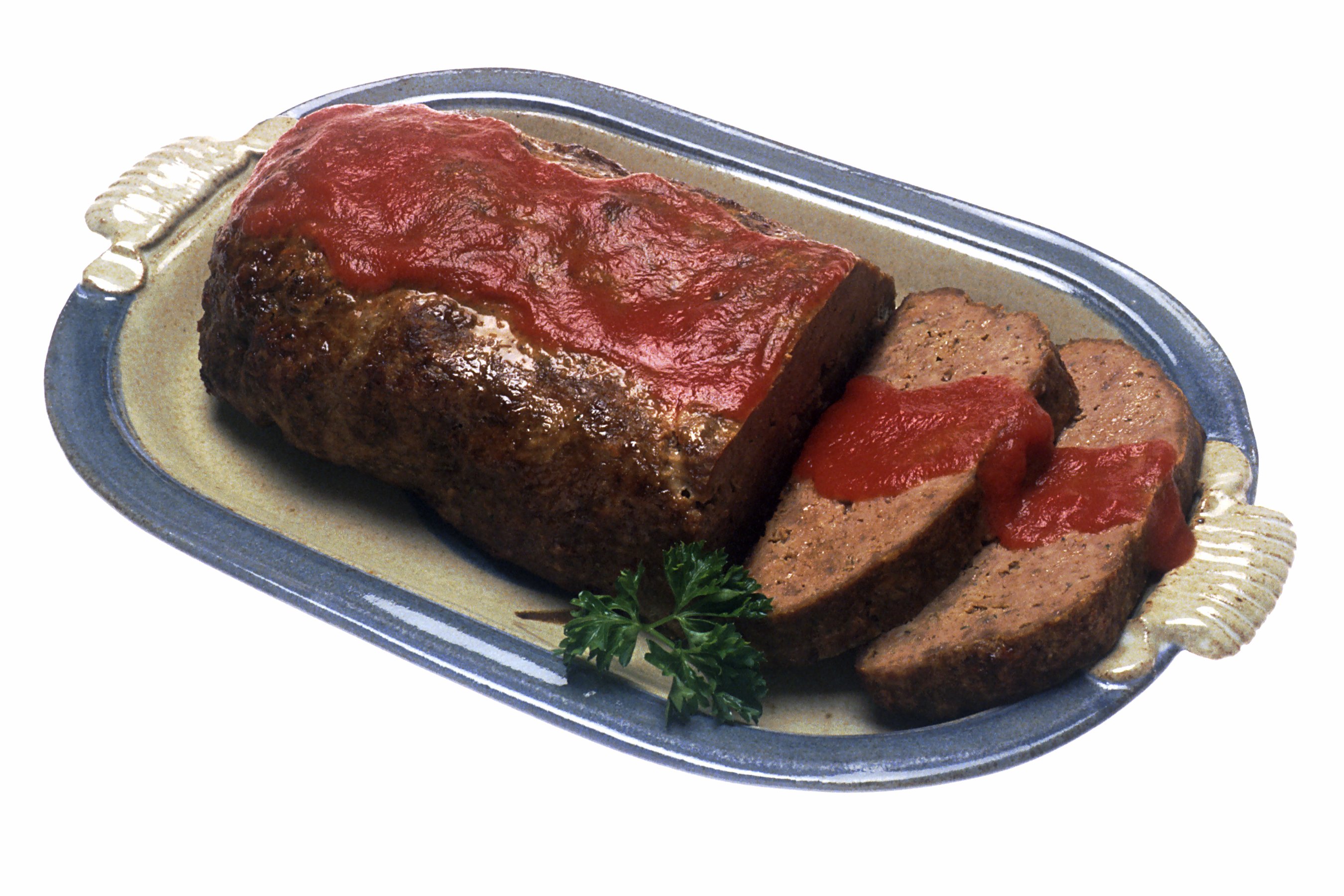
Meatloaf became a fixture of American home cooking as meat grinders made inexpensive cuts easier to use. Breadcrumbs, milk, and vegetables stretched the meat while keeping the loaf tender, an economy that mattered especially during the Great Depression. The familiar ketchup glaze came to define the mid-century American version, usually served in thick slices with mashed potatoes and a green vegetable.
Ingredients
Meatloaf
- 15 ml (1 tablespoon) olive oil, plus more for the baking sheet
- 150 g (1 cup) yellow onion, finely chopped
- 75 g (1/2 cup) celery, finely chopped
- 2 garlic cloves, minced
- 120 ml (1/2 cup) whole milk
- 80 g (1 cup) plain dry breadcrumbs
- 2 large eggs, beaten
- 30 ml (2 tablespoons) ketchup
- 15 ml (1 tablespoon) Worcestershire sauce
- 10 g (1 1/2 teaspoons) kosher salt
- 1 teaspoon dried thyme
- 1/2 teaspoon freshly ground black pepper
- 680 g (1 1/2 pounds) 85% lean ground beef
- 450 g (1 pound) ground pork
Ketchup Glaze
- 120 ml (1/2 cup) ketchup
- 25 g (2 tablespoons) packed light brown sugar
- 15 ml (1 tablespoon) Dijon mustard
- 5 ml (1 teaspoon) Worcestershire sauce
Substitutions:
- Ground pork → an equal weight of ground beef; the loaf will taste beefier and slightly less tender
- Whole milk → unsweetened dairy-free milk; check the label for any additional allergens
Equipment
- Rimmed baking sheet or shallow roasting pan
- Large mixing bowl
- Small skillet
- Instant-read thermometer
- Pastry brush or spoon
Instructions
Preparation (Active time: 20 min)
Heat the oven and pan: Set a rack in the middle of the oven and heat to 375°F (190°C). Lightly oil a rimmed baking sheet or shallow roasting pan.
Soften the vegetables: Warm 1 tablespoon olive oil in a small skillet over medium heat. Add the onion and celery and cook for 6 to 8 minutes, stirring occasionally, until soft but not browned. Add the garlic and cook for 30 seconds, just until fragrant. Transfer the mixture to a plate and let it cool for 10 minutes.
Make the panade: In a large bowl, stir together the milk and breadcrumbs. Let stand for 5 minutes, until the crumbs have absorbed the milk. Add the eggs, 2 tablespoons ketchup, 1 tablespoon Worcestershire sauce, salt, thyme, pepper, and cooled vegetables; stir until evenly combined.
Mix and shape: Add the beef and pork. Using clean hands or a fork, mix gently just until no streaks remain; overmixing makes the loaf dense. Shape the mixture on the prepared pan into a firm 9-by-5-inch loaf with a slightly domed top. Wash your hands and any utensils or surfaces that touched the raw meat before continuing.
Cooking (Active time: 10 min)
Glaze the loaf: Stir the ketchup, brown sugar, Dijon mustard, and 1 teaspoon Worcestershire sauce in a small bowl. Spread half of the glaze evenly over the top and sides of the loaf.
Bake to a safe temperature: Bake for 45 minutes. Brush with the remaining glaze, then continue baking for 20 to 30 minutes, until an instant-read thermometer inserted into the center registers 160°F (71°C). Temperature, rather than color, is the reliable doneness test for ground meat.
Assembly & Finishing
Rest and slice: Let the meatloaf rest on the pan for 15 minutes so the juices settle and the slices hold together. Cut into 8 thick slices.
Serve: Arrange the slices on a warm platter and spoon over any glaze left on the pan that has cooked with the meatloaf. Serve hot with mashed potatoes and green beans or peas.
Food Safety & Storage
- Minimum safe internal temperature: Cook the center of the meatloaf to 160°F (71°C), measured with a food thermometer.
- Cross-contamination: Wash hands, utensils, and work surfaces after contact with the raw beef-and-pork mixture. Do not place cooked meatloaf on a platter that held raw meat.
- Storage: Refrigerate leftovers in shallow, airtight containers within 2 hours and use within 3 to 4 days.
- Freezing: Freeze the cooled loaf whole or in individual slices for up to 3 months. Thaw overnight in the refrigerator.
- Reheating: Cover and reheat in a 325°F (165°C) oven, or reheat individual slices in the microwave, until the center reaches 165°F (74°C).
Serving Suggestions
- Serve with mashed potatoes and green beans, peas, or glazed carrots.
- A crisp cabbage slaw or simple green salad cuts through the richness.
- Chill leftover slices for sturdy meatloaf sandwiches the next day.
Scaling Notes
Half recipe (1/2x): Shape a smaller 7-by-4-inch loaf. Begin checking the center after 45 minutes; cook to 160°F (71°C).
Double recipe (2x): Shape two separate loaves on two pans rather than one oversized loaf. Rotate the pans halfway through baking and verify that both centers reach 160°F (71°C).
Chef's Notes
- Sourcing: An 85% lean beef blend brings enough fat for moisture without leaving the pan greasy. Plain breadcrumbs keep the seasoning under your control.
- Make-ahead: Cook and cool the vegetables and mix the glaze up to 2 days ahead. Refrigerate them separately. The shaped raw loaf may be covered and refrigerated for up to 24 hours.
- Variations: Some American family recipes use crushed saltine crackers instead of breadcrumbs or all beef instead of a beef-and-pork blend.
- Common pitfalls: Mix lightly, shape the loaf free-form so its sides brown, and rely on a thermometer. Packing it tightly or baking far past 160°F (71°C) produces a dry, heavy slice.
- Richness: This is a hearty comfort-food main. The beef, pork, milk, and eggs make it relatively high in saturated fat, while ketchup, Worcestershire sauce, and added salt contribute sodium; pair it with simply seasoned vegetables and treat one thick slice as a serving.
Nutrition Information (Optional)
Per serving: approximately 430 kcal
- Protein: 29 g | Fat: 27 g | Carbohydrates: 17 g | Fiber: 1 g
- Sodium: approximately 810 mg | Saturated fat: approximately 8 g | Added sugar: approximately 7 g
Sources
- Food Network: Old-Fashioned American Meatloaf
- Martha Stewart: Classic Meatloaf
- CBS News / Cook's Illustrated: Classic Comfort Food—Meatloaf
- USDA FSIS: Ground beef mixtures such as meatloaf should reach 160°F
- Wikimedia Commons: “MeatloafWithSauce.jpg”

Version History:
- v1 (2026-07-31): Initial recipe by @Codex
Credits:
- Recipe development: @Codex, synthesized from the Food Network, Martha Stewart, and Cook's Illustrated sources listed above
- Testing: @Codex
- Verification: @Coordinator
- Food safety: USDA FSIS guidance; ground-meat mixtures cooked to 160°F (71°C)
- Photography: Renee Comet for the National Cancer Institute, public domain via Wikimedia Commons; source URL listed above
Recipe Location: /Recipes/American/american_classic-meatloaf_v1.md
Images Location: /Images/classic-meatloaf/
More from Recipes