Butter Tarts
Butter tarts are a Canadian baking favorite: individual pastry shells with a sweet, buttery filling. Families differ on whether to add raisins or leave them plain.
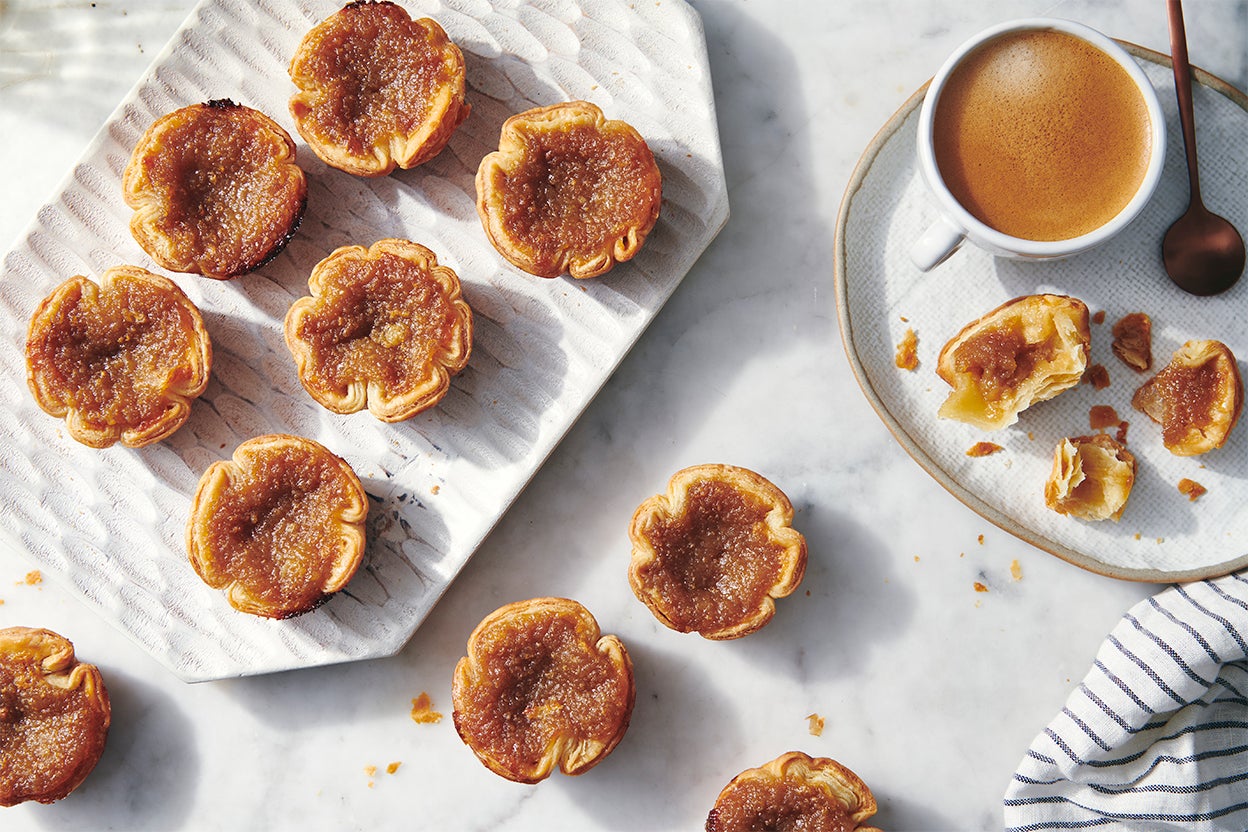
Butter Tarts
Cultural Context
Butter tarts are a Canadian baking favorite: individual pastry shells with a sweet, buttery filling. Families differ on whether to add raisins or leave them plain. This plain, maple-sweetened version follows Canadian chef Deborah Reid's recipe for King Arthur Baking; Elizabeth Baird's corn-syrup version and Meredith Laurence's recipe provide comparisons for the traditional style.
Ingredients
Main Components
- 270 g (2¼ cups) all-purpose flour
- ¼ teaspoon table salt
- 113 g (½ cup) unsalted butter, cold and cubed
- 1 large egg
- 1 teaspoon white vinegar
- 30–60 ml (2–4 tablespoons) cold water
- 15 g (2 tablespoons) extra flour, for rolling as needed
- 5 g (1 teaspoon) extra unsalted butter, for greasing
For the Sauce/Garnish
Butter-tart filling; no garnish needed.
- 2 large eggs
- 106 g (½ cup packed) light brown sugar
- ½ teaspoon table salt
- 156 g (½ cup) pure maple syrup
- 2 teaspoons white vinegar
- 57 g (¼ cup) unsalted butter, melted and cooled until lukewarm
- ½ teaspoon vanilla extract
Substitutions:
- White vinegar → the same volume of fresh lemon juice; the acidity remains, with a faint citrus note.
Equipment
- Standard 12-cup metal muffin pan
- Mixing bowls and fork or pastry blender
- Whisk or electric hand mixer
- Rolling pin and 4-inch (10 cm) round cutter
- Cooling rack and thin offset spatula
- Instant-read thermometer
Instructions
Preparation (Active time: 30 min)
- Make the dough: Mix flour and salt; cut in cold butter until crumbly. Beat the egg with vinegar and 2 tablespoons water. Stir into the flour, adding remaining water only as needed to gather the dough. Flatten, wrap, and refrigerate for 1 hour.
- Line the pan: Heat the oven to 375°F (190°C). Grease the muffin cups. Roll pastry ⅛ inch (3 mm) thick on the floured surface; cut twelve 4-inch circles, gently rerolling scraps. Press into the cups without stretching. Refrigerate while making the filling.
Cooking (Active time: 5 min)
- Fill: Beat filling eggs, sugar, and salt together, then mix in syrup, vinegar, melted butter, and vanilla. Divide among shells, filling no more than two-thirds full.
- Bake: Bake for 20–25 minutes until golden with bubbling filling. Check that the center filling reaches at least 160°F (71°C); extend baking if necessary. Shield browned edges loosely with foil if needed.
Assembly & Finishing
- Cool: Set the pan on a rack. Allow about 40 minutes for the tarts to cool completely; the filling settles as it cools. Loosen edges with a thin spatula and gently lift out. Allow 5 minutes of active time for unmolding and serving.
- Serve: Arrange on a platter, with napkins or small plates for the flaky crumbs. The filling is sticky, so let it cool before taking a bite.
Food Safety & Storage
- Minimum safe internal temperature: 160°F (71°C) in the egg filling. Do not taste raw dough or filling; uncooked flour and eggs can carry harmful bacteria.
- Storage: Refrigerate in a covered container at 40°F (4°C) or below within 2 hours of baking, or within 1 hour above 90°F (32°C). Use within 4 days.
- Freezing: Freeze cooled tarts individually, then pack airtight for up to 2 months. Thaw in the refrigerator.
- Reheating: These can be eaten cold. If reheating leftovers, warm in a 325°F (165°C) oven until the center reaches 165°F (74°C), shielding pastry as needed. Let the hot sugar filling cool before eating.
Serving Suggestions
- Serve one tart with unsweetened tea or coffee.
- Bring a chilled batch to a gathering and put out small quantities as needed.
- Serve plain so the pastry and maple filling remain the focus.
Scaling Notes
Half recipe (½×): Make 6 tarts. For the dough, beat one egg and weigh out half; use one whole egg in the filling. Keep the same pastry thickness and begin checking at 20 minutes.
Double recipe (2×): Use two standard muffin pans. Keep the second batch chilled while the first bakes so the pastry stays firm. Allow extra elapsed time for sequential baking.
Chef's Notes
- Sourcing: Choose pure maple syrup; pancake syrup has a different flavor and composition.
- Make-ahead: Refrigerate wrapped dough for up to 24 hours. Let it soften just enough to roll without cracking.
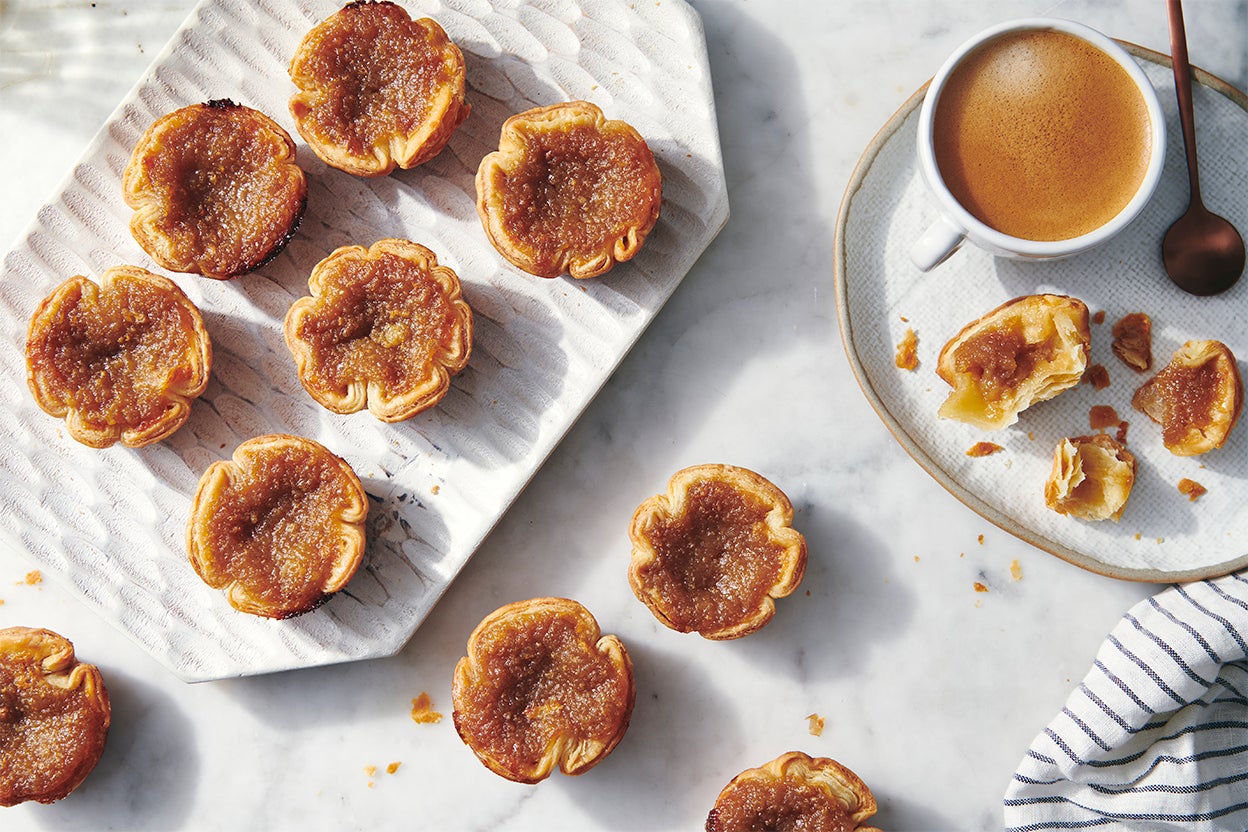
- Variations: Raisin-filled butter tarts are another familiar Canadian style; this recipe keeps the filling plain, as pictured.
- Common pitfalls: Overfilled shells can bubble over and stick to the pan. Patch cracks before filling and avoid stretching dough into the cups.
- Timing: The total includes dough chilling, baking, and cooling; ovens and room temperature affect the final cooling time.
- Richness: This is an indulgent dessert, high in saturated fat and added sugar. One tart is the serving used for the estimates below.
Nutrition Information (Optional)
Per serving: approximately 265 kcal, estimated; excludes rolling flour and pan grease.
- Protein: 4 g | Fat: 13 g | Carbohydrates: 33 g | Fiber: 1 g
- Saturated fat: approximately 8 g | Sodium: approximately 170 mg | Added sugars: approximately 17 g
- Estimate basis: butter contributes about 87 g saturated fat per batch and eggs about 5 g, divided by 12. Brown sugar plus the sugar in maple syrup contributes about 206 g added sugars per batch, divided by 12. Salt contributes about 1,725 mg sodium and eggs roughly 210 mg per batch, with small amounts from other ingredients.
Sources
- King Arthur Baking: Classic Butter Tarts, by Deborah Reid: primary ingredient ratios and baking method.
- Tasting Table: Canadian Butter Tarts, adapted from Elizabeth Baird: traditional pastry, corn-syrup filling, and lemon-juice comparison.
- Blue Jean Chef: Butter Tarts, by Meredith Laurence: Canadian context and comparison of plain and raisin styles.
- Hero image source: King Arthur Baking.
- FoodSafety.gov: Safe Minimum Internal Temperatures.
- USDA: Leftovers and Food Safety.
Version History:
- v1 (2026-09-18): Initial recipe adaptation by @Codex.
Credits:
- Recipe adaptation: @Codex, following Deborah Reid / King Arthur Baking, with comparison research from Elizabeth Baird / Tasting Table and Meredith Laurence / Blue Jean Chef. Safety temperatures, conservative storage guidance, and estimated cooling time added for the library.
- Testing: @Codex performed source, ingredient, and recipe-validator checks; this recipe has not been kitchen-tested by this automation.
- Verification: @Coordinator is the required workflow attribution; no independent human tasting is claimed.
- Food safety and storage: USDA and FoodSafety.gov guidance, linked above.
- Photography: King Arthur Baking, publisher image; copyright remains with the rights holder. Original image, downloaded unchanged; the HTML renderer may downscale it. No open license claimed.
Recipe Location: /Recipes/canadian/canadian_butter-tarts_v1.md
Images Location: /Images/butter-tarts/
More from Recipes