Rinderrouladen (German Beef Rolls)
Rinderrouladen are a German home-cooking classic, especially at Sunday and holiday meals.
Rinderrouladen (German Beef Rolls)
Cultural Context
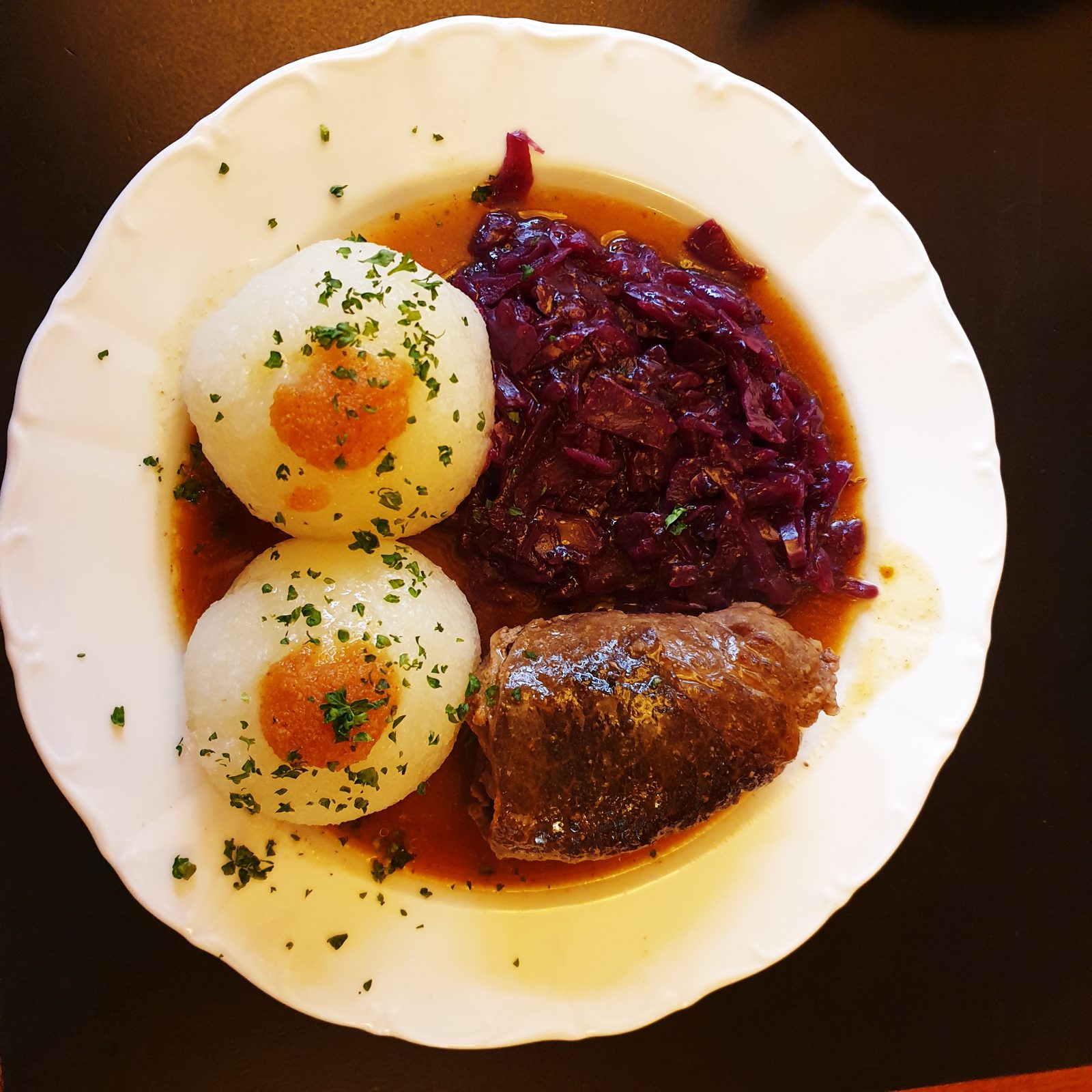
Rinderrouladen are a German home-cooking classic, especially at Sunday and holiday meals. Thin beef slices are spread with mustard, wrapped around bacon, onion, and pickles, then braised until tender. Red cabbage and potato dumplings, boiled potatoes, or mashed potatoes are customary partners because they catch the dark pan gravy.
Ingredients
Main Components
- 4 beef top-round slices, about 180 g (6 oz) each and 5 mm (¼ inch) thick
- ½ teaspoon fine salt
- ½ teaspoon freshly ground black pepper
- 4 teaspoons German medium-hot mustard
- 8 thin slices smoked bacon, about 100 g (3½ oz)
- 4 small dill pickles, quartered lengthwise
- 1 medium yellow onion, halved and thinly sliced
- 2 tablespoons neutral oil, divided
For the Sauce/Garnish
- 1 medium yellow onion, cut into 1 cm (⅜ inch) dice
- 1 medium carrot, cut into 1 cm (⅜ inch) dice
- 100 g (3½ oz / about 1 cup) celery root, cut into 1 cm (⅜ inch) dice
- ½ small leek, white and light green parts only, rinsed and cut into 1 cm (⅜ inch) pieces
- 1 tablespoon tomato paste
- 150 ml (5 fl oz / ⅔ cup) dry red wine
- 500 ml (17 fl oz / 2 cups) low-sodium beef stock, plus more if needed
- 2 bay leaves
- 2 sprigs fresh thyme
- 1 teaspoon cornstarch
- 1 tablespoon cold water
- 1 tablespoon finely chopped flat-leaf parsley, for garnish
Substitutions:
- Dry red wine → 150 ml (⅔ cup) additional low-sodium beef stock plus 2 teaspoons red wine vinegar; the gravy will be lighter and less rounded
- Celery root → 1 large celery stalk; the sauce will have a milder celery flavor
- German medium-hot mustard → Dijon mustard; use a smooth, moderately sharp Dijon rather than whole-grain mustard
Equipment
- Large Dutch oven or heavy lidded braiser
- Meat mallet or small heavy saucepan
- Kitchen twine, roulade needles, or sturdy toothpicks
- Fine-mesh sieve
- Instant-read thermometer
Instructions
Preparation (Active time: 25 min)
Prepare the beef: Place each beef slice between two sheets of parchment or plastic wrap and pound it to an even 5 mm (¼ inch) thickness if needed. Pat dry. Season both sides with the salt and pepper, then spread 1 teaspoon mustard over one side of each slice.
Fill and roll: Lay 2 bacon slices along each piece of beef. Divide the pickle quarters and sliced onion among the pieces, keeping a 2.5 cm (1 inch) border. Fold the long sides inward, roll tightly from a short end, and secure each roll with kitchen twine, roulade needles, or toothpicks.
Cooking (Active time: 20 min)
Brown the rouladen: Heat 1 tablespoon oil in the Dutch oven over medium-high heat. Brown the rolls in batches for 6–8 minutes total, turning until deeply colored on every side. Transfer them to a plate.
Build the braise: Reduce the heat to medium and add the remaining 1 tablespoon oil. Add the diced onion, carrot, celery root, and leek. Cook for 7–8 minutes, stirring often, until browned at the edges. Stir in the tomato paste and cook for 1 minute. Pour in the wine, scrape up the browned bits, and simmer for 3–4 minutes, until reduced by about half.
Braise until tender: Add the stock, bay leaves, and thyme. Return the rouladen and their juices to the pot; the liquid should reach about halfway up the rolls. Bring to a gentle simmer, cover, and cook over low heat for 90–120 minutes, turning once halfway through. Add a little hot stock if the pan begins to dry. The beef is ready when a knife slips in easily and the center has reached at least 145°F (63°C); braised rouladen commonly reach 190–205°F (88–96°C) by the time they are tender.
Assembly & Finishing
Finish the gravy: Move the rouladen to a warm plate and remove all twine, needles, or toothpicks. Discard the bay leaves and thyme. Press the braising liquid and vegetables through a fine-mesh sieve into a saucepan. Simmer uncovered for 5–10 minutes, until the flavor is concentrated. Stir the cornstarch and cold water together, whisk the slurry into the simmering gravy, and cook for 1–2 minutes, until it lightly coats a spoon. Taste and adjust the seasoning.
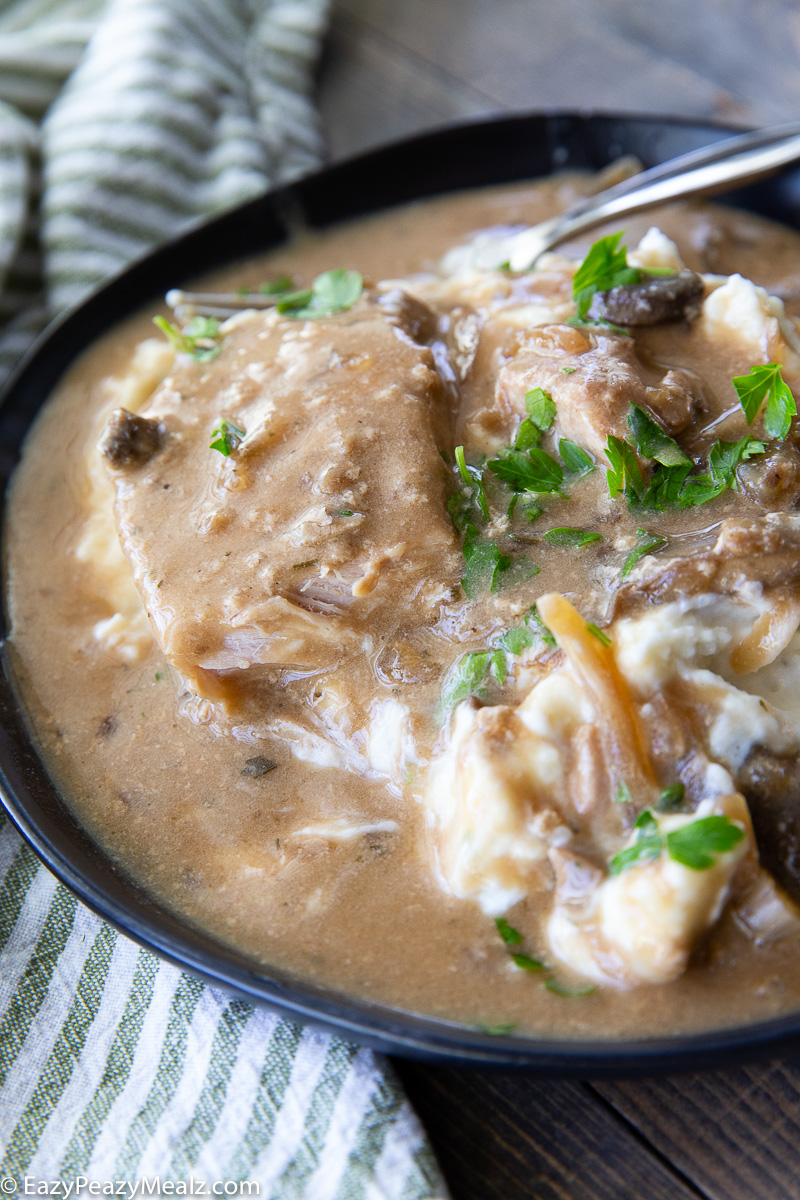
Garnish and serve: Return the rouladen to the gravy for 5 minutes over low heat. Spoon the gravy onto warm plates, set one roulade on each, and scatter with parsley. Serve hot.
Food Safety & Storage
- Minimum safe internal temperature: Beef must reach at least 145°F (63°C), followed by a 3-minute rest; the longer braise takes it well above that temperature and makes the rolls tender
- Storage: Refrigerate the rouladen and gravy in shallow airtight containers within 2 hours; keep for up to 3 days
- Freezing: Freeze cooled rouladen in their gravy for up to 3 months; thaw overnight in the refrigerator
- Reheating: Reheat the rouladen and gravy gently on the stovetop until the center reaches 165°F (74°C)
Serving Suggestions
- Serve with Rotkohl (braised red cabbage) and potato dumplings, boiled potatoes, or mashed potatoes
- Pairs well with a dry German Spätburgunder or an amber lager
- Traditional serving style: Place one whole roulade on each plate and spoon plenty of gravy around it
Scaling Notes
Half recipe (½×): Use a smaller heavy pot so the braising liquid still reaches halfway up the rolls. Check tenderness after 90 minutes; the braising time will not be cut in half.
Double recipe (2×): Brown in batches and use two pots or a wide roasting pan with a tight cover. Allow an extra 15–30 minutes if the rolls are crowded, and verify every roll is tender.
Chef's Notes
- Sourcing: Ask a butcher for thin beef top-round slices cut for rouladen. German medium-hot mustard and crisp dill pickles give the filling its characteristic tang.
- Make-ahead: The flavor improves overnight. Cook the rouladen and gravy fully, chill promptly, and reheat together the next day.
- Variations: Some families add a strip of carrot to the filling or finish the sauce with a spoonful of crème fraîche. Either changes the family style rather than the basic method.
- Common pitfalls: Do not overfill the rolls or skip browning. Keep the braise at a quiet simmer; a hard boil can tighten the meat before the connective tissue softens.
- Nutrition note: Bacon, pickles, mustard, and stock make this a sodium-rich celebration dish. Low-sodium stock and restrained added salt keep it from becoming needlessly salty.
Nutrition Information (Optional)
Per serving: approximately 560 kcal
- Protein: 47g | Fat: 34g | Saturated fat: 10g | Carbohydrates: 12g | Fiber: 2g
- Sodium: approximately 1,250mg | Added sugar: 0g
Sources
- Recipe synthesis: essen & trinken — Rinderrouladen, klassisches Rezept
- Recipe method and proportions: Schuhbeck & Friends — Rinderrouladen
- Recipe comparison and popularity check: Chefkoch — Rinderrouladen klassisch
- Image source: Wikimedia Commons — Rinderroulade mit Rotkohl und Klößen in Erfurt

Version History:
- v1 (2026-10-26): Initial recipe by @Codex
Credits:
- Recipe development: @Codex; synthesized from the sources above
- Testing: @Codex
- Verification: @Coordinator
- Photography: Anagoria, CC BY 3.0, via Wikimedia Commons
- Food safety guidance: USDA safe minimum temperatures and leftovers guidance
Recipe Location: /Recipes/german/german_rinderrouladen_v1.md
Images Location: /Images/rinderrouladen/
More from Recipes