Filipino Chicken Adobo
Adobo is a Filipino method of braising meat or vegetables with vinegar, garlic, pepper, and often soy sauce.
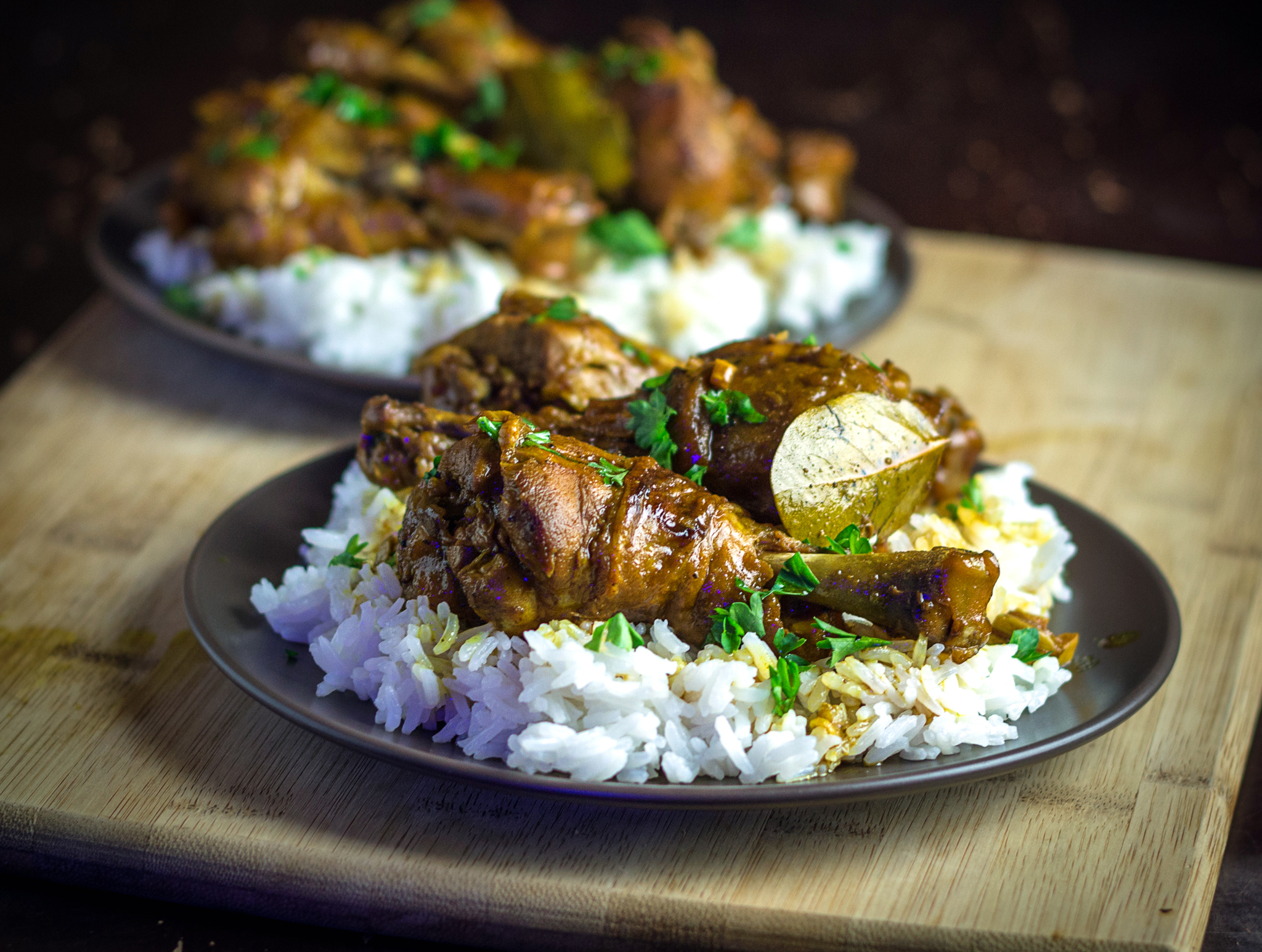
Filipino Chicken Adobo
Cultural Context
Adobo is a Filipino method of braising meat or vegetables with vinegar, garlic, pepper, and often soy sauce. There is no single definitive version: proportions and additions change from one household and province to another. Chicken adobo is one of the best-known forms, usually served with plenty of rice to catch the sharp, savory sauce.
Ingredients
Main Components
- 1.4 kg (3 lb) bone-in, skin-on chicken thighs and drumsticks
- 120 ml (4 fl oz / 1/2 cup) Filipino cane vinegar
- 80 ml (2.7 fl oz / 1/3 cup) low-sodium soy sauce
- 120 ml (4 fl oz / 1/2 cup) water
- 10 garlic cloves, peeled and lightly crushed
- 3 dried bay leaves
- 1 tsp whole black peppercorns, lightly cracked
- 1 tbsp neutral cooking oil
For Serving
- 900 g (6 cups) hot cooked jasmine rice
- 3 scallions, thinly sliced
Substitutions:
- Filipino cane vinegar → unseasoned rice vinegar or distilled white vinegar (rice vinegar is softer; distilled vinegar is sharper)
- Low-sodium soy sauce → regular soy sauce mixed with an equal amount of water (the sauce will still be saltier)
Equipment
- Large nonreactive bowl or food-safe container
- 30 cm (12-inch) heavy skillet or Dutch oven with lid
- Instant-read thermometer
- Tongs
Instructions
Preparation (Active time: 10 min)
Marinate the chicken: Pat the chicken dry. Combine the vinegar, soy sauce, water, garlic, bay leaves, and peppercorns in a nonreactive container. Add the chicken and turn every piece to coat. Cover and refrigerate for at least 1 hour and up to 8 hours, turning once if convenient.
Drain and dry: Lift the chicken from the marinade, letting the liquid run back into the container. Reserve every drop of marinade. Pat the skin dry so it will brown instead of steam.
Cooking (Active time: 15 min)
Brown the chicken: Heat the oil in a wide, heavy skillet or Dutch oven over medium heat. Lay in the chicken skin-side down without crowding; work in two batches if needed. Cook for 5 to 7 minutes, until the skin is deep golden, then turn and cook for 2 minutes. Transfer the chicken to a clean plate.
Braise: Pour the reserved marinade into the pan and scrape up the browned bits. Bring it to a full boil, then return the chicken skin-side up. Lower the heat, cover, and simmer gently for 25 minutes. Turn the pieces, cover again, and cook for 10 to 15 minutes more, until the thickest part of each piece reaches 165°F (74°C), away from the bone.
Assembly & Finishing
Reduce the sauce: Transfer the cooked chicken to a clean platter. Boil the sauce uncovered over medium-high heat for 5 to 8 minutes, stirring often, until glossy and lightly thickened. Return the chicken and turn it through the sauce for 1 to 2 minutes.
Garnish and serve: Spoon rice into shallow bowls, add the chicken, and ladle over the sauce. Scatter with scallions and serve hot.
Food Safety & Storage
- Minimum safe internal temperature: Chicken must reach 165°F (74°C) in the thickest part without touching bone.
- Marinade and cross-contamination: Keep the chicken refrigerated while it marinates. The used marinade must come to a full boil before it becomes the braising sauce. Wash hands, utensils, and surfaces that touched raw chicken, and use a clean plate for cooked chicken.
- Storage: Refrigerate chicken and sauce in shallow airtight containers within 2 hours; keep for up to 4 days. Store rice separately and refrigerate it promptly.
- Freezing: Freeze cooled chicken with its sauce for up to 3 months. Thaw overnight in the refrigerator.
- Reheating: Reheat chicken and sauce to 165°F (74°C). Add a splash of water if the sauce is too tight.
Serving Suggestions
- Serve with steamed jasmine rice and a simple cucumber salad.
- A side of blanched or stir-fried greens cuts through the salty, tart sauce.
- Set the platter in the middle of the table and pass extra rice alongside.
Scaling Notes
Half recipe (½×): Use a 25 cm (10-inch) skillet. Keep the braising time about the same and begin checking the chicken at 30 minutes.
Double recipe (2×): Brown in batches and divide the chicken and sauce between two wide pots so the pieces braise in a single layer. Reduction may take a few extra minutes.
Chef's Notes
- Sourcing: Filipino cane vinegar is sold at Filipino and many Asian markets. Look for Datu Puti or Silver Swan; use an unseasoned vinegar, not sweetened sushi vinegar.
- Make-ahead: Adobo tastes especially good the next day. Chill it in its sauce, then lift off any firm fat before reheating.
- Variations: Some families add ginger, onion, coconut milk, chiles, or a little sugar. This version keeps the core vinegar, soy, garlic, bay leaf, and peppercorn profile.
- Common pitfalls: Do not stir the vinegar mixture before it reaches a boil; letting its first sharp fumes cook off gives the sauce a cleaner taste. Keep the braise gentle so the chicken stays intact.
- Nutrition note: Soy sauce makes adobo a sodium-rich main dish. Low-sodium soy sauce tempers it, but the sauce should still be portioned with rice rather than treated as a low-sodium food.
Nutrition Information (Optional)
Per serving, including rice: approximately 690 kcal
- Protein: 39g | Fat: 28g | Carbohydrates: 68g | Fiber: 1g
Sources
- SBS Food: Filipino chicken adobo
- Bon Appétit: Filipino Chicken Adobo
- Food Network: Filipino Chicken Adobo
- Philippine Department of Trade and Industry: Standardization of famous Filipino dishes advances
- Wikimedia Commons: Chicken Adobo over rice

Version History:
- v1 (2026-08-07): Initial recipe by @Codex
Credits:
- Recipe development: @Codex, synthesized from the sources above
- Testing: @Codex
- Verification: @Coordinator
- Photography: Jack Lawrence, Chicken Adobo over rice, licensed under CC BY 2.0
- Food safety: Refrigerate promptly, prevent raw-chicken cross-contamination, and cook chicken to 165°F (74°C)
Recipe Location: /Recipes/southeast-asian/southeast-asian_chicken-adobo_v1.md
Images Location: /Images/chicken-adobo/
More from Recipes