Tom Yum Goong (Thai Hot and Sour Shrimp Soup)
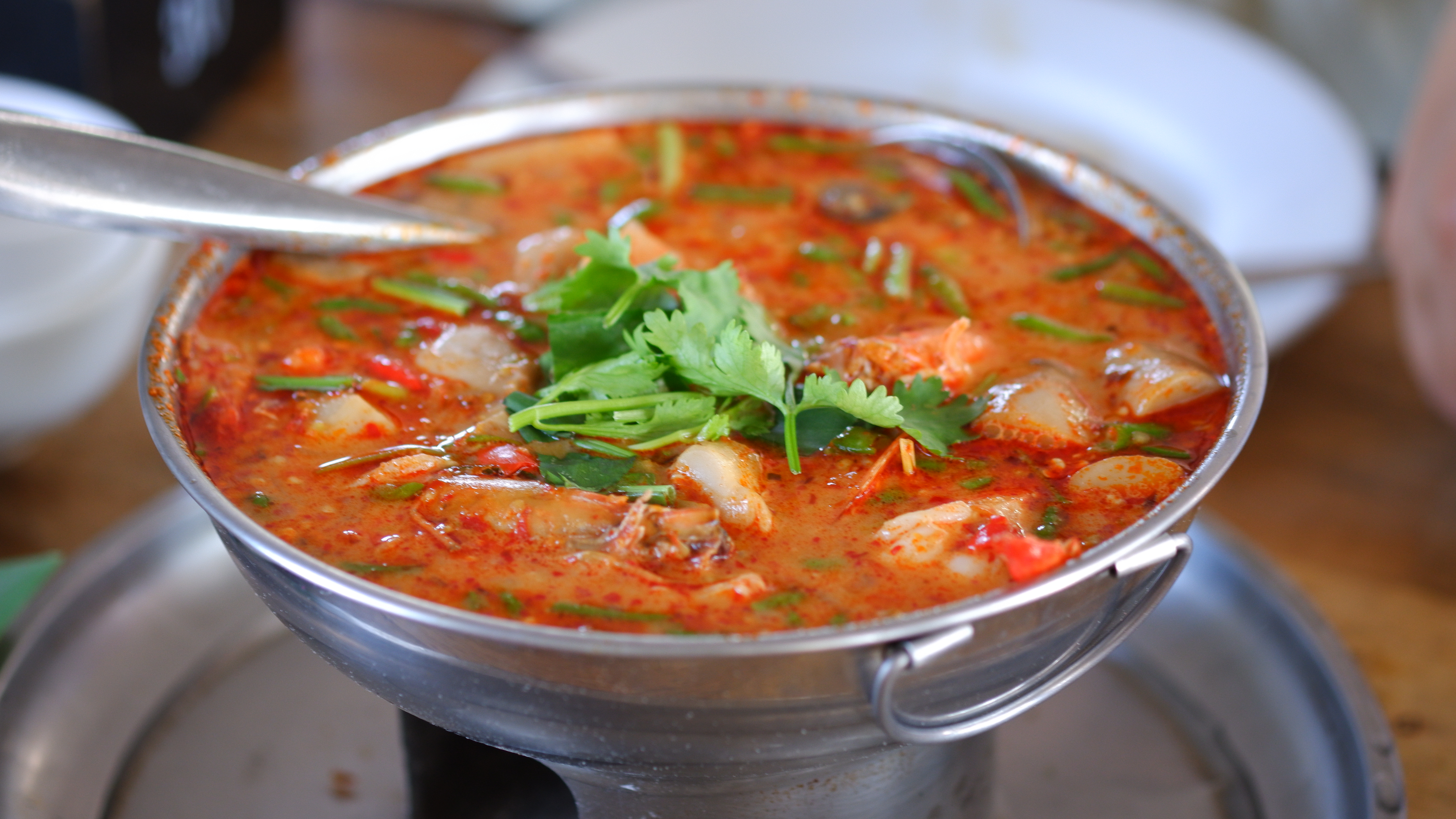
Tom yum goong is one of Thailand's most recognizable soups, built around the bright fragrance of lemongrass, galangal, makrut lime leaves, Thai chiles, fish sauce, and fresh lime.
Tom Yum Goong (Thai Hot and Sour Shrimp Soup)
Cultural Context
Tom yum goong is one of Thailand's most recognizable soups, built around the bright fragrance of lemongrass, galangal, makrut lime leaves, Thai chiles, fish sauce, and fresh lime. "Goong" means shrimp, the classic protein pairing for tom yum, and the soup is commonly served as part of a rice-centered Thai meal rather than as a stand-alone starter. This version follows the popular nam khon style, lightly enriched with Thai chile jam and evaporated milk while keeping the broth sharp, spicy, and aromatic.
Ingredients
Shrimp Stock and Soup
- 450 g (1 lb) shell-on large shrimp or prawns, peeled and deveined, shells and heads reserved if available
- 1.2 L (5 cups) water
- 2 stalks lemongrass, tough outer leaves removed, bruised, cut into 2-inch pieces
- 45 g (1.5 oz / about 2-inch piece) fresh galangal, sliced into thin coins
- 8 makrut lime leaves, torn
- 3 small shallots, peeled and lightly crushed
- 4 cloves garlic, lightly crushed
- 6-10 Thai bird's eye chiles, bruised or sliced, to taste
- 200 g (7 oz / about 3 cups) oyster or straw mushrooms, torn or halved
- 2 medium Roma tomatoes, cut into wedges
- 45 ml (3 tbsp) fish sauce, plus more to taste
- 5 g (1 tsp) palm sugar or granulated sugar
- 45 g (3 tbsp) Thai roasted chile jam (nam prik pao)
- 75 ml (5 tbsp) evaporated milk
- 60-75 ml (4-5 tbsp) fresh lime juice, plus more to taste
Garnish and Serving
- 20 g (about 1/2 cup loosely packed) cilantro leaves and tender stems, chopped
- Sawtooth coriander, thinly sliced (optional)
- Extra Thai chiles, sliced (optional)
- Steamed jasmine rice, for serving
Substitutions:
- Makrut lime leaves -> A few strips of lime zest in a pinch, but the aroma will be less floral
- Galangal -> Ginger only if necessary; it is sharper and lacks galangal's piney flavor
- Oyster or straw mushrooms -> Button, cremini, shimeji, or enoki mushrooms
- Evaporated milk -> Omit for clear tom yum goong nam sai; do not replace with sweetened condensed milk
- Shell-on shrimp -> Peeled shrimp plus light chicken stock instead of shell stock
Equipment
- 4 qt saucepan or soup pot
- Fine-mesh skimmer or slotted spoon
- Cutting board and chef's knife
- Citrus juicer (optional)
Instructions
Preparation (Active time: 15 min)
Prepare the shrimp: Peel and devein the shrimp, keeping shells and heads for the stock if you have them. Refrigerate the cleaned shrimp while you build the broth.
Bruise the aromatics: Smash the lemongrass, galangal, shallots, garlic, and chiles just enough to split and release aroma. Tear the makrut lime leaves down the center vein. These sturdy herbs season the soup but are not meant to be eaten.
Prep the finishing ingredients: Tear or halve the mushrooms, wedge the tomatoes, chop the cilantro, and juice the limes. Keep the lime juice off the heat so it tastes fresh and sharp.
Cooking (Active time: 20 min)
Make a quick shrimp stock: Bring the water to a boil in a soup pot. Add the reserved shrimp shells and heads with a small pinch of salt and simmer for 5 minutes, pressing the shells occasionally. Skim foam as needed, then strain or lift out the shells.
Infuse the broth: Add lemongrass, galangal, makrut lime leaves, shallots, garlic, and chiles to the stock. Simmer for 8-10 minutes, until the broth smells intensely citrusy and herbal.
Cook the vegetables: Add mushrooms and tomatoes. Simmer for 2-3 minutes, until the mushrooms soften and the tomatoes just begin to slump.
Cook the shrimp: Lower the heat to a gentle simmer. Add the shrimp and cook for 1-3 minutes, depending on size, just until opaque and curled. The shrimp should reach 145°F (63°C); avoid boiling hard once they go in.
Season the soup: Stir in fish sauce, sugar, nam prik pao, and evaporated milk. Heat for about 1 minute, just until the chile jam dissolves and the soup is hot again. Turn off the heat.
Assembly & Finishing
Finish with lime: Stir in 4 tablespoons lime juice and most of the cilantro. Taste carefully; tom yum should be boldly sour, salty, spicy, and aromatic. Adjust with more lime juice, fish sauce, or chiles as needed.
Garnish and serve: Ladle into a shared serving bowl, leaving some aromatics visible as garnish but warning diners not to eat the lemongrass, galangal, or lime leaves. Top with remaining cilantro and optional sawtooth coriander or sliced chiles. Serve hot with jasmine rice.
Food Safety & Storage
- Minimum safe internal temperature: 145°F (63°C) for shrimp
- Storage: Refrigerate in an airtight container for up to 2 days; cool promptly and do not leave seafood soup at room temperature for more than 2 hours
- Freezing: Not recommended; shrimp become rubbery and the fresh lime flavor fades
- Reheating: Reheat gently to steaming over medium-low heat. Do not boil aggressively or the shrimp will toughen. Add a fresh squeeze of lime after reheating.
Serving Suggestions
- Serve with steamed jasmine rice as part of a Thai meal
- Pair with simple stir-fried greens, Thai omelet, grilled fish, or other dry dishes that benefit from a bright soup alongside
- Traditional serving style: place a communal bowl of soup at the table with individual rice plates or small side bowls
Scaling Notes
Half recipe (1/2x): Use a small saucepan and reduce chiles cautiously; season with lime and fish sauce to taste at the end.
Double recipe (2x): Use a wide 6-8 qt pot so the shrimp cook evenly. Cook shrimp in batches if needed, then return them to the soup before serving.
Chef's Notes
- Sourcing: Look for galangal, lemongrass, makrut lime leaves, nam prik pao, fish sauce, and straw mushrooms at Thai or broader Asian markets. Frozen makrut lime leaves work well.
- Make-ahead: The herb-infused stock can be made 1 day ahead. Add mushrooms, tomatoes, shrimp, evaporated milk, lime juice, and herbs only when serving.
- Clear version: For tom yum goong nam sai, omit nam prik pao and evaporated milk. Increase lime juice and fish sauce to keep the broth vivid.
- Common pitfalls: Do not boil lime juice, overcook shrimp, or substitute coconut milk for evaporated milk if you want the classic creamy tom yum profile.
Nutrition Information (Optional)
Per serving: approximately 190 kcal
- Protein: 25g | Fat: 6g | Carbohydrates: 11g | Fiber: 2g
Sources
- Eating Thai Food, "Tom Yum Soup Recipe (ต้มยำกุ้ง) - Authentic Thai Style": https://www.eatingthaifood.com/tom-yum-soup-recipe/
- Lion Brand, "Tom Yum Goong Recipe | Thai Hot and Sour Soup | ต้มยำกุ้ง": https://lionbrand.com.au/recipes/tom-yum-goong-recipe-thai-hot-and-sour-soup/
- Serious Eats, "A Guide to Thai Soups": https://www.seriouseats.com/a-guide-to-thai-soups-6741948
- Image source: Wikimedia Commons, "Tom yam kung 1.jpg" by Vee Satayamas, CC BY 2.0: https://commons.wikimedia.org/wiki/File:Tom_yam_kung_1.jpg

Version History:
- v1 (2026-07-07): Initial recipe by @Codex
Credits:
- Recipe development: @Codex, synthesized from the sources listed above
- Testing: @Codex
- Verification: @Coordinator
- Photography: Vee Satayamas via Wikimedia Commons, CC BY 2.0
Recipe Location: /Recipes/thai/thai_tom-yum-goong_v1.md
Images Location: /Images/tom-yum-goong/
More from Recipes