The Man Who Invented a Country and Sold It
In 1822, a Scottish soldier convinced hundreds of people to sell everything they owned and move to a country that didn't exist.
The Man Who Invented a Country and Sold It
Category: Historical Scams Topic: Gregor MacGregor / The Poyais Fake-Country Fraud Length: 134 seconds (~358 words) Read by: voiceover narrator (third person)
In 1822, a Scottish soldier convinced hundreds of people to sell everything they owned and move to a country that didn't exist.
His name was Gregor MacGregor. He was real. His war record was real. He had fought under Simón Bolívar in South America's wars of independence, earned the rank of general, and married Bolívar's cousin. The man had credentials.
In 1820 he traveled to Honduras and secured an 8-million-acre land grant from the Mosquito Coast's king. Then he did something extraordinary. He invented a nation on top of it.
He called it Poyais. He styled himself its "Cazique" — its prince. He commissioned a 355-page guidebook describing a thriving capital city, St. Joseph: a cathedral, banks, an opera house, cobblestone streets, rich farmland, a ready-made democracy. He had Bank of Poyais currency printed by the Bank of Scotland's own printer. He floated a £200,000 government bond on the London market, underwritten by a reputable city firm at 6 percent interest.
London's upper class bought in. Farmers sold their land. Merchants liquidated their shops. Families packed everything.
Two ships departed: the Honduras Packet in September 1822, the Kennersley Castle in January 1823. About 250 settlers in total.
They arrived on the Mosquito Coast to find jungle. Mosquito-infested, uninhabited, sweltering jungle. No St. Joseph. No cathedral. No cobblestones. Just ruins barely visible beneath the undergrowth.
Malaria moved through the camp within weeks. Then yellow fever. At least 180 of the 250 settlers died on that beach or on the voyage home. Fewer than 50 ever made it back to Britain.
MacGregor was arrested in Paris, where he had already launched the exact same scheme on French investors. A French court tried him for fraud in 1826.
He was acquitted.
In 1838 he moved to Venezuela, received as a national hero. He died in Caracas in 1845 and was buried with full military honors at the city's cathedral.
The man who invented a country and killed 180 people in it died a decorated soldier.
Sources
Direction notes
Direction Notes — The Man Who Invented a Country and Sold It
Tone
Measured, almost matter-of-fact — let the facts do the work. The narrator is a historian who can't quite believe what they're recounting. Dry disbelief on the setup, building controlled outrage through the death toll, landing on cold, flat irony at the kicker.
Pacing
- Target run time: 134 seconds
- Reading speed: ~160 wpm; slow to ~130 wpm on "He was acquitted." and the final line
- Beats / pauses:
- Full 2-beat pause after "move to a country that didn't exist."
- Half-beat after "The man had credentials." (let it land)
- Half-beat after "He invented a nation on top of it." (pivot moment)
- Full beat before and after "He was acquitted." (one sentence, maximum impact)
- Slow, deliberate delivery on the final sentence — no fade, cut clean
Emphasis cues
- "didn't exist" — stress both words; the hook hinges on it
- "Cazique" — slightly theatrical, as if reading from the guidebook
- £200,000 — punch the number; it signals the con's credibility
- "Fewer than 50 ever made it back to Britain" — drop volume slightly, somber
- "He was acquitted." — flat. No inflection. The silence after it is the point.
- "died a decorated soldier" — quiet fury; do not soften it
B-roll / visual hooks (optional)
- Opening: aerial drone shot of Central American jungle, dense canopy
- Guidebook moment: tight shot of an ornate 19th-century map dissolving into blank parchment
- Bond market: archival engraving of the London Stock Exchange floor, 1820s
- Ships departing: period illustration or dark silhouette of sailing ship at dusk
- Arrival: point-of-view walk into thick jungle; no city, no sound except insects
- Death toll: simple white text counter ticking upward against black — stops at 180
- Final line: MacGregor's portrait fading to a military funeral cortège
Music / SFX (optional)
Open with a low, slow string swell — 18th-century chamber feel, slightly ominous. Drop to near-silence during the jungle arrival. Bring back a single, unresolved chord under "He was acquitted." No resolution on the final line — hard cut to silence.
Provenance
Metadata — The Man Who Invented a Country and Sold It
- Category: historical-scams
- Topic slug: gregor-macgregor-poyais-fake-country
- Date: 2026-07-12
- Generated by: Claude Code (
script/categories/audio/voiceover-script-generator/) - Workflow prompt:
My-Library/Content/Voiceover-Scripts/Prompts/generate-voiceover-script.md - Word count: 358
- Estimated read time: 134 seconds at ~160 wpm
- Research tool: WebSearch (built-in)
- Cover image model: agy (Antigravity OAuth)
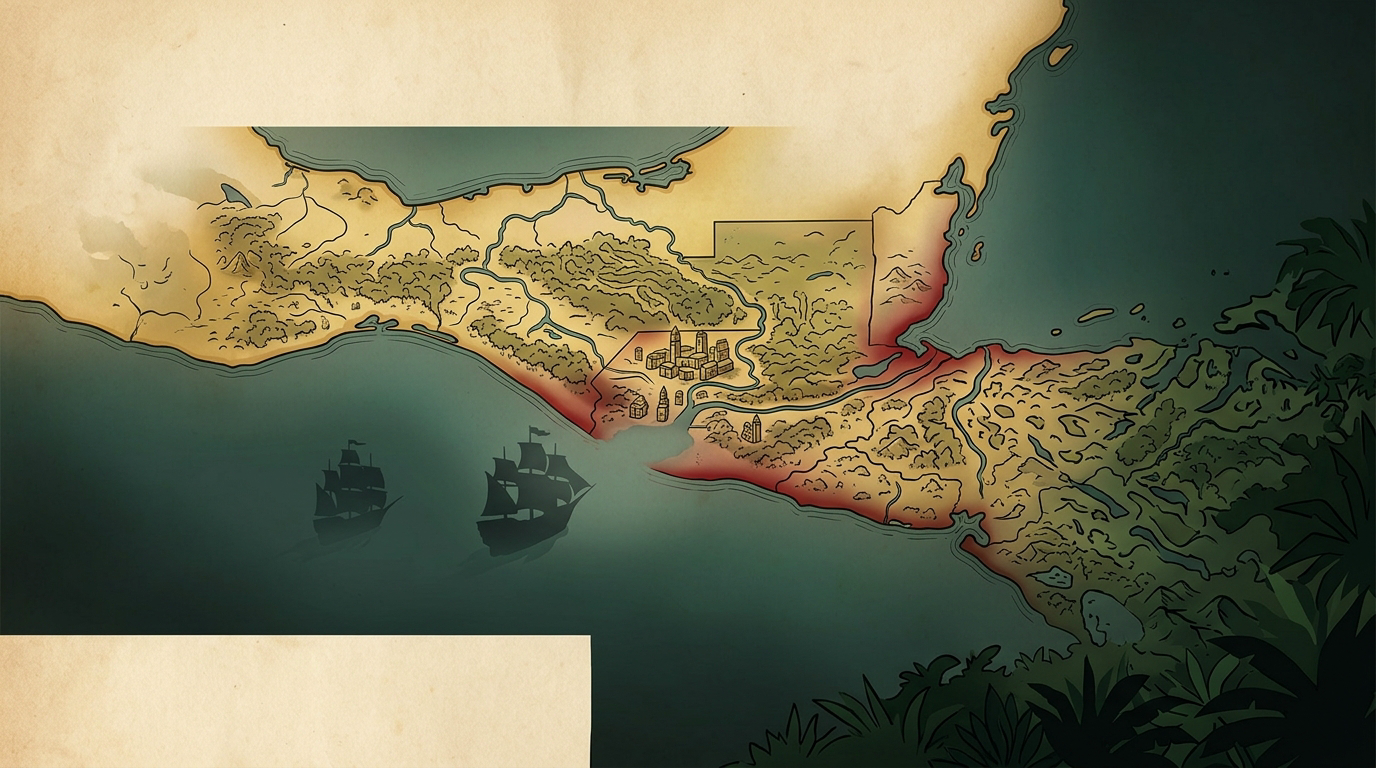
- Cover image prompt: Ornate antique parchment map of fictional Central American country dissolving into jungle darkness, ghost sailing ships approaching phantom harbor — editorial-tech illustration, parchment gold / shadow green / blood red palette, 16:9, no text
- Sources:
- https://en.wikipedia.org/wiki/Poyais
- https://www.amusingplanet.com/2025/05/the-poyais-scam-nation-that-never-was.html
- https://www.britannica.com/story/the-craziest-scam-gregor-macgregor-creates-his-own-country
- https://pictojam.com/p/how-a-con-artist-named-gregor-macgregor-sold-the-fake-country-of-poyais-to-investors-and-got-away-with-it
More from Short Video Voiceovers