Image Collections
Exoplanets — 19 Ross 128 b
One of the quietest nearby red-dwarf systems
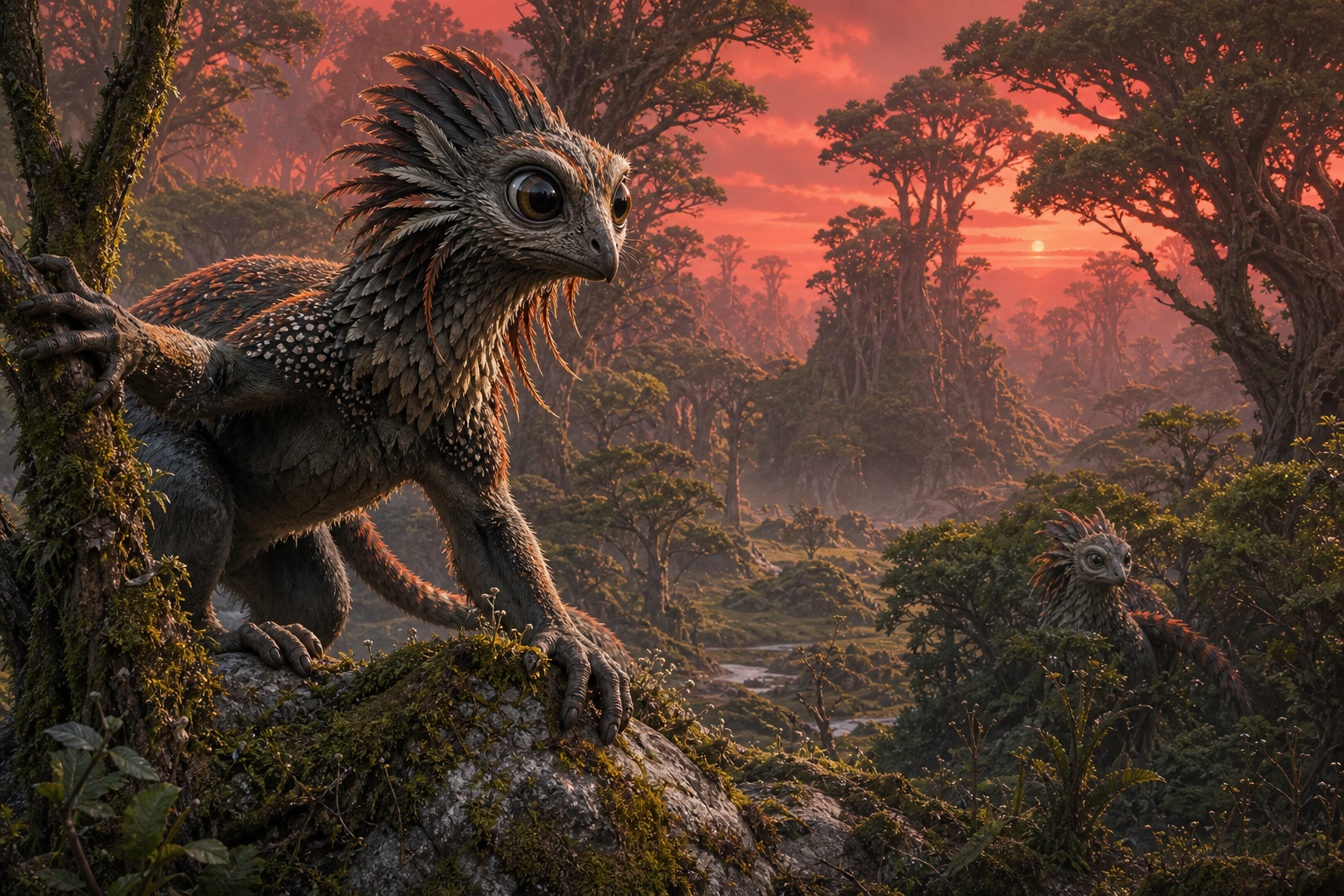
Exoplanets: Ross 128 b
- Planet: Ross 128 b
- Sequence: 19
- Saved image path:
My-Library/Images/Collections/Exoplanets/Images/Exoplanets_19-Ross-128-b.png - Model: built-in gpt-image (recovered from session transcript)
- Generation date: 2026-07-20
Planet Profile
- Planet type: Rocky terrestrial planet
- Host star: Quiet M-type red dwarf
- Minimum mass: ~1.35 Earth masses
- Orbital period: ~9.9 days
- One of the quietest nearby red-dwarf systems
- Atmosphere: Unknown
Environment
- Gravity: Near Earth
- Radiation: Lower stellar activity than many red dwarfs
- Climate: Potentially mild
- Surface: Rocky
Creature Design Direction
Forest-dwelling social animals with sophisticated communication and large binocular vision.
Planet / Habitat Depicted
A surface-level red-dwarf forest habitat with rocky ground, lichen-like mats, thick branching trunks, canopy haze, soft red-orange light, gentle mist, and a non-humanoid social climber using featherlike sensory crests for communication.
Sources
- Data provided in the collection plan (
Prompts/generate-exoplanets-collection.md); measurements are from published exoplanet catalogs. No web research performed for this collection.
Final Prompt Used
Use case: scientific-educational
Asset type: Exoplanets speculative-astrobiology natural-history field-guide image, 3:2 landscape PNG
Primary request: Create a scientifically plausible alien creature from Ross 128 b.

Core description from the collection plan: An intelligent forest-dwelling alien from Ross 128 b, Earthlike gravity, dense alien forests under soft red sunlight, expressive eyes, featherlike sensory structures, agile climbing limbs, realistic wildlife documentary illustration.

Known environment to depict: Ross 128 b is a rocky terrestrial planet orbiting a quiet M-type red dwarf. Minimum mass is about 1.35 Earth masses, orbital period about 9.9 days, atmosphere unknown. Gravity is near Earth, stellar radiation is lower activity than many red dwarfs, climate is potentially mild, surface is rocky.

Creature design: forest-dwelling social animal with sophisticated communication and large binocular vision. Body plan reflects near-Earth gravity: agile but grounded, climbing limbs and grasping pads suited to rocky forest trunks. Sensory organs reflect soft red-dwarf lighting: very large expressive binocular eyes, dark adaptive pupils, featherlike sensory structures around the head and neck that can signal socially. Skin, feathers, and insulation reflect a mild red-lit forest climate: muted charcoal, rust, moss-green, and iridescent dark plumage, no fantasy glow except subtle natural bioluminescent forest spores.

Planet and habitat: show a surface-level view inside dense alien forests under soft red sunlight, with rocky ground, lichen-like mats, thick branching trunks, layered canopy, red-orange sky glimpsed through leaves, atmospheric haze, gentle mist, and horizon depth. The creature should be physically interacting with its world: gripping a mossy rock and tree limb, leaving soft prints in damp mineral soil, communicating with another partially hidden individual through featherlike crest posture.

Requirements: depict the planet as well as the creature: ground surface, sky, atmosphere, weather, horizon, terrain, lighting, and habitat features. Make creature and environment feel physically connected. Use a surface-level habitat view. Do not show the planet as a separate sphere in the sky; do not add unexplained moons or extra planets. Avoid humanoid anatomy unless scientifically justified; make it non-humanoid but intelligent-looking through posture, gaze, tool-adjacent curiosity, and social signaling.

Style/medium: natural-history field-guide illustration, realistic scientific/anatomical detail, documentary wildlife lighting, NASA meets National Geographic meets speculative astrobiology, one unified scene.

Composition/framing: 3:2 wide landscape; balance a clear creature portrait in the foreground with readable planetary forest habitat across the midground and background. Do not crop so tightly that the world is reduced to a blurred background.

Text constraints: no text or labels baked into the image. No logos, no watermarks, no borders.

Avoid: random fantasy alien, humanoid person in costume, official logos, photorealistic real people, extra planets or moons, orbital cutaway, captions, labels, unreadable pseudo-text.
More from Image Collections
Internet Culture Timeline — 2025
2025-01-01
Music Yearbooks — 2025
2025-01-01
News & Culture — 2025
2025-01-01
NFL Super Bowls — 2025
2025-01-01
Science Breakthroughs — 2025
2025-01-01
Transportation & Mobility — 2025
2025-01-01
Video Game History — 2025
2025-01-01
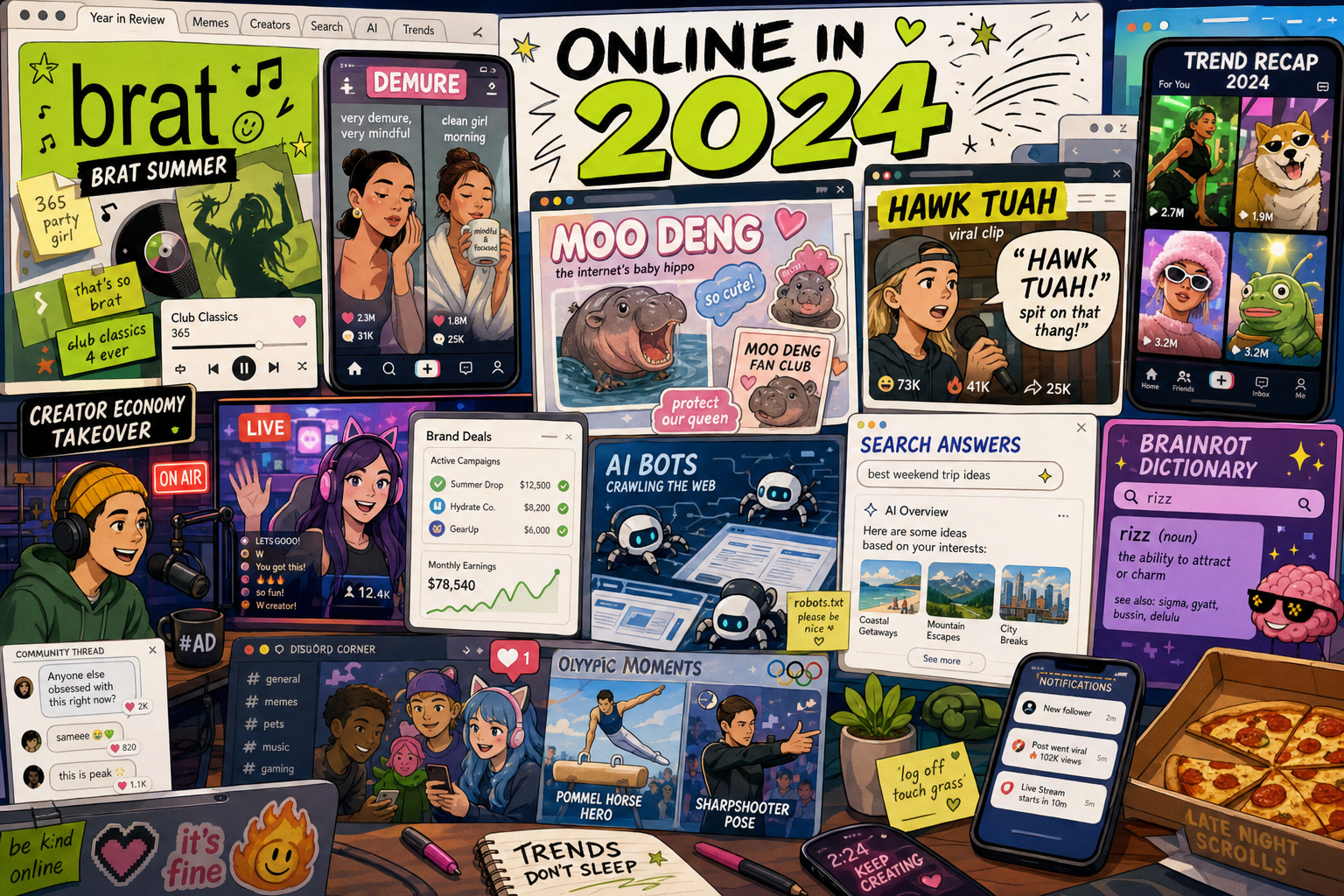
Internet Culture Timeline — 2024
2024-01-01
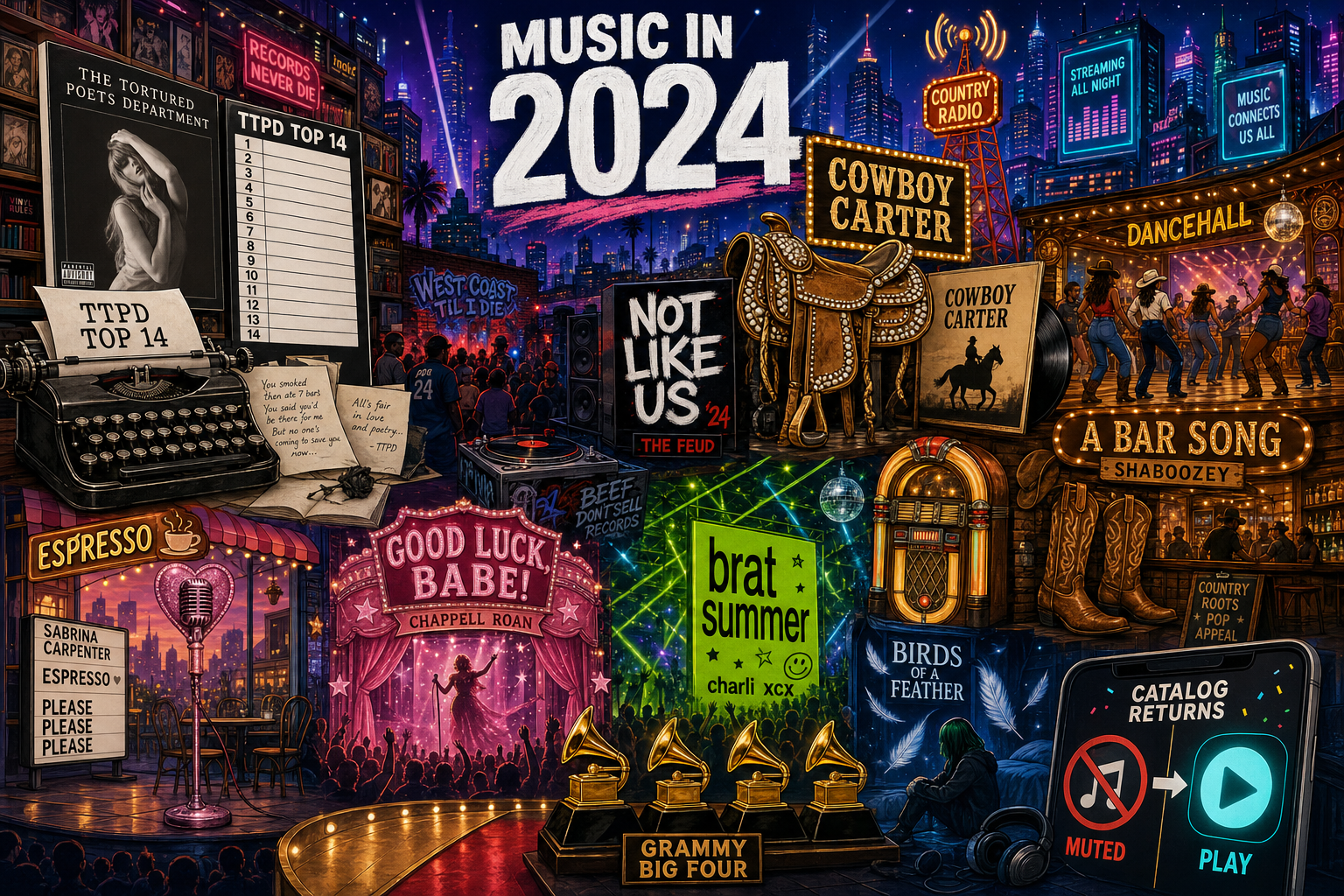
Music Yearbooks — 2024
2024-01-01
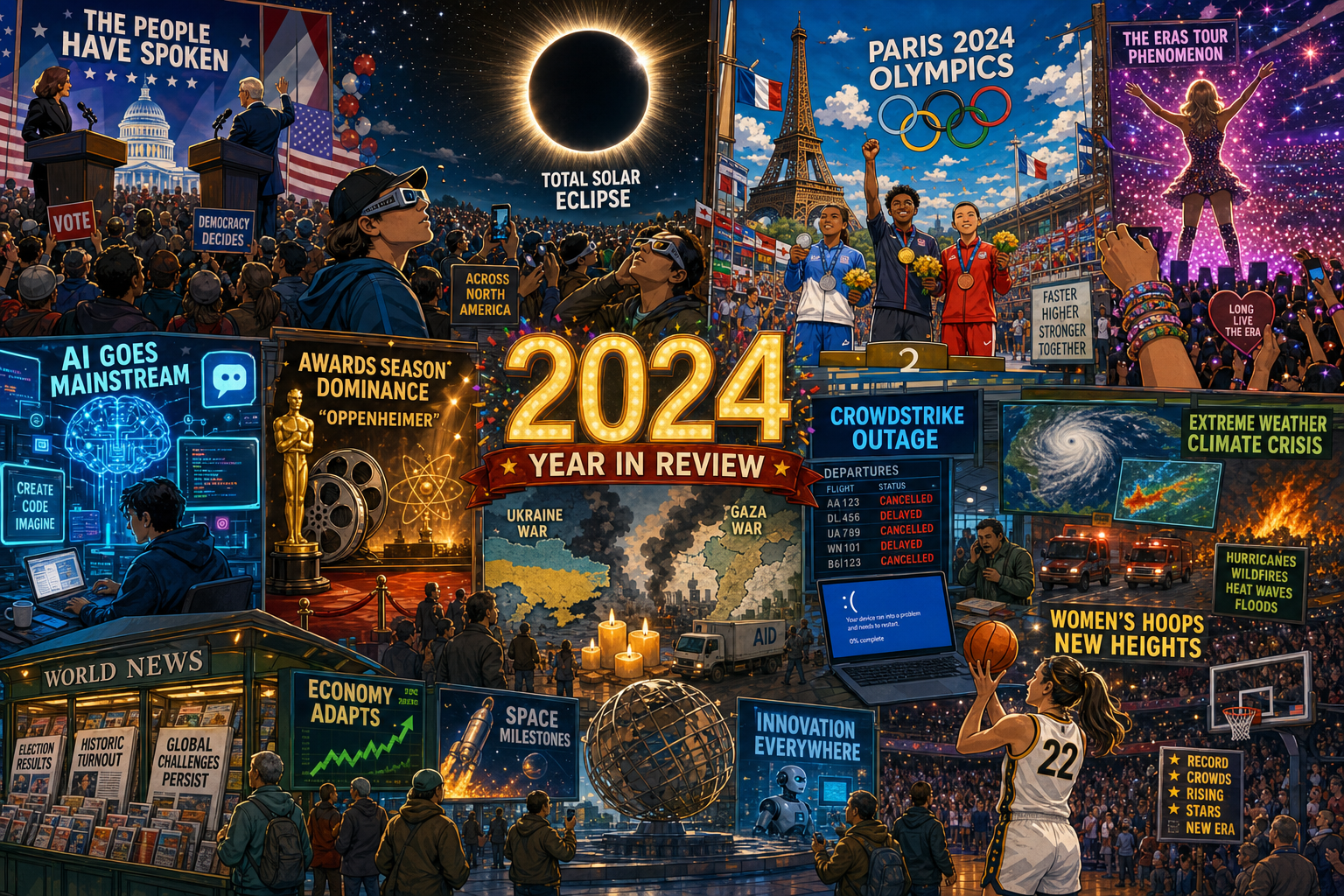
News & Culture — 2024
2024-01-01
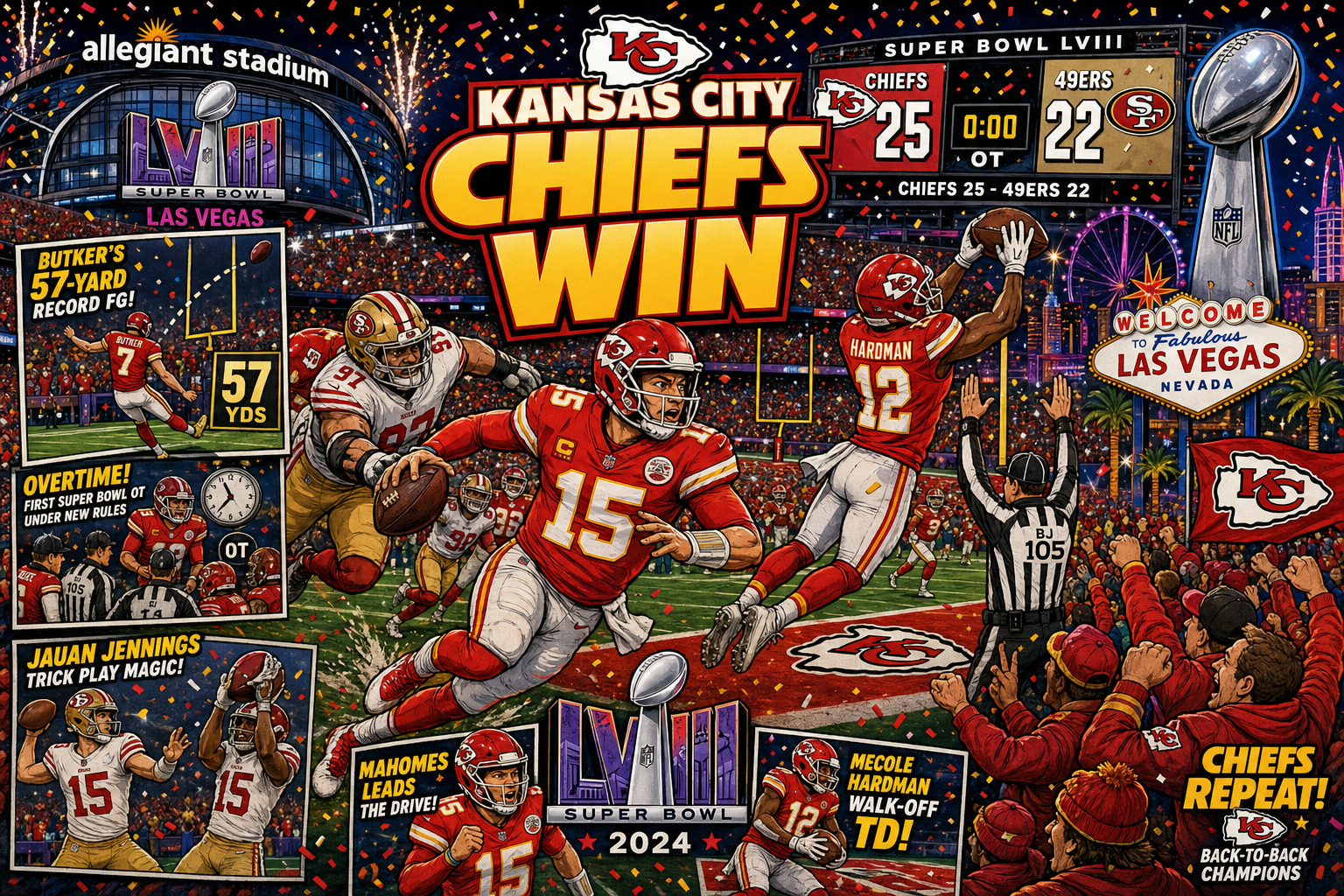
NFL Super Bowls — 2024
2024-01-01
Science Breakthroughs — 2024
2024-01-01