Image Collections 2004-01-01
Science Breakthroughs — 2004
Spirit and Opportunity Mars rovers found evidence of past water. Selected because Science named the Mars rover discoveries its 2004 Breakthrough of the Year.
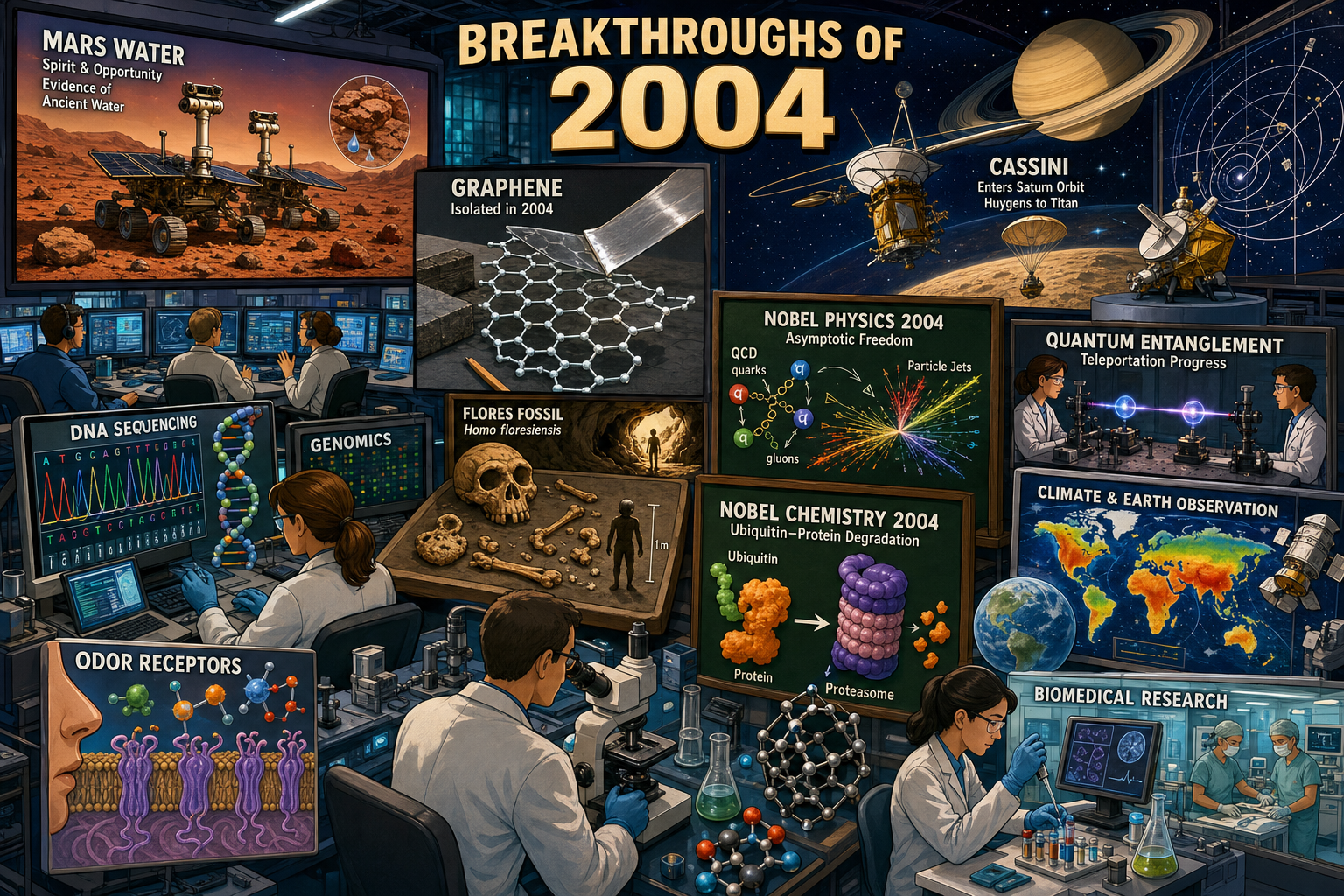
Science Breakthroughs: 2004
- Year: 2004
- Saved image path:
My-Library/Images/Collections/Science-Breakthroughs/Images/Science-Breakthroughs_2004.png - Model: built-in gpt-image (recovered from session transcript)
- Generation date: 2026-07-07
Selected Science Breakthroughs
- Spirit and Opportunity Mars rovers found evidence of past water. Selected because Science named the Mars rover discoveries its 2004 Breakthrough of the Year. Source: https://news.cornell.edu/stories/2004/12/science-names-mars-discovery-breakthrough-year
- Graphene isolation. Selected because the 2004 work opened the modern era of two-dimensional materials. Source: https://www.aps.org/publications/apsnews/200910/physicshistory.cfm
- Cassini-Huygens entered Saturn orbit and released Huygens. Selected as a major planetary-science milestone. Source: https://science.nasa.gov/mission/cassini/
- Homo floresiensis announced from Flores Island fossils. Selected as a striking human-evolution and archaeology breakthrough. Source: https://www.nature.com/scitable/knowledge/library/homo-floresiensis-making-sense-of-the-small-91387735/
- 2004 Nobel Prize in Physics: asymptotic freedom in strong interactions. Selected to represent the year's Nobel-worthy physics. Source: https://www.nobelprize.org/prizes/physics/2004/summary/
- 2004 Nobel Prize in Chemistry: ubiquitin-mediated protein degradation. Selected to represent molecular cell biology and chemistry. Source: https://www.nobelprize.org/prizes/chemistry/2004/summary/
- 2004 Nobel Prize in Physiology or Medicine: odorant receptors and olfactory organization. Selected to represent neuroscience and sensory biology. Source: https://www.nobelprize.org/prizes/medicine/2004/summary/
- Five-photon entanglement and open-destination quantum teleportation. Selected as a visually distinct quantum-information milestone. Source: https://pubmed.ncbi.nlm.nih.gov/15229594/
- Climate and Earth-observation monitoring. Selected as a broader 2004 science context for planetary data and climate visualization. Source: https://www.noaa.gov/
- DNA sequencing and biomedical lab progress. Selected as supporting context for early-2000s genomics and life-science research. Source: https://www.nih.gov/
Rights / Sensitivity Notes
All researchers are generic figures. Nobel themes are represented through diagrams and lab props, not named laureate likenesses. Medical and human-evolution topics are shown symbolically and respectfully.
Final Prompt Used
Use case: illustration-story
Asset type: year-by-year science breakthroughs collection image
Primary request: Create a lively illustrated science-magazine montage for the year 2004, showing medicine, physics, biology, genetics, energy, archaeology, materials science, space exploration, and Nobel-worthy discoveries that defined science that year.

Scene/backdrop: a cohesive laboratory-and-discovery montage: a bright popular-science annual-review cover scene with lab benches, microscopes, telescope/star chart wall, molecule/DNA models, particle-collider chalkboard, fossil/specimen table, clean hospital research corner, and a Mars mission control screen. The scene should feel like one unified science world rather than disconnected stickers.

Subject: combine these selected breakthroughs into one unified illustrated montage: NASA Spirit and Opportunity Mars rovers finding evidence of ancient water, shown on a mission-control screen and red-rock sample tray; graphene isolation in 2004 shown as a honeycomb carbon sheet being lifted from graphite with tape; Cassini-Huygens entering Saturn orbit and releasing the Titan probe shown on a star chart and small spacecraft model; Homo floresiensis announced from Flores cave fossils shown as a respectful fossil table with tiny hominin silhouette scale, no real-person likenesses; 2004 Nobel Physics asymptotic freedom shown as quark/gluon chalkboard diagrams and colored particle jets; 2004 Nobel Chemistry ubiquitin-mediated protein degradation shown as tagged proteins entering a proteasome machine; 2004 Nobel Medicine odorant receptors shown as a nose-cell receptor diagram and aroma molecules; quantum teleportation/open-destination entanglement progress shown as connected photon beams between lab benches; climate and Earth-observation monitoring shown as a globe with heat-map bands; biomedical and genetics progress shown as DNA sequencing screens and clean lab vials.

Year text requirement: include clear readable text in the image that says: "2004".

Optional title text: include a short readable title: "BREAKTHROUGHS OF 2004".

Style/medium: polished cartoon-editorial illustration in a popular-science-magazine style: stylized lab equipment, glowing screens, molecule and DNA models, star charts, expressive generic researcher figures, magazine-quality digital art.

Composition/framing: wide 3:2 landscape image, one unified scene rather than separate panels. Use foreground researchers and instruments, midground lab benches and specimen tables, and background observatory, mission-control, collider, and hospital-research context. Make the biggest 2-3 breakthroughs most prominent: Mars rovers/water evidence, graphene, and Cassini/Saturn, with smaller references integrated as chalkboard diagrams, screen readouts, specimen labels, wall charts, or poster insets.

Lighting/mood: bright, curious, and optimistic, with clean lab lighting, glowing screens and instruments, and clear visual hierarchy.

Color palette: varied and field-aware: clinical whites and teals for medicine, deep-space blues and purples for astronomy, DNA greens and molecular oranges for biology/chemistry, graphite gray and electric cyan for graphene, Mars red, Saturn gold, and earthy fossil tones. Avoid a one-note palette.

Text constraints: short readable labels are allowed on chalkboards, screens, specimen tags, wall charts, and posters. Use 1-5 words per label, such as "MARS WATER", "GRAPHENE", "CASSINI", "FLORES FOSSIL", "UBIQUITIN", "ODOR RECEPTORS", "QCD", "NOBEL". Keep text high-contrast, correctly spelled, and large enough to read. Do not use long captions, fake paragraphs, or a row of labels at the bottom.

Avoid: official logos, exact institutional branding, trademark-accurate equipment or product designs, photorealistic likenesses of real people including named scientists/laureates, graphic illness/injury/casualties, hateful symbols, cluttered sticker-collage layout, tiny unreadable labels, distorted lettering, fake full article text, and generic stock imagery.
More from Image Collections
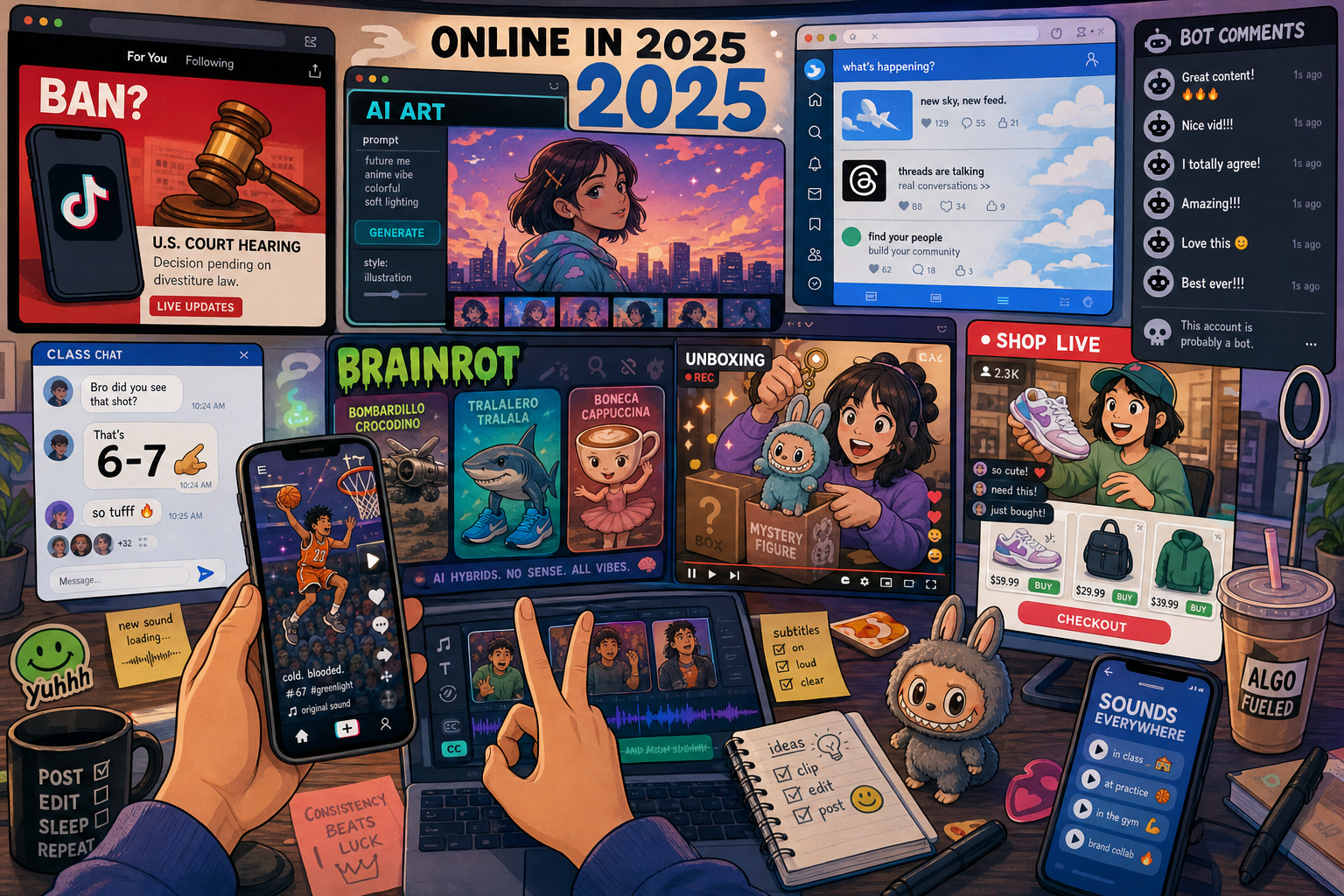
Internet Culture Timeline — 2025
2025-01-01
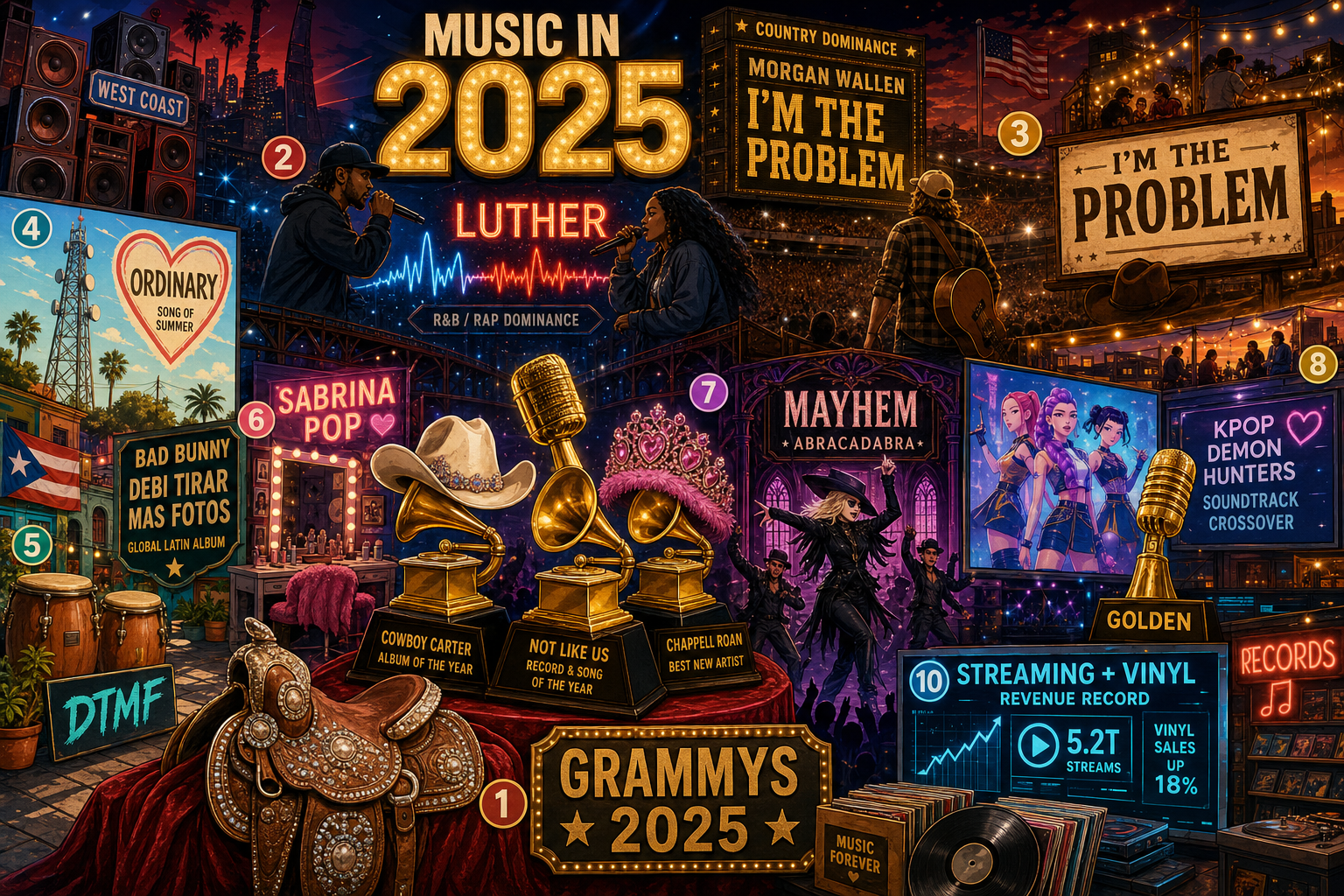
Music Yearbooks — 2025
2025-01-01

News & Culture — 2025
2025-01-01

NFL Super Bowls — 2025
2025-01-01
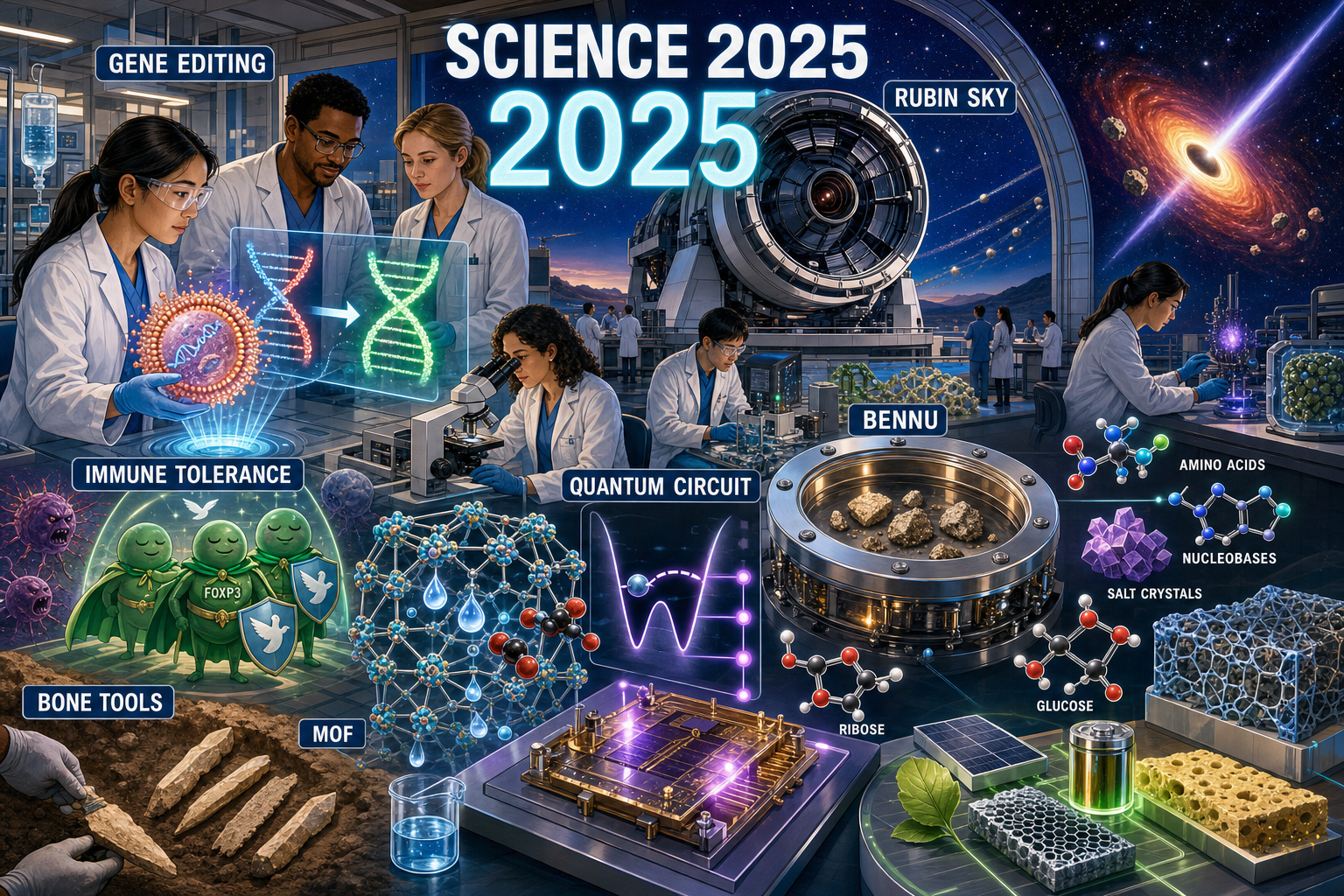
Science Breakthroughs — 2025
2025-01-01
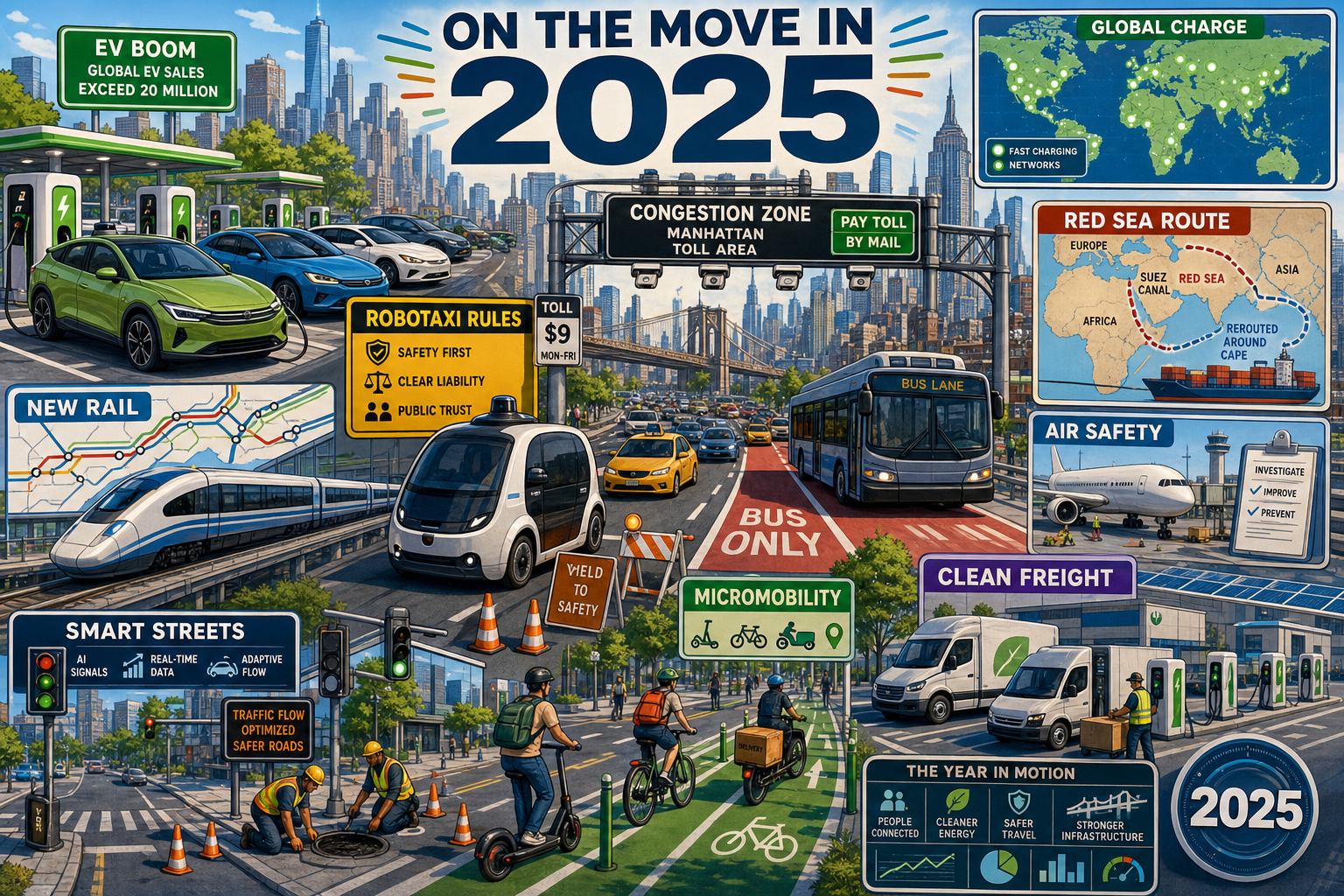
Transportation & Mobility — 2025
2025-01-01
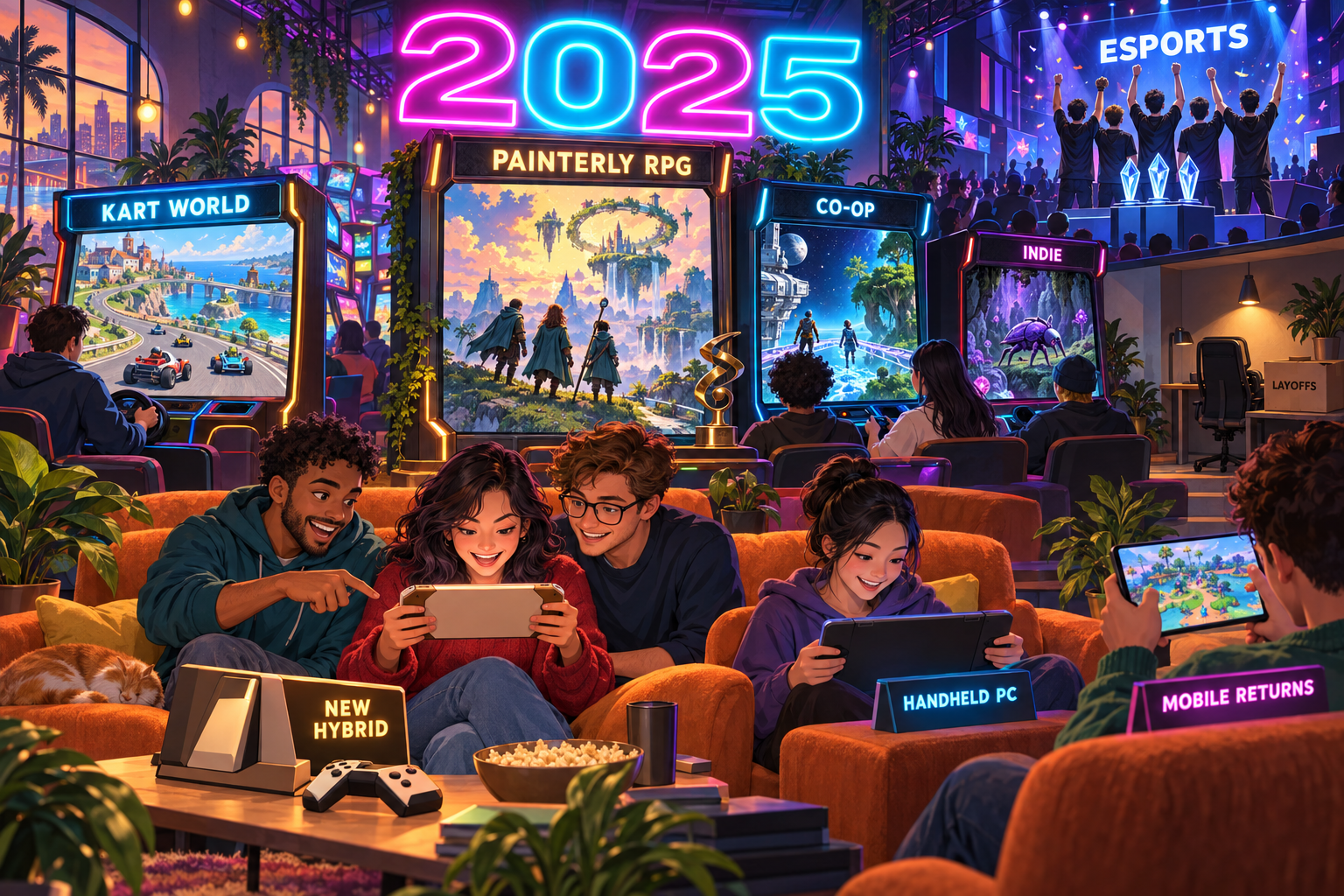
Video Game History — 2025
2025-01-01
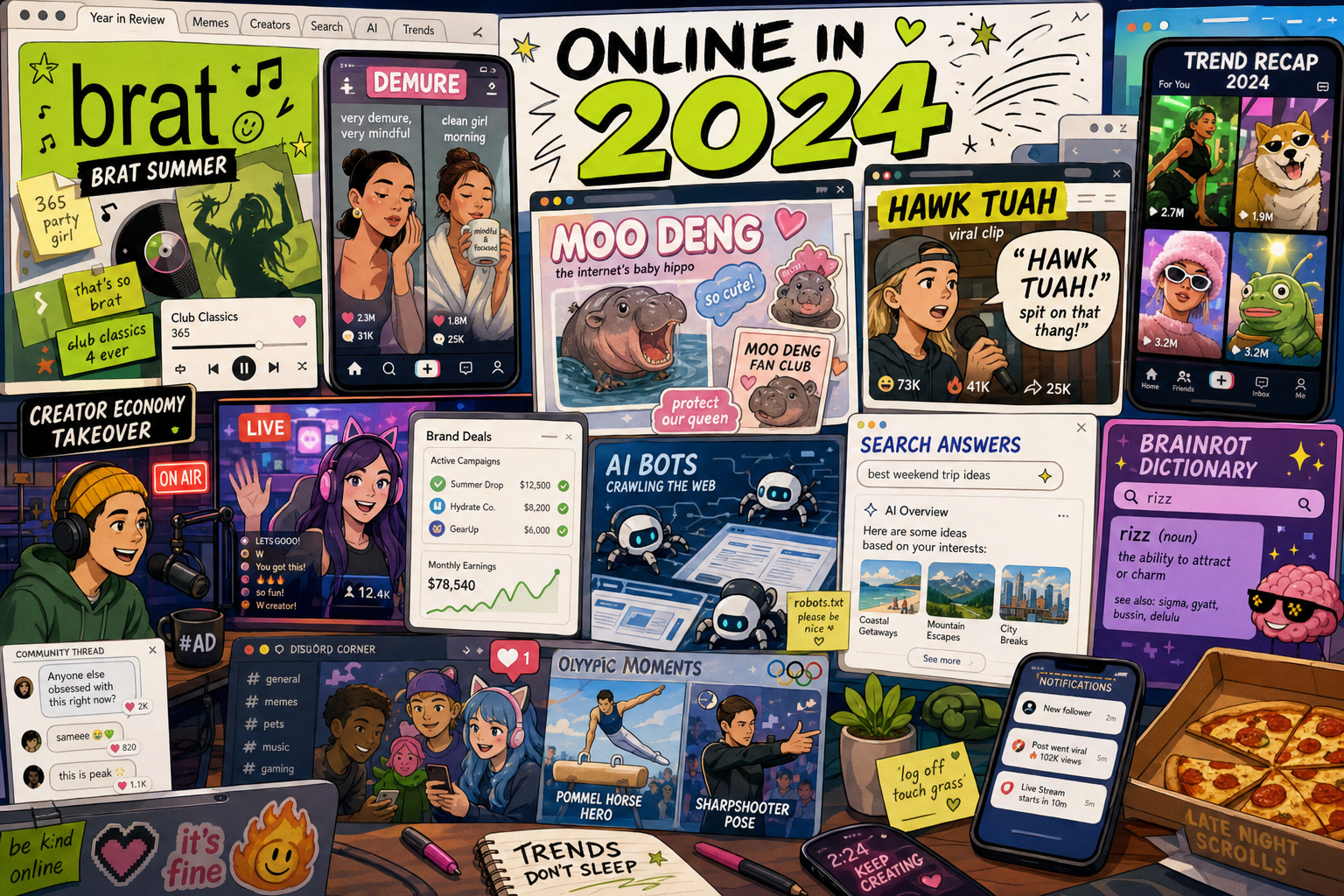
Internet Culture Timeline — 2024
2024-01-01
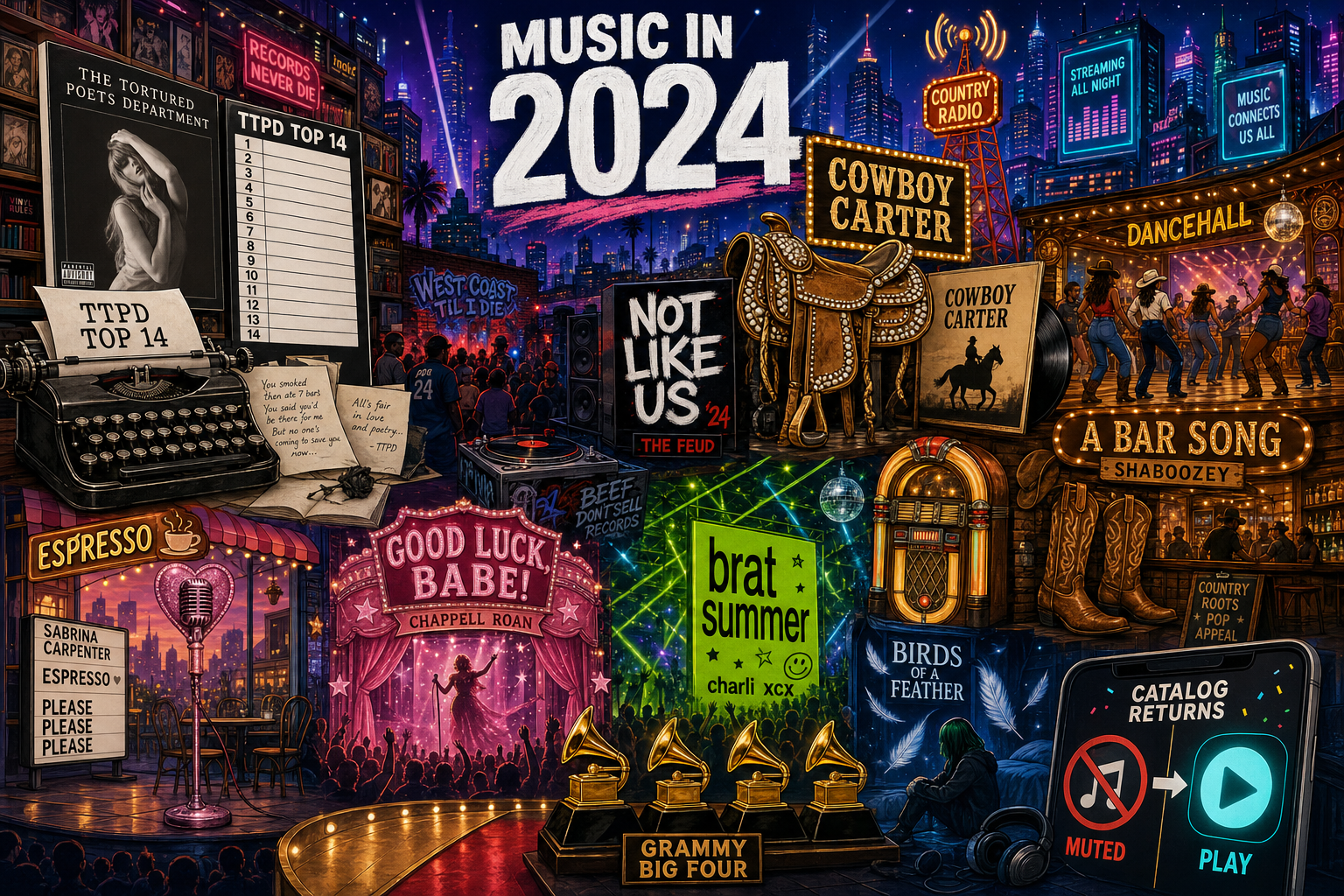
Music Yearbooks — 2024
2024-01-01
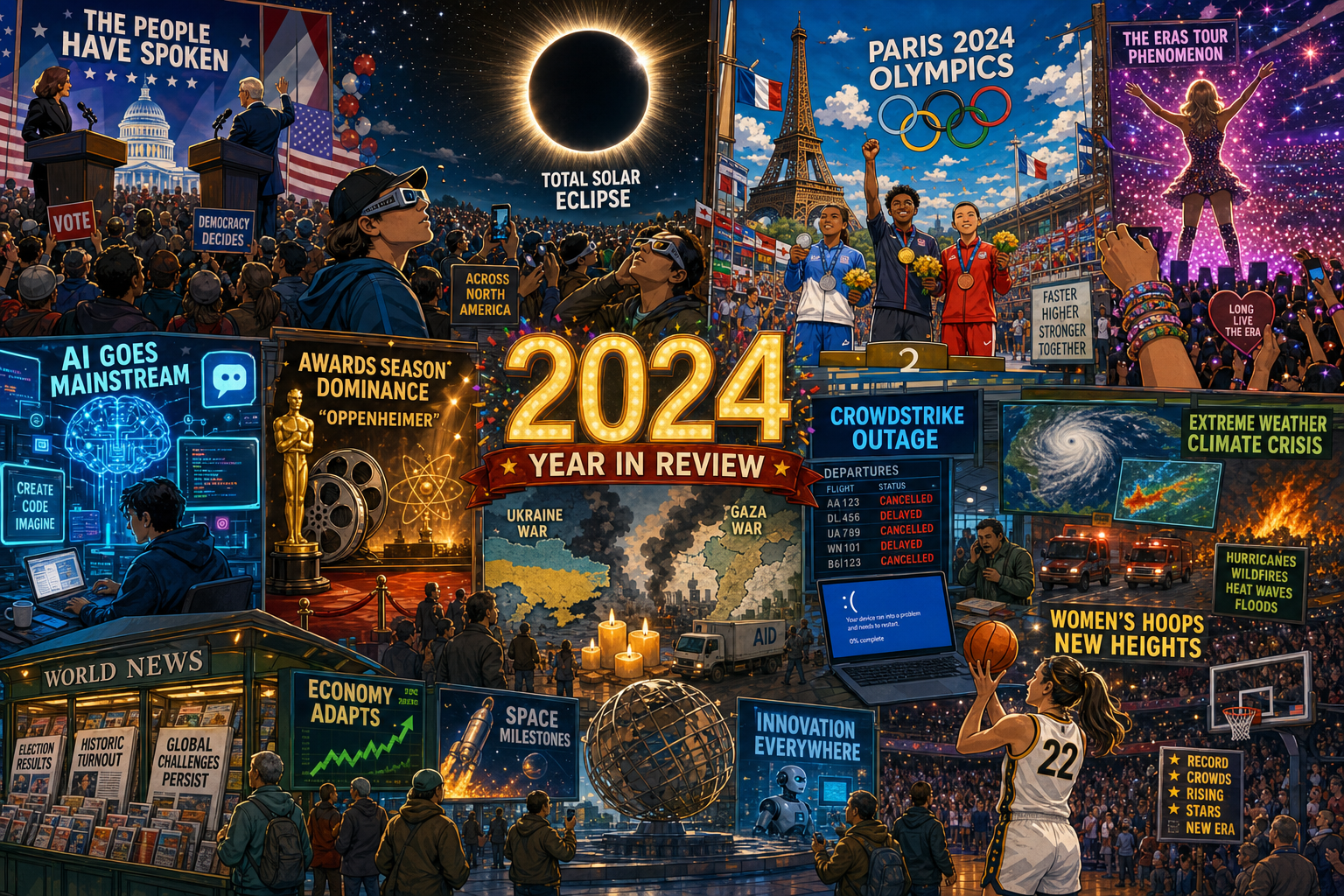
News & Culture — 2024
2024-01-01
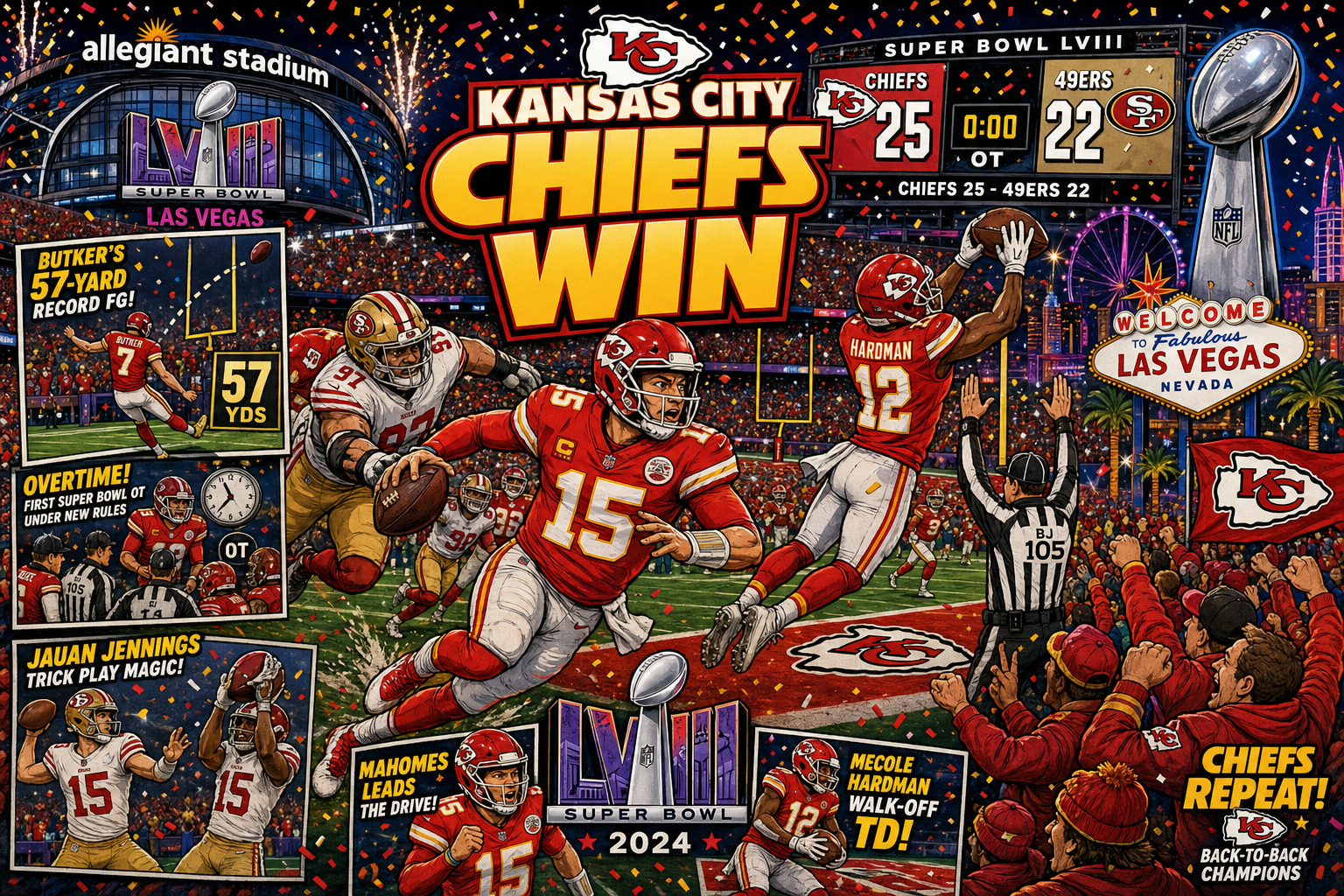
NFL Super Bowls — 2024
2024-01-01
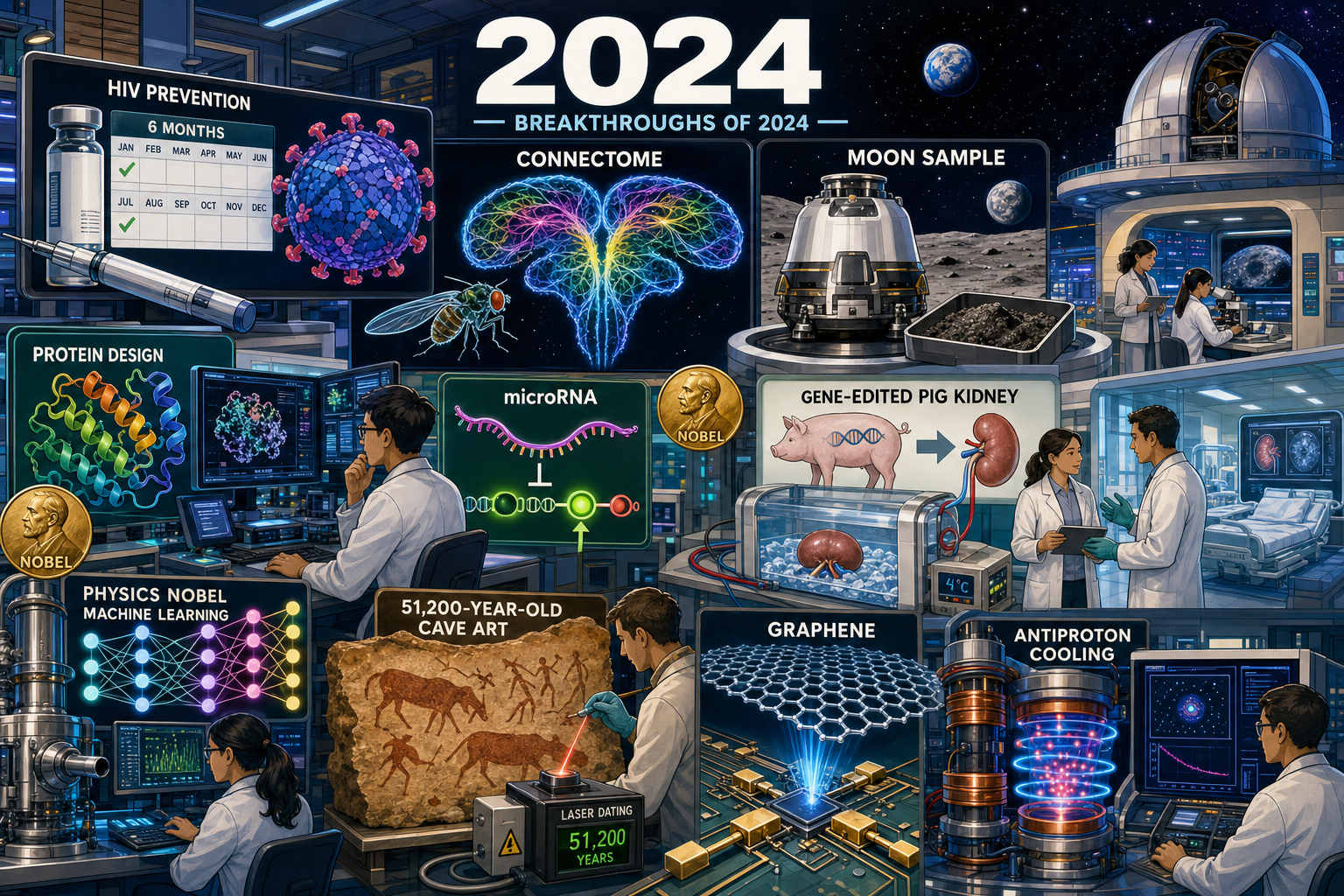
Science Breakthroughs — 2024
2024-01-01