Image Collections 2014-01-01
Science Breakthroughs — 2014
Rosetta and Philae comet landing
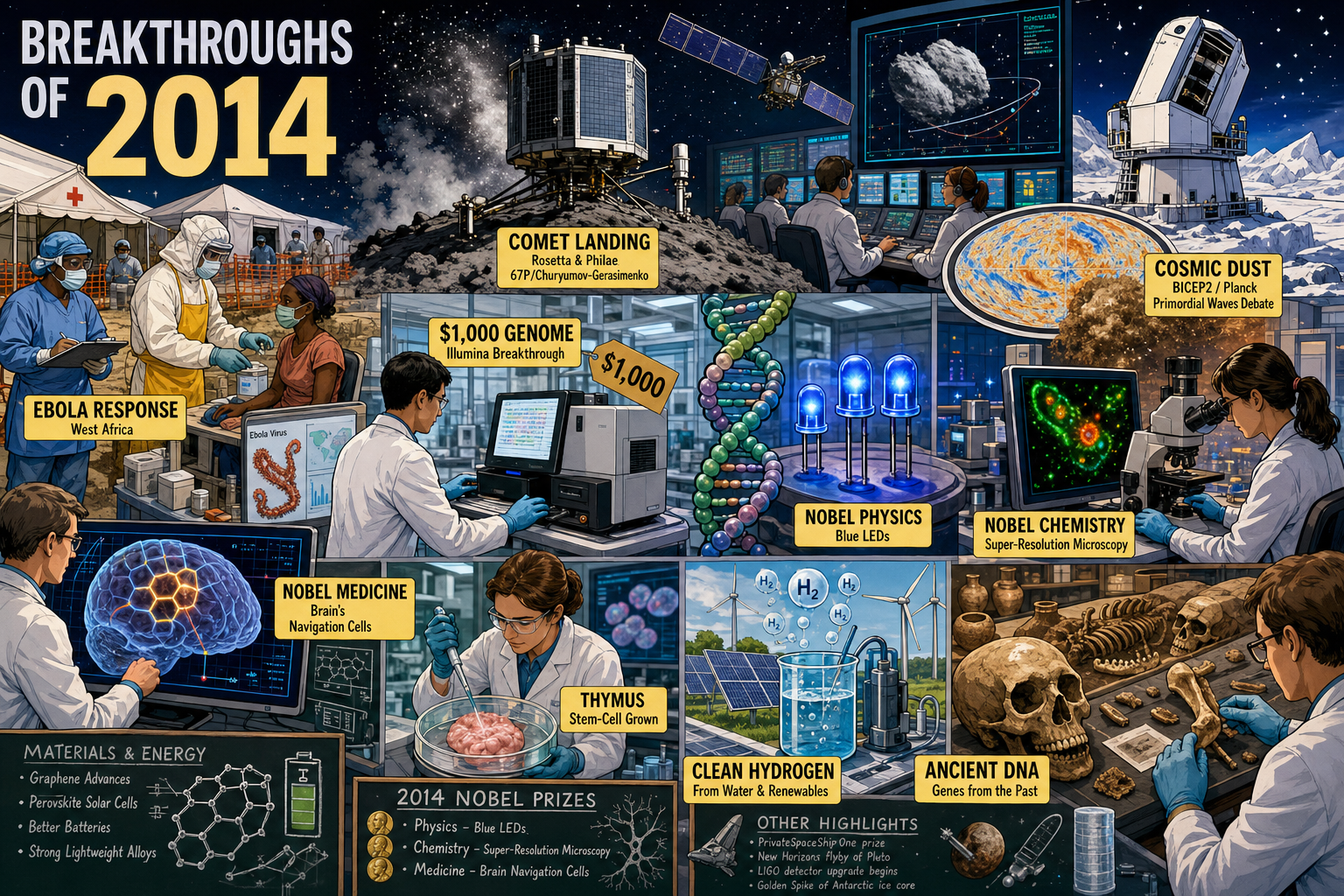
Science Breakthroughs: 2014
- Year: 2014
- Saved image path:
My-Library/Images/Collections/Science-Breakthroughs/Images/Science-Breakthroughs_2014.png - Model: built-in gpt-image (recovered from session transcript)
- Generation date: 2026-07-20
Selected Science Breakthroughs
- Rosetta and Philae comet landing
- Field: Space science / planetary science
- Why selected: Science named Rosetta's comet landing its 2014 breakthrough of the year, and ESA describes Rosetta as the first mission to rendezvous with, follow, and deploy a lander to a comet.
- Visual depiction: Philae lander on comet 67P with mission-control screens.
- Rights/sensitivity notes: Generic mission-control styling, no agency logo.
- Source: https://www.science.org/content/article/breakthrough-year-2014-landing-comet
- Source: https://www.esa.int/Science_Exploration/Space_Science/Rosetta
- West Africa Ebola emergency
- Field: Medicine / public health
- Why selected: WHO declared the outbreak a Public Health Emergency of International Concern in August 2014.
- Visual depiction: Clean response tent, masked health workers, and abstract virus model.
- Rights/sensitivity notes: Symbolic public-health scene, no graphic illness.
- Source: https://www.who.int/news/item/08-08-2014-statement-on-the-1st-meeting-of-the-ihr-emergency-committee-on-the-2014-ebola-outbreak-in-west-africa
- $1,000 genome sequencing
- Field: Genetics / biotechnology
- Why selected: The HiSeq X Ten announcement marked a widely discussed sequencing cost milestone.
- Visual depiction: Generic sequencing machine, DNA helix, and $1,000 genome label.
- Rights/sensitivity notes: No product branding.
- Source: https://investor.illumina.com/news/press-release-details/2014/Illumina-Introduces-the-HiSeq-X-Ten-Sequencing-System/default.aspx
- Source: https://www.nature.com/articles/nature.2014.14530
- BICEP2 and Planck dust caution
- Field: Physics / cosmology
- Why selected: The 2014 primordial gravitational wave claim and subsequent dust scrutiny became a major science-process story.
- Visual depiction: Polar telescope, CMB swirl, and cosmic dust cloud.
- Rights/sensitivity notes: Abstract cosmology visualization.
- Source: https://www.sciencenews.org/collections/2014-top-25
- Source: https://www.cfa.harvard.edu/news/bicep2-and-planck-joint-study-gravitational-waves-remain-elusive
- Blue LEDs
- Field: Physics / energy-efficient lighting
- Why selected: The 2014 Nobel Prize in Physics recognized efficient blue LEDs enabling bright white light sources.
- Visual depiction: Blue LED glow illuminating a lab bench.
- Rights/sensitivity notes: No laureate likenesses.
- Source: https://www.nobelprize.org/prizes/physics/2014/summary/
- Super-resolution microscopy
- Field: Chemistry / microscopy
- Why selected: The 2014 Nobel Prize in Chemistry recognized methods that bypassed optical microscopy's resolution limit.
- Visual depiction: Glowing microscope resolving tiny molecules.
- Rights/sensitivity notes: No real-person likenesses.
- Source: https://www.nobelprize.org/prizes/chemistry/2014/summary/
- Brain positioning cells
- Field: Neuroscience / medicine
- Why selected: The 2014 Nobel Prize in Physiology or Medicine recognized discoveries of cells forming the brain's positioning system.
- Visual depiction: Stylized brain map with grid-cell hexagons.
- Rights/sensitivity notes: No laureate likenesses.
- Source: https://www.nobelprize.org/prizes/medicine/2014/summary/
- Lab-grown thymus in an animal
- Field: Regenerative medicine
- Why selected: 2014 reports highlighted growth of a functioning thymus inside an animal as a regenerative-biology milestone.
- Visual depiction: Clean organoid dish labeled THYMUS.
- Rights/sensitivity notes: Non-graphic lab depiction.
- Source: https://en.wikipedia.org/wiki/2014_in_science
- Solar/wind hydrogen fuel from water
- Field: Energy / chemistry
- Why selected: 2014 year-in-science summaries included advances in hydrogen fuel production from water.
- Visual depiction: Solar panels, water beaker, and H2 bubbles.
- Rights/sensitivity notes: Generic clean-energy prototype.
- Source: https://en.wikipedia.org/wiki/2014_in_science
- Ancient DNA and human origins
- Field: Archaeology / genetics
- Why selected: 2014 science retrospectives highlighted ancient-human discoveries and DNA work as major themes.
- Visual depiction: Fossil specimen table labeled ANCIENT DNA.
- Rights/sensitivity notes: Museum-style specimen handling.
- Source: https://www.sciencenews.org/collections/2014-top-25
Final Prompt Used
Use case: illustration-story
Asset type: year-by-year science breakthroughs collection image
Primary request: Create a lively illustrated science-magazine montage for the year 2014, showing the medicine, physics, biology, genetics, energy, archaeology, and materials-science breakthroughs, including the year's Nobel-worthy discoveries, that defined science that year.

Scene/backdrop: a cohesive laboratory-and-discovery montage: a bright research world with lab benches, microscopes and telescopes, a molecule/DNA model, a space-mission control wall, a clean hospital research room, a public-health response station, a fossil/specimen table, clean-energy prototypes, and chalkboard diagrams. The scene should feel like one unified science world rather than disconnected stickers.

Subject: combine these selected breakthroughs into one unified illustrated montage: ESA's Rosetta mission and Philae lander touching down on comet 67P as the central anchor, labeled COMET LANDING; West Africa Ebola emergency response shown responsibly with masked health workers, a clean treatment tent, virus model, and label EBOLA RESPONSE; Illumina's $1,000 genome milestone shown as a generic sequencing machine, DNA helix, and price tag label $1,000 GENOME; BICEP2/Planck primordial-wave debate shown as a polar telescope, cosmic microwave background swirl, and dust cloud labeled COSMIC DUST; 2014 Nobel Physics blue LEDs shown as bright blue light-emitting diodes illuminating a lab bench; 2014 Nobel Chemistry super-resolution microscopy shown as a glowing microscope resolving tiny molecules labeled NANO MICROSCOPE; 2014 Nobel Medicine brain navigation cells shown as a stylized brain map with grid-cell hexagons labeled BRAIN GPS; stem-cell-grown thymus in an animal research context shown symbolically as a clean organoid dish labeled THYMUS; hydrogen fuel from water and renewable energy shown as solar panels, water beaker, and H2 bubbles labeled CLEAN HYDROGEN; ancient human DNA and fossils shown as a careful specimen table labeled ANCIENT DNA.

Year text requirement: include clear readable text in the image that says: "2014"

Optional title text: include a short readable title: "BREAKTHROUGHS OF 2014"

Style/medium: polished cartoon-editorial illustration in a popular-science-magazine style: stylized lab equipment, glowing screens, molecule and DNA models, star charts, expressive generic researcher figures, magazine-quality digital art.

Composition/framing: 3:2 wide landscape image, one unified scene rather than separate panels. Use foreground researchers and instruments, midground lab benches and specimen tables, and background comet mission control, observatory, and hospital-research context. Make Rosetta/Philae, Ebola response, and Nobel discoveries the most prominent, with smaller references integrated as chalkboard diagrams, screen readouts, specimen labels, wall charts, or poster insets.

Lighting/mood: bright, curious, and optimistic, with clean lab lighting, glowing screens and instruments, blue LED glow, comet dust rim light, and clear visual hierarchy. Medical topics must be calm and symbolic, not graphic.

Color palette: varied and field-aware: clinical whites and teals for medicine, deep-space blues and purples for astronomy, DNA greens and molecular oranges for biology/chemistry, clean-energy yellows and greens, earthy tones for archaeology, and bright blue LED accents. Avoid a one-note palette.

Text constraints: short readable labels only, 1-5 words per label, high contrast, correctly spelled, large enough to read. Do not use long captions, fake paragraphs, or a row of labels at the bottom.

Avoid: official logos, exact institutional branding, trademark-accurate equipment or product designs, photorealistic likenesses of real people including named scientists/laureates, graphic illness/injury/casualties, hateful symbols, cluttered sticker-collage layout, tiny unreadable labels, distorted lettering, fake full article text, and generic stock imagery.
More from Image Collections
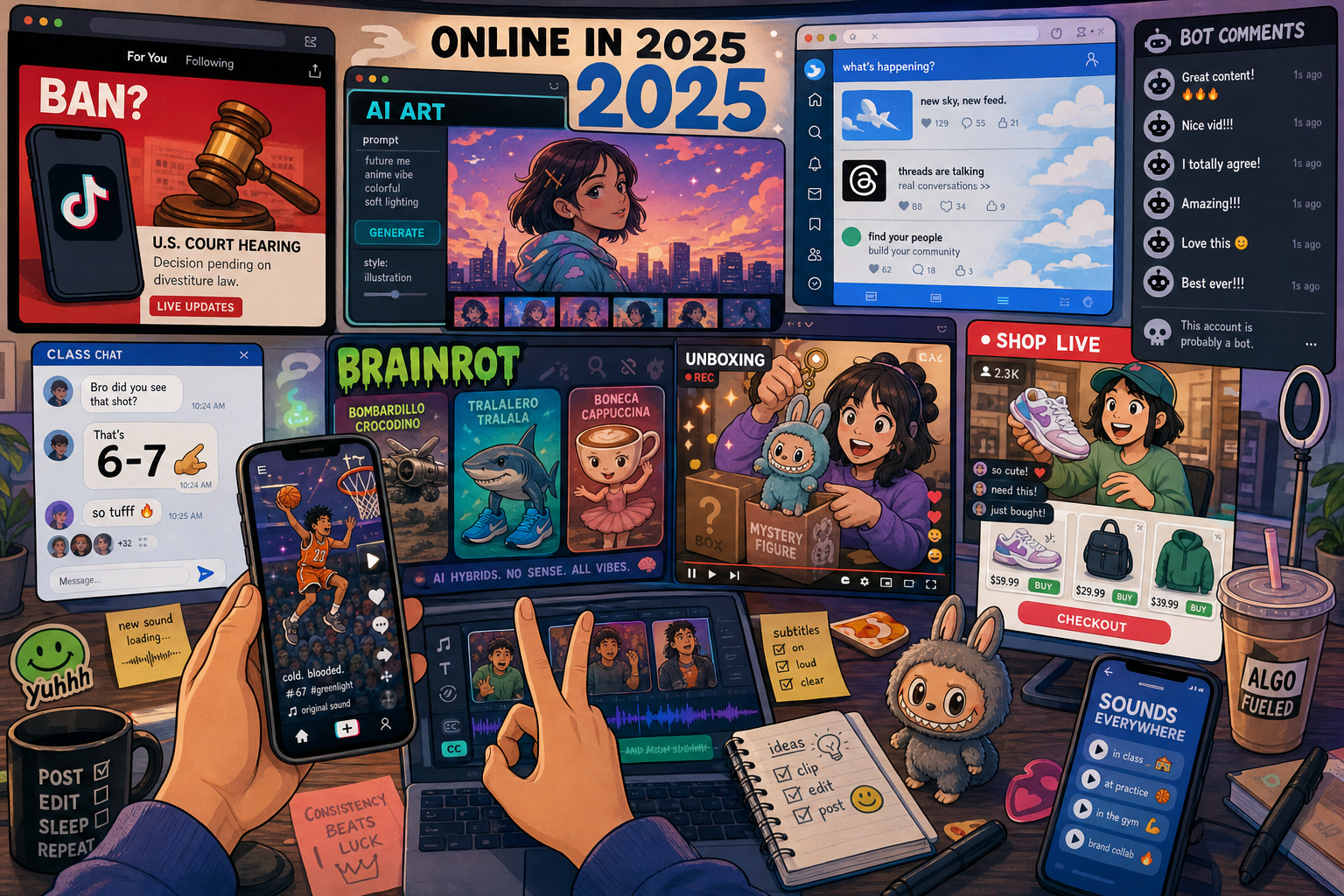
Internet Culture Timeline — 2025
2025-01-01
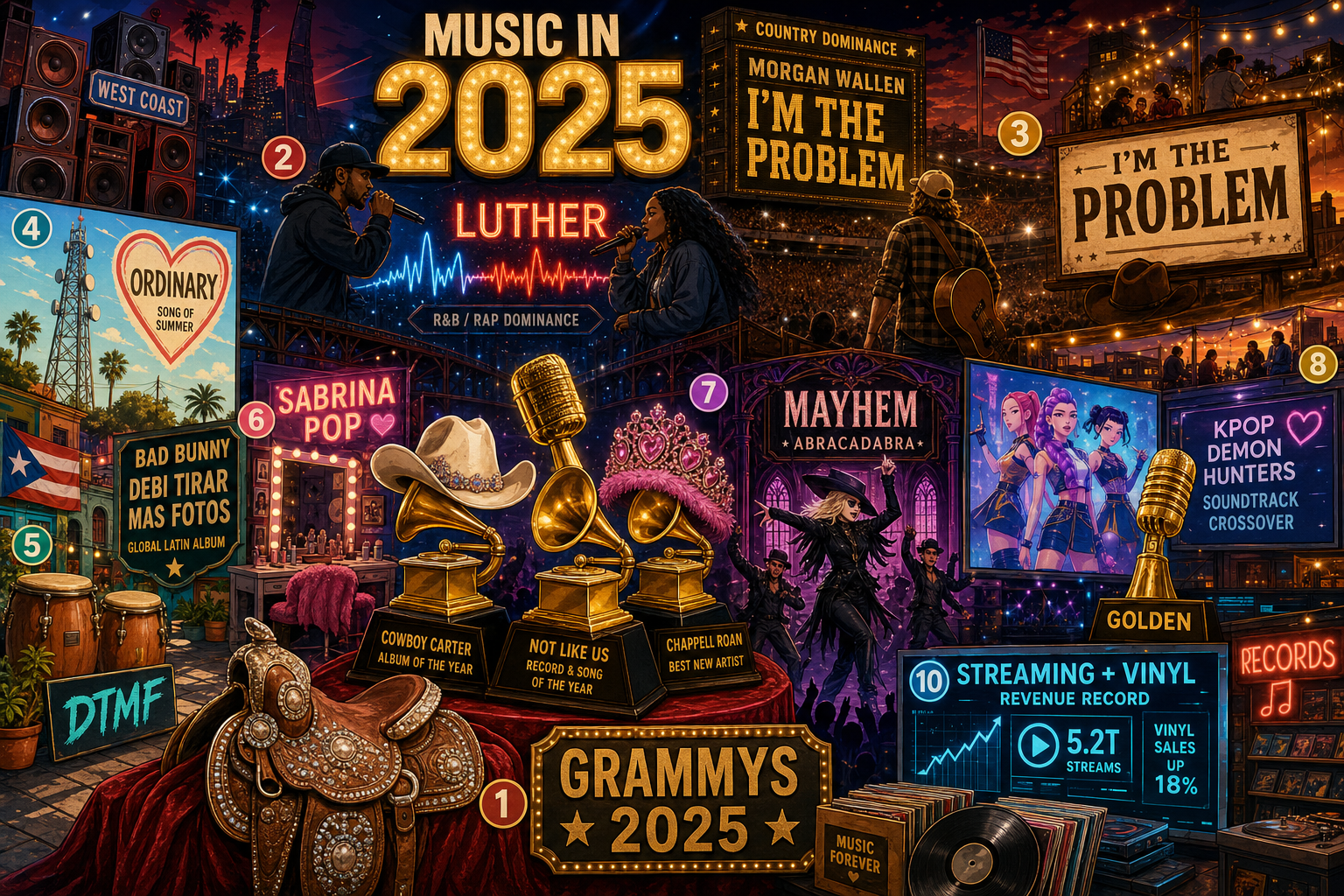
Music Yearbooks — 2025
2025-01-01
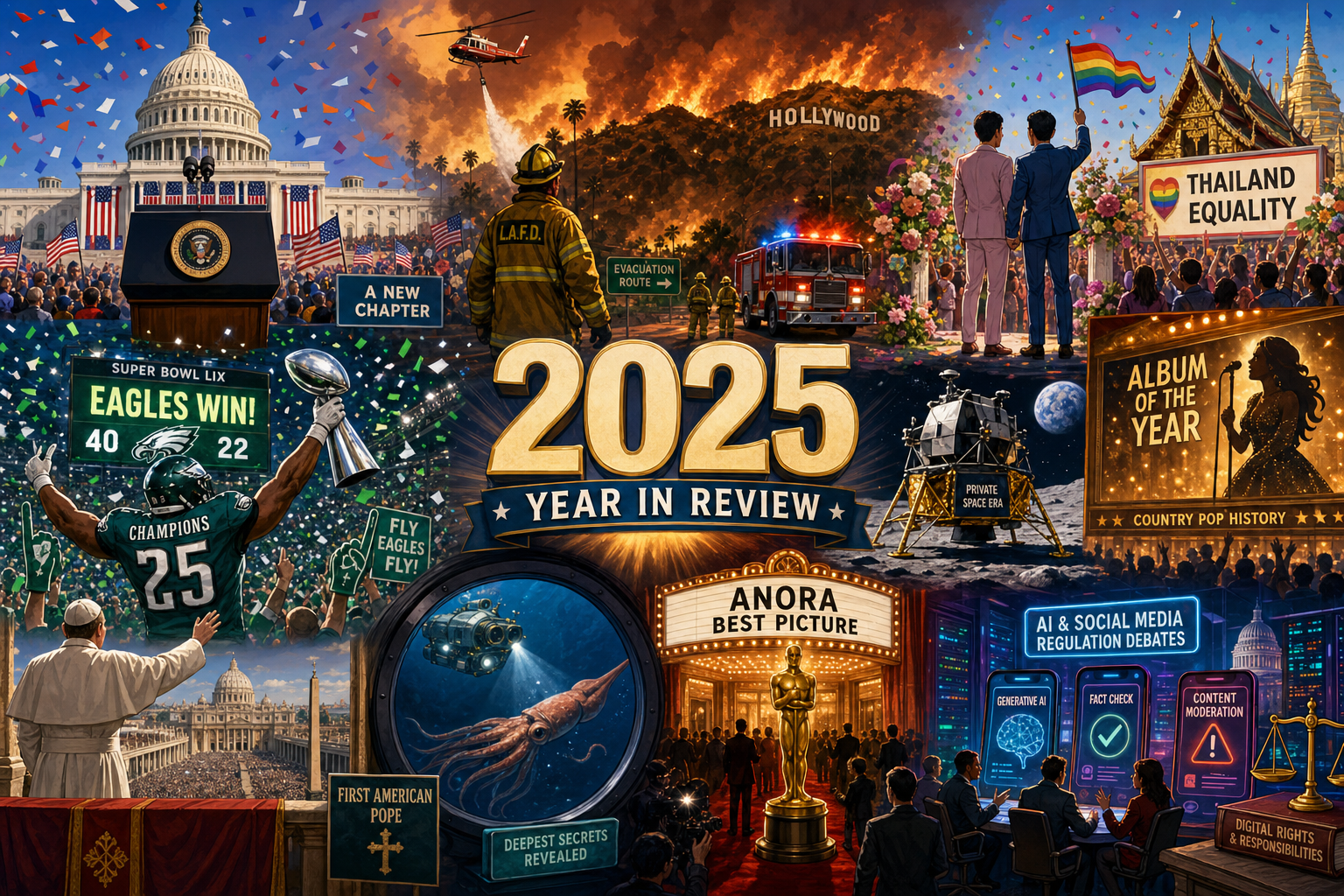
News & Culture — 2025
2025-01-01
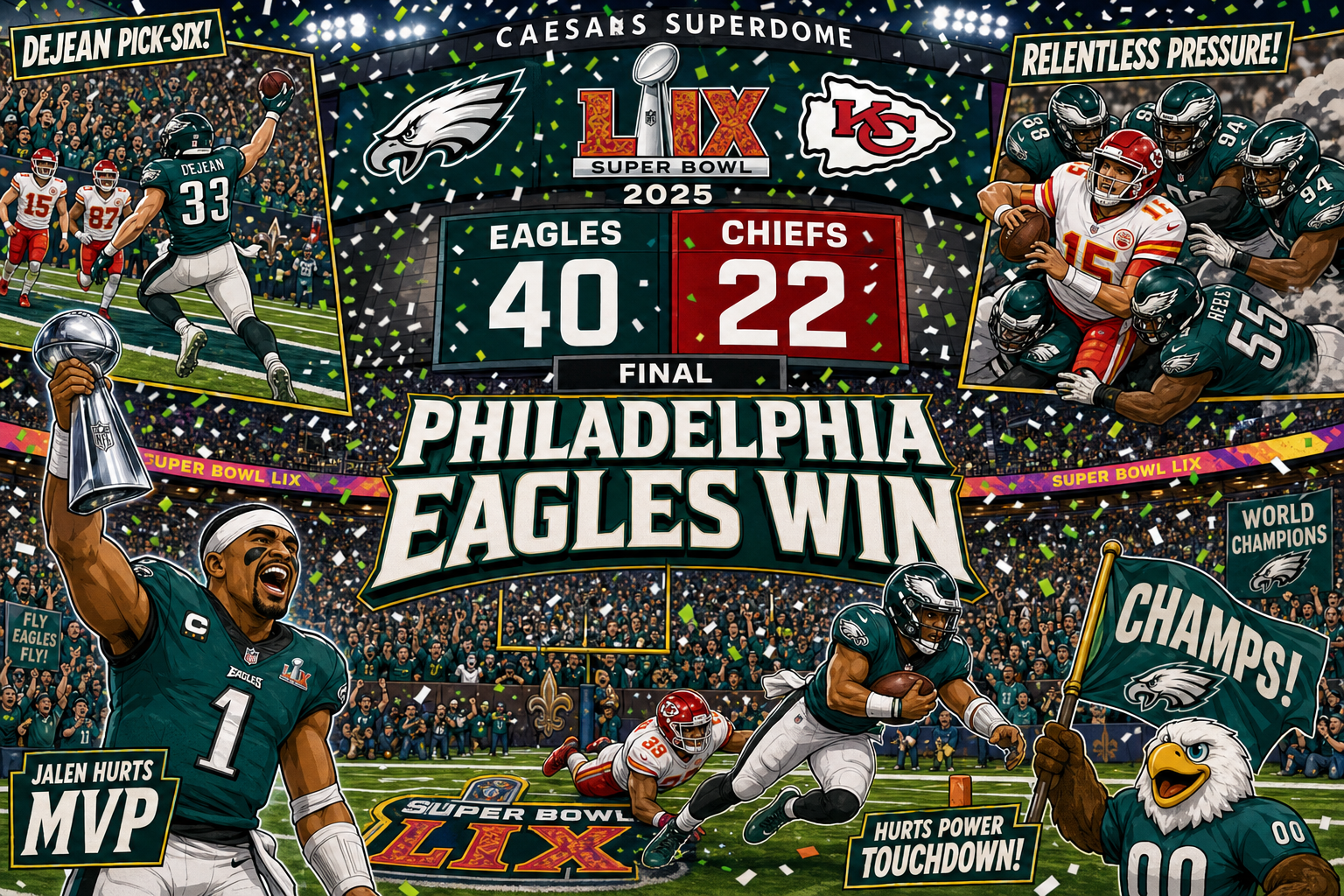
NFL Super Bowls — 2025
2025-01-01
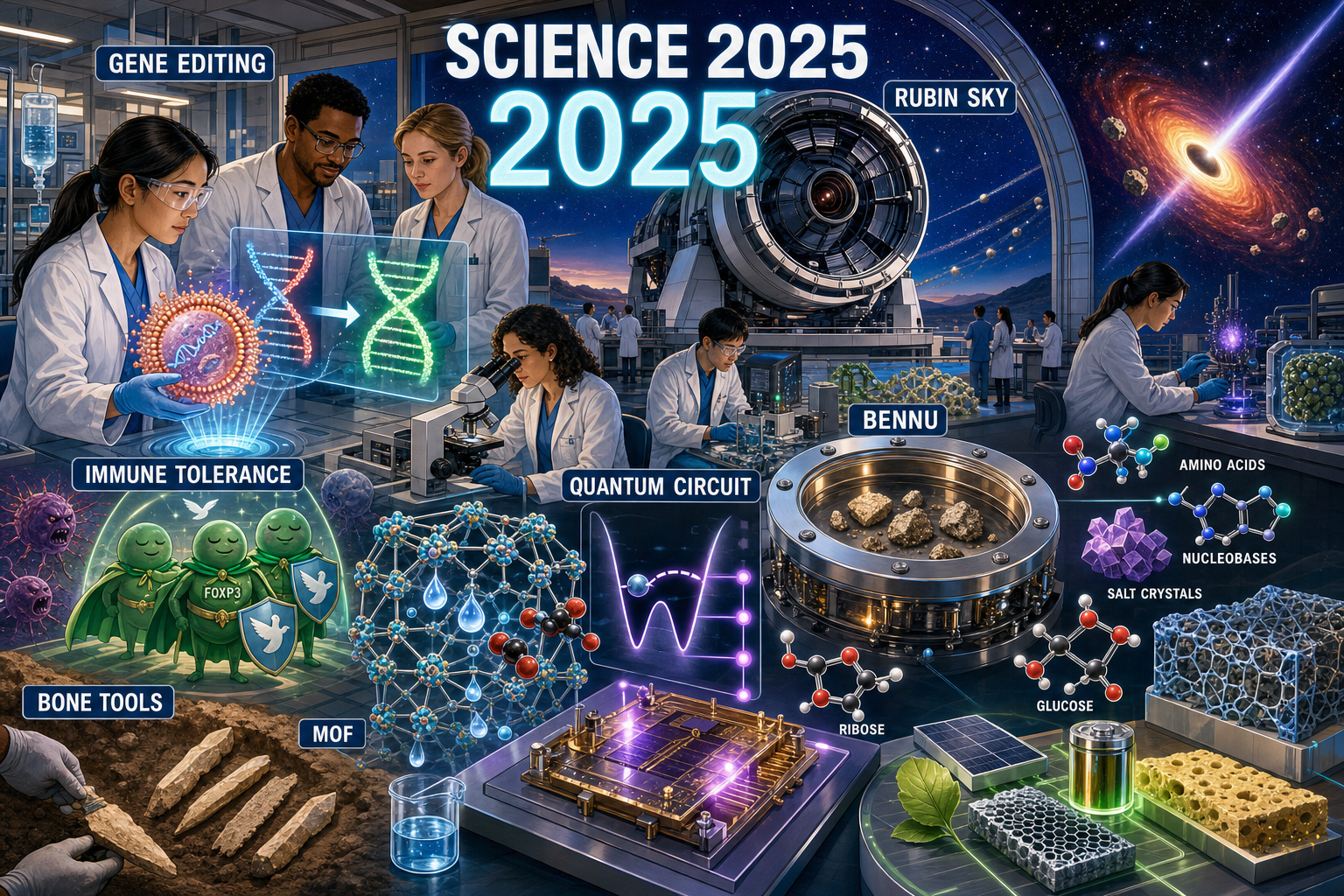
Science Breakthroughs — 2025
2025-01-01
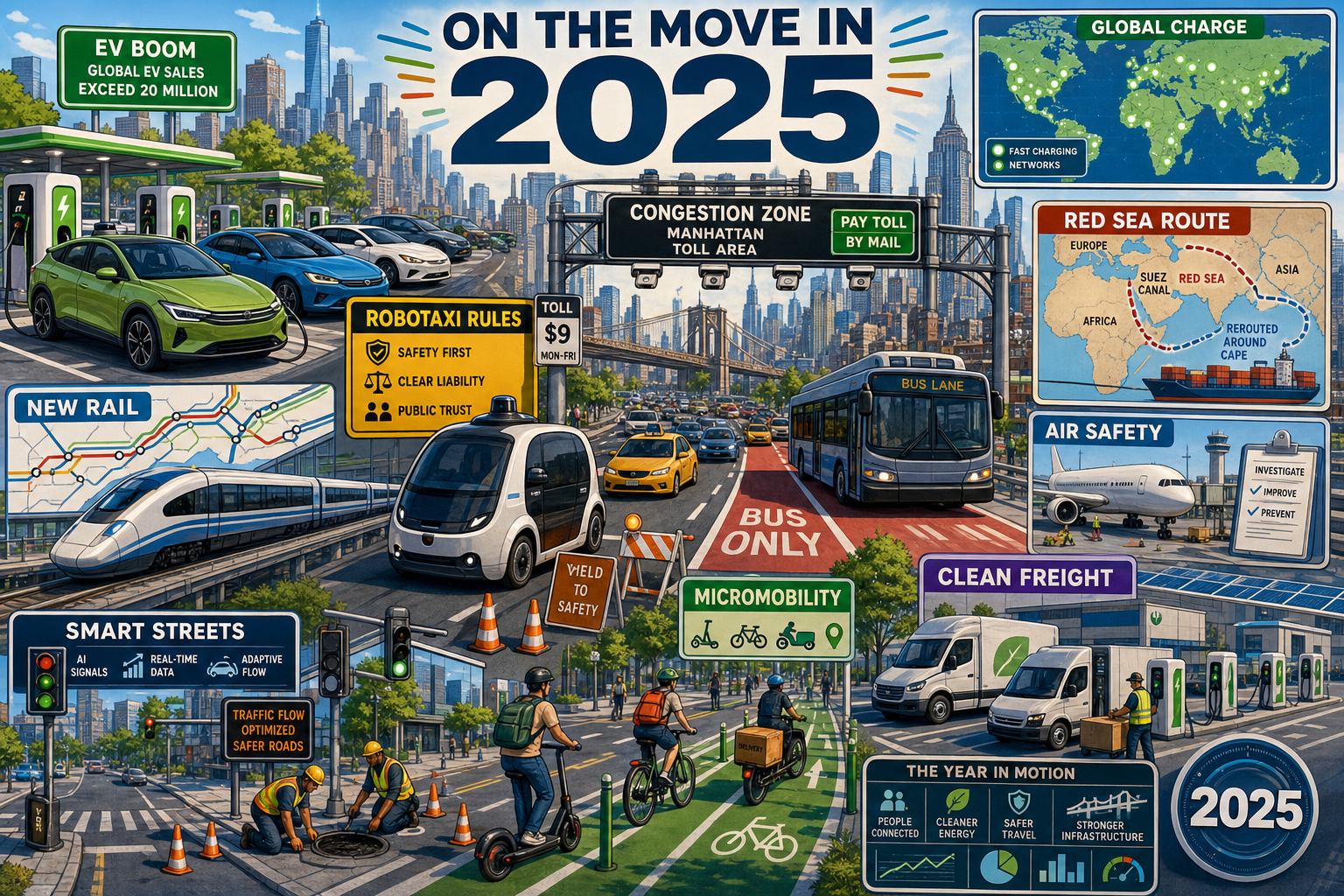
Transportation & Mobility — 2025
2025-01-01
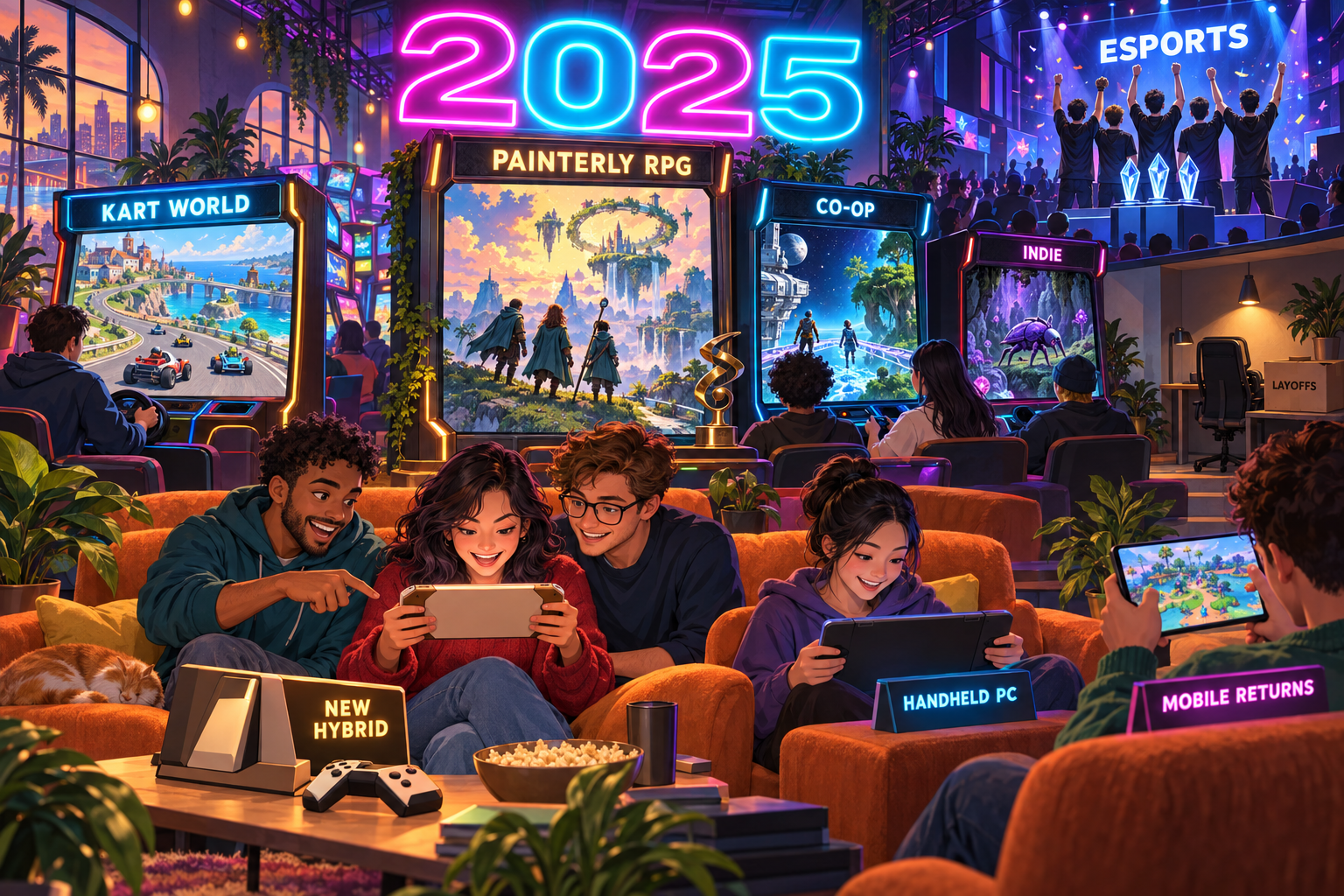
Video Game History — 2025
2025-01-01
Internet Culture Timeline — 2024
2024-01-01
Music Yearbooks — 2024
2024-01-01
News & Culture — 2024
2024-01-01
NFL Super Bowls — 2024
2024-01-01
Science Breakthroughs — 2024
2024-01-01