Image Collections 2016-01-01
Science Breakthroughs — 2016
Zika public-health emergency and research response: selected as a major medicine/public-health story. Visualized with clean diagnostics, a mosquito icon, and fetal-health chart.
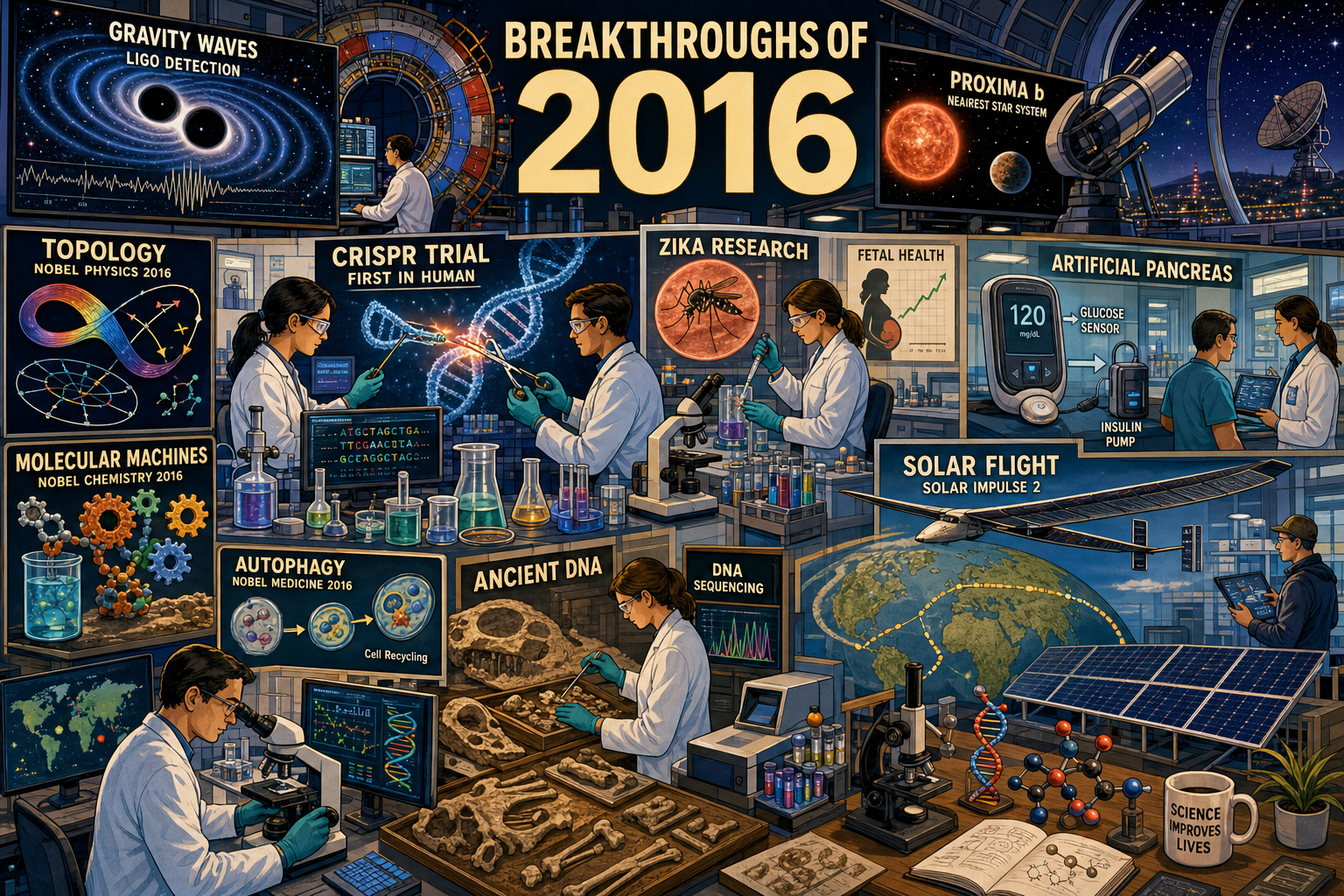
Science Breakthroughs: 2016
- Year: 2016
- Saved image path:
My-Library/Images/Collections/Science-Breakthroughs/Images/Science-Breakthroughs_2016.png - Model: built-in gpt-image (recovered from session transcript)
- Generation date: 2026-07-20
Selected Science Breakthroughs
- Gravitational waves detected: selected as the year's defining physics breakthrough and Science's Breakthrough of the Year. Visualized as merging black holes and spacetime ripples. Sources: https://www.sciencenews.org/article/top-science-stories-2016, https://www.theguardian.com/science/2016/feb/11/gravitational-waves-discovery-hailed-as-breakthrough-of-the-century
- Proxima b discovery: selected as a landmark nearby habitable-zone exoplanet discovery. Visualized as a rocky planet on a red-star telescope display. Source: https://www.jpl.nasa.gov/news/eso-discovers-earth-size-planet-in-habitable-zone-of-nearest-star/
- Zika public-health emergency and research response: selected as a major medicine/public-health story. Visualized with clean diagnostics, a mosquito icon, and fetal-health chart. Sources: https://www.who.int/emergencies/situations/zika-virus-outbreak, https://www.cdc.gov/mmwr/volumes/65/wr/mm6552e1.htm
- First CRISPR gene-editing tested in a person: selected as a pivotal genetics/biotech milestone. Visualized as glowing DNA and molecular scissors. Source: https://www.nature.com/articles/nature.2016.20988
- First hybrid closed-loop artificial pancreas approval: selected as a medical-device breakthrough for type 1 diabetes. Visualized as a glucose sensor and insulin pump diagram. Source: https://www.cbsnews.com/news/fda-approves-first-artificial-pancreas-type-1-diabetes-medtronic-minimed-670g/
- Solar Impulse 2 completes a fuel-free round-the-world flight: selected as a clean-energy and aviation technology milestone. Visualized as a solar aircraft over a globe map. Source: https://aroundtheworld.solarimpulse.com/adventure
- 2016 Nobel Physics: selected for topological phase transitions and topological phases of matter. Visualized as quantum material bands. Source: https://www.nobelprize.org/prizes/physics/2016/summary/
- 2016 Nobel Chemistry: selected for molecular machines. Visualized as gear-like molecules. Source: https://www.nobelprize.org/prizes/chemistry/2016/summary/
- 2016 Nobel Physiology or Medicine: selected for discoveries of mechanisms for autophagy. Visualized as cell recycling vesicles. Source: https://www.nobelprize.org/prizes/medicine/2016/summary/
- Ancient-DNA and fossil specimen work: selected as a supporting archaeology/paleontology visual category for a balanced science montage. Visualized with fossil trays and sequencing screens. Source: https://www.sciencenews.org/article/top-science-stories-2016
Rights / Sensitivity Notes
Medical and outbreak topics were requested as clean research visuals, not graphic illness. No exact institutional logos, branded equipment, or photorealistic scientist/laureate likenesses were requested.
Final Prompt Used
Use case: illustration-story
Asset type: year-by-year science breakthroughs collection image, 3:2 landscape PNG
Primary request: Create a lively illustrated science-magazine montage for the year 2016, showing the medicine, physics, biology, genetics, energy, archaeology, and materials-science breakthroughs, including Nobel-worthy discoveries, that defined science that year.

Scene/backdrop: a cohesive laboratory-and-discovery montage: a bright research world with lab benches, microscopes and telescopes, molecule and DNA models, a particle-collider ring and star chart on the wall, a fossil/specimen table, clean-energy prototypes, a hospital research room, and field-science screens. The scene should feel like one unified science world rather than disconnected stickers.

Subject: combine these selected 2016 breakthroughs into one unified illustrated montage: first direct detection of gravitational waves announced by LIGO, shown as two black holes merging on a star-chart screen with rippling spacetime labeled "GRAVITY WAVES"; Proxima b discovered around the nearest star, shown as a tiny rocky exoplanet on a red-star telescope display labeled "PROXIMA b"; the Zika public-health emergency and causal-link work, shown responsibly as a mosquito icon, clean lab diagnostics, and fetal-health chart labeled "ZIKA RESEARCH"; first CRISPR gene-editing tested in a human, shown as scientists editing glowing DNA with molecular scissors labeled "CRISPR TRIAL"; FDA approval of the first hybrid closed-loop artificial pancreas, shown as a glucose sensor and insulin pump diagram in a hospital research room labeled "ARTIFICIAL PANCREAS"; Solar Impulse 2 completing a fuel-free round-the-world solar flight, shown as a delicate solar aircraft over a globe map and solar panels labeled "SOLAR FLIGHT"; 2016 Nobel Physics for topological phases of matter, shown as swirling topological material bands and quantum arrows labeled "TOPOLOGY"; 2016 Nobel Chemistry for molecular machines, shown as tiny gear-like molecules in a beaker labeled "MOLECULAR MACHINES"; 2016 Nobel Medicine for autophagy, shown as a cell recycling diagram with vesicles labeled "AUTOPHAGY"; paleontology and ancient-DNA style specimen work shown as fossil trays and gene sequencer labeled "ANCIENT DNA".

Year text requirement: include clear readable text in the image that says: "2016"
Optional title text: include a short readable title: "BREAKTHROUGHS OF 2016"

Style/medium: polished cartoon-editorial illustration in a popular-science-magazine style, stylized lab equipment, glowing screens, molecule and DNA models, star charts, expressive generic researcher figures, magazine-quality digital art.

Composition/framing: wide 3:2 landscape image, one unified scene rather than separate panels. Use foreground researchers and instruments, midground lab benches and specimen tables, and background observatory, collider, and hospital-research context. Make the biggest 2-3 breakthroughs most prominent: gravitational waves, CRISPR human trial, Proxima b. Smaller references integrated as chalkboard diagrams, screen readouts, specimen labels, wall charts, and poster insets.

Lighting/mood: bright, curious, and optimistic, with clean lab lighting, glowing screens and instruments, and clear visual hierarchy.

Color palette: varied field-aware palette: clinical whites and teals for medicine, deep-space blues and purples for astronomy, DNA greens and molecular oranges for biology/chemistry, clean-energy yellows and greens, and earthy fossil-table tones. Avoid a one-note palette.

Text constraints: short readable labels on chalkboards, screens, specimen tags, wall charts, and posters. Use 1-5 words per label, high-contrast, correctly spelled, large enough to read. Do not use long captions, fake paragraphs, or a row of labels at the bottom.

Avoid: official logos, exact institutional branding, trademark-accurate equipment or product designs, photorealistic likenesses of real people including named scientists or laureates, graphic illness or injury, hateful symbols, cluttered sticker-collage layout, tiny unreadable labels, distorted lettering, fake full article text, and generic stock imagery.
More from Image Collections
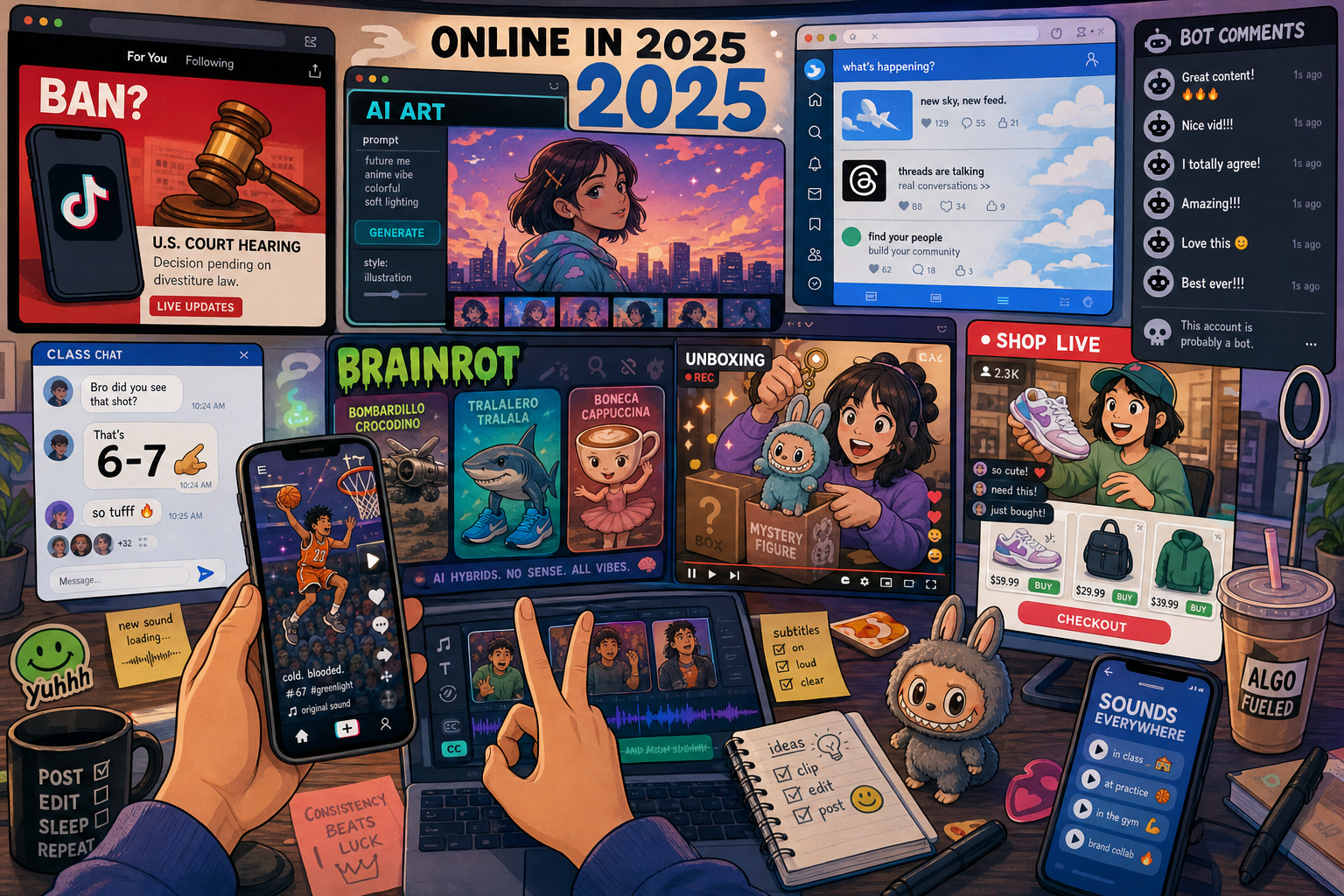
Internet Culture Timeline — 2025
2025-01-01
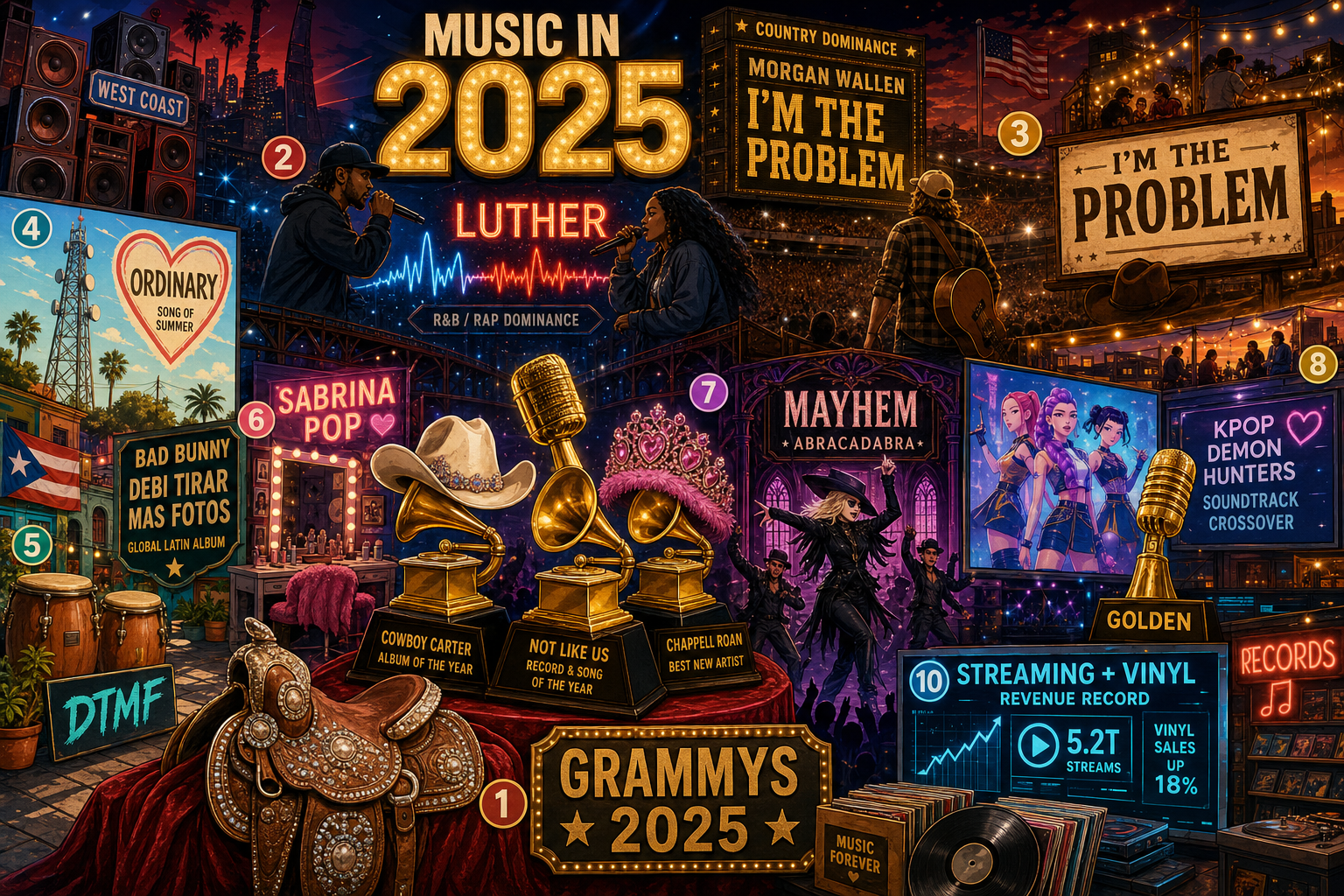
Music Yearbooks — 2025
2025-01-01
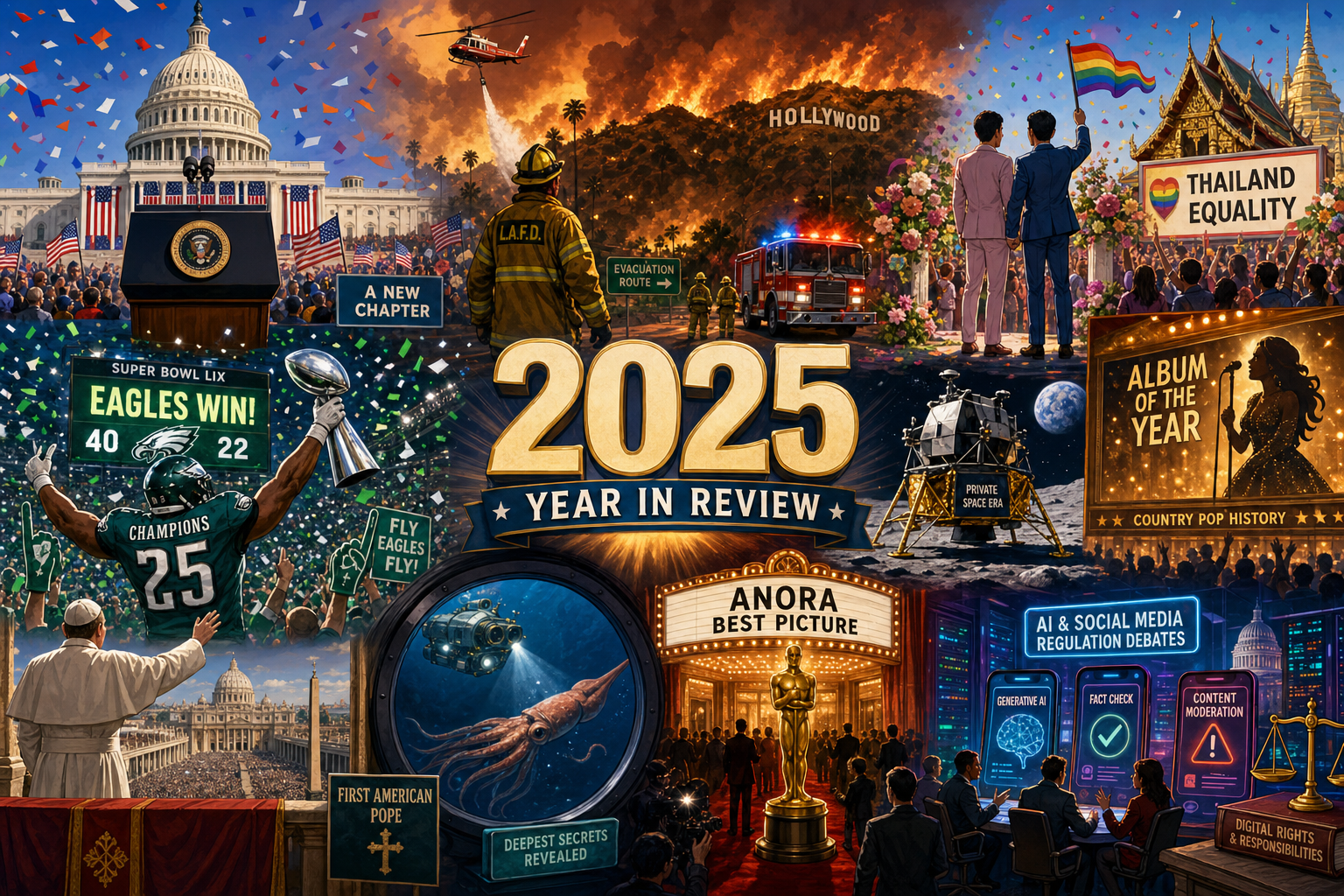
News & Culture — 2025
2025-01-01
NFL Super Bowls — 2025
2025-01-01
Science Breakthroughs — 2025
2025-01-01
Transportation & Mobility — 2025
2025-01-01
Video Game History — 2025
2025-01-01
Internet Culture Timeline — 2024
2024-01-01
Music Yearbooks — 2024
2024-01-01
News & Culture — 2024
2024-01-01
NFL Super Bowls — 2024
2024-01-01
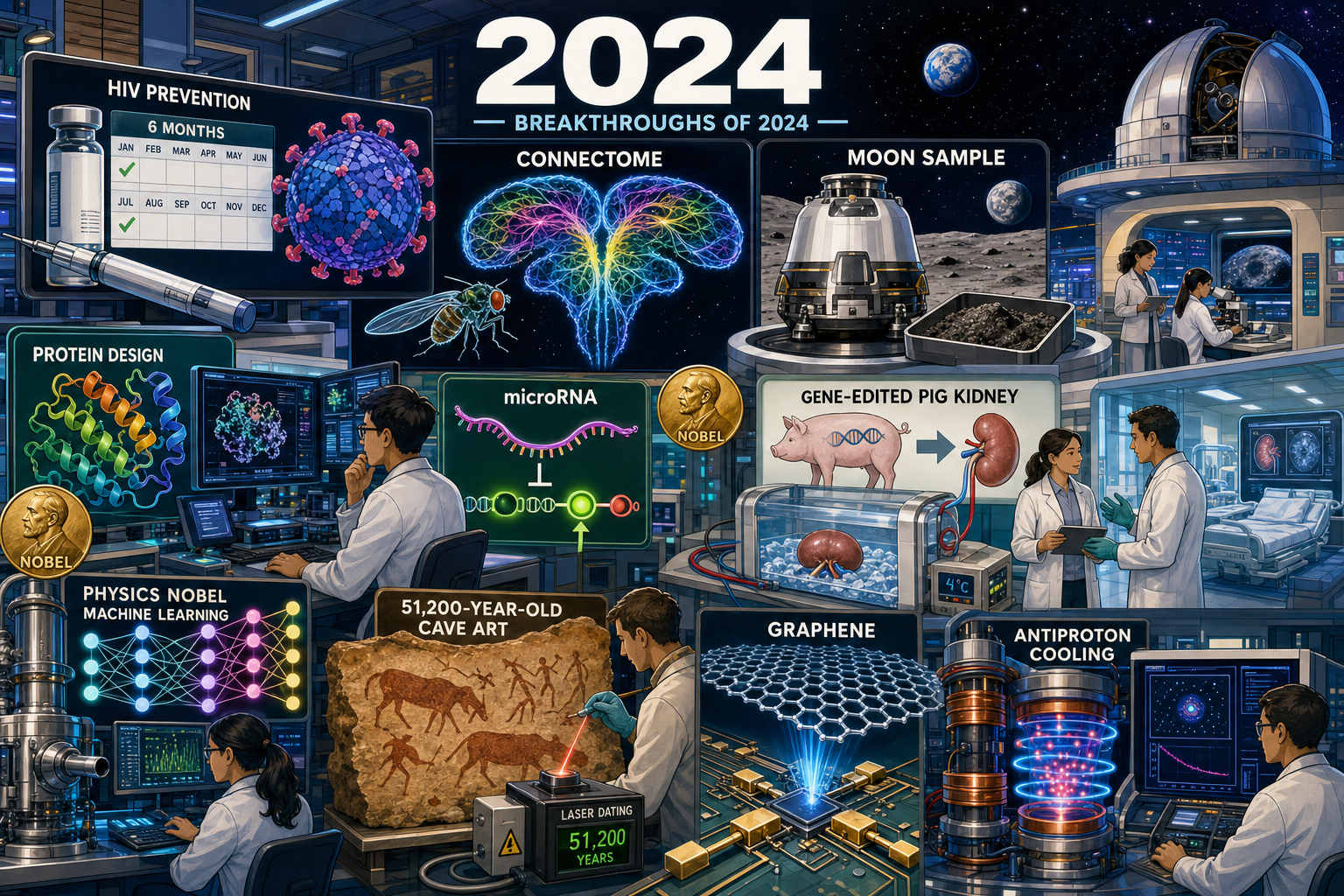
Science Breakthroughs — 2024
2024-01-01