Image Collections 2023-01-01
Science Breakthroughs — 2023
First approved CRISPR therapy for sickle cell disease (medicine/genetics).
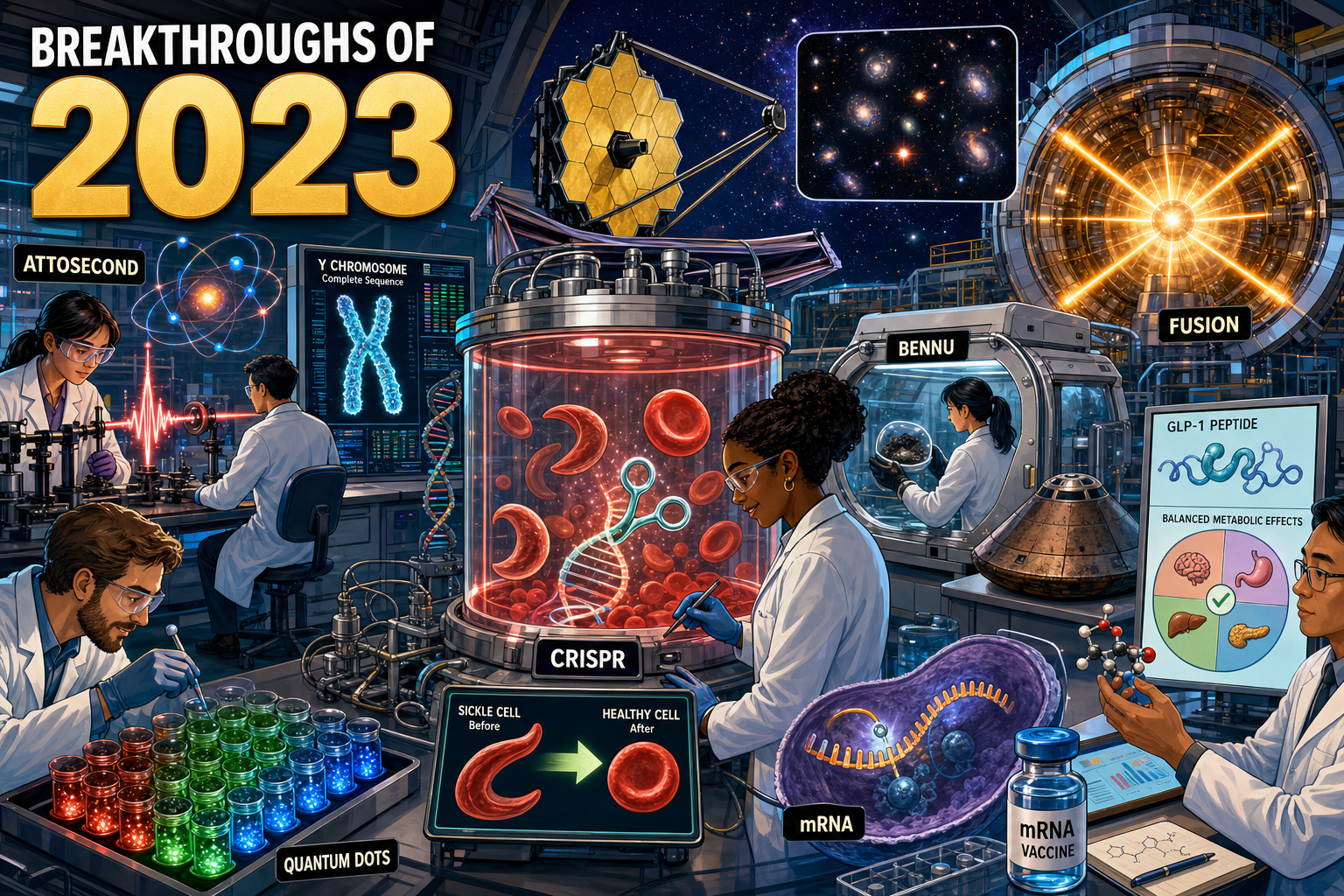
Science Breakthroughs: 2023
- Year: 2023
- Saved image path:
My-Library/Images/Collections/Science-Breakthroughs/Images/Science-Breakthroughs_2023.png - Model: built-in gpt-image
- Generation date: 2026-07-25
Selected Science Breakthroughs
- First approved CRISPR therapy for sickle cell disease (medicine/genetics). Selected as the first FDA-approved treatment using CRISPR/Cas9 and depicted symbolically as molecular scissors repairing a sickled red blood cell.
- James Webb Space Telescope observations of early galaxies (astronomy). Selected because Webb confirmed a developing cluster of seven galaxies only about 650 million years after the Big Bang; depicted as a segmented telescope and early-galaxy field.
- OSIRIS-REx return of samples from asteroid Bennu (planetary science). Selected as the first U.S. asteroid sample return, with initial analysis finding carbon and water; depicted as a capsule, regolith, and clean-room glovebox.
- First complete human Y chromosome sequence (genomics). Selected because it closed the last major gap among fully sequenced human chromosomes and revealed medically relevant repetitive regions; depicted on a sequencing display.
- Repeated fusion ignition at the National Ignition Facility (energy/physics). Selected because multiple 2023 experiments repeated and improved target energy gain; depicted as a laser-driven spherical target chamber.
- GLP-1 medicines recognized as a major advance (medicine). Selected for their major impact on obesity and metabolic treatment; depicted with a generic peptide model and balanced metabolic chart, with no brands.
- 2023 Nobel Prize in Physiology or Medicine: nucleoside base modifications enabling effective mRNA vaccines. Depicted as a generic mRNA strand entering a cell and an unbranded vial.
- 2023 Nobel Prize in Physics: attosecond light pulses. Depicted as an ultrashort laser pulse following electron motion.
- 2023 Nobel Prize in Chemistry: quantum dots. Depicted as size-dependent glowing nanocrystals in red, green, and blue.
Rights and Sensitivity Notes
Medical advances are represented through clean laboratory symbolism rather than patients or illness. Researchers are generic and do not depict named scientists or laureates. Equipment, medicines, and institutions use no exact logos or product branding.
Sources
- FDA — first gene therapies for sickle cell disease and first FDA-approved CRISPR treatment: https://www.fda.gov/news-events/press-announcements/fda-approves-first-gene-therapies-treat-patients-sickle-cell-disease
- NASA — Webb early-universe protocluster of seven galaxies: https://www.nasa.gov/universe/webb-reveals-early-universe-prequel-to-huge-galaxy-cluster/
- NASA — OSIRIS-REx delivered the Bennu sample on September 24, 2023: https://science.nasa.gov/missions/osiris-rex/osirisrex-delivers-nasas-first-asteroid-sample-to-earth/
- NASA — initial Bennu sample analysis found carbon and water: https://www.nasa.gov/news-release/nasas-bennu-asteroid-sample-contains-carbon-water/
- National Human Genome Research Institute — first complete human Y chromosome sequence: https://www.genome.gov/news/news-release/researchers-assemble-the-first-complete-sequence-of-a-human-y-chromosome
- Lawrence Livermore National Laboratory — repeated and improved 2023 fusion ignition results: https://annual.llnl.gov/fy-2023/national-ignition-facility-2023
- Science — 2023 Breakthrough of the Year, GLP-1 medicines: https://www.science.org/content/article/breakthrough-of-the-year-2023
- Nobel Prize — 2023 Physiology or Medicine: https://www.nobelprize.org/prizes/medicine/2023/summary/
- Nobel Prize — 2023 Physics: https://www.nobelprize.org/prizes/physics/2023/press-release/
- Nobel Prize — 2023 Chemistry: https://www.nobelprize.org/prizes/chemistry/2023/popular-information/
Final Prompt Used
Use case: illustration-story
Asset type: year-by-year science breakthroughs collection image
Primary request: Create a lively, polished cartoon-editorial science-magazine montage for the year 2023, showing the medicine, astronomy, genetics, energy, physics, chemistry, and planetary-science breakthroughs that defined the year.

Scene/backdrop: One cohesive, bright laboratory-and-discovery world, not panels or stickers. Foreground researchers work around a central transparent red-blood-cell bioreactor where a stylized CRISPR molecular scissors motif repairs a sickle-shaped cell into a healthy round cell, representing the first approved CRISPR gene-editing therapy. Nearby, a clinician studies a generic peptide model and balanced metabolic chart representing GLP-1 medicines, with no brands. Midground: a clean-room glovebox holds dark Bennu asteroid grains beside a small sample-return capsule; a DNA sequencing workstation displays a complete glowing Y chromosome with patterned repeating regions. Background: a large gold-toned segmented space telescope silhouette points toward a deep star field and an inset view of seven infant galaxies in an early protocluster; a spherical fusion target chamber fires converging laser beams and glows with ignition energy.

Integrate three Nobel science motifs naturally into the lab: a brilliant ultrashort laser pulse tracking an electron around an atom for attosecond physics; a tray of tiny size-dependent red, green, and blue glowing quantum dots; and a generic mRNA strand entering a cell beside a vaccine vial, without depicting named laureates. Make CRISPR therapy, Webb early galaxies, and Bennu the three most prominent anchors; the other discoveries appear as meaningful instruments and screens in the same environment.

Text requirement: include clear, large, correctly spelled high-contrast text reading exactly “2023”. Optional title text may read exactly “BREAKTHROUGHS OF 2023”. Use only these additional short labels if legible: “CRISPR”, “BENNU”, “FUSION”, “mRNA”, “QUANTUM DOTS”, “ATTOSECOND”. No fake paragraphs or tiny gibberish.

Style/medium: polished popular-science-magazine cartoon editorial illustration, bold confident outlines, refined cel shading, expressive diverse generic researchers, stylized but scientifically recognizable lab equipment, magazine-cover quality digital art. Wide 3:2 landscape, unified scene with clear depth and hierarchy.

Lighting/mood: bright, curious, optimistic; clean white and teal lab light, deep-space blue and violet, warm asteroid earth tones, vivid molecular orange and green, controlled golden fusion glow.

Constraints: readable year baked into image; balanced fields; responsible symbolic medical depiction; no graphic illness. Avoid official logos, exact institutional branding, trademark-accurate products, photorealistic real-person likenesses or named laureates, borders, rigid grids, disconnected sticker collage, unreadable text, watermarks, or generic stock imagery.
More from Image Collections
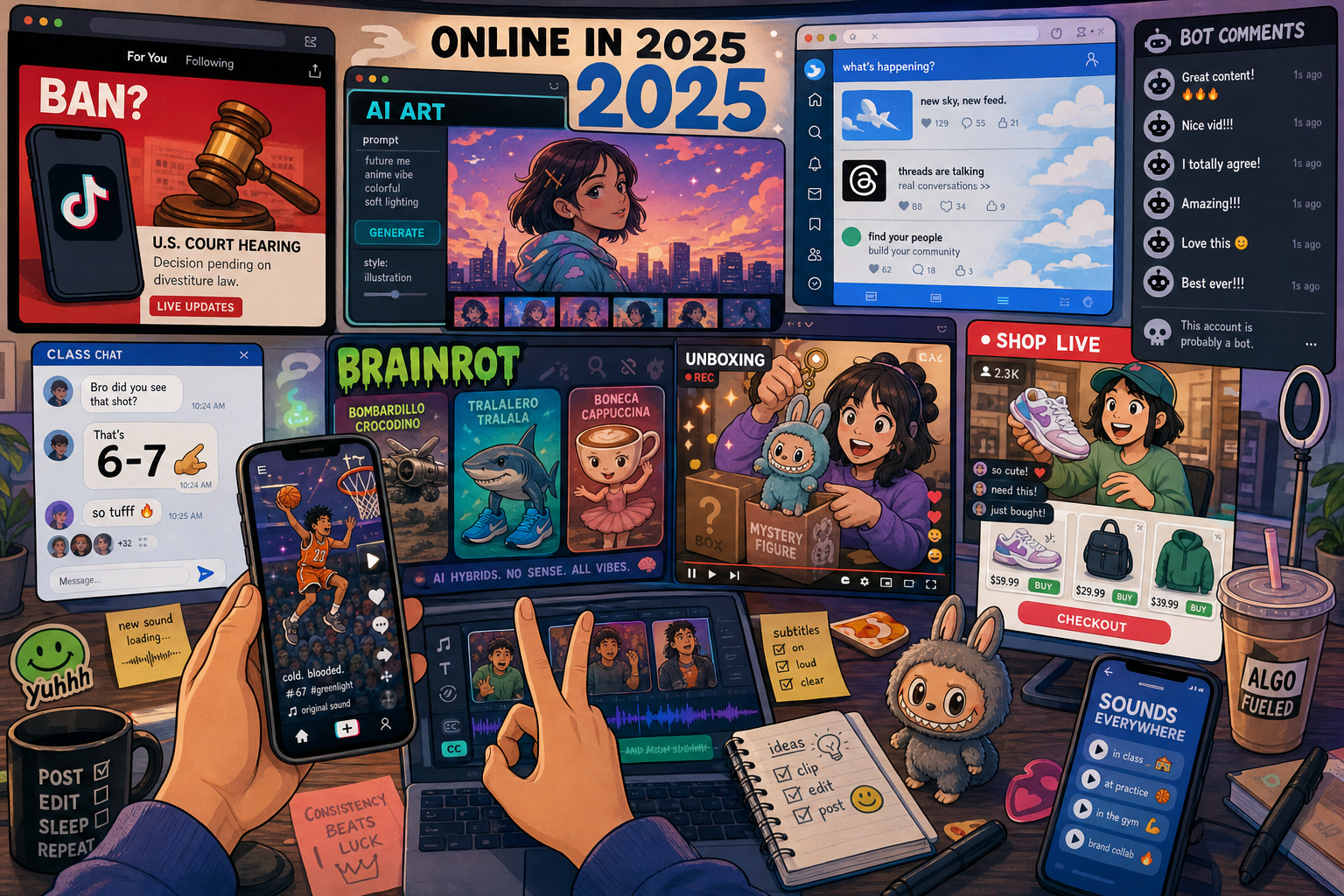
Internet Culture Timeline — 2025
2025-01-01
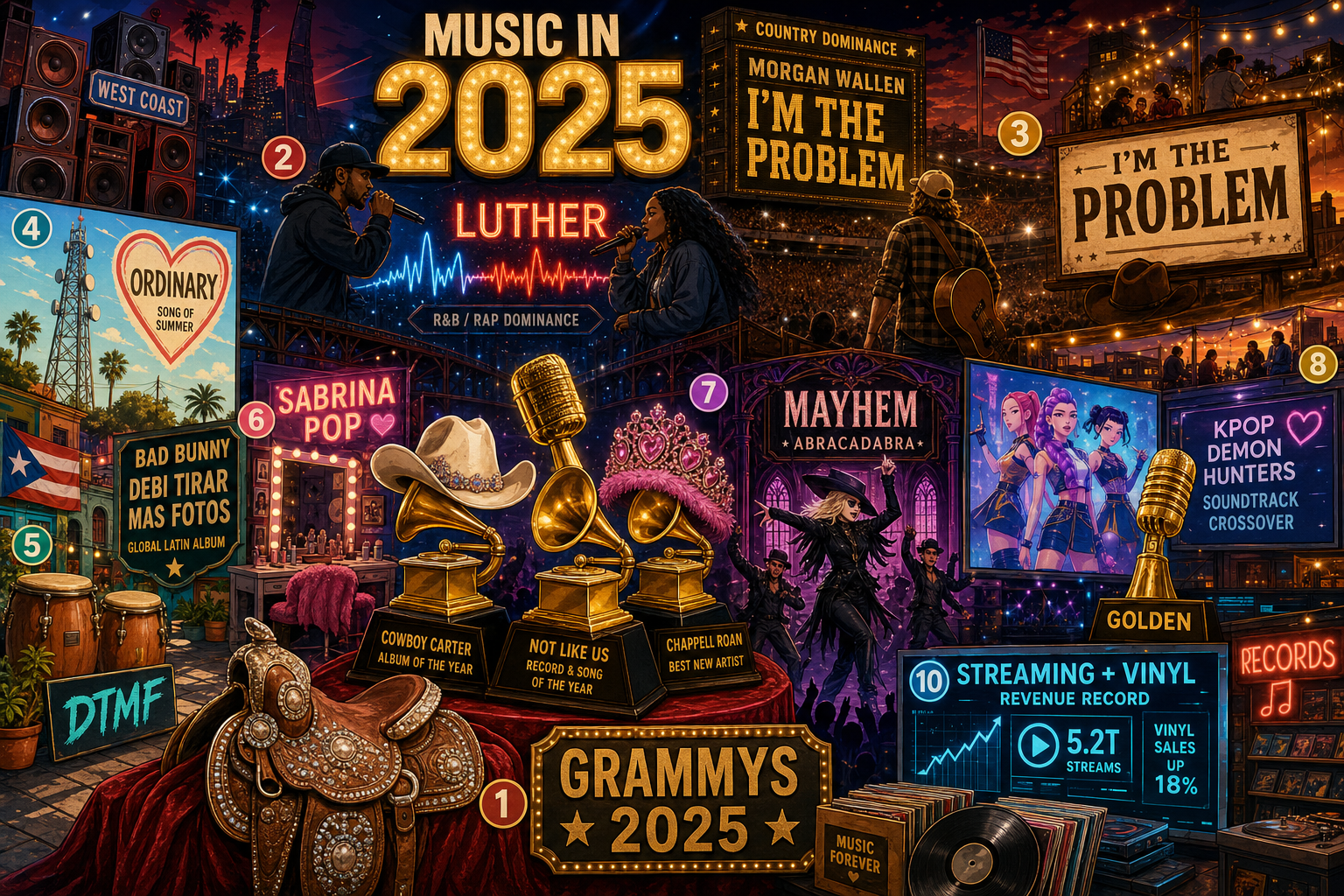
Music Yearbooks — 2025
2025-01-01
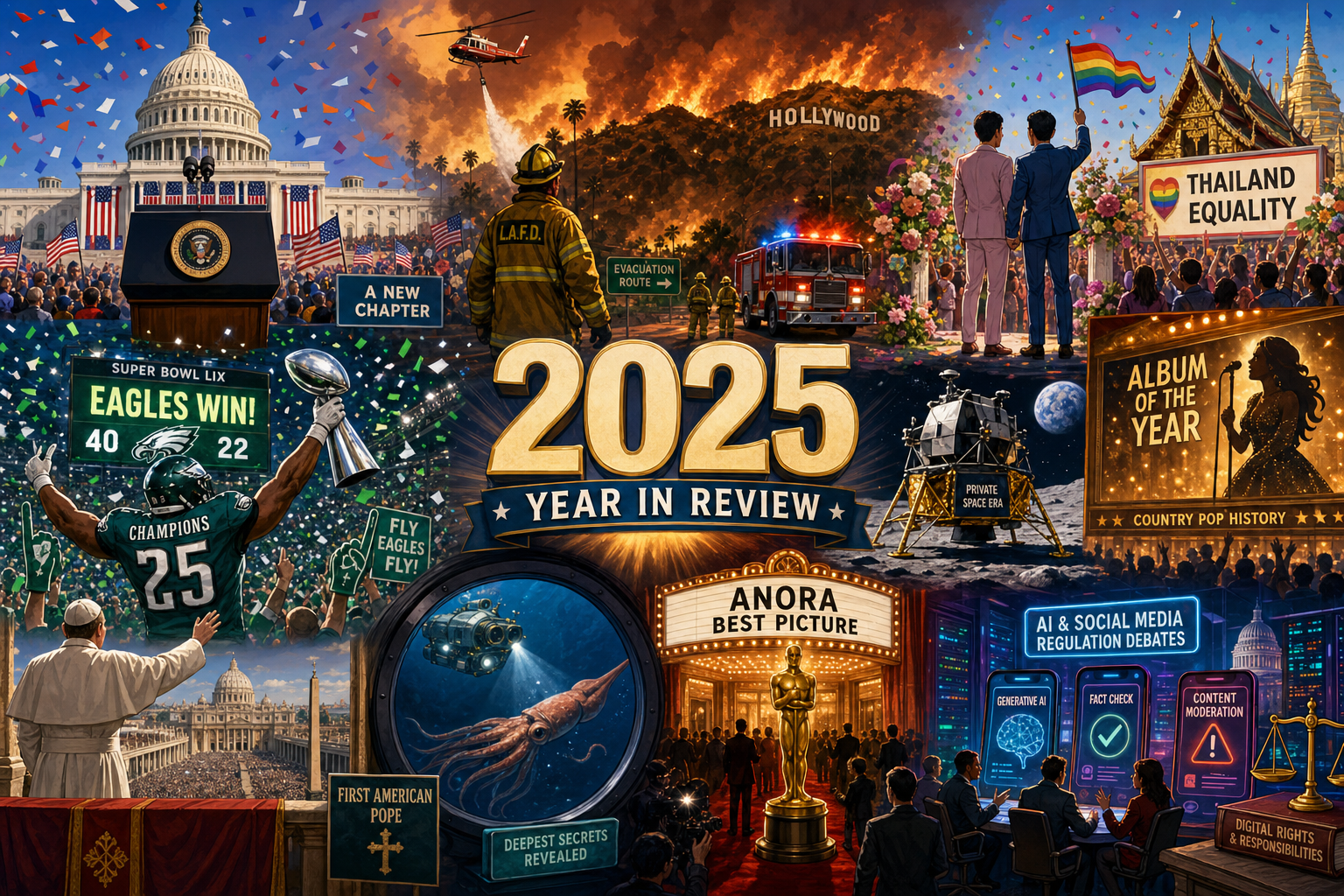
News & Culture — 2025
2025-01-01

NFL Super Bowls — 2025
2025-01-01
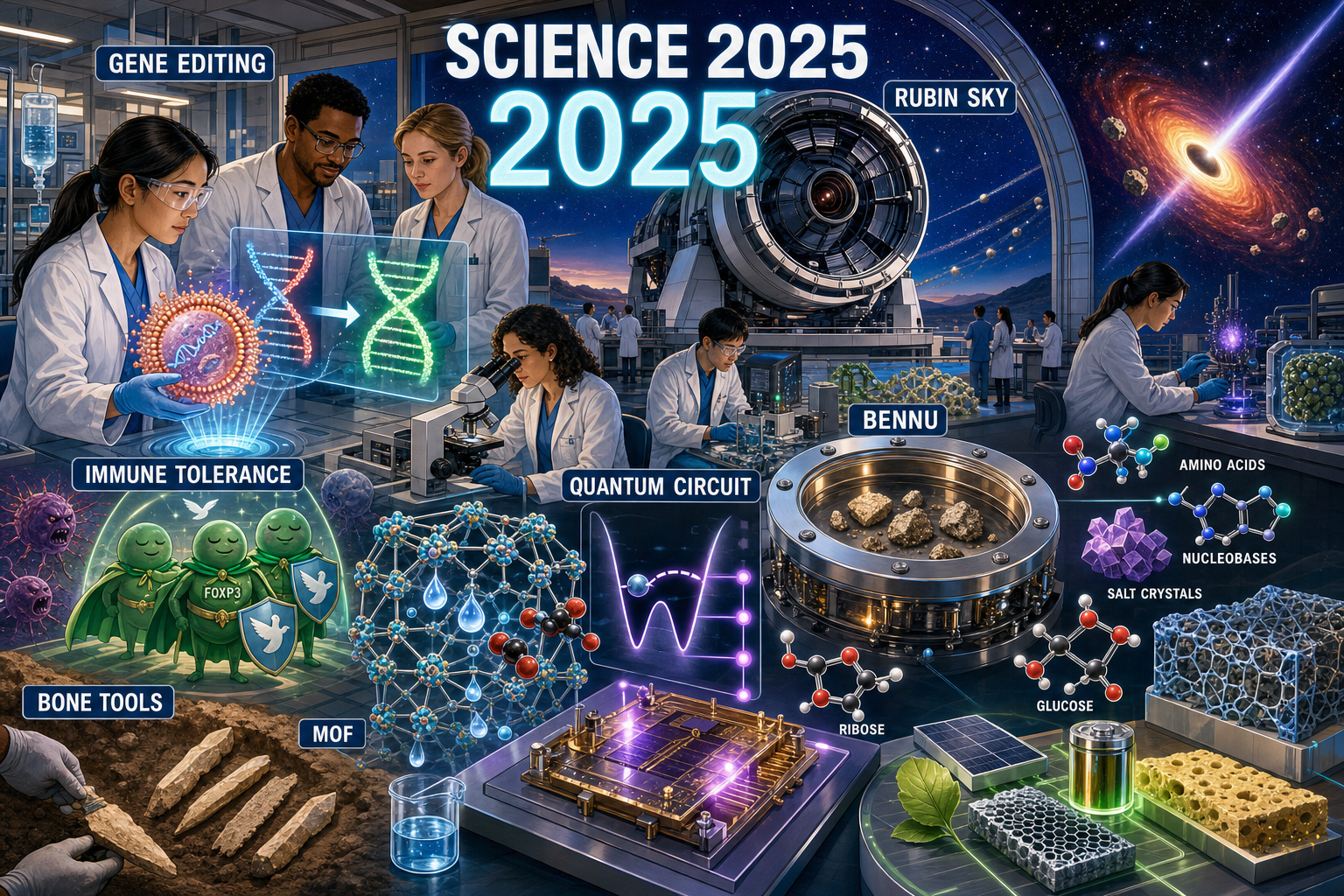
Science Breakthroughs — 2025
2025-01-01
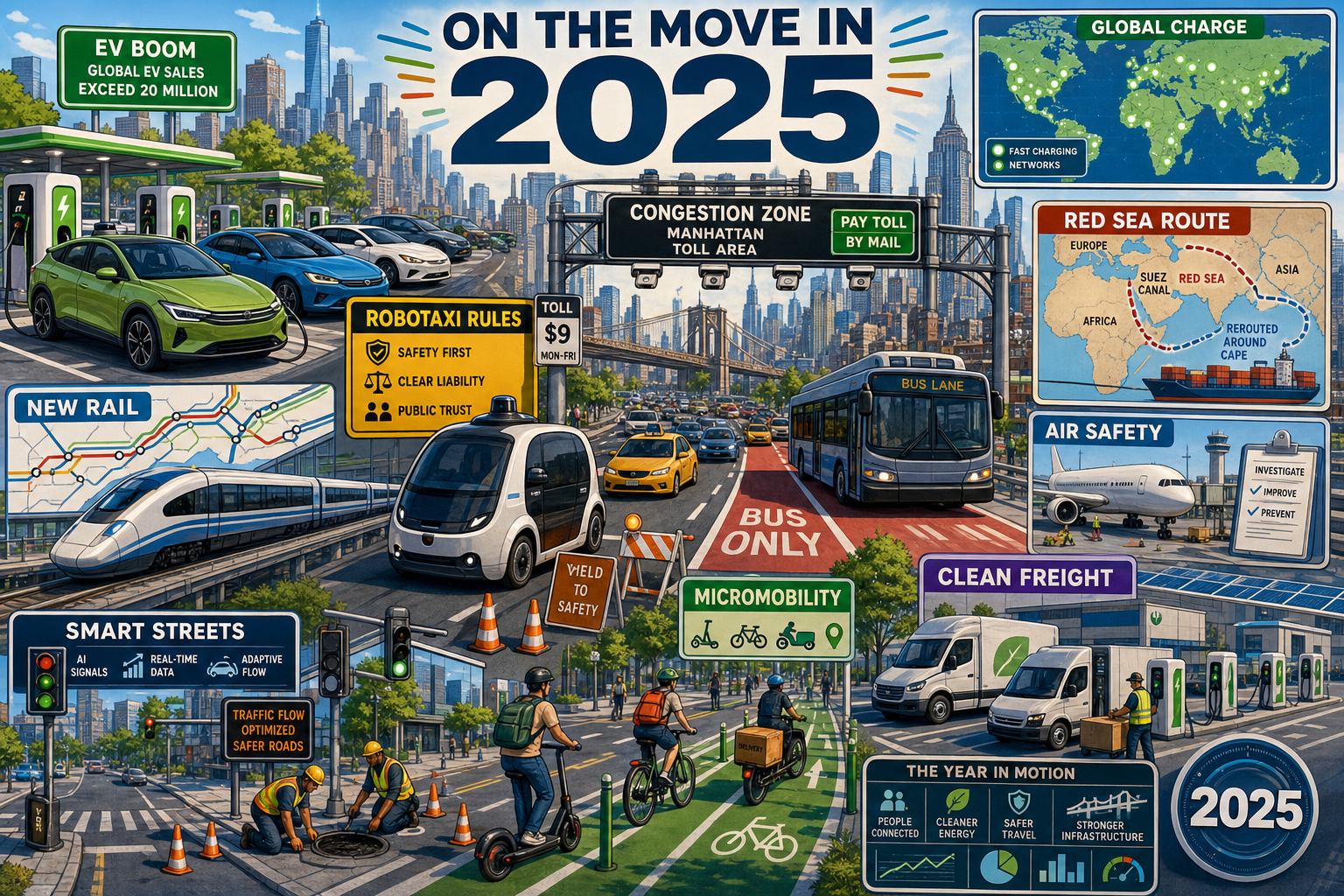
Transportation & Mobility — 2025
2025-01-01
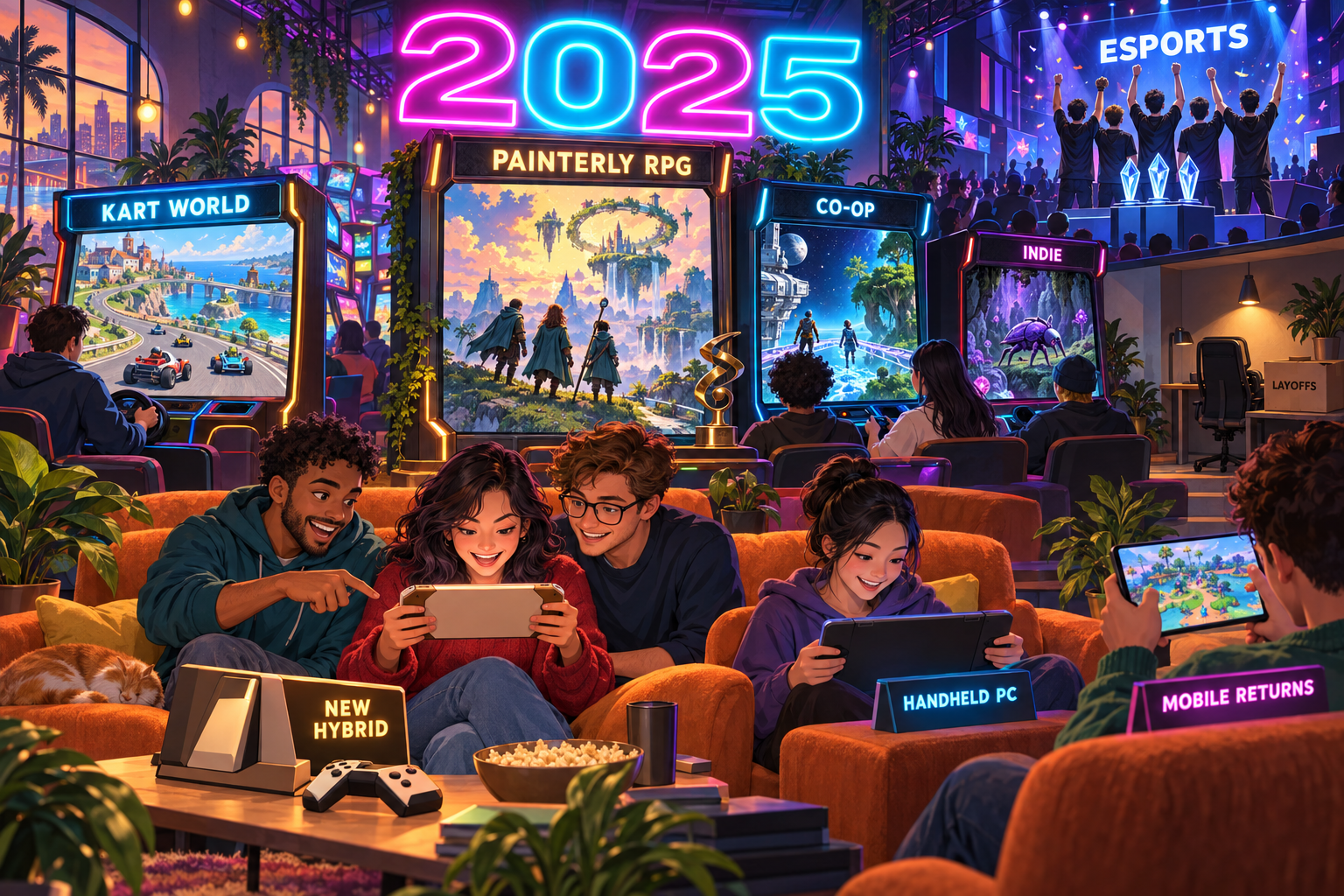
Video Game History — 2025
2025-01-01
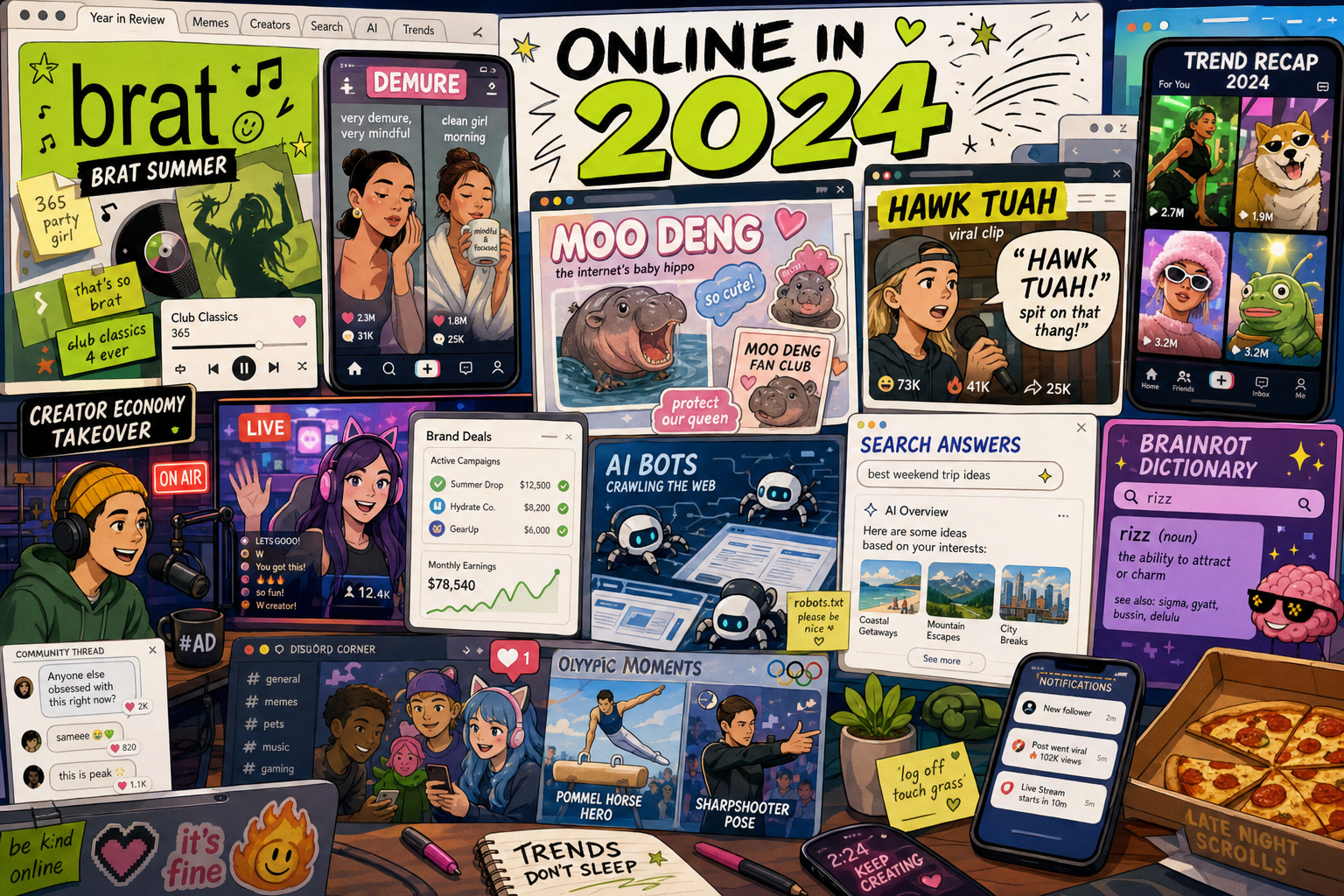
Internet Culture Timeline — 2024
2024-01-01
Music Yearbooks — 2024
2024-01-01
News & Culture — 2024
2024-01-01
NFL Super Bowls — 2024
2024-01-01
Science Breakthroughs — 2024
2024-01-01