Image Collections
Technology Milestones — 11 Printing Press
Era / approximate date: Mainz, Germany, approximately 1450-1455 CE
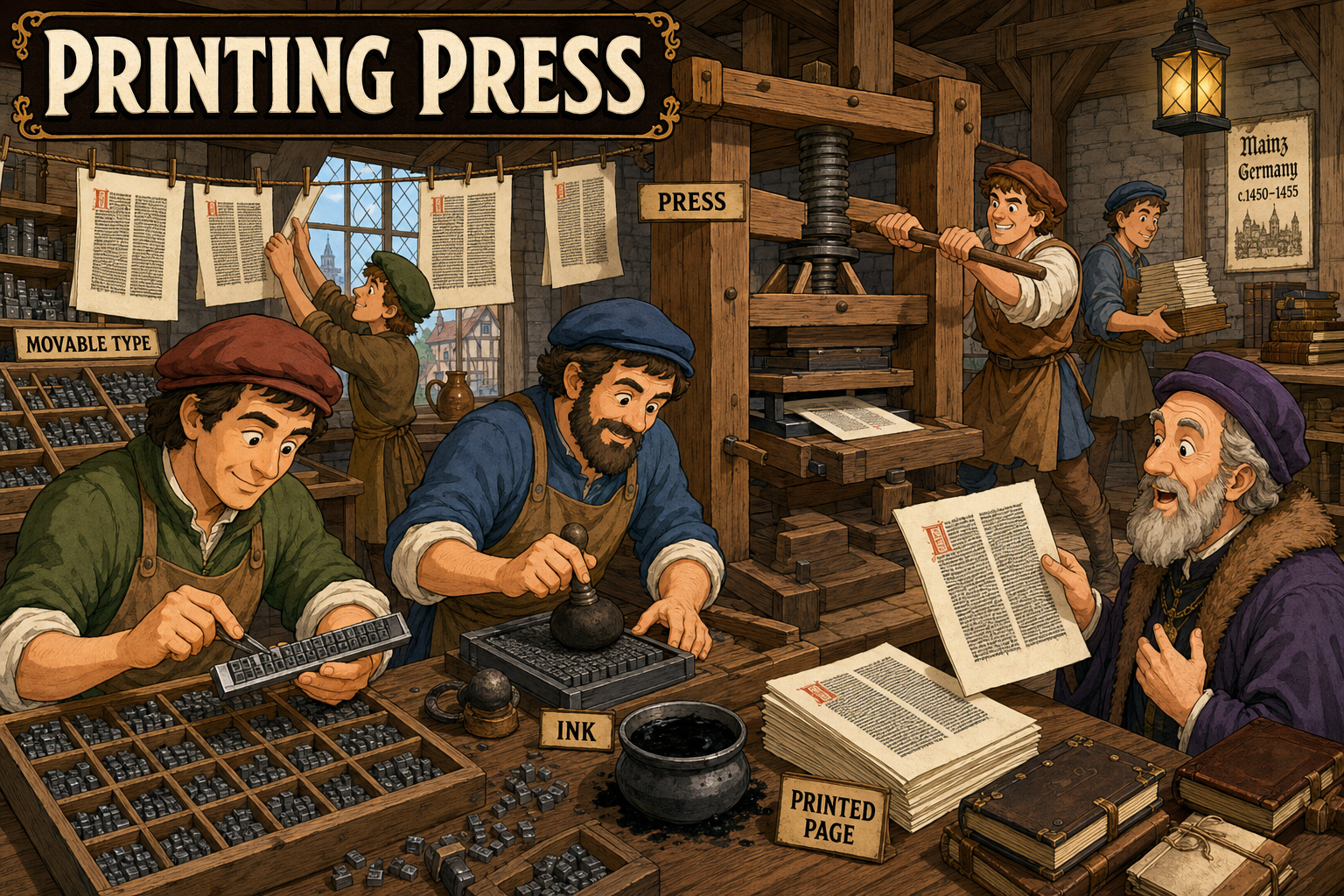
Technology Milestones: Printing Press
- Milestone slug:
Printing-Press - Milestone name: Gutenberg's movable-type printing press
- Era / approximate date: Mainz, Germany, approximately 1450-1455 CE
- Likely setting depicted: 15th-century European print workshop with movable type, ink, wooden screw press, and drying pages
- Generation date: 2026-06-29
- Model: built-in gpt-image
- Saved image path:
My-Library/Images/Collections/Technology-Milestones/Images/Technology-Milestones_11-Printing-Press.png
Why It Is A Milestone
Gutenberg's movable-type printing system combined metal type, oil-based ink, press mechanics, and workshop production into a scalable way to reproduce books. It accelerated the spread of texts, scholarship, religious debate, administration, and mass communication across Europe.
Key Visual Elements
- Printers arranging individual metal letters in type cases and a composing stick.
- Ink balls applying dark ink to locked-up type.
- A large wooden screw press based on press mechanics familiar from wine and paper production.
- Fresh pages emerging with repeated two-column printed layouts.
- Printed sheets drying on lines and book gatherings being stacked.
- 15th-century clothing, timber-framed workshop details, benches, lamps, and manuscript-like red accents.
- Readable embedded title:
PRINTING PRESS.
Sources
- https://www.britannica.com/technology/printing-press
- https://www.britannica.com/biography/Johannes-Gutenberg
- https://www.loc.gov/exhibits/bibles/the-gutenberg-bible.html
- https://www.bl.uk/collection-items/gutenberg-bible
Final Prompt Used
Use case: illustration-story
Asset type: technology-milestone cartoon collection entry, 3:2 landscape, final image should be suitable for 1536x1024 gallery use.
Primary request: Create a clean, friendly cartoon editorial illustration for the Technology Milestones "Printing-Press" entry, depicting Gutenberg's movable-type printing press and the workshop process of printing books in 15th-century Europe.
Historical setting: Mainz, Germany, mid-15th century, approximately 1450-1455 CE. Show an era-appropriate print workshop with researched architecture, clothing, tools, materials, and props: timber-framed interior, wooden screw press inspired by wine presses, metal movable type, composing stick, type cases, ink balls, oil-based black ink, damp paper sheets, printed pages with two columns, red hand rubrication accents, drying lines, book gatherings, wooden benches, aprons, caps, and Gothic manuscript-style pages.
Subject: combine these visual elements into one unified scene: printers arranging individual metal letters in a composing stick; a worker inking type with padded ink balls; a press operator pulling the wooden screw press lever; fresh printed pages emerging with neat columns; apprentices hanging sheets to dry and stacking book gatherings; a scholar or buyer marveling at multiple matching pages. Keep the human figures expressive, active, and central to the moment.
Embedded title text: include a short, bold, correctly spelled title: "PRINTING PRESS". The title must be readable at web thumbnail size.
Optional labels: a few short readable labels are allowed, such as "MOVABLE TYPE", "INK", "PRESS", and "PRINTED PAGE". No long captions, no fake paragraphs, no sequence numbers.
Style/medium: clean, friendly cartoon / editorial illustration, bold confident outlines, flat-to-soft cel shading, warm expressive characters, simple readable shapes, magazine-quality cartoon art. One unified scene, not a grid of panels or a sticker collage.
Composition/framing: wide landscape image with foreground typesetting and inking, midground wooden press action, and background drying pages and book stacks. Make the printing press recognizable at web thumbnail size through the large wooden press, type cases, movable metal letters, inking balls, repeated printed pages, and workshop bustle.
Lighting/mood: bright optimistic workshop daylight with warm lamplight highlights, conveying craft, scale, and the spread of knowledge.
Color palette: varied and era-grounded with warm wood, cream paper, black ink, muted wool clothing, red rubrication accents, metal gray type, and soft window light. Avoid a one-note palette.
Text constraints: embedded title and any labels must be short, high-contrast, and correctly spelled. No long captions, no modern signage that does not fit the era. Any page text should look like decorative columns without fake readable paragraphs.
Avoid: photorealism, exact modern logos, exact brand or product trademarks, photorealistic real-person likenesses of Gutenberg, copyrighted characters, modern machinery, modern bookshelves, disconnected symbol collage, unreadable tiny labels, generic stock clip-art look, and claiming it is the first printed book in the world.
More from Image Collections

Internet Culture Timeline — 2025
2025-01-01

Music Yearbooks — 2025
2025-01-01

News & Culture — 2025
2025-01-01
NFL Super Bowls — 2025
2025-01-01

Science Breakthroughs — 2025
2025-01-01
Transportation & Mobility — 2025
2025-01-01

Video Game History — 2025
2025-01-01

Internet Culture Timeline — 2024
2024-01-01
Music Yearbooks — 2024
2024-01-01

News & Culture — 2024
2024-01-01
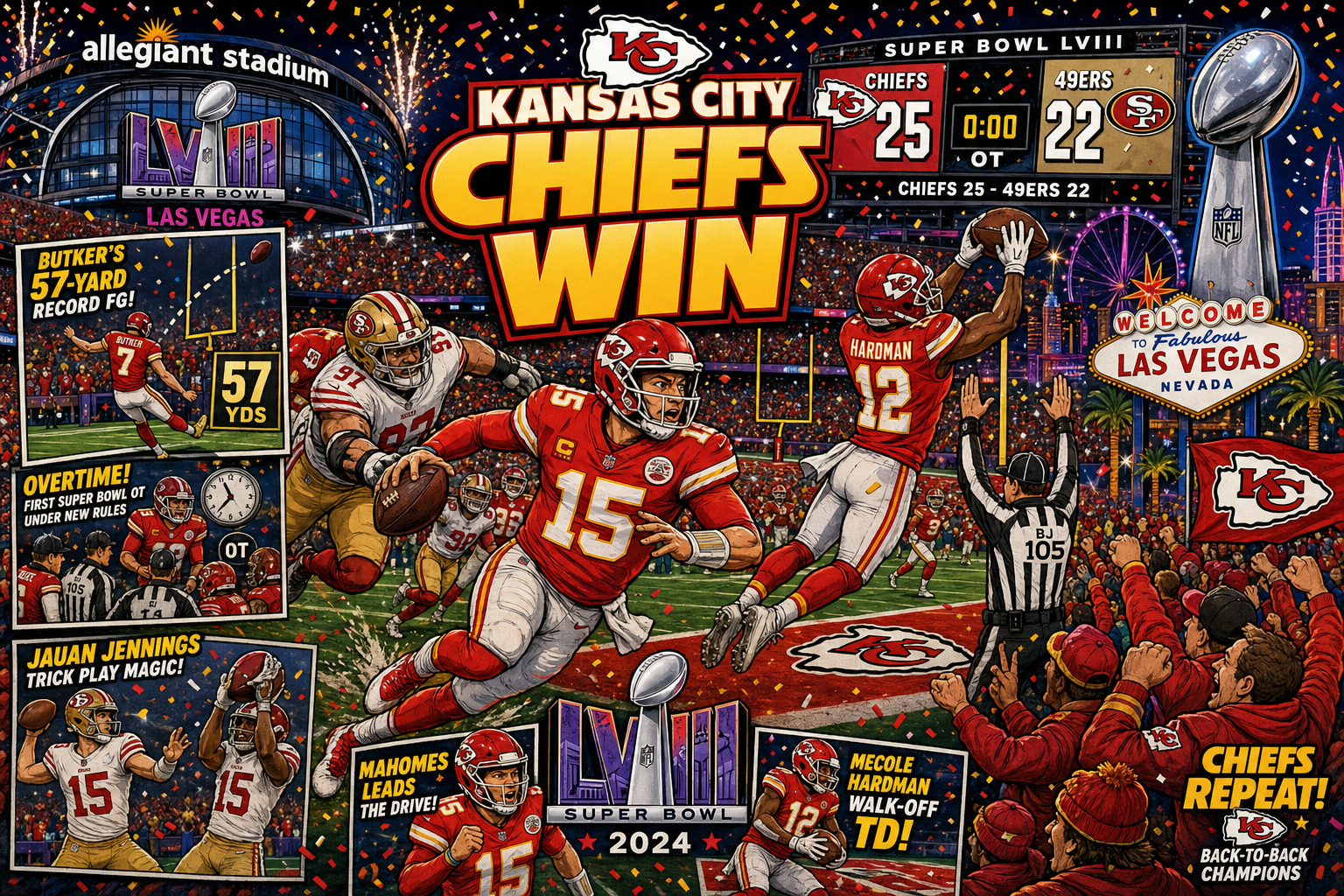
NFL Super Bowls — 2024
2024-01-01
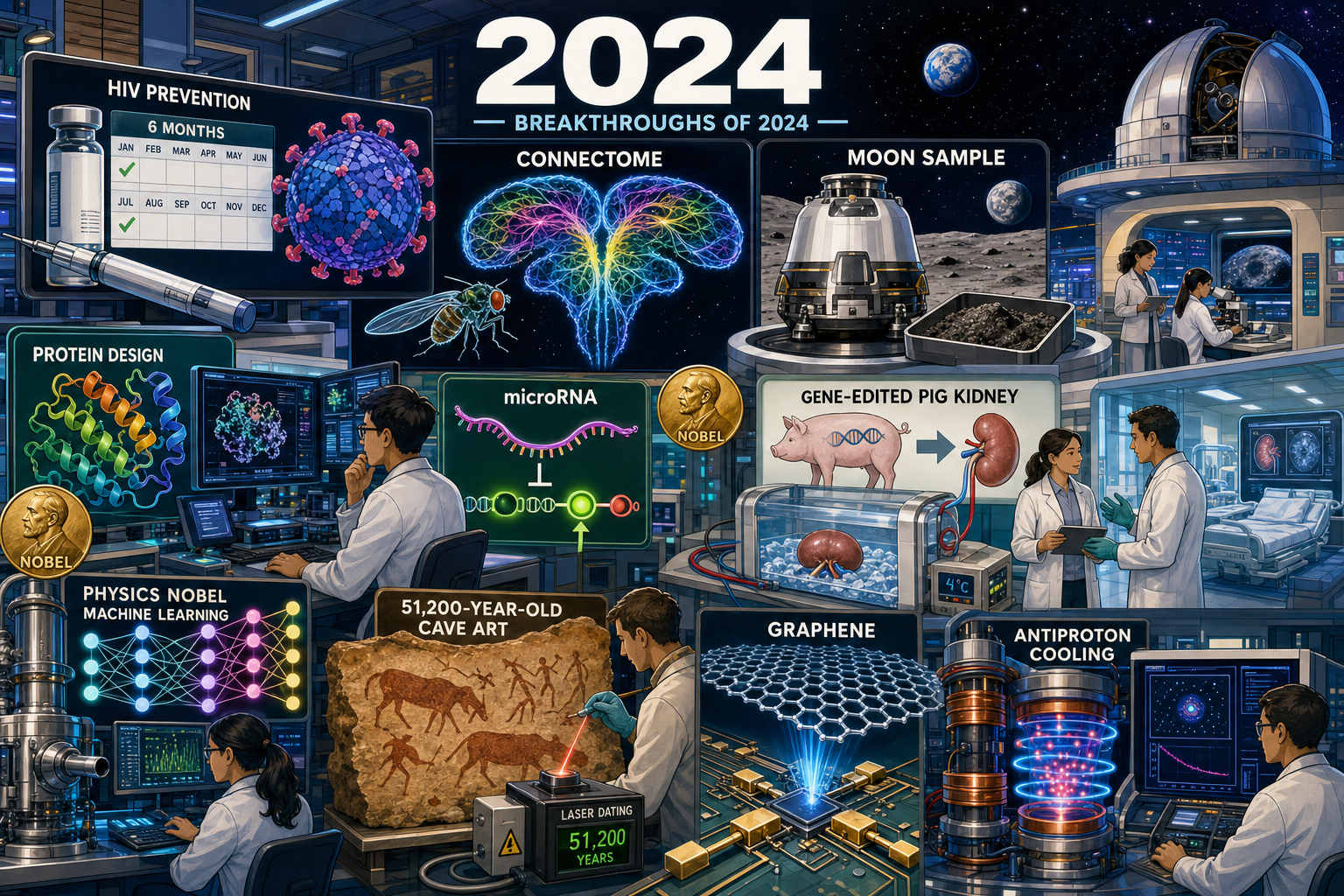
Science Breakthroughs — 2024
2024-01-01