Image Collections
Technology Milestones — 24 Television
Era / approximate date: Late 1920s to mid-1930s, with key developments in London, San Francisco, Philadelphia, and early broadcast studios
Technology Milestones: Television
- Sequence number: 24
- Milestone slug: Television
- Milestone name: Television
- Era / approximate date: Late 1920s to mid-1930s, with key developments in London, San Francisco, Philadelphia, and early broadcast studios
- Saved image path:
My-Library/Images/Collections/Technology-Milestones/Images/Technology-Milestones_24-Television.png - Generation date: 2026-07-03
- Model: built-in gpt-image (recovered from session transcript)
Why This Is A Milestone
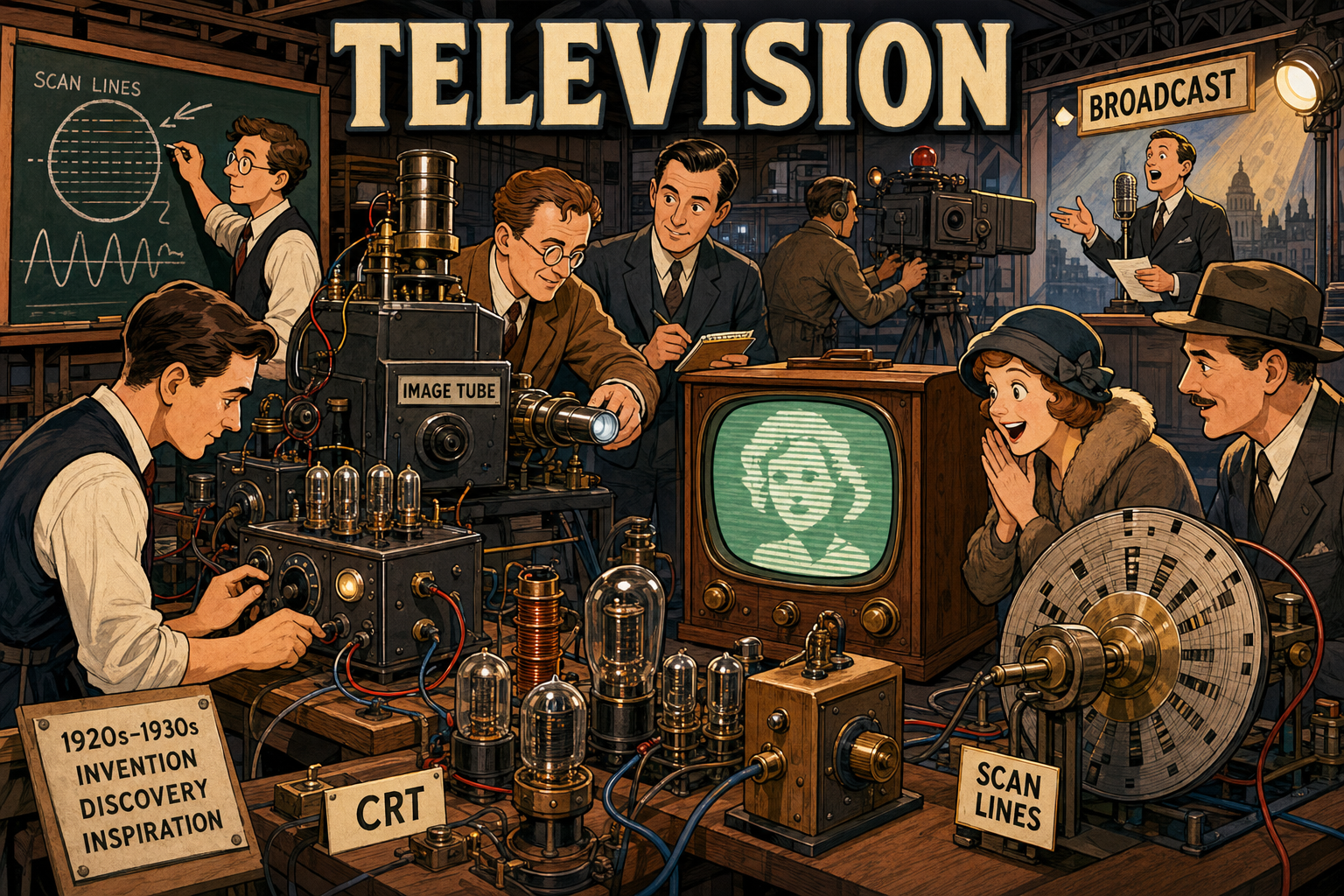
Television turned moving images into electrical signals that could be transmitted and displayed remotely, creating a new mass medium for news, entertainment, education, advertising, and shared public events. The image combines mechanical television demonstrations, early electronic camera/display systems, and experimental broadcasting because the milestone was a multi-inventor transition from laboratory apparatus to public media infrastructure.
Key Visual Elements
- Early CRT receiver with green scan-line glow
- Mechanical scanning disc as a nod to John Logie Baird's demonstrations
- Image dissector / camera-tube style apparatus as a nod to Philo Farnsworth's electronic television work
- Vacuum tubes, coils, cables, dials, and lab benches
- Early broadcast-studio corner with generic announcer and microphone
- 1920s/1930s clothing and workshop materials
- Readable embedded title text:
TELEVISION
Sources
- National Science and Media Museum, "Launching BBC television": https://www.scienceandmediamuseum.org.uk/objects-and-stories/who-invented-television
- Engineering and Technology History Wiki, "Farnsworth's Image Dissector": https://ethw.org/Farnsworth%27s_Image_Dissector
- U.S. Census Bureau, "Philo Farnsworth and the Invention of Television": https://www.census.gov/about/history/stories/monthly/2023/september-2023.html
- Science Museum Group Collection, "John Logie Baird": https://collection.sciencemuseumgroup.org.uk/people/cp3684/john-logie-baird
- National MagLab Magnet Academy, "Iconoscope - 1923": https://nationalmaglab.org/magnet-academy/history-of-electricity-magnetism/museum/iconoscope-1923/
Final Prompt Used
Use case: illustration-story
Asset type: technology-milestone cartoon collection entry, 3:2 wide landscape PNG
Primary request: Create a clean, friendly cartoon editorial illustration for the Technology Milestones "Television" entry, depicting the invention and early public demonstration of television with people using, building, and discovering it.

Historical setting: late 1920s to mid-1930s laboratory and early broadcast studio, London and San Francisco influences. Show era-appropriate wood benches, brass and Bakelite electrical apparatus, vacuum tubes, cables, CRT receiver, mechanical scanning disc, image dissector camera tube, bright studio lamps, chalkboard scan-line sketch, early BBC-style studio backdrop without logos, and 1920s/1930s clothing.

Subject: one unified scene with a central inventor team adjusting a bulky early television camera and receiver; a glowing CRT screen showing a simple abstract face made of scan lines; a spinning mechanical scanning disc off to one side; vacuum tubes and coils on a lab bench; a small broadcast studio corner with an announcer silhouette and microphone; observers reacting with wonder. Keep human figures expressive, active, and central.

Embedded title text: include a short, bold, correctly spelled title naming the milestone: "TELEVISION". The title must be readable at web thumbnail size.

Optional labels: short labels only, such as "SCAN LINES", "CRT", "BROADCAST", and "IMAGE TUBE" on props or signs.

Style/medium: clean, friendly cartoon / editorial illustration, bold confident outlines, flat-to-soft cel shading, warm expressive characters, simple readable shapes, magazine-quality cartoon art. One unified scene, not a grid of panels or a sticker collage.

Composition/framing: wide landscape image with foreground hands tuning dials and cables, midground television apparatus and glowing screen, background lab/studio context. Make television recognizable at web thumbnail size.

Lighting/mood: bright, optimistic, era-appropriate warm lamplight and screen glow, sense of wonder and discovery.

Color palette: varied and era-grounded: warm wood, brass, charcoal suits, cream lab walls, greenish CRT glow, red and blue accent wires. Avoid a one-note palette.

Text constraints: embedded title and labels must be short, high-contrast, correctly spelled. No long captions, no modern signage.

Avoid: photorealism, official logos, exact brand or product trademarks, photorealistic real-person likenesses, copyrighted characters, gore, disconnected symbol collage, unreadable tiny labels, generic stock clip-art look.
More from Image Collections

Internet Culture Timeline — 2025
2025-01-01
Music Yearbooks — 2025
2025-01-01

News & Culture — 2025
2025-01-01
NFL Super Bowls — 2025
2025-01-01
Science Breakthroughs — 2025
2025-01-01
Transportation & Mobility — 2025
2025-01-01
Video Game History — 2025
2025-01-01

Internet Culture Timeline — 2024
2024-01-01
Music Yearbooks — 2024
2024-01-01
News & Culture — 2024
2024-01-01
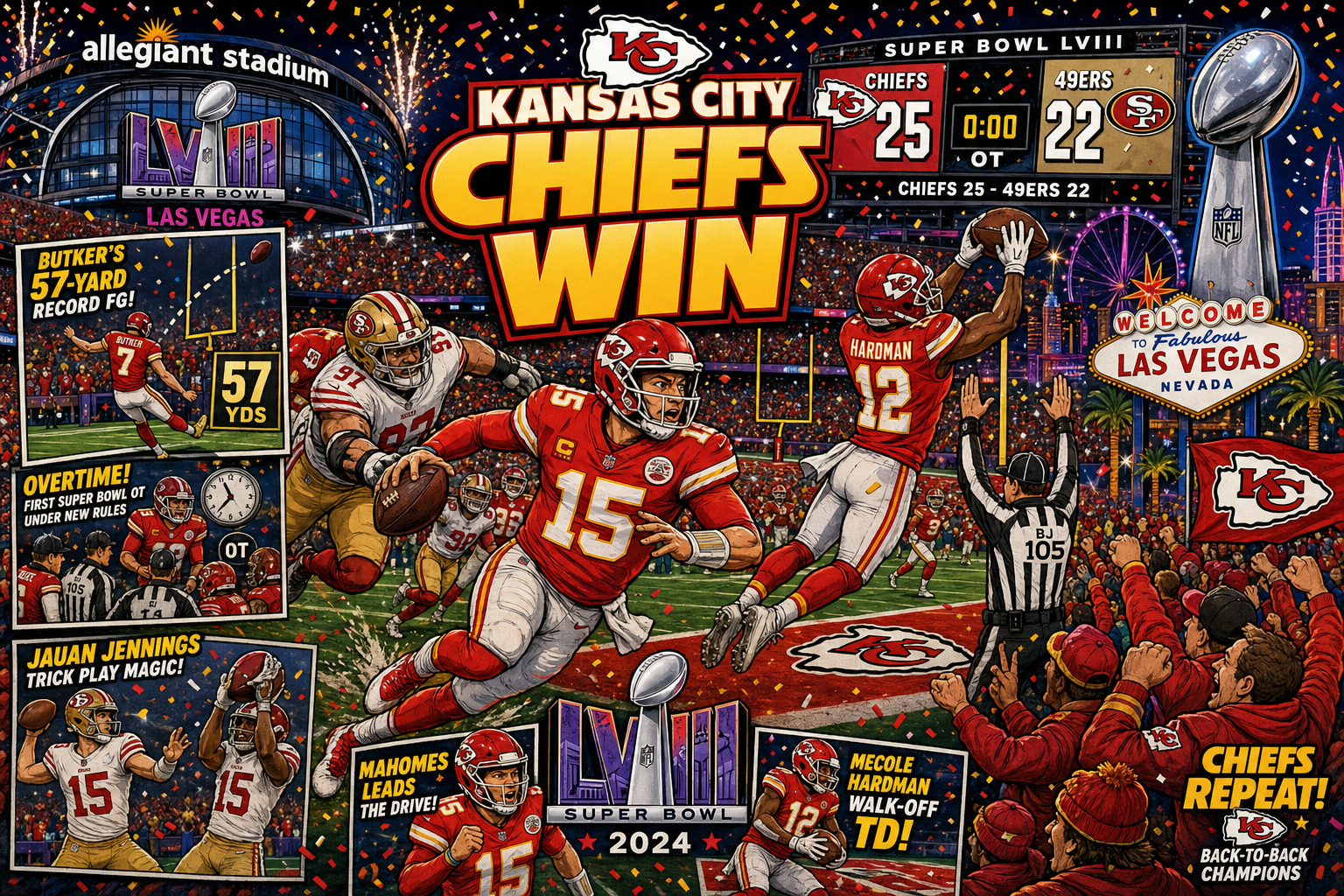
NFL Super Bowls — 2024
2024-01-01
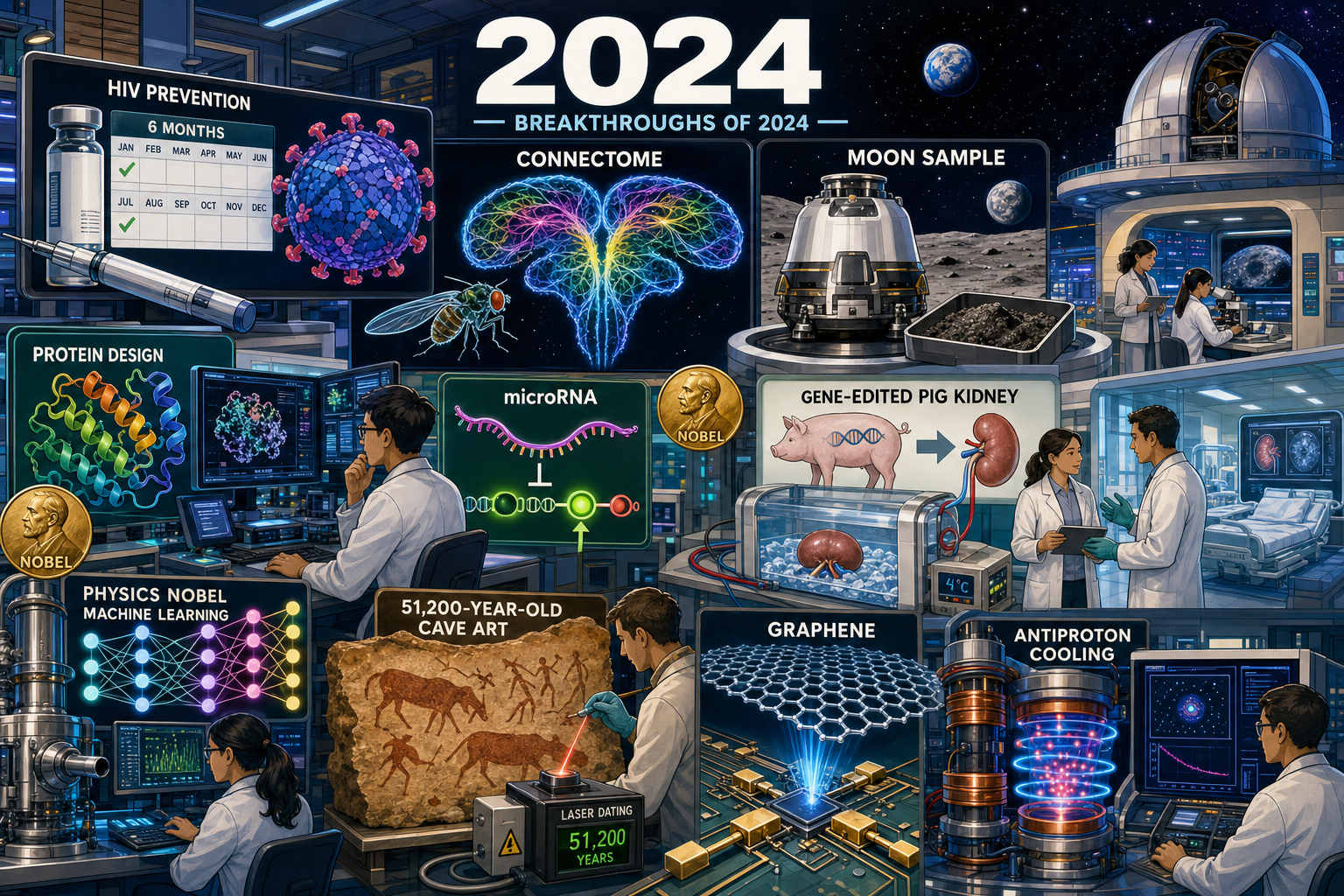
Science Breakthroughs — 2024
2024-01-01