Quantum Hype Reality Check
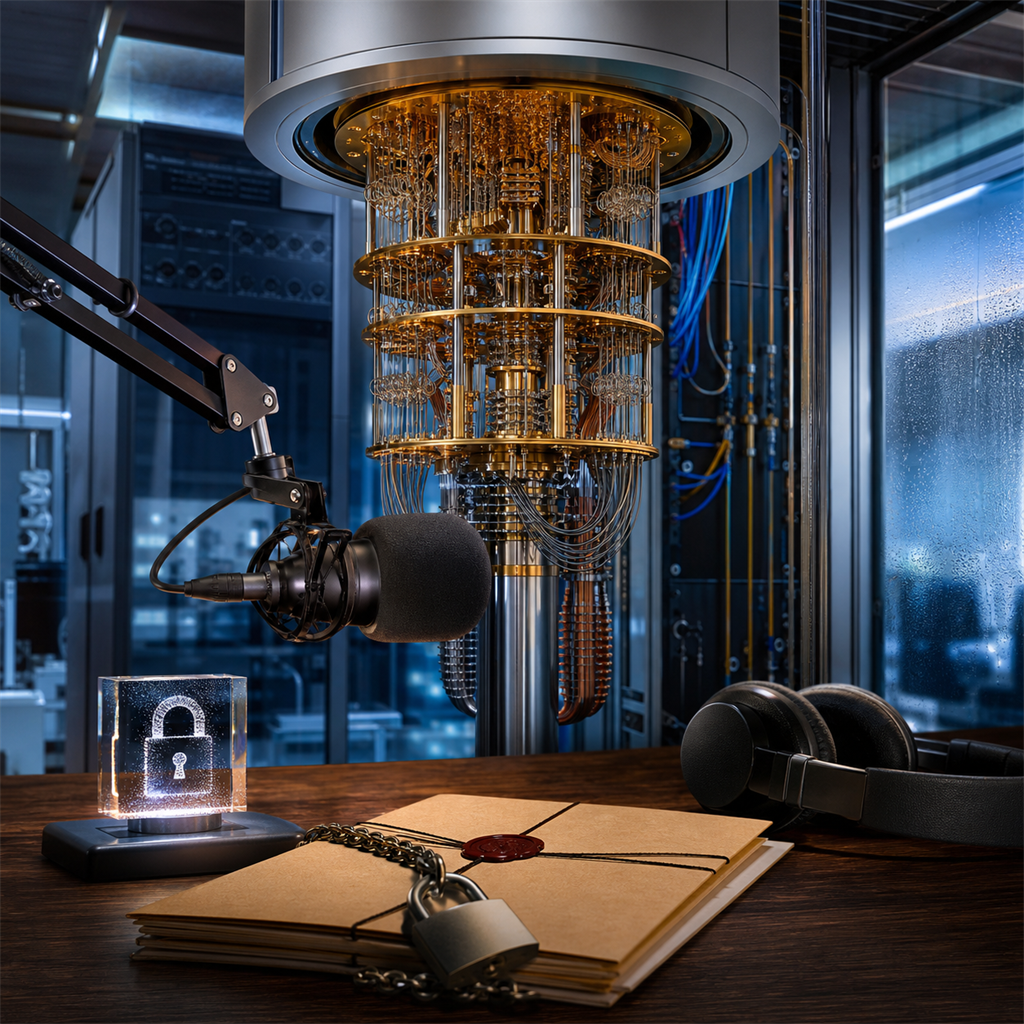
Dr. Penelope Hartwell: Welcome to The Round Table, where we take complex ideas and see what happens when we drop them in front of people with very strong opinions. Today: quantum computing — genuine revolution, or the most expensive science fair project in history. I'm joined by three guests with, shall we say, divergent views. Prepper Paul: I'll say upfront that when quantum computers break all existing encryption, every bank account, every military secret, every private message becomes an open book. That's not hype. That is the documented plan. Boomer Bill: Nobody asked you to go first, Paul. Karen Kay: Nobody asked me either, but I've done my research. I attended a three-hour webinar. Three hours. And not once did they explain what a qubit actually is. I asked in the chat. Repeatedly. I was ignored. Dr. Penelope Hartwell: A qubit is a quantum bit that can exist in superposition — both zero and one simultaneously — until you observe it, at which point it collapses. The machine exploits that ambiguity to run many calculations at once. The trouble is qubits are extraordinarily fragile. Any interference from the environment — heat, vibration, a stray electromagnetic field — destroys the calculation. That's decoherence, and it's the central engineering barrier. Boomer Bill: So the whole thing falls apart if you breathe on it wrong. Meanwhile my union guys ran a factory on regular computers for forty years. Hard to get excited. Prepper Paul: Decoherence is exactly what they want you focused on. While you're reading about decoherence, early quantum systems are already cataloguing encrypted communications from the past decade. Store now, decrypt later. It is a documented intelligence strategy. Karen Kay: Documented by whom? Because if documentation exists, I want a copy. I have a right to know if my messages are being stored, and I will be filing a — Prepper Paul: NIST — the National Institute of Standards and Technology — finalized post-quantum cryptography standards last year precisely because the threat window is closing. That is publicly available. That is real. Dr. Penelope Hartwell: That is actually accurate. Cybersecurity is perhaps the most urgent near-term story — not because quantum computers can break encryption today, but because the timeline is close enough that new standards need to be in place before they can. Pharma, finance, logistics — those industries hear a lot of quantum promises, but the honest window for commercially meaningful impact is closer to ten to twenty years. Boomer Bill: Ten to twenty years. That's what they said about — Prepper Paul: — fusion power, which has been thirty years away for sixty years, I know, but this is different — Boomer Bill: I was going to say electric cars, but sure, hijack my sentence. Prepper Paul: The near-term devices they're selling cloud access to right now are called NISQ machines — noisy, error-prone, genuinely useful for narrow research problems but not yet beating classical computers on anything that matters commercially. That is the gap between the press release and the reality. Karen Kay: Then why is every tech company announcing quantum breakthroughs every other month? I have a Google alert set for the word quantum and my inbox is completely unmanageable. Someone needs to be held accountable for the hype. Boomer Bill: Welcome to Silicon Valley. They've been selling the future for thirty years and half of it never showed up. Dr. Penelope Hartwell: The hype is real, and the underlying science is also real, and the two are currently on different timelines. Error correction is the crux — you need roughly a thousand physical qubits to produce one reliable logical qubit, and fault-tolerant quantum computing at scale will likely require millions. We are not there. We are making genuine progress. Both of those things are simultaneously true. Prepper Paul: Progress being made in facilities you cannot tour, funded by entities whose interests are not yours. Boomer Bill: Paul, I say this with respect — you need a hobby. Karen Kay: What I would like, for once, is a straight answer. Which industry benefits first, and when, and who do I contact if I have follow-up questions. Dr. Penelope Hartwell: Cybersecurity is already adapting — that's happening now. Pharma and materials science within a decade, most likely, because molecular simulation is where quantum has its clearest near-term advantage. Finance not far behind. Everyone else — longer. And for follow-up questions, Karen, the NIST website is genuinely quite good. I'm Dr. Penelope Hartwell — thank you all for a conversation that somehow covered both logical qubits and inbox management. Stay curious, and perhaps just slightly less alarmed than our friend Paul. Prepper Paul: Print this transcript. Store it offline. When the grid goes down, you'll be glad you have it. Boomer Bill: The grid's not going down, Paul. Prepper Paul: Not today. Dr. Penelope Hartwell: And on that note — good evening.
More from Podcasts