Papa a la Huancaína
Papa a la huancaína is a popular Peruvian starter associated with Huancayo in the central Andes.
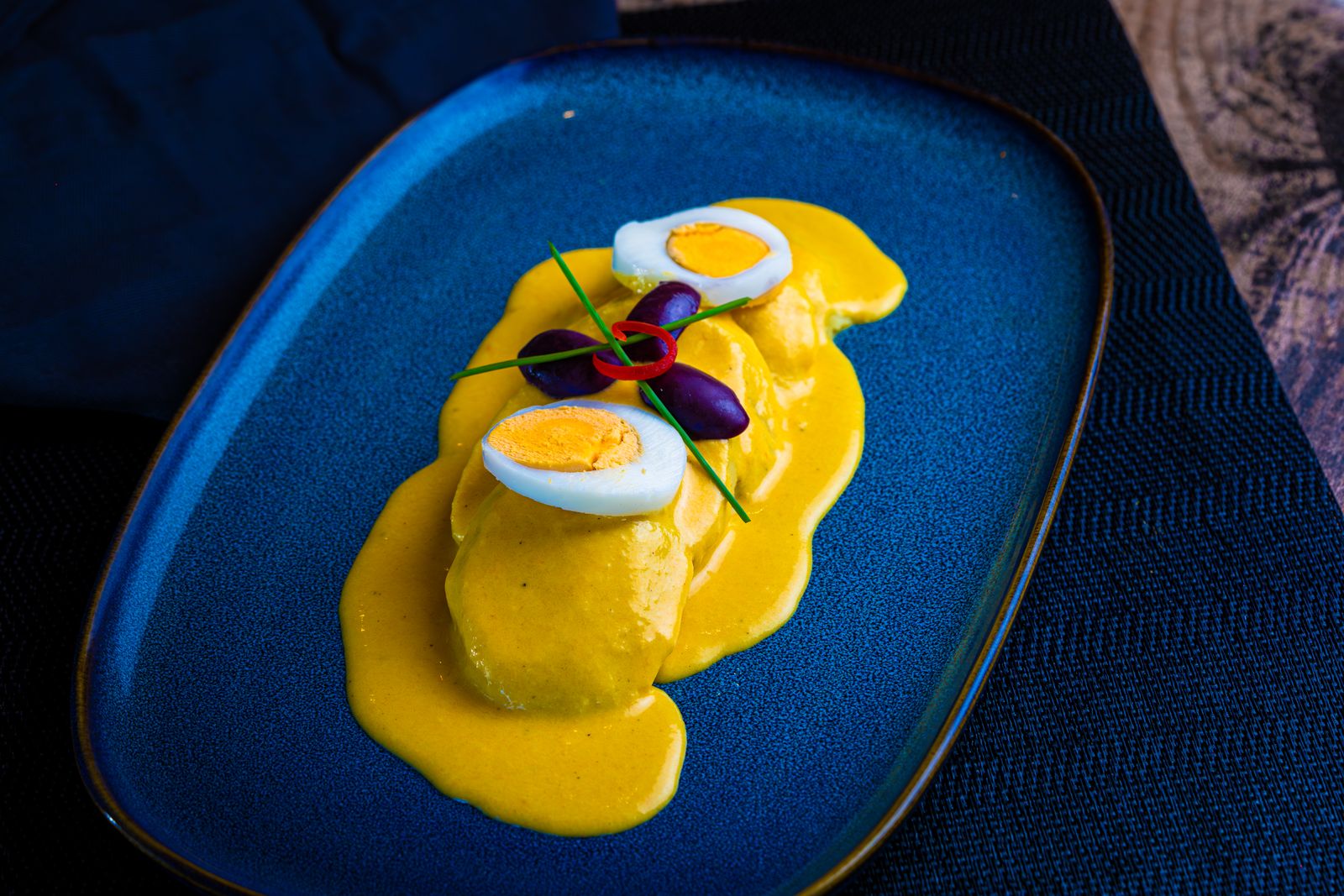
Papa a la Huancaína
Cultural Context
Papa a la huancaína is a popular Peruvian starter associated with Huancayo in the central Andes. Tender potato slices carry a creamy, gently spicy ají amarillo and fresh-cheese sauce, with hard-boiled egg and dark olives alongside. It is usually served cool on lettuce; see Peru Travel and Eat Peru.
Ingredients
Main Components
- 900 g (2 lb; about 6 medium) yellow or white potatoes, scrubbed
- 2 large eggs
- Water, enough to cover potatoes and eggs in separate pans
For the Sauce/Garnish
- 60 ml (¼ cup) sunflower oil, divided
- ½ medium onion (about 75 g), thickly sliced
- 3 fresh or thawed frozen ají amarillo peppers, stems, seeds and ribs removed, chopped
- 200 g (7 oz) pasteurized queso fresco, crumbled
- 120 ml (½ cup) pasteurized whole milk
- 1 tablespoon fresh lemon juice, plus up to 1 teaspoon more to taste
- Up to ¼ teaspoon fine salt, to taste after blending
- 4 large lettuce leaves, washed and dried
- 4 black botija olives, pitted
- 80 g (½ cup) cooked Peruvian choclo kernels, cooled
Substitutions:
- Peruvian yellow potatoes or huayro → Yukon Gold or another potato that holds its shape when boiled.
- Fresh ají amarillo → 2 tablespoons pure ají amarillo paste, increasing to 3 tablespoons to taste; check the label for added salt and allergens. The fresh peppers give a fuller fruit flavor.
- Choclo → cooked large-kernel white corn; ordinary sweetcorn is sweeter and less chewy.
Equipment
- Large saucepan and small saucepan
- Skillet
- Blender
- Colander, knife and cutting board
Instructions
Preparation (Active time: 10 min)
- Prepare the ingredients: Choose sound potatoes without green patches or heavy sprouting. Prepare the onion and peppers; wear gloves when handling chiles and wash hands afterward. Keep the cheese and milk refrigerated until needed.
- Start the eggs: Cover the eggs with cold water by 2.5 cm (1 inch). Bring to a boil, cover, remove from heat and let stand for 12 minutes. Transfer to ice water for 5 minutes, then peel. Both whites and yolks must be firm; refrigerate until assembly.
Cooking (Active time: 15 min)
- Boil the potatoes: In the large saucepan, cover whole potatoes with cold water by 2.5 cm (1 inch). Bring to a boil, reduce to a steady simmer and cook for 20–30 minutes, depending on size, until a thin knife slides through the centers without resistance. Drain. When safe to handle, peel and cut into 1 cm (⅜ inch) slices. Spread in a shallow container to cool briefly, then refrigerate while making the sauce.
- Cook the onion: Heat 1 tablespoon of the measured oil in the skillet over medium heat. Cook the onion for 6–8 minutes, stirring often, until soft and lightly golden. Take off the heat and let cool for 5 minutes.
- Blend the sauce: Put the onion, peppers, cheese, milk and remaining 3 tablespoons oil in the blender. Blend until smooth, scraping down the sides as needed. Add the lemon juice, then taste before adding salt. The sauce should coat a spoon but still pour; if necessary, blend in cold water 1 tablespoon at a time. Refrigerate until serving.
Assembly & Finishing
- Plate and serve: Line 4 plates with lettuce. Divide the cool potato slices among them and spoon the sauce over the top. Quarter the eggs and give each plate 2 quarters, 1 olive and one-quarter of the corn. Serve promptly. The photograph shows a restaurant presentation with extra chile and chive garnish; those extras are not required here.
Food Safety & Storage
- Minimum safe doneness: Eggs must have firm whites and yolks. Use pasteurized cheese and milk; the sauce is not cooked after blending.
- Storage: Refrigerate potatoes, sauce and eggs separately in covered shallow containers at 40°F (4°C) or below within 2 hours of preparation, or 1 hour above 90°F (32°C). Use within 3 days. Assemble only the portions needed.
- Freezing: Not recommended; potatoes become watery and the sauce can separate.
- Reheating: Traditionally served cool. If reheating leftover potatoes, heat to 165°F (74°C), then add freshly refrigerated sauce just before eating. Do not repeatedly warm and chill the sauce.
Serving Suggestions
- Serve as an entrada before a Peruvian lunch, or alongside rice and a cooked main dish.
- Offer extra ají amarillo sauce separately for diners who prefer more heat.
- Traditional serving style: potato slices on lettuce, covered with sauce and finished with egg and olives.
Scaling Notes
Half recipe (½×): Use 1 egg and halve the other ingredients. A small blender jar helps the reduced sauce blend smoothly.
Double recipe (2×): Use a larger pot so the potatoes simmer freely. Blend the sauce in batches and cool the potatoes in several shallow containers.
Chef's Notes
- Sourcing: Find ají amarillo and choclo in Peruvian or Latin American markets, often frozen. Use queso fresco made from pasteurized milk.
- Make-ahead: Prepare the components up to 1 day ahead and refrigerate separately. Stir the sauce before serving; thin with a little cold water if needed.
- Variations: Some family recipes use evaporated milk and saltine crackers to thicken the sauce. This version follows Peru Travel's cracker-free formula, so it contains no wheat ingredient.
- Common pitfalls: Do not overcook the potatoes until they crumble. Taste the blended cheese sauce before salting; cheese and olives vary considerably in saltiness.
- Recipe basis: Synthesized from the sources below, principally Peru Travel's sauce ratios and accompaniments. Potato weight, salt limit and practical cooking instructions are specified here for home use.
Nutrition Information (Optional)
Per starter serving: approximately 520 kcal; estimates vary with cheese and potato variety.
- Protein: 15 g | Fat: 26 g | Carbohydrates: 49 g | Fiber: 5 g
- Sodium: approximately 550–700 mg | Saturated fat: approximately 7 g | Added sugar: 0 g
- This is a rich cheese-sauce starter. Estimated sodium is elevated and saturated fat is high; it is not a low-sodium or low-fat dish.
Sources
- Peru Travel: Papa a la Huancaína — primary ingredient proportions and serving accompaniments.
- Eat Peru: Papa a la Huancaína — boiling, cool serving style and traditional garnishes.
- PBS Food: Papa a la Huancaína, Adrianna Adarme — comparison for ají paste and appetizer serving size.
- Image: Nano Erdozain on Pexels — finished plated dish.
- Downloaded image URL.

Version History:
- v1 (2026-11-06): Initial recipe by @Codex.
Credits:
- Recipe adaptation and source review: @Codex; synthesized as described above.
- Testing: @Codex (document and ingredient review only; not kitchen-tested).
- Verification: @Coordinator (workflow attribution; no independent kitchen test claimed).
- Safety/storage: firm-cooked eggs, pasteurized dairy, prompt shallow-container refrigeration and cold holding follow the USDA/FDA guidance used by recipe-validator.
- Photography: Nano Erdozain / Pexels, under the Pexels License. Downloaded at 1600 px wide; no crop or color edits. HTML renderer may resize the image. Source and direct download are listed above.
Recipe Location: /Recipes/peruvian/peruvian_papa-a-la-huancaina_v1.md
Images Location: /Images/papa-a-la-huancaina/
More from Recipes