Chroma Break
Design brief
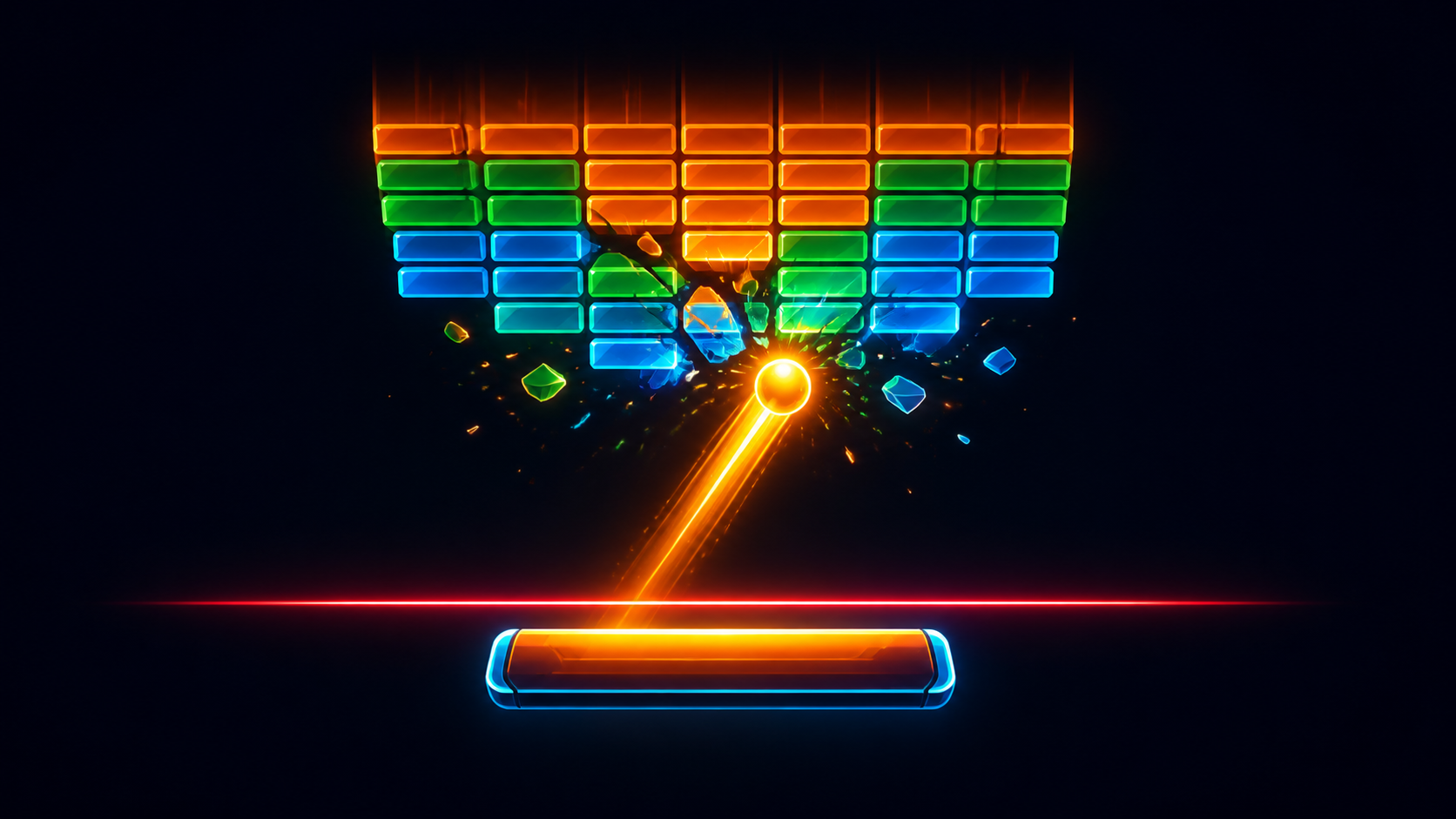
Catch the ball off-center to bend its rebound, keep your paddle's glow matched to the plate you're about to hit for an instant break, and chain unbroken matches into a rising multiplier as the ball quickens and the paddle narrows.
Date: 2026-08-24 Genre: brick-breaker Status: Playable build
Concept
Chroma Break takes the paddle-and-plates loop and gives the paddle a second job: it carries a color charge, and only plates that match it break clean. Every plate on the board is a small bet: swing the charge to the color in your path, or leave it and spend an extra hit. The fantasy is less "clear the wall" and more "keep the right color loaded before the ball gets there."
How to play
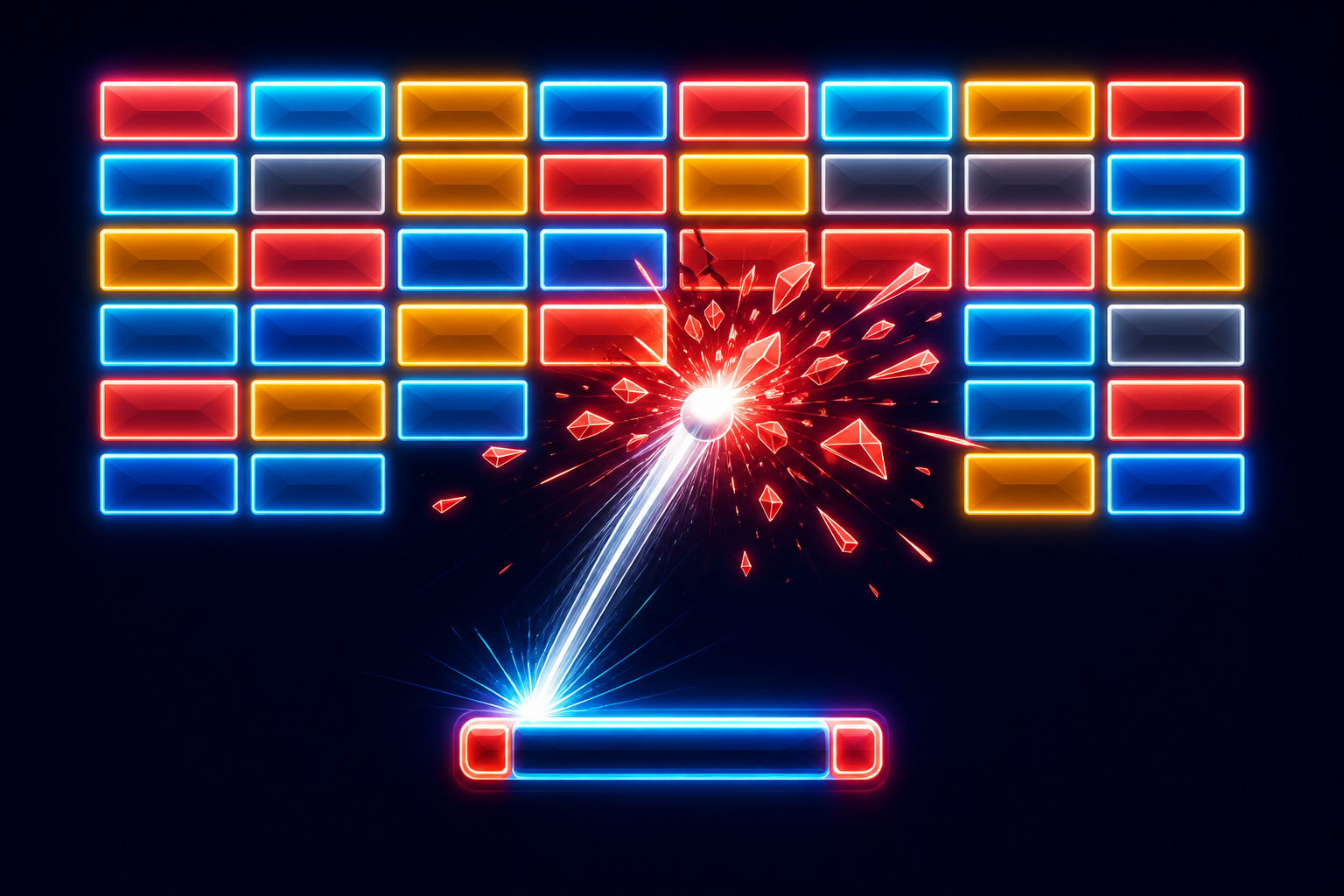
Clear every colored plate to advance; run out of balls and the attempt ends. Move the paddle with the mouse, a finger drag, or the arrow keys / A-D. Cycle the paddle's charge color with the dot in the bottom-right corner, or the C key. A matching-color plate shatters in one hit; a mismatched one takes two and pays less. Tap, click, or press Space to serve the ball, and catch it near the paddle's edge to send it off at a sharper angle. Press R or hit the on-screen button to restart after a loss.
Core mechanics
- Color-charge paddle: cycle among 2-4 active colors; matching a plate destroys it in one hit for full value, mismatching costs a second hit for a third of the points.
- Angle control: where the ball lands on the paddle sets its rebound angle, and hitting the outer 20% of the paddle adds a flat graze bonus for playing risky.
- Combo multiplier: five consecutive color-matched breaks bump the score multiplier (capped at x4); losing a ball resets it to x1.
- Steel plates: unbreakable gray obstacles that only deflect the ball, growing in number each level to complicate the angles.
- Three lives per run, with a bonus life every three levels cleared.
Progression & scoring
Ball speed starts at 260 px/s and climbs 8% per level cleared, capping near 620. Paddle width starts at 96px and shrinks 6px per level down to a 48px floor. Steel-plate count grows by roughly one per level (capped at 8), and the grid adds a row every two levels (5 up to 8). The active color count steps up too: two colors through level 2, three through level 5, four from level 6 on, so the color-matching decision gets harder exactly as the board gets harder to read. Matched breaks pay 100 points times the current multiplier; mismatched breaks pay 20 times the multiplier; edge grazes add a flat 25; clearing a level pays 250 times the level number. Best score persists locally so each run has something to chase.
Look & feel
A dark navy gradient backs a neon grid: four saturated plate colors (coral, cyan, amber, lime) against slate-gray steel, with the paddle and ball glowing in the paddle's current charge color. Breaking a plate throws a small burst of colored particles and a floating point value; every hit, cycle, and life lost has its own short synthesized WebAudio tone, so the board has a pulse even with no music.
What makes it fun
- The charge-cycling adds a real read-and-react decision on top of aiming: you're never just bouncing a ball, you're managing which color is "loaded" before it matters.
- The graze bonus makes hugging the paddle's edge a legitimate, rewarded choice instead of the safe play always being the correct one.
- Four separate difficulty knobs (speed, paddle size, steel density, color count) ramp together, so level six feels meaningfully different to read and play than level one, not just faster.