Deadline Break
Design brief
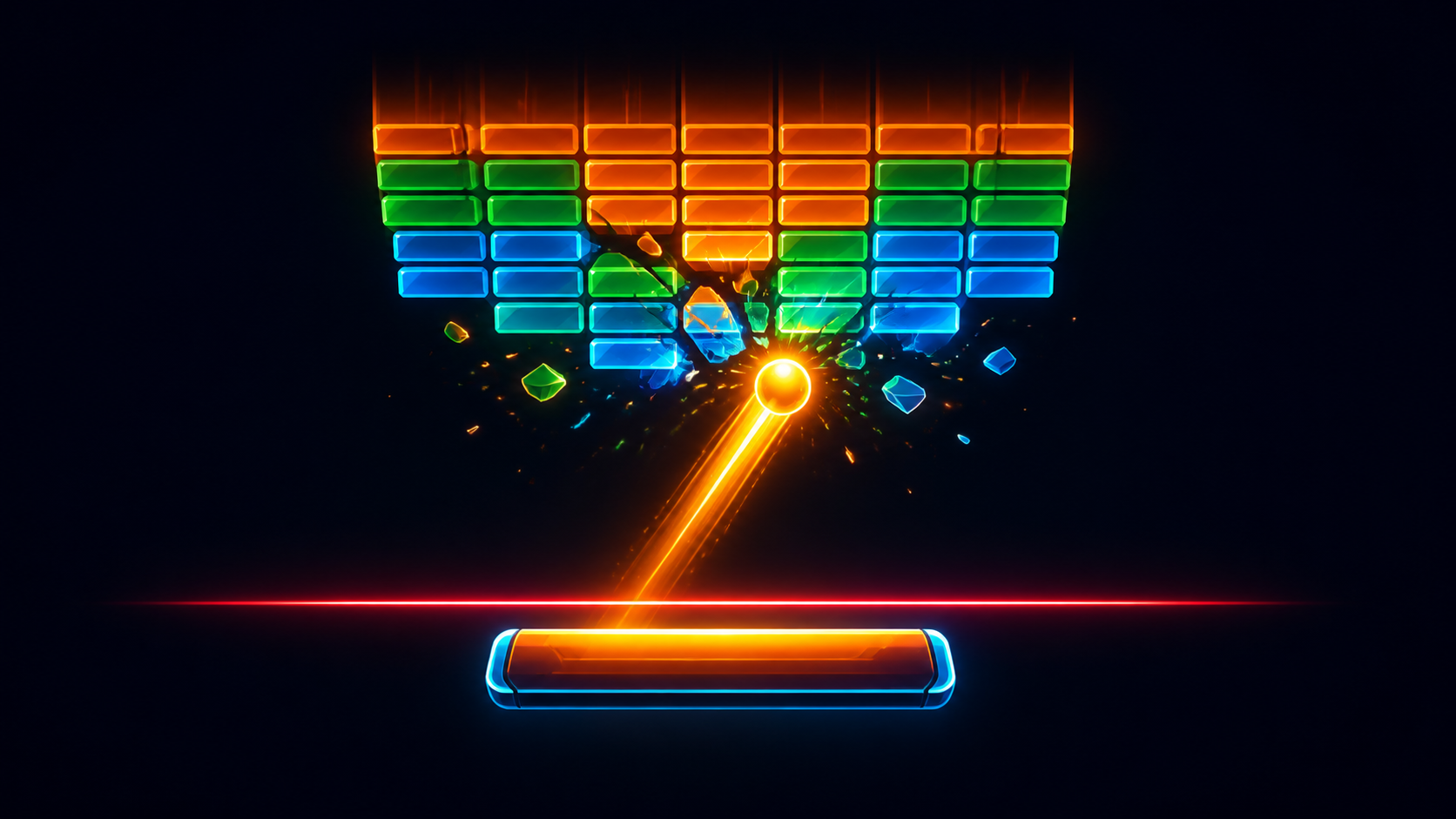
Angle the ball into color-matched chains before the multiplier resets, while the brick wall creeps one row lower on a timer and a red line marks how close it's allowed to get.
Date: 2026-08-26 Genre: brick-breaker Status: Playable build
Concept
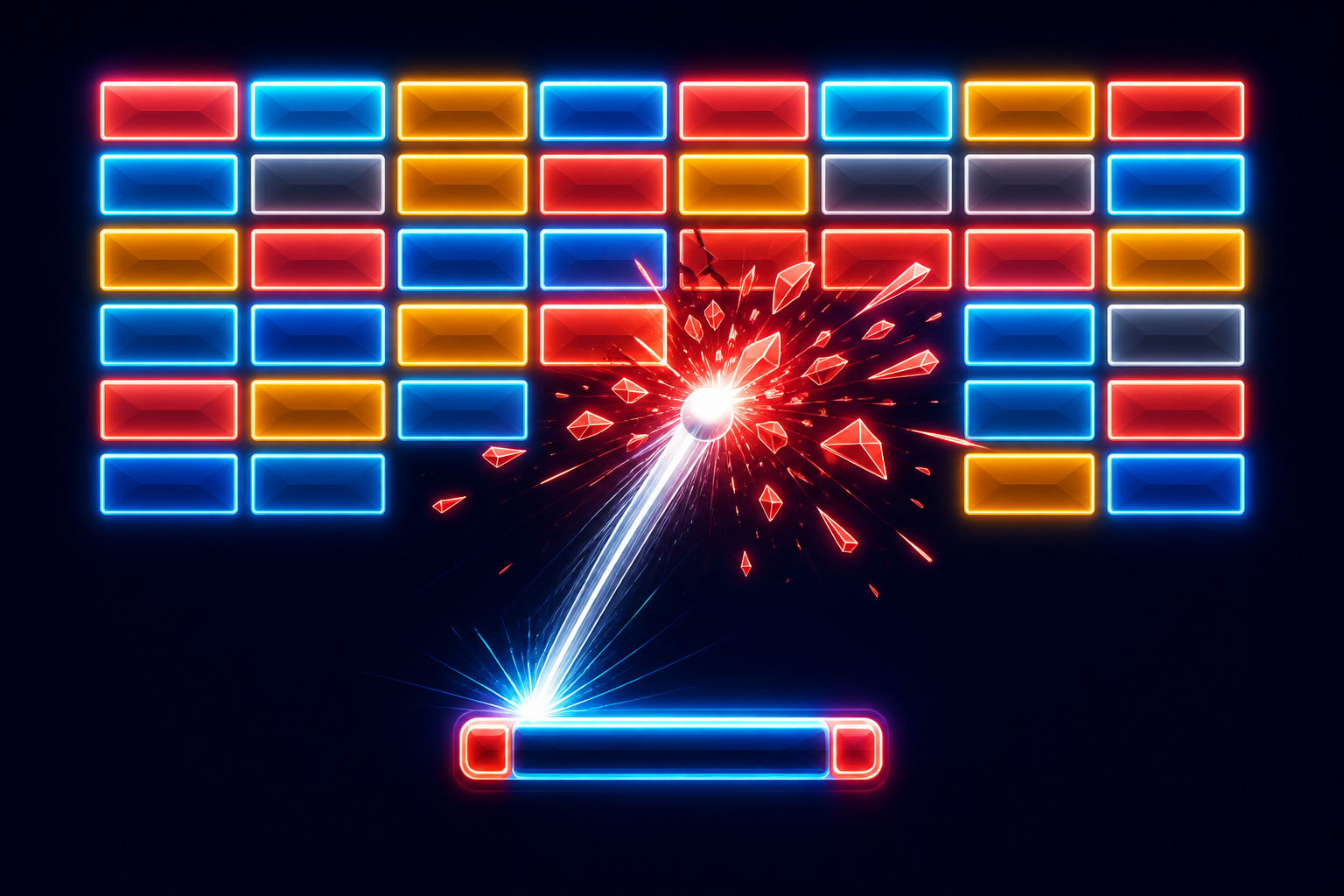
Deadline Break takes the paddle-and-ball loop and adds a second clock: the brick wall itself is falling toward you. Every few seconds it drops a row and a fresh row spawns at the top, so clearing bricks buys you time as much as it scores points. That splits your attention between chasing a same-color streak for the multiplier and keeping the wall off the red line above your paddle.
How to play
Clear as many bricks as you can before either you run out of lives or the wall reaches the danger line. Drag the mouse or your finger to move the paddle; on a keyboard, use the arrow keys or A/D. Click, tap, or press Space to launch the ball from the paddle. Where the ball hits the paddle sets its rebound angle, same as classic brick-breaker: catch it near an edge to send it out sharp. Missing the ball costs a life and resets your multiplier; losing all three lives, or letting any brick's bottom edge cross the red line, ends the run.
Core mechanics
- Descending wall: every 18 seconds at the start (down to 10 seconds by the run's late stage), the whole brick grid shifts down one row and a new row spawns at the top.
- Color-chain multiplier: breaking bricks of the same color back to back builds a multiplier up to x5; breaking a different color, or a steel or explosive brick, resets it to x1.
- Steel bricks: gray, two hits to clear, no color of their own — useful for buying a breather but they don't extend a chain.
- Explosive bricks: one hit clears it and every brick touching it, which is great for carving through a crowded wall fast but also kills whatever chain you had going.
- Paddle-angle control: the bounce angle depends on where the ball lands on the paddle, so positioning is a constant, active choice, not a passive catch.
Progression & scoring
Score is 10 points times your current multiplier per brick. Every 25 seconds of survival, the run steps up: ball speed rises about 10% per step, the wall's descent interval shortens, and steel bricks (from step one) and explosive bricks (from step two) start appearing in new rows. By the third step the paddle also shrinks about 10%. The ramp caps around the fourth step, so a run that gets that far plateaus instead of spiraling into an unwinnable speed.
Look & feel
Dark navy playfield, neon brick colors (coral red, mint green, sky blue) against near-black, with gray steel bricks and an amber explosive brick that reads as the odd one out. The danger line is a dashed red glow that pulses faintly, and the paddle flashes white on contact. All sound is synthesized WebAudio — square-wave blips for regular bricks, a lower crack for steel, a falling sawtooth sweep for explosions — so there are no audio files, just oscillators shaped per event.
What makes it fun
- The wall and the multiplier pull against each other: the safest play (clear methodically, keep the paddle near the danger zone) is slower than the risky one (chase a color streak across the whole board), so the greedy line is also the fast line.
- Explosive bricks are a trap disguised as a reward — they clear space fast when the wall is closing in, but you feel the chain snap the instant you use one.
- The red line turns "how close did I let it get" into its own kind of near-miss, on top of the usual "did the ball almost slip past the paddle."