Sparkforge
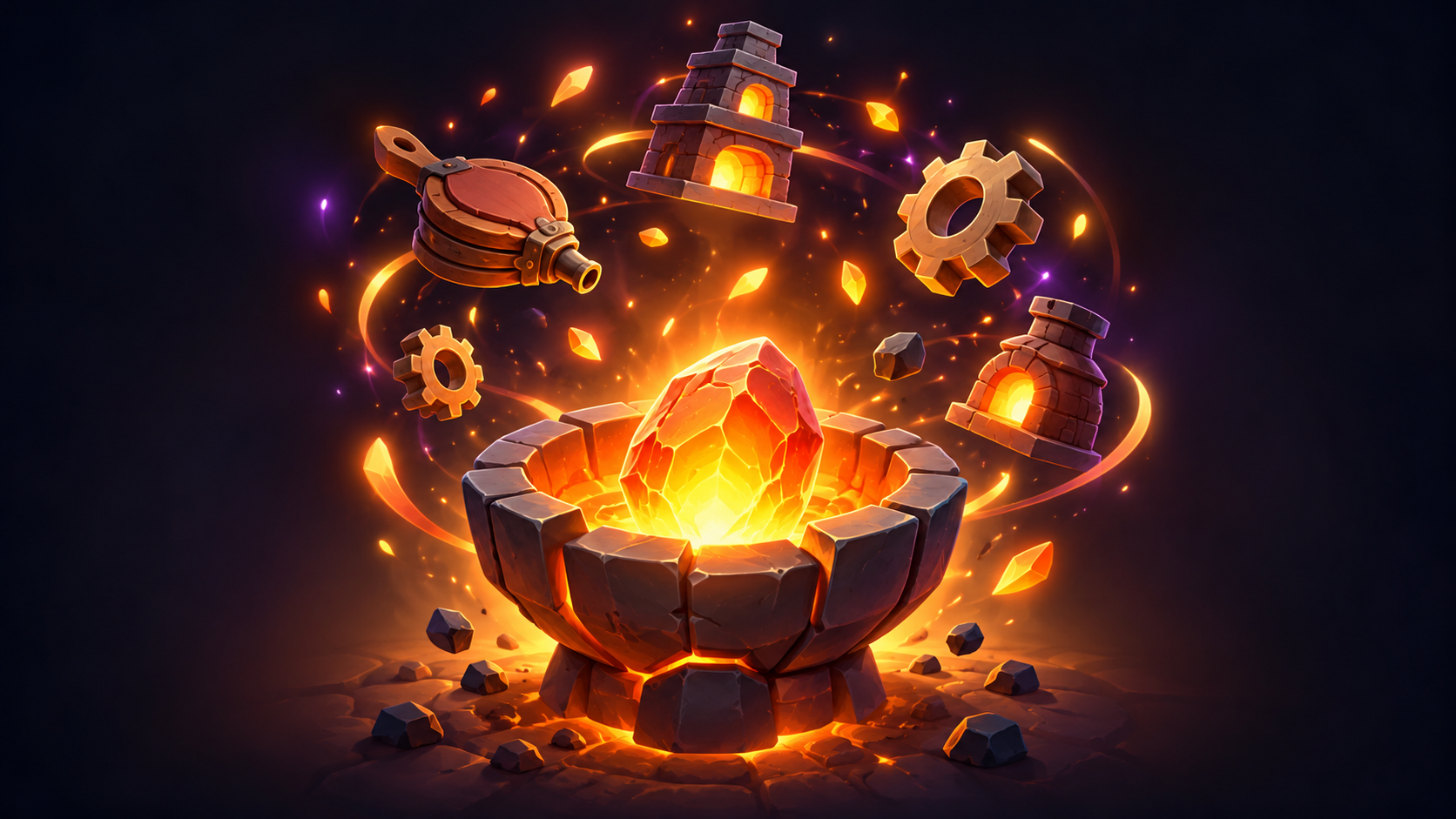
Design brief
Tap an ember into an empire of self-stoking furnaces, then decide when to burn it all down for a permanent boost.
Date: 2026-10-29 Genre: Idle incremental Platform: Mobile (portrait, touch-first) Status: Playable build
Concept
Sparkforge is a one-sitting idle climb: you start with a bare ember and grow it into a chain of stokers, bellows, and furnaces that keep earning while you're not tapping. The twist is that sitting still doesn't actually work — sparks you don't spend start bleeding away, so the game keeps pulling your thumb back even after the economy is running itself.
How to play
Tap the ember to earn sparks. Spend sparks on stoker rows below it — each one adds sparks per second on its own, and its price climbs every time you buy another. Once you've earned 1,000 lifetime sparks, a Reforge button unlocks: it wipes your current sparks and stokers but locks in a permanent rate multiplier based on everything you've earned so far. Desktop: Space taps the ember, keys 1–5 buy a stoker tier, F reforges, R resets, M mutes.
Core mechanics
- Tap-to-earn: every tap adds sparks, scaled by your current reforge multiplier.
- Five stoker tiers (Kindler through Dragon's Breath), each with its own base rate and an exponential cost curve.
- Overflow decay: sparks held above roughly five times your cheapest next purchase bleed off at 3% a second, so hoarding is a losing move.
- Flare windows: an unpredictable 6-second burst where taps pay 6x and passive income jumps 50%, rewarding whoever's thumb is already on the ember.
- Reforge: a one-way reset that trades your current board for a permanent multiplier on all future rates and taps.
Progression & scoring
Lifetime sparks earned is the running score, shown at the top alongside your reforge count. Early stoker costs sit in the tens and hundreds, climbing roughly 15 to 19% per purchase within a tier, so the decision of which tier to feed next changes every minute or two. The real escalation isn't a faster number. It's the reforge call: wipe a board that's taken ten minutes to build for a multiplier that makes the next ten minutes faster, or hold off and squeeze more out of what you've already got.
Look & feel
The ember glows and pulses on a dark forge-black background, brightening and widening during a flare. Tapped sparks pop off as small floating "+N" numbers that fade as they rise. All of it sits inside an on-screen phone frame with a notch cutout, so it reads as a handheld device even in a landscape iframe. Every sound, from the tap click to the buy thunk to the three-note reforge chime, is synthesized live with the WebAudio API. None of it is a sample file.
What makes it fun
- The overflow decay turns a normally hands-off genre into something you have to keep touching — there's a real cost to looking away from the screen.
- Flare windows create a genuine interrupt: whatever you were about to buy, the smart move is to drop it and mash the ember for six seconds.
- The reforge button is a standing dare — it's sitting right there the moment you cross 1,000 lifetime sparks, and every stoker you buy afterward raises the stakes of giving it all up.