Stellar Fusion
Design brief
Drag two matching stars together to fuse them into something bigger, before the field runs out of room.
Date: 2026-09-17 Genre: merge puzzle Platform: Mobile (portrait, touch-first) Status: Playable build
Concept
A 5×6 field slowly fills with small glowing stars. Drag one onto a matching one and they fuse into the next tier, worth more points and freeing a cell. Do nothing and the field chokes; fuse too slowly and a "Stone" — a dead cell that never fuses — starts eating your options. The fantasy is small and physical: two things touch, and something better exists where they used to be.
How to play
Drag a star onto another star of the same tier to fuse them. Drop a star on an empty cell to reposition it instead. New stars land in random empty cells on a timer that speeds up as the run goes on. The game ends when the field is full and no two stars on the board share a tier — there's nothing left to fuse. On a phone: press and drag with a finger. On desktop: click and drag with a mouse, or use the arrow keys to move a cursor and Enter to pick up and drop a star. Press R to restart at any time.
Core mechanics
- Drag-to-fuse: same-tier stars merge into the next tier on contact; anything else snaps back.
- Drag-to-reposition: dropping on an empty cell just moves the star, letting you stage a fusion for later.
- A combo window: fuse again within 2.5 seconds of your last fusion and the multiplier climbs, up to x8; wait too long and it resets.
- Stones: from the second difficulty step onward, some spawns are inert rocks that occupy a cell forever. They can't be cleared — only planned around.
- A spawn timer that drops from 2.2s to 1.0s over four steps, alongside heavier stars entering the spawn pool.
Progression & scoring
Four timed steps (20s, 45s, 75s, 110s) each shorten the spawn interval and widen the mix of star tiers that can appear; stones start showing up at the second step. Each step is announced with a short on-screen line so the player knows what just changed, rather than guessing why the board suddenly feels tighter. Fusing a pair scores 2^(new tier), multiplied by the current combo — so a single big, delayed fusion built up over several matching pairs can outscore a dozen quick small ones, and chaining fusions fast is worth more than doing them safely one at a time. Best score is saved locally and shown against the current run on game over.
Look & feel
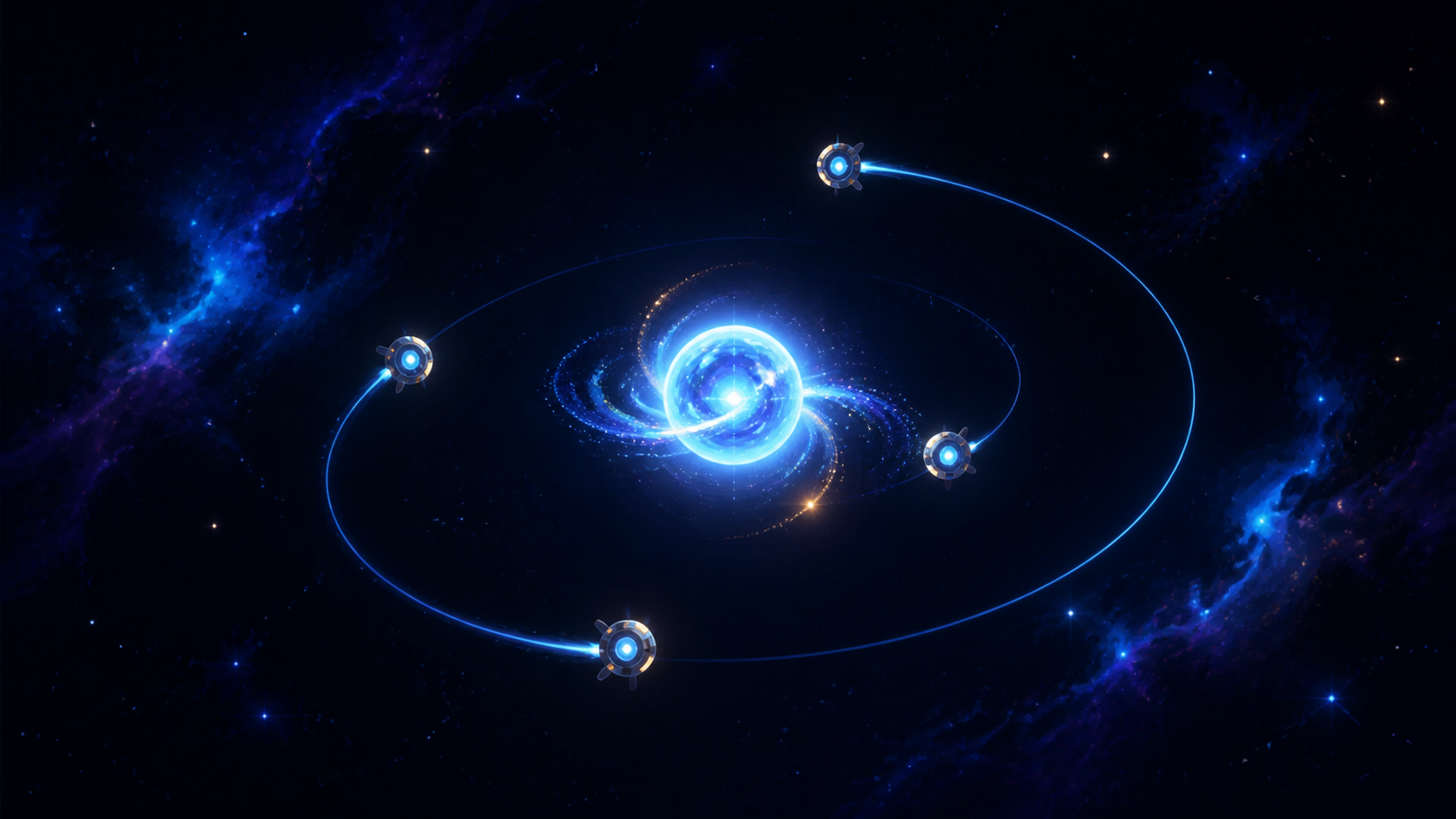
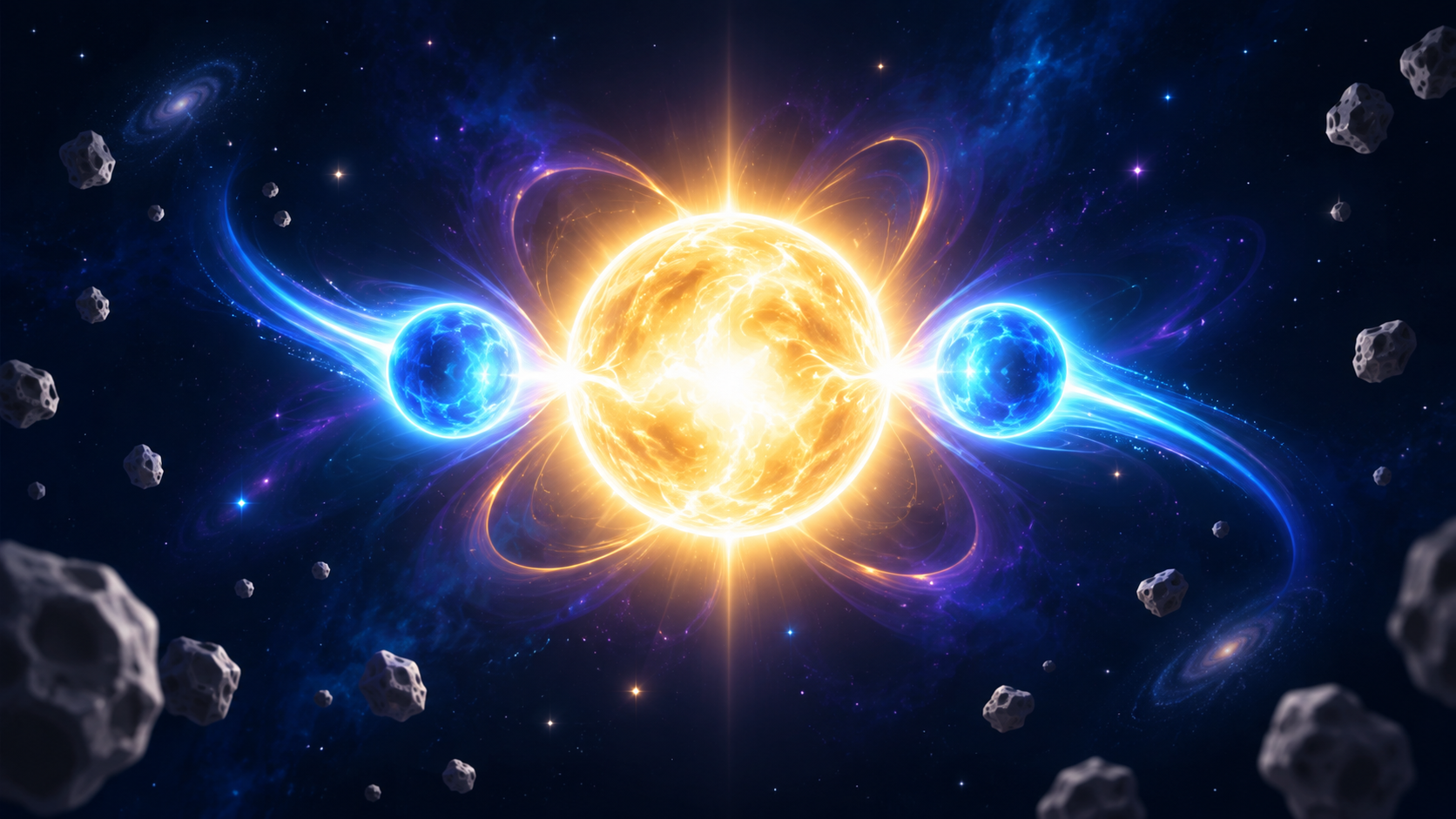
Dark navy field with soft glowing orbs in a blue-to-gold gradient by tier, rendered on canvas with no external art. A faint checkerboard marks the grid so empty cells still read clearly. Fusing throws off a short particle burst in the new star's color; sound is a handful of synthesized WebAudio blips — a rising chirp for spawns, a pitched-up square wave for fusions that gets higher with tier, a low descending tone on game over. Everything sits inside an on-screen phone frame with a notch and rounded bezel, so it reads as a phone screenshot even before you touch it.
What makes it fun
- The stall-or-spend decision: leaving two low-tier stars unfused to bait a third in, so one drag turns into a bigger, higher-value chain, while the board keeps filling underneath you.
- Stones turn the grid from a math puzzle into a spatial one — losing a corner to a rock changes which fusions are even reachable for the rest of the run.
- The combo window rewards working fast in bursts rather than playing it slow and safe, so the greediest sequence of moves is also the best-scoring one.