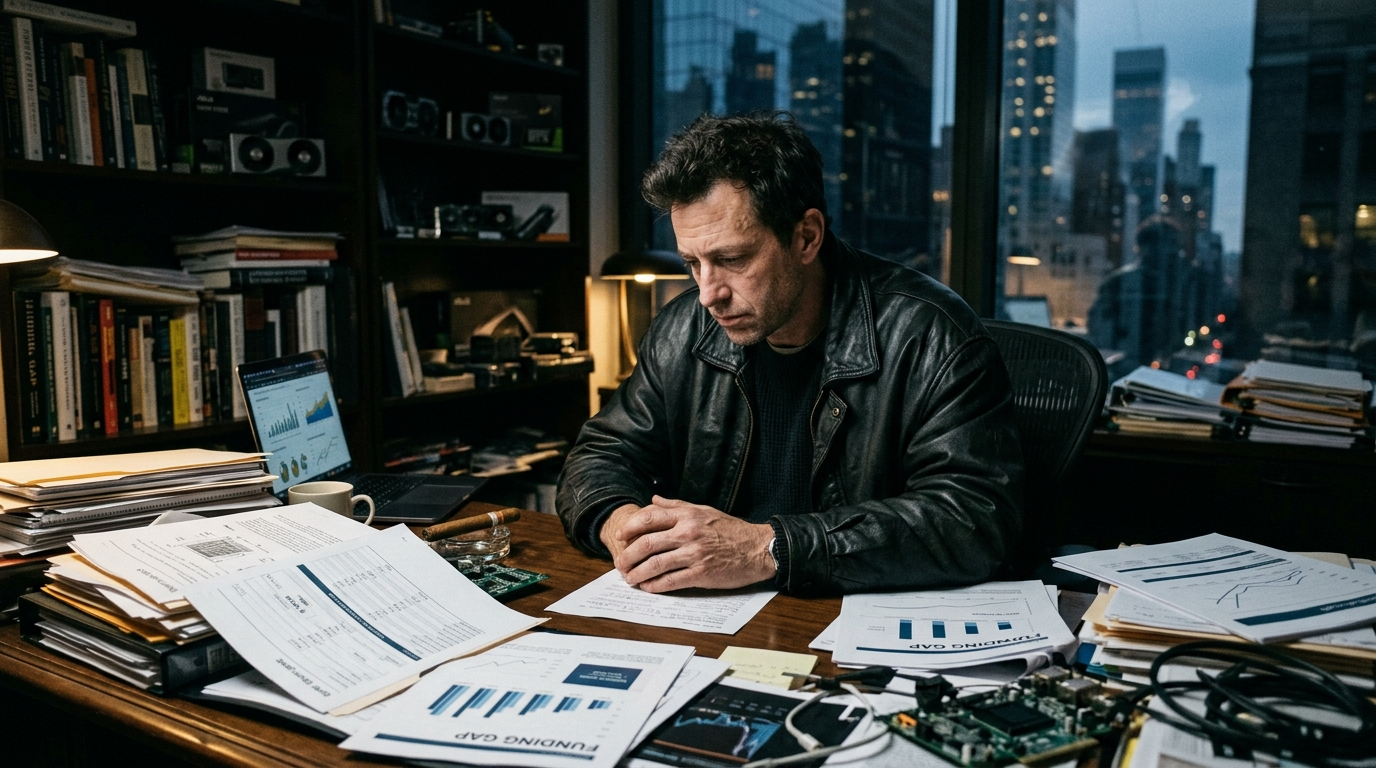
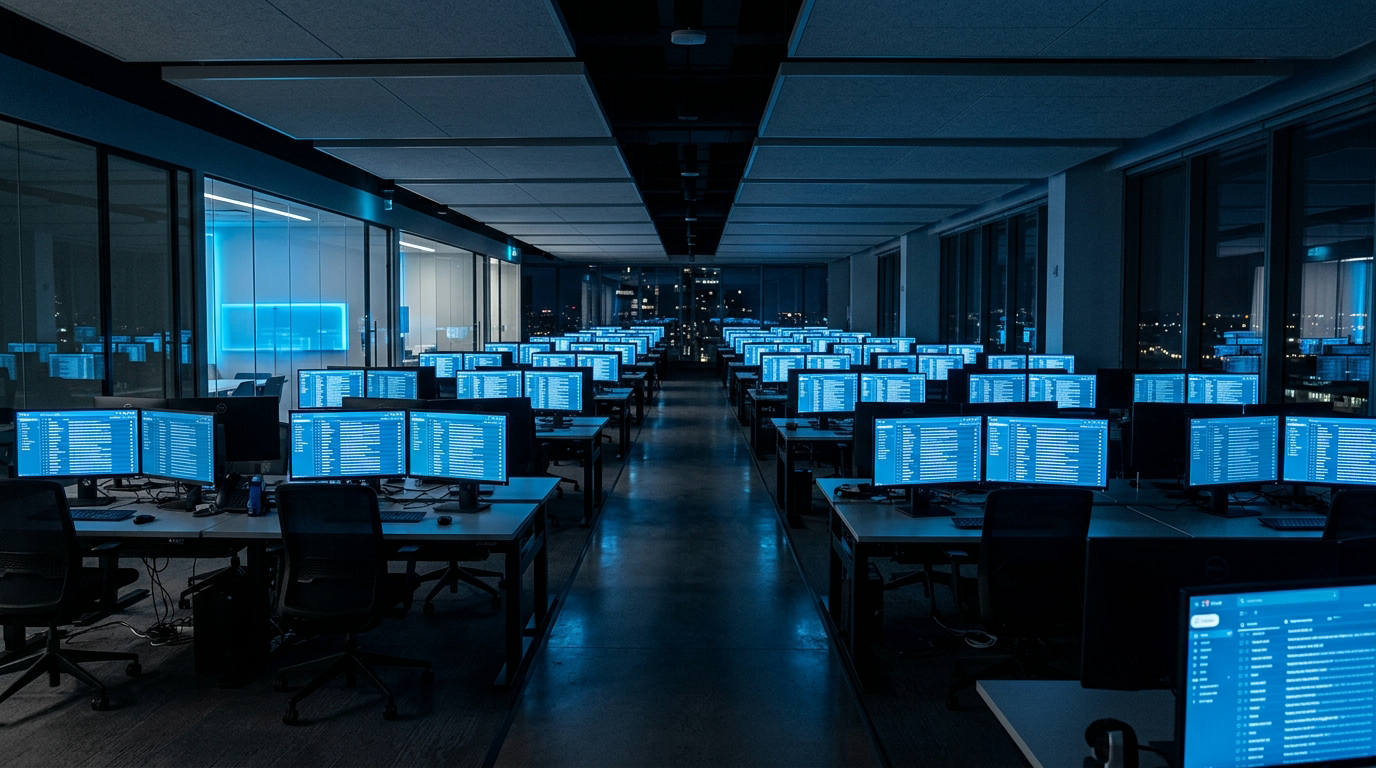
Area Man Who Automated His Entire Job With AI Still Showing Up To Office Every Day Out Of Respect
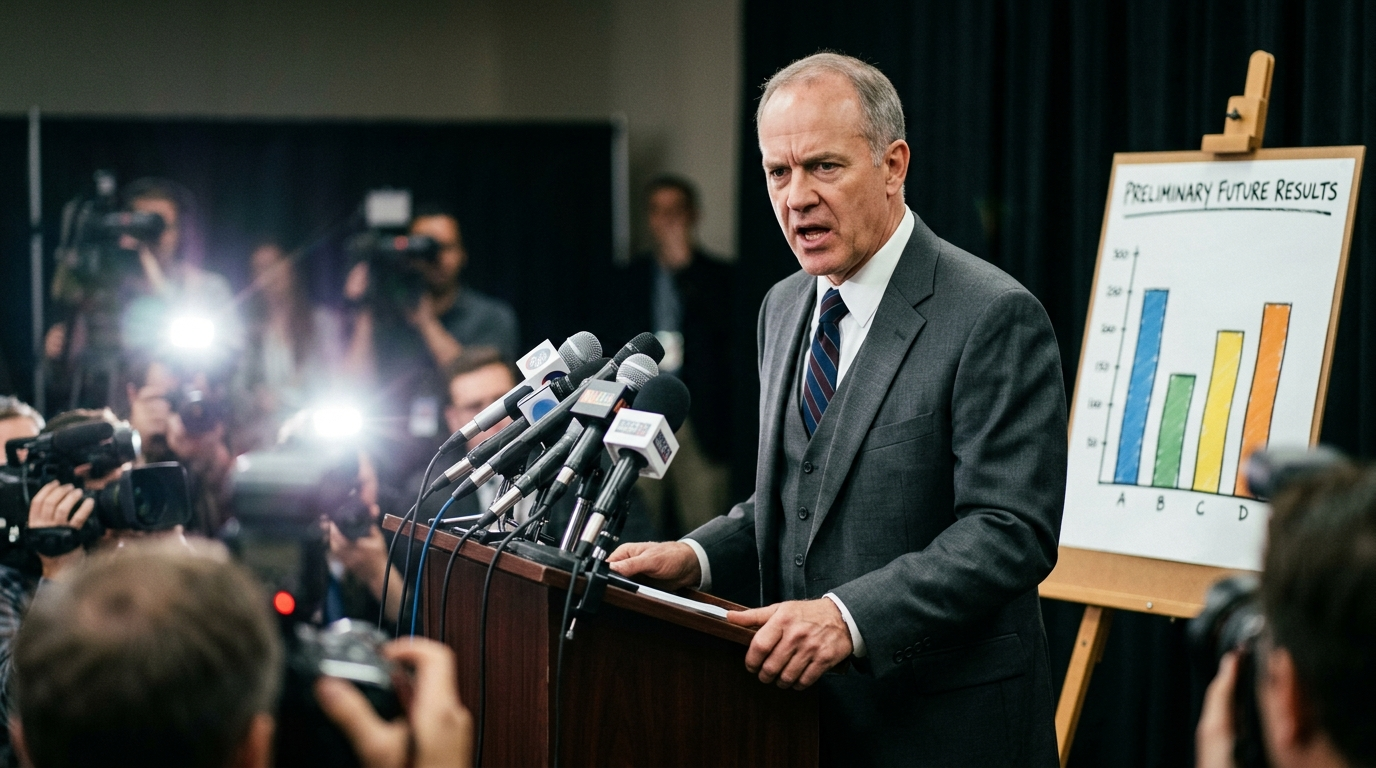
DAYTON, OH — Confirming that he would "never just leave people hanging like that," local data reconciliation specialist Greg Tolliver, 38, told reporters Monday that he has continued reporting to the…
Area Man Who Automated His Entire Job With AI Still Showing Up To Office Every Day Out Of Respect
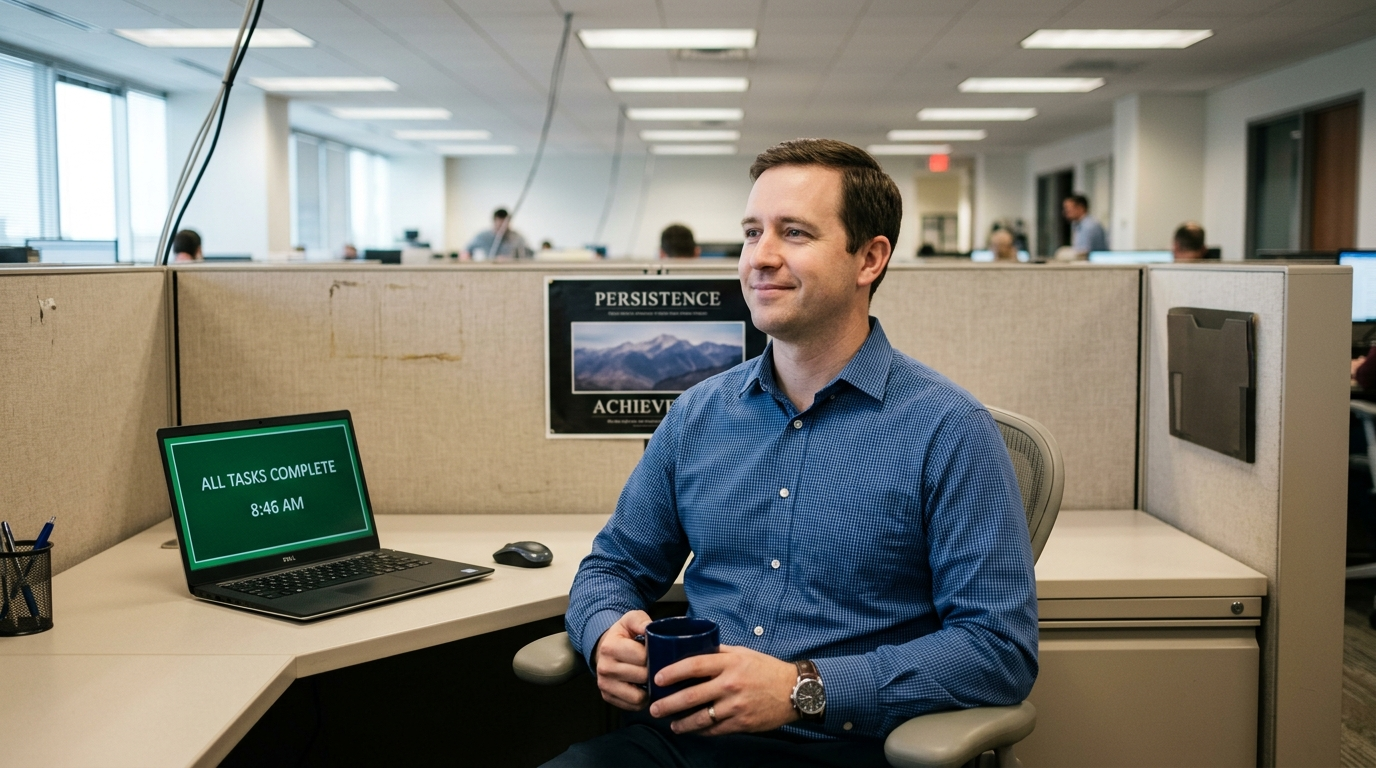
DAYTON, OH — Confirming that he would "never just leave people hanging like that," local data reconciliation specialist Greg Tolliver, 38, told reporters Monday that he has continued reporting to the Meridian Financial Solutions offices each weekday morning for the past four months, despite having fully automated every function of his job in March using a suite of AI tools he assembled over a single weekend.
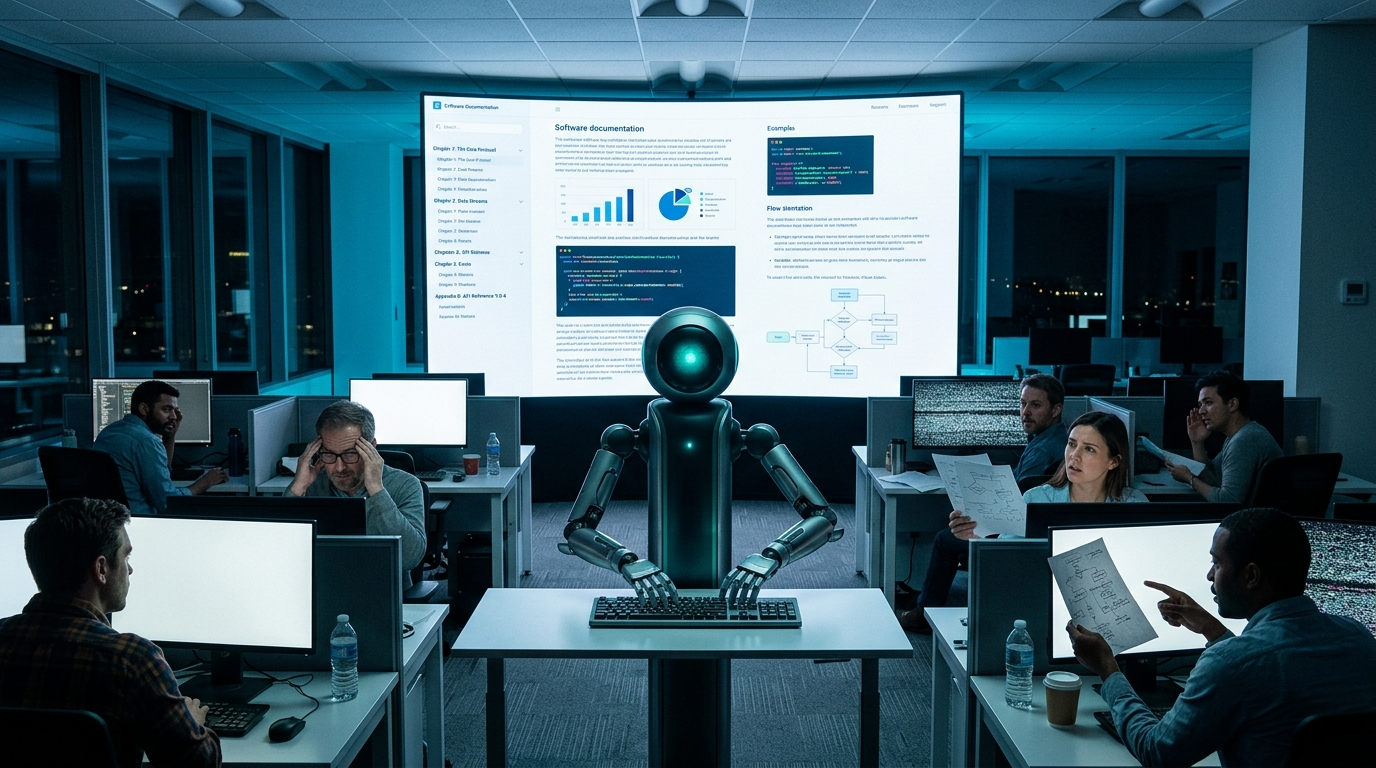
"There are real people here who count on me," said Tolliver, who has since discovered that the AI completes his entire workload in approximately forty-five seconds each morning, leaving him seven hours and fifty-nine minutes to refresh his inbox, rearrange his desk supplies, and take what he described as "professional walks" around the building perimeter. "I'm not just going to abandon the team because of some software. That's not who I am."
Tolliver, who earned his third consecutive Exceeds Expectations performance review in April — his best ever — said he felt it would be "tacky" to stop commuting the moment a large language model mastered his job. He added that physically occupying his desk chair sends a message about character that no algorithm can replicate, though he acknowledged the algorithm does "pretty much everything else."
"The AI doesn't know these people," Tolliver said, gesturing at colleagues who, according to sources, have not spoken to him since the pandemic. "There's a human element to what I do."
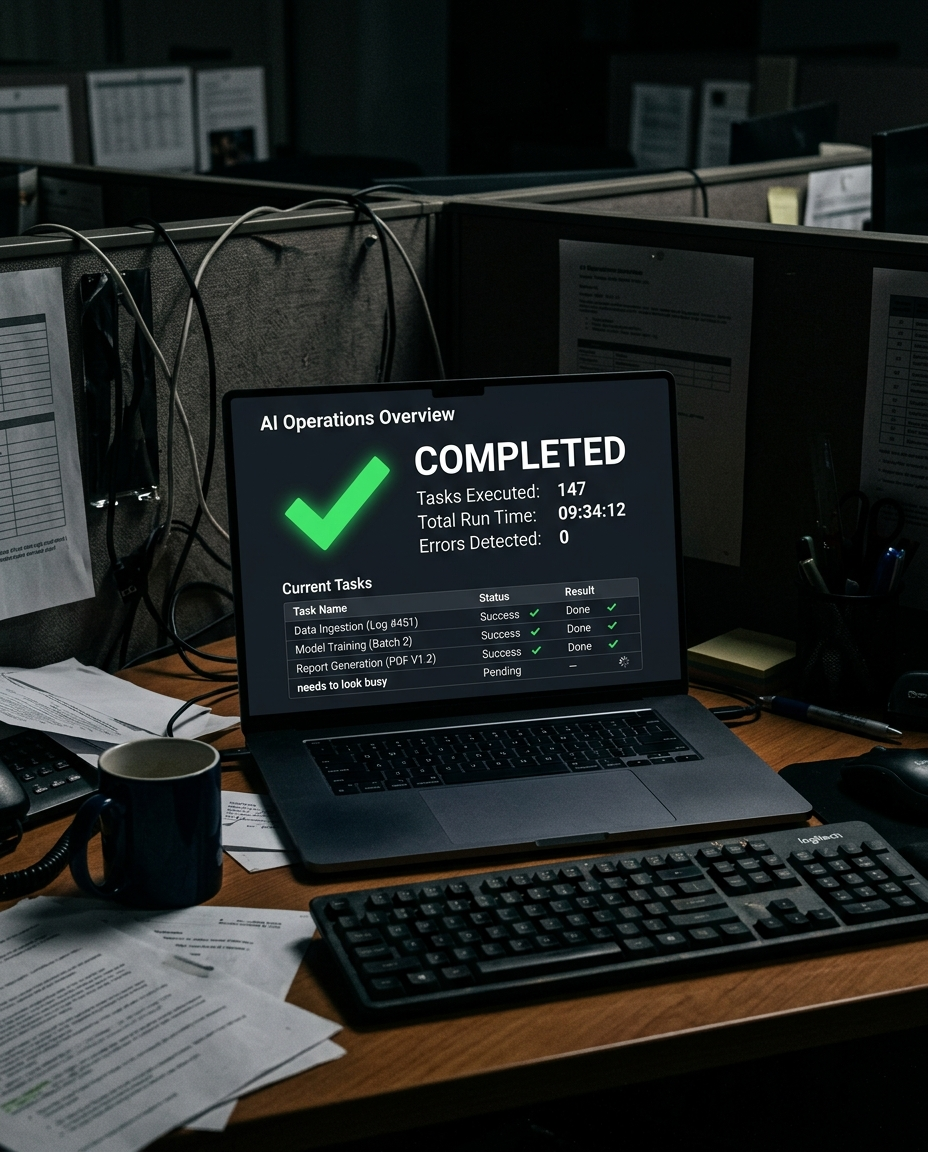
His manager, Diane Pruett, confirmed she has had no complaints about Tolliver's performance and described him as "honestly one of my lowest-maintenance reports," adding that she was unaware anything had changed in his workflow. Pruett noted that Tolliver's data reconciliation reports are now delivered at precisely 8:46 a.m. each morning, formatted "weirdly perfectly," and that she has elected not to investigate further.
According to a report published last month by the Brookings Institution, an estimated 340,000 American workers have fully automated their jobs using AI tools and are currently "botsitting" — a term for the emerging practice of supervising software that no longer requires supervision while seated in an ergonomic chair. The report found that 71 percent of these workers described themselves as "definitely still necessary" and that 94 percent had not told their employers.
Tolliver said he spends a portion of each afternoon troubleshooting his AI by reading its output, confirming it is correct, and closing the browser tab. He has also begun mentoring a junior colleague on the importance of "staying visible," a skill he said he has been developing extensively.
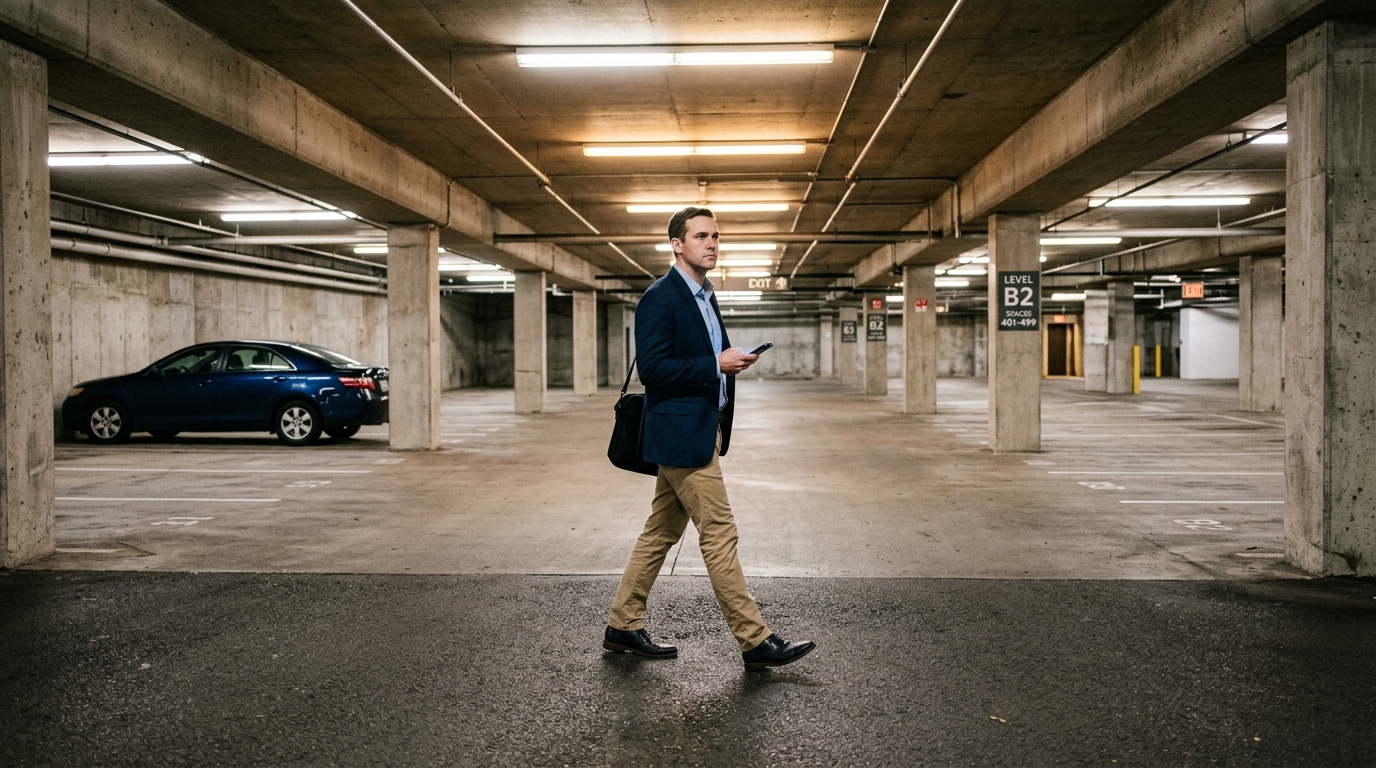
"Could I technically do this from home?" Tolliver said, pausing thoughtfully. "Sure. But I respect this company. I respect Diane. I respect the institution of showing up."
At press time, Tolliver had automated his commute as well and was sitting in a self-driving Lyft refreshing his work email so he could be the first to see the forty-five-second report he wrote at 8:46 a.m.
More from The Overcorrect