Cosmic Wallpapers — 8 August 2026
Credits — Cosmic Wallpapers, 8 August 2026
All 5 wallpapers are published by ESA/Hubble, ESO, ESA/Webb under CC BY 4.0 — free to share and adapt with attribution.
Abstract Cosmic Flow — abstract-cosmic-flow.jpg
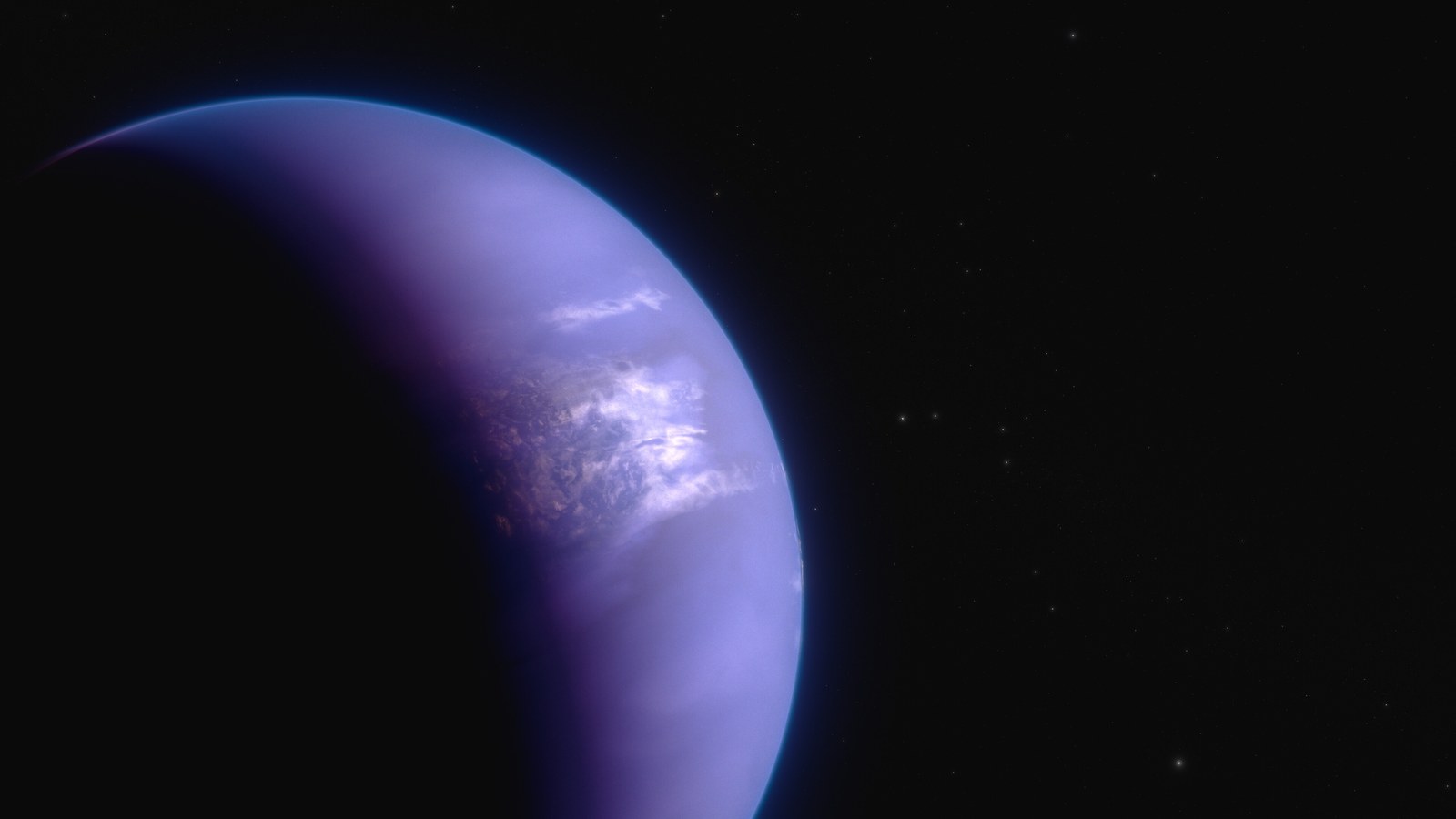
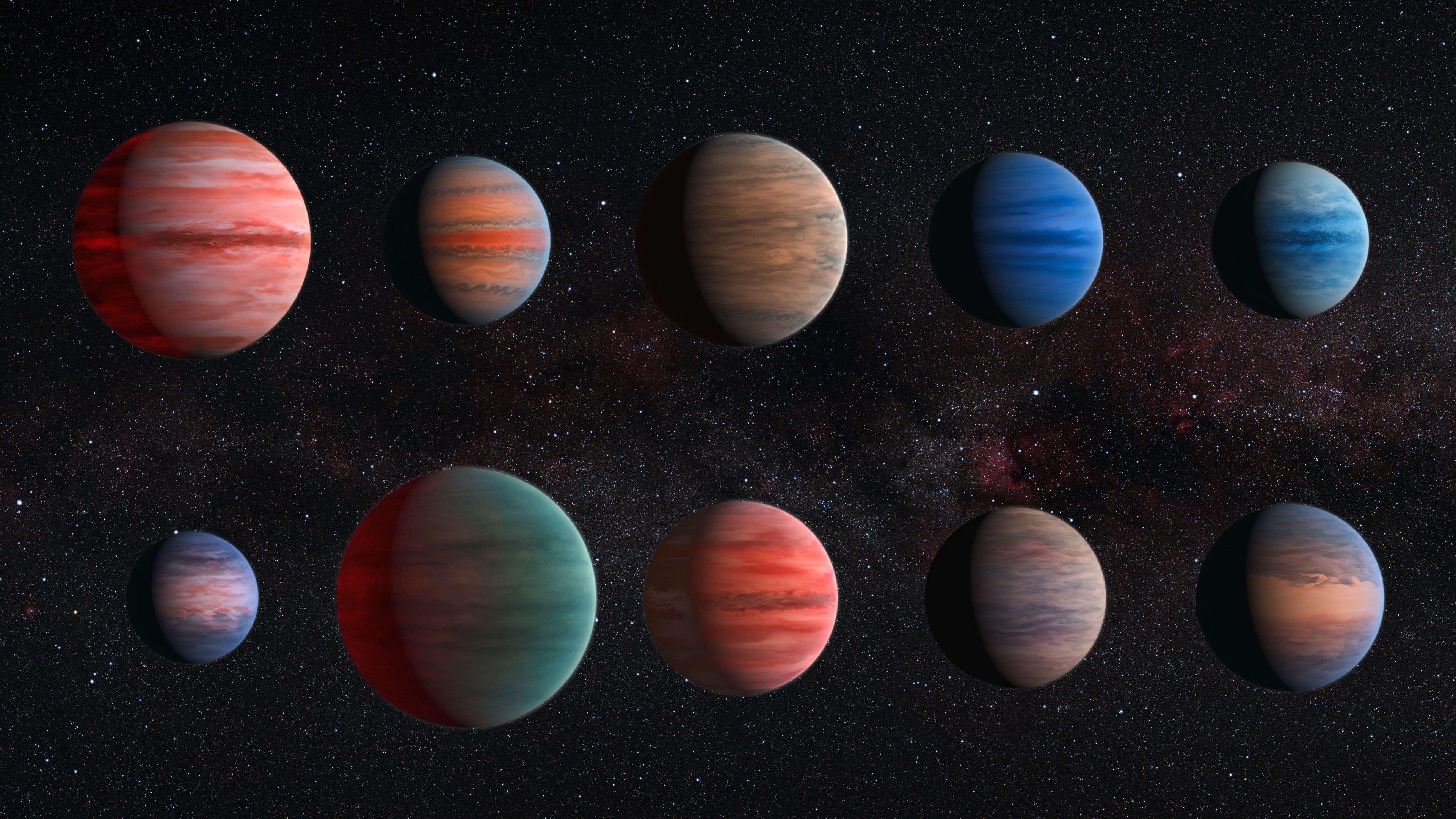
Clear to cloudy hot Jupiters
- Credit: ESA/Hubble & NASA
- Source: ESA/Hubble — heic1524a
- Licence: CC BY 4.0
- Image type: Artwork
- Native resolution: 10000x6105
This image shows an artist’s impression of the ten hot Jupiter exoplanets studied by David Sing and his colleagues. From top left to lower left these planets are WASP-12b, WASP-6b, WASP-31b, WASP-39b, HD 189733b, HAT-P-12b, WASP-17b, WASP-19b, HAT-P-1b and HD 209458b. The images are to scale with each other. HAT-P-12b, the smallest of them, is approximately the size of Jupiter, while WASP-17b, the largest planet in the sample, is almost twice the size. The planets are also depicted with a variety of different cloud properties. There is almost no information about the colours of the planets available, with the exception of HD 189733b, which became known as the blue planet (heic1312). The hottest planets within the sample are portrayed with a glowing night side. This effect is strongest on WASP-12b, the hottest exoplanet in the sample, but also visible on WASP-19b and WASP-17b. It is also known that several of the planets exhibit strong Rayleigh scattering. This effect causes the blue hue of the daytime sky and the reddening of the Sun at sunset on Earth. It is also visible as a blue edge on the planets WASP-6b, HD 189733b, HAT-P-12b, and HD 209458b. The wind patterns shown on these ten planets, which resemble the visible structures on Jupiter, are based on theoretical models.
Planetary Vista — planetary-vista.jpg
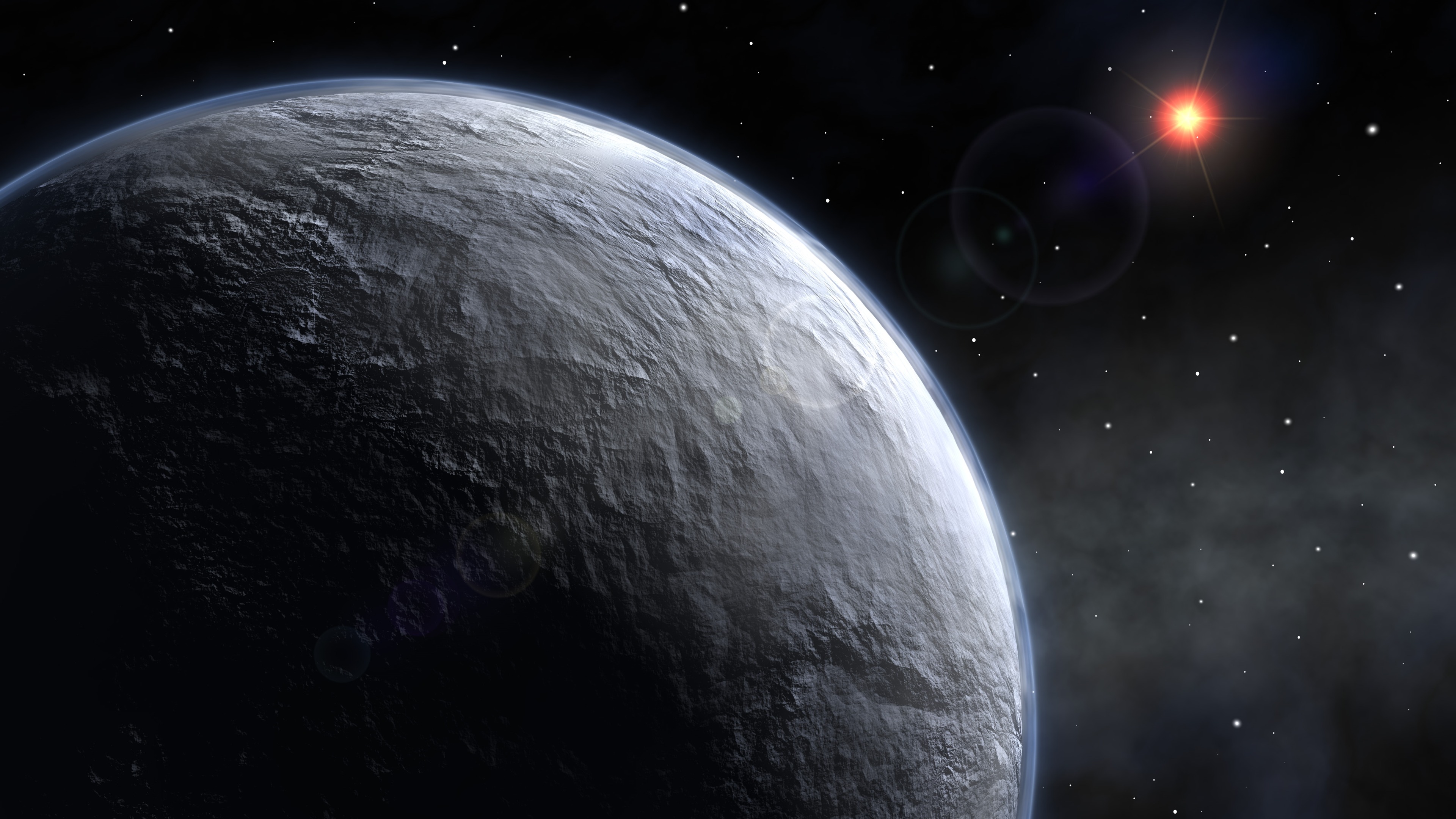
Icy exoplanet (artist's impression)
- Credit: ESO
- Source: ESO — eso0603a
- Licence: CC BY 4.0
- Image type: Artwork
- Native resolution: 5000x3888
Using a network of telescopes scattered across the globe, including the Danish 1.5-m telescope at ESO La Silla (Chile), astronomers discovered a new extrasolar planet significantly more Earth-like than any other planet found so far. The planet, which is only about 5 times as massive as the Earth, circles its parent star in about 10 years. It is the least massive exoplanet around an ordinary star detected so far and also the coolest. The planet most certainly has a rocky/icy surface. Its discovery marks a groundbreaking result in the search for planets that support life.
Black Hole Horizon — black-hole-horizon.jpg
Artist’s impression of star being tidally disrupted by a supermassive black hole
- Credit: ESO/M. Kornmesser
- Source: ESO — eso2018a
- Licence: CC BY 4.0
- Image type: Artwork
- Native resolution: 4800x2910
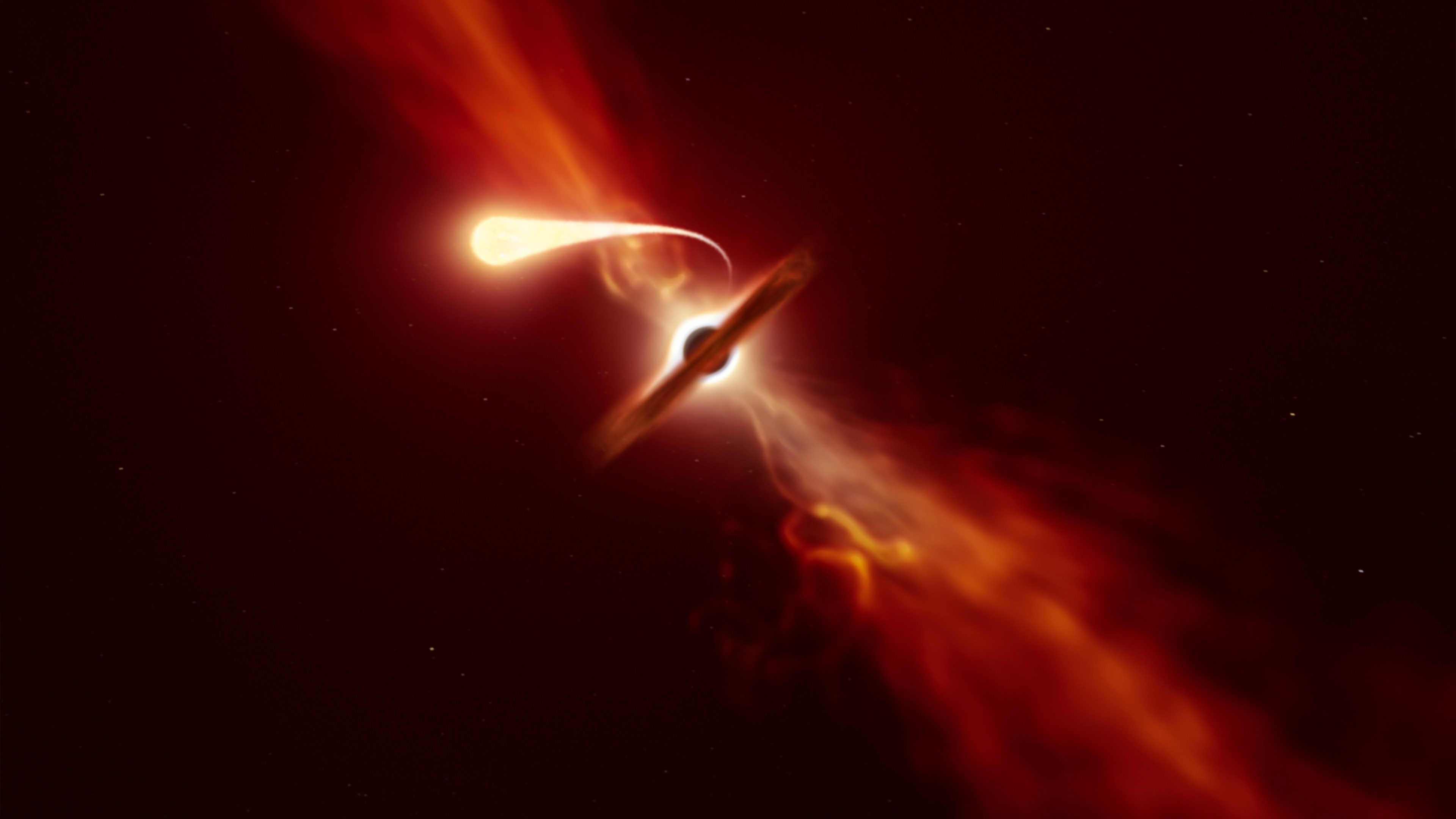
This illustration depicts a star (in the foreground) experiencing spaghettification as it’s sucked in by a supermassive black hole (in the background) during a ‘tidal disruption event’. In a new study, done with the help of ESO’s Very Large Telescope and ESO’s New Technology Telescope, a team of astronomers found that when a black hole devours a star, it can launch a powerful blast of material outwards.
Cosmic Nebula — cosmic-nebula.jpg
Hubble celebrates its 33rd anniversary with NGC 1333
- Credit: NASA, ESA, STScI
- Source: ESA/Hubble — heic2304a
- Licence: CC BY 4.0
- Image type: Observation
- Native resolution: 7424x11315
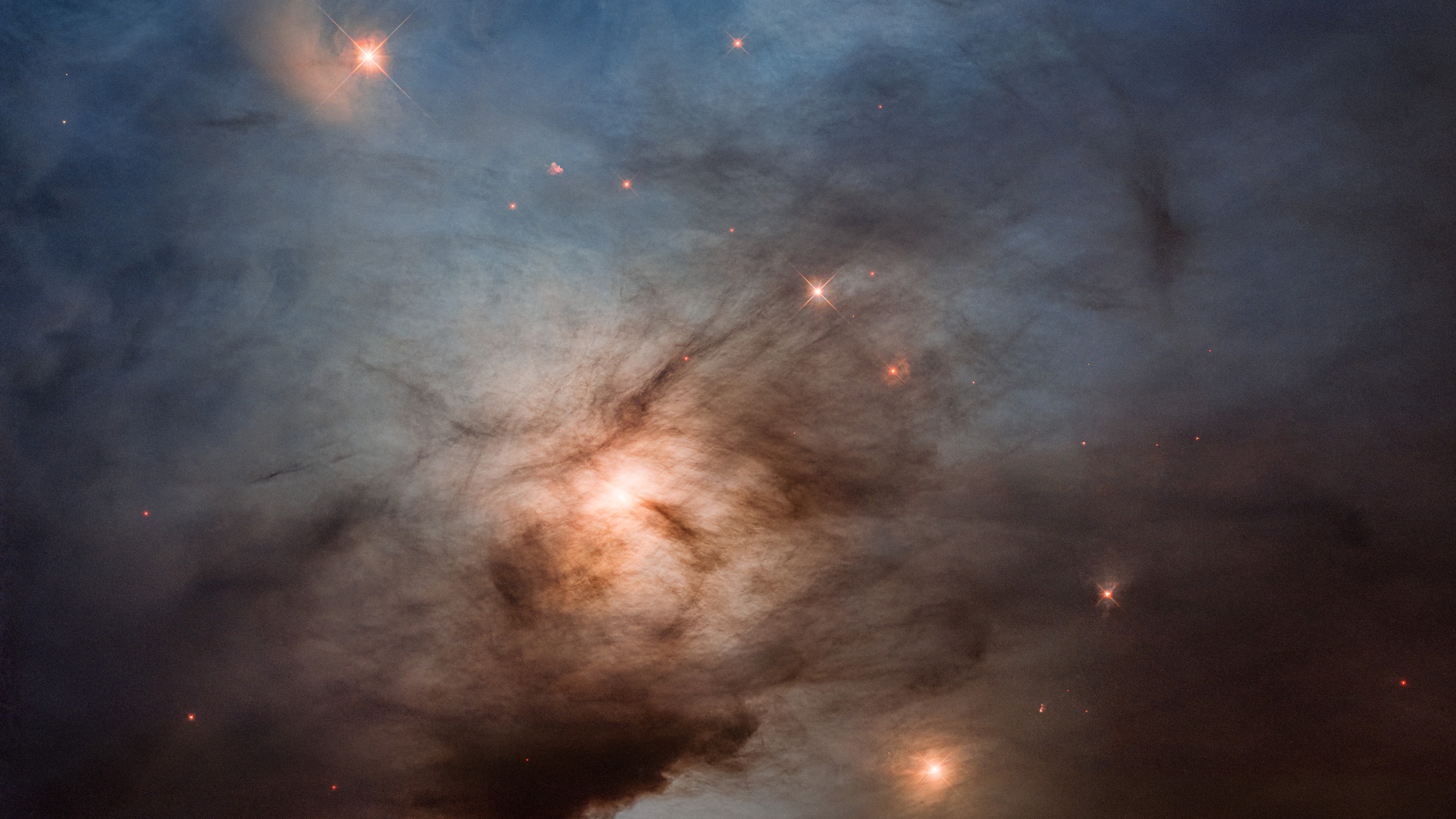
Astronomers are celebrating the NASA/ESA Hubble Space Telescope’s 33rd launch anniversary with an ethereal photo of a nearby star-forming region, NGC 1333. The nebula is in the Perseus molecular cloud, and is located approximately 960 light-years away. Hubble’s colourful view, showcasing its unique capability to obtain images in light from ultraviolet to near-infrared, unveils an effervescent cauldron of glowing gases and pitch-black dust stirred up and blown around by several hundred newly forming stars embedded within the dark cloud. Even then, Hubble just scratches the surface; most of the star-birthing firestorm is hidden behind clouds of fine dust — essentially soot — that are thicker toward the bottom of the image. The black areas of the image are not empty space, but are filled with obscuring dust. To capture this image, Hubble peered through a veil of dust on the edge of a giant cloud of cold molecular hydrogen — the raw material for fabricating new stars and planets under the relentless pull of gravity. The image underscores the fact that star formation is a messy process in a rambunctious Universe. Ferocious stellar winds, likely from the bright blue star at the top of the image, are blowing through a curtain of dust. The fine dust scatters the starlight at blue wavelengths. Farther down, another bright super-hot star shines through filaments of obscuring dust, looking like the Sun shining through scattered clouds. A diagonal string of fainter accompanying stars looks reddish because the dust is filtering their starlight, allowing more of the red light to get through. The bottom of the picture presents a keyhole peek deep into the dark nebula. Hubble captures the reddish glow of ionised hydrogen. It looks like the finale of a fireworks display, with several overlapping events. This is caused by pencil-thin jets shooting out from newly forming stars outside the frame of view. These stars are surrounded by circumstellar discs, which may eventually produce planetary systems, and powerful magnetic fields that direct two parallel beams of hot gas deep into space, like a double lightsaber from science fiction films. They sculpt patterns on the hydrogen cocoon, like laser lightshow tracings. The jets are a star’s birth announcement. This view offers an example of the time when our own Sun and planets formed inside such a dusty molecular cloud, 4.6 billion years ago. Our Sun didn’t form in isolation but was instead embedded inside a mosh pit of frantic stellar birth, perhaps even more energetic and massive than NGC 1333. [Image description: A vertical image with colors ranging from blue at the top to golden in the middle and red at the bottom. At the top, a bright blue star is illuminating surrounding clouds of gas. At the center of the image, a brighter yellow star illuminates surrounding gas. The bottom of the image is noticeably darker than the rest, with the exception of a dramatic splash of red.]
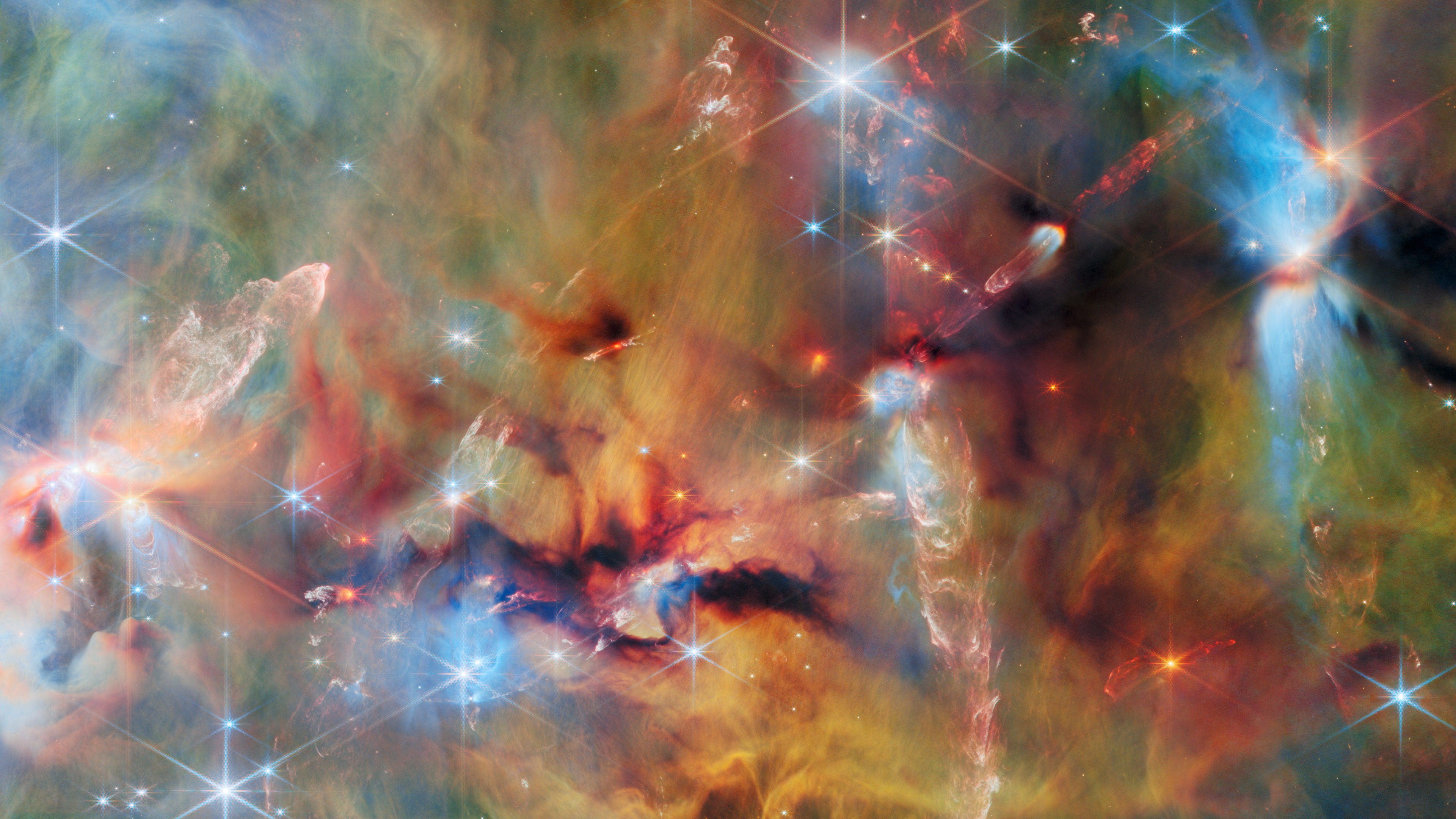
Stellar Nursery — stellar-nursery.jpg
Webb unveils young stars across every stage of formation
- Credit: ESA/Webb, NASA & CSA, T. Megeath, M. Zamani (ESA/Webb) Acknowledgement: M. H. Özsaraç
- Source: ESA/Webb — potm2605a
- Licence: CC BY 4.0
- Image type: Observation
- Native resolution: 12846x7556
For this NASA/ESA/CSA James Webb Space Telescope Picture of the Month we return to the constellation Orion (the Hunter), a location familiar to Webb. This area of the sky is replete with star-forming clouds that make up a complex hundreds of light-years across. We find ourselves in the giant molecular cloud Orion A, of which the familiar Orion Nebula (also known as M42) is just a part; Webb has taken both close-up and wide-angle looks at M42 before. The target of these observations, however, requires us to look behind the Orion Nebula. Behind the stars, gas and dust of M42 is a long, massive filament of cold gas and dust called (somewhat confusingly) the Orion Molecular Clouds, which is divided into four parts, OMC-1 through OMC-4. OMC-1 sits immediately behind M42, to the north are OMC-2 and OMC-3, and OMC-4 lies to the south. This image shows just a small, northern portion of OMC-2, located 1280 light-years from Earth and a little north of the Orion Nebula. Every stage of star formation — from the youngest stellar embryos, to protoplanetary discs, to newly-minted pre-main sequence stars — is contained within just this scene, which stretches 2.5 light-years across. The intense star-forming activity has produced an impressive display of billowing outflows and sparkling stars atop swirling layers of gas and dark, obscuring clouds. Molecular clouds such as OMC-2 are vast clumps of gas much more dense than the rest of interstellar space. This density allows complex molecules to form, protected from the radiation given off by other stars, and it means that gravity can cause the cloud to collapse and form stars. The earliest stage of this process is a protostar - a growing star that is being fed gas from the surrounding cloud through a spinning disc of gas. As gas falls onto the protostar, it heats up, powering the glow of the protostar. The immense amount of energy acquired during this process is unleashed in fierce jets of gas from the poles of the star, frequently seen as twin glowing outflows that mark the location of a protostar. The abundance of protostars forming here in OMC-2 has created many spectacular outflows, large and small. Jets emitted from the young stars form high-speed shockwaves that sweep through the dense material around them; where the shockwaves are impacting the gas, it heats up and glows brightly, creating sharp ridges. Zoom in to observe the fine details in these shockwaves, as well as spot the smaller outflows from younger protostars. See if you can spot the location of hidden protostars, still so deeply obscured by their dusty cradles that they can’t be seen directly, by following outflows! Compare these very young protostars to the most evolved examples: the large, bright stars which have cleared away the clouds that surrounded them and now illuminate OMC-2. Webb’s Near-Infrared Camera (NIRCam) was used to capture this view of OMC-2. The thick gas and dust in and around the Orion Nebula blocks any light coming from OMC-2 at visible wavelengths, and the clouds in OMC-2 itself obscure the protostars that astronomers really want to find. Only in the infrared do we see these protostars begin to shine out from their cocoons of dust. In many places, the cold dust is so dense that it absorbs all or almost all light, creating dark globules. Orange, brown and some of the red colours mark warmer dust that absorbs some light and emits some of its own. The yellow to green gradient is largely emission from polycyclic aromatic hydrocarbons (PAHs), while light from stars and protostars scattered by dust grains is seen here primarily as blue and cyan hazes. Gas heated by the outflows creates the detailed, glowing red ridges. The data was collected in observing programme #5804, which aims to study the star formation in OMC-2 and its immediate neighbour, OMC-3. Since these molecular clouds are so near to Earth, they are excellent laboratories to learn about the earliest stages of stellar evolution. Astronomers will use the data from Webb to investigate how the many outflows affect star formation in the two regions, how the ultraviolet emission from the young stars impacts chemistry in the circumstellar discs which one day will form planets, and how gas and dust accretes onto the tens of protostars in the region. [Image Description: An area inside a star-forming molecular cloud. The background is covered with layers of gas and dust in blue, green and yellowish colours. Thicker clumps of cold dust, dark brown to black, block out light completely. Stars lie among and atop the clouds, from small orange ones to large white or blue ones. Waves and streams of glowing whitish gas are created by jets from protostars colliding with the surrounding material.] Links Pan video: OMC-2 Zoom video: OMC-2 Space Sparks episode: OMC-2 Image on ESA website