Cd Ladder Planner
A Python script that splits your savings across staggered-term CDs, projects interest per rung, and benchmarks the result against a HYSA and a traditional savings account — so you know exactly how…

CD Ladder Planner
A Python script that splits your savings across staggered-term CDs, projects interest per rung, and benchmarks the result against a HYSA and a traditional savings account — so you know exactly how much you earn, when each CD matures, and what to do next.
Date: 2026-07-06 Type: Utility Theme: Saving Status: Idea
What it is
A command-line Python script that takes a total savings amount and a number of rungs (CD terms) and designs a CD ladder: an even split of your money across staggered maturities (e.g. 6-month, 1-year, 18-month, 2-year, 3-year). For each rung it computes the exact interest earned using daily-compounding math, then benchmarks the ladder's total return against what the same money would earn in a top high-yield savings account (HYSA) and a national-average traditional savings account. It closes with a reinvestment guide — what to do when each CD matures — and a provider shortlist sourced from publicly cited July 2026 rate tables.
Who it serves
Someone with $5,000–$50,000 in savings they won't need all at once but also don't want locked away indefinitely. They've heard about CD ladders but can't easily see the math without a spreadsheet. This script runs in 10 seconds and gives a clear, no-fluff answer: here is what you earn, here is when you can access each piece, here is your next step.
The money problem it addresses
Most people leave medium-term savings in a traditional bank savings account earning 0.38% APY — roughly one-tenth of what a competitive CD or HYSA pays. Even those who move to a HYSA often don't consider CDs because the math is opaque and locking money up feels risky. A CD ladder solves both problems: money becomes accessible on a rolling schedule (every 6 months in the default 5-rung plan), and each rung locks in today's rate so the user is protected if the Fed cuts rates and HYSA APYs fall. On a $10,000 balance over 36 months, the difference between a traditional savings account and this ladder is $561 in additional interest — while still having a rung mature every 6 months.
How it works
- Input: the user passes
--amount(total savings),--rungs(number of CDs, default 5), and optionally--config(path to the rate-config JSON) and--start(first purchase date). - Split: the script divides the total evenly across rungs; any leftover cent goes to rung 1.
- Projection: for each rung it applies the formula
A = P × (1 + APY/365)^(365 × t)usingdecimal.Decimal(no binary-float rounding errors). - Comparison: over the same horizon as the longest rung, it projects what the full principal would have earned in a top HYSA (4.10% APY, July 2026) and a national-average traditional savings account (0.38% APY).
- Reinvestment guide: prints what to do when each CD matures — default recommendation is to roll into a new longest-term CD unless funds are needed.
- Provider hints: lists the top-rated provider per term from the config (sourced from publicly cited rate tables; always verify before opening an account).
The script reads rates from sample-config.json. In production, the config's rates block would be populated by a live call to a rate-aggregation API; that call is stubbed and labeled # IN_PRODUCTION inside the script.
What's in this folder
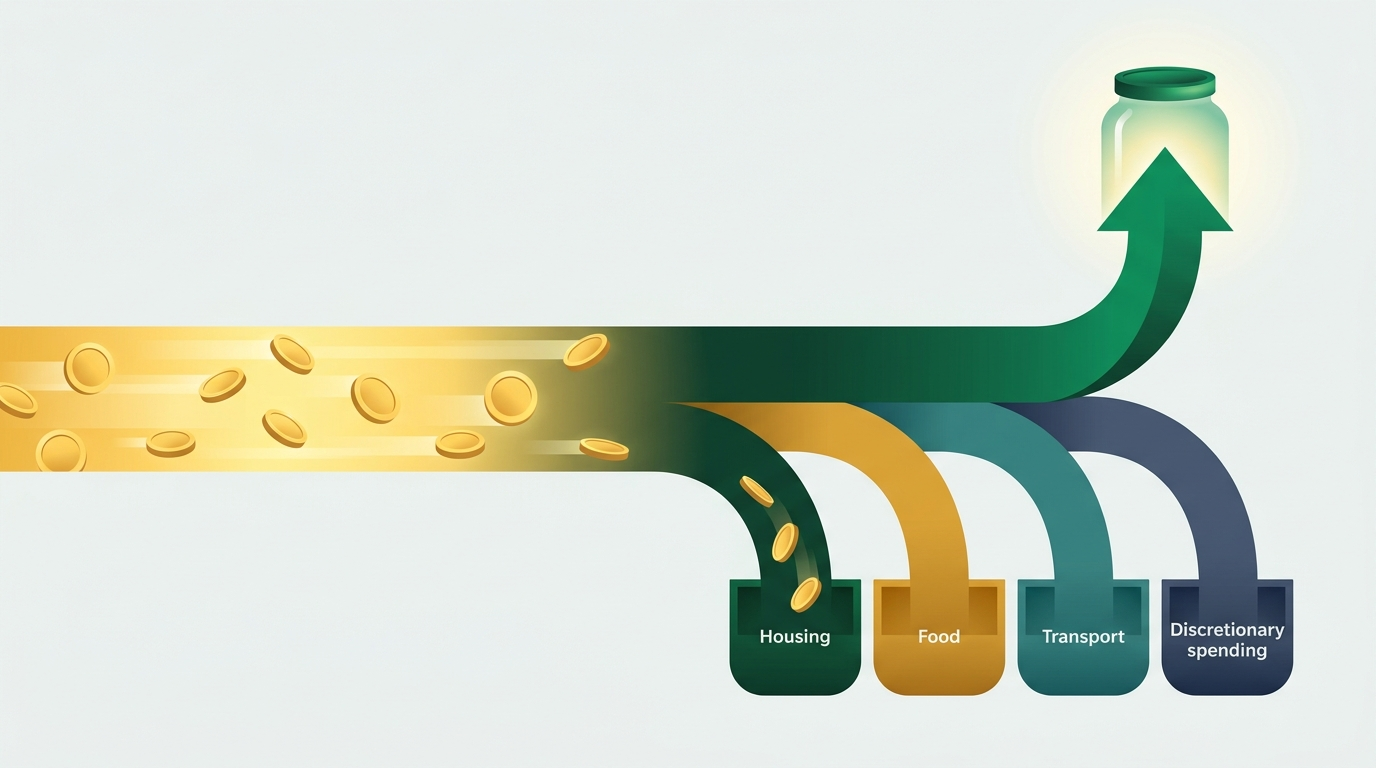
README.md— this documentcover-image.png— cover illustrationmetadata.md— automation sidecarrequirements.md— functional and non-functional specscript.py— the CD ladder planner (Python 3.9+, stdlib only)sample-config.json— illustrative rate config (5 CD terms + HYSA + traditional savings, rates sourced from July 2026 public data)sample-output.txt— what a successful run prints for $10,000 across 5 rungs starting 2026-07-06
How to run / read it
# Default: $10,000 across 5 rungs using sample-config.json, starting today
python3 script.py --amount 10000

# Custom: $25,000 across 4 rungs, custom start date
python3 script.py --amount 25000 --rungs 4 --start 2026-08-01

# Point at a different rate config
python3 script.py --amount 15000 --config my-rates.json
Requires Python 3.9 or later. No third-party packages. See sample-output.txt for example output, and sample-config.json for the rate-config shape.
Estimated impact
On a $10,000 balance over 36 months, this plan earns $676 in CD interest vs. $115 in a traditional savings account — a $561 advantage. At $25,000, the same comparison yields a $1,403 advantage. The assumption is that CD rates hold steady (they are locked in at open) while the traditional savings account stays at the 2026 national average of 0.38% APY. Even in the current environment where top HYSAs match or slightly beat the ladder, the ladder provides rate-lock protection: if the Fed cuts rates and HYSAs drop from 4.10% to 3.00% during 2026–2027, a 3-year rung locked at 4.00% keeps earning regardless.
Good to know
This script is an educational organizer and projection tool — it is not personalized financial, investment, or savings advice. CD rates change daily; always verify current APYs directly with the provider or at Bankrate / NerdWallet before opening any account. The national-average savings rate (0.38%) is the FDIC figure as of mid-2026 and may drift. Early withdrawal from a CD typically incurs a penalty (often 90–180 days of interest depending on the bank); factor this in if there is any chance you will need the money before maturity. All sample data is synthetic; no real account numbers or personal details are used.
Sources
- https://finance.yahoo.com/personal-finance/banking/article/best-cd-rates-201308688.html — July 2026 top CD rates by term (6-month Limelight Bank 4.08%, 1-year Bask Bank / Live Oak Bank 4.10%, 18-month TAB Bank 4.05%, 2-year America First CU / TAB Bank 4.10%)
- https://www.bankrate.com/banking/cds/cd-rates/ — Bankrate July 2026 best CD rates overview; 3-year Bread Savings figure
- https://www.bankrate.com/banking/savings/best-high-yield-interests-savings-accounts/ — HYSA rates and national average savings rate (0.38% APY)
- https://www.forbes.com/financial-services/best-cd-rates/ — Forbes Advisor July 2026 CD rate table (corroboration)
- https://www.nerdwallet.com/banking/best/cd-rates — NerdWallet July 2026 best CD rates (up to 4.30%)
- https://www.leaderbank.com/blog/cd-ladders-vs-high-yield-savings-accounts-which-is-right-for-your-goals — CD ladder vs. HYSA strategy overview
- https://247wallst.com/personal-finance/savings-accounts/2026/07/01/hysa-vs-a-cd-and-which-one-wins-as-the-fed-cuts/ — HYSA vs. CD in a falling-rate environment (July 2026)
- https://www.fidelity.com/fixed-income-bonds/cd-ladders — Fidelity CD ladder model overview (concept grounding)
Requirements
Requirements — CD Ladder Planner
Purpose
Design and project a certificate-of-deposit (CD) ladder from a user-supplied total savings amount. Compare total interest earned against a high-yield savings account (HYSA) and a traditional savings account over the same horizon. Emit a plain-text schedule of maturities with reinvestment guidance.
Functional requirements
- Accept total savings amount, number of rungs, and optional start date via CLI arguments.
- Distribute the principal evenly across rungs (remaining cents go to the first rung).
- Assign each rung to a CD term from the configured term list (e.g. 6-month, 12-month, 18-month, 24-month, 36-month).
- Compute compound interest per rung using:
A = P × (1 + APY/n)^(n×t), wheren = 365(daily compounding approximation). - Look up the APY for each term from the
ratesblock insample-config.json. - Compute a HYSA baseline (same total principal for the full ladder horizon at the configured HYSA APY).
- Compute a traditional savings baseline (same principal, national-average APY of 0.38%).
- Print a summary table: rung number, term, principal, APY, maturity date, interest earned, total at maturity.
- Print a comparison block: ladder total interest vs. HYSA vs. traditional savings.
- Print a reinvestment recommendation for each rung at maturity (roll into the longest configured term or describe the next-rung action).
- Exit 0 on success; exit 1 on validation errors with a clear message to stderr.
Non-functional requirements
- Python 3.9 or later; no third-party packages required.
- All monetary math uses
decimal.Decimal(never binary floats for currency). - Argument parsing via
argparse. - Fully runnable against
sample-config.jsonwith no real accounts, logins, or API keys. - Stub block clearly labeled where a live rate-feed API call would go in production.
Inputs
| Flag | Type | Default | Description |
|---|---|---|---|
--amount |
float | required | Total savings to ladder (e.g. 10000) |
--rungs |
int | 5 | Number of CD rungs |
--config |
path | sample-config.json |
Path to rate-config JSON |
--start |
YYYY-MM-DD | today | First CD purchase date |
Outputs
- Plain-text table printed to stdout (matches
sample-output.txt). - Exit code 0 on success, 1 on error.
Constraints
- No hard-coded secrets, tokens, or real account numbers anywhere in the script.
- All sample data is synthetic; rates are from publicly cited sources (see README).
- The script does not transmit data over the network.