Flyover
Design brief
Every log you burn to stay warm tonight is a log missing from the pyre the search plane needs to see tomorrow, and the planes stop flying the day the lakes freeze.
Date: 2026-10-12 Genre: survival crafting Platform: PC (Windows; keyboard & mouse and controller) Status: Concept
Target player
Someone with 200 hours in The Long Dark who still plays it with the sound up, because the wind tells them things. They finished Subnautica 2's Early Access build, liked it, and noticed the map and story ran out after about a dozen hours. They have also said, more than once, that starting another survival save from scratch feels like work.
They want what the genre does well: scarcity, weather and a body to keep alive. They are tired of the open-ended version where the game "just goes on until you lose interest," as one Quarter to Three poster put it. Flyover gives them a survival game with a finish line, a deadline, and one person on the other end who can actually see them.
Core loop
The loop in one sentence: split each armful of wood between the stove that keeps you alive tonight and the signal pyre that might get you seen tomorrow, light the pyre when you hear the engine, and watch the passes come further apart as the lakes start to freeze.
30 seconds. You chop deadfall (dry, burns hot, almost no smoke) or cut green spruce boughs (burns badly, makes thick white smoke). Every armful goes to one of two piles: the stove at camp or the pyre at your signal site. You can see both piles and both numbers the whole time: tonight's burn hours at the stove, and the pyre's smoke rating against tomorrow's threshold.
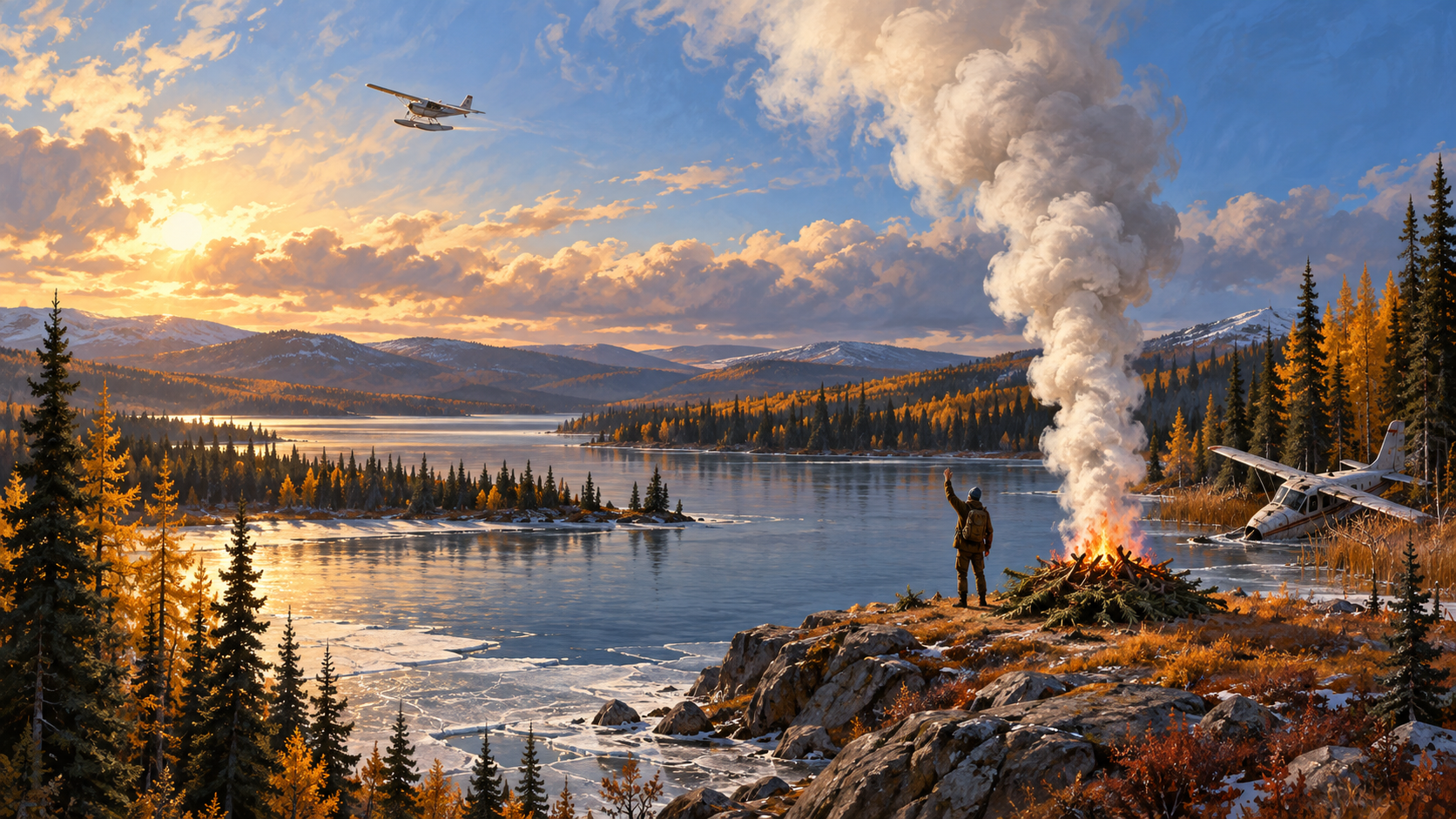
30 minutes (one in-game day, 24 real minutes). At dusk you listen to the salvaged receiver and hear which sector the search plane flies next. Sometimes it's yours. More often you have to paddle to it, build a pyre on a point or island inside it, and keep that pyre dry overnight. Tomorrow you hear the engine about 60 seconds before the plane crosses. You light the pyre, lay a ground sign, work the signal mirror if there's sun, and watch what the plane does: wings waggle and a supply tin drops, or the wings stay level and the engine fades.
The whole run (22 to 26 in-game days, about 8 to 10 hours). Get spotted once, get spotted again inside two passes to confirm, then clear and mark a landing lane on open water before ice closes it. If freeze-up comes first, the search is suspended. That ending is a loss.
Where hour three gets boring, and what we do about it. By hour three the player knows the routine: chop, stack, listen, paddle, wait. It turns into chores. Four things push back on that:
- Stands run out. Each patch of forest holds about 400 kg of deadfall. A full pyre eats 90 kg, so the stand behind camp is gone by day 8 and every pyre after that means paddling or portaging to new timber.
- A weak signal is worse than none. If the observer half-sees your smoke, they log it as a trapper's camp and the search skips that sector for the next two cycles. Lighting a thin pyre "just in case" is the most expensive mistake in the game.
- The weather can veto you. Wind over 25 km/h flattens the smoke column to half height. Overcast kills the mirror. Rain soaks an uncovered pyre. The barometer gives a day's warning, so the player can work around weather but can't ignore it.
- The search gets thinner. Two aircraft become one on day 11, and the gap between passes stretches from 1 day to 4. Mid-run, the danger is starvation and cold. Late-run, it's the calendar.
Systems
- The wood split. Wood is the only fuel and it serves two masters. The stove burns 3 kg per night hour, and with daylight shrinking from 14 to 10 minutes per day, nights get longer and hungrier. Without a fire, warmth drops 4 points an hour from 100. Below 25 your chop timing window shrinks and the screen edges frost over. At 0 you die. Every system in the game eventually turns into a question about how much wood goes where.
- Signal visibility. Each pass compares your visibility score V against a threshold T = 20 + 10 per km between the flight track and your signal, plus a weather modifier (+0 clear, +8 haze, +15 low cloud). V adds up three sources. Smoke: 6 points per 10 kg of green boughs on a burning dry base, but only 2 per 10 kg of dry wood alone. Ground sign: a "V" (the real ground-to-air code for "require assistance") laid in contrasting material, worth up to 15 points for area times contrast, so spruce boughs on pale sand score high and grey stones on grey rock score low. Mirror: up to 25 points from a timing minigame, and only with direct sun. If V ≥ T, the plane sees you. If V is between T−10 and T, you get the glimpse penalty. Below that, nothing happens.
- The search schedule. The search runs on a six-sector grid and starts 30 km from where you actually crashed, because that's where the pilot's last radio fix was. The search authority's choices are a priority table, not a planner: it starts at the last fix, steps outward one sector per cycle, and pushes any sector with a logged glimpse to the back of the queue for two cycles. Passes come daily for days 1 to 4, every 2 days for days 5 to 10, every 3 days for days 11 to 17, and every 4 days from day 18 until freeze-up.
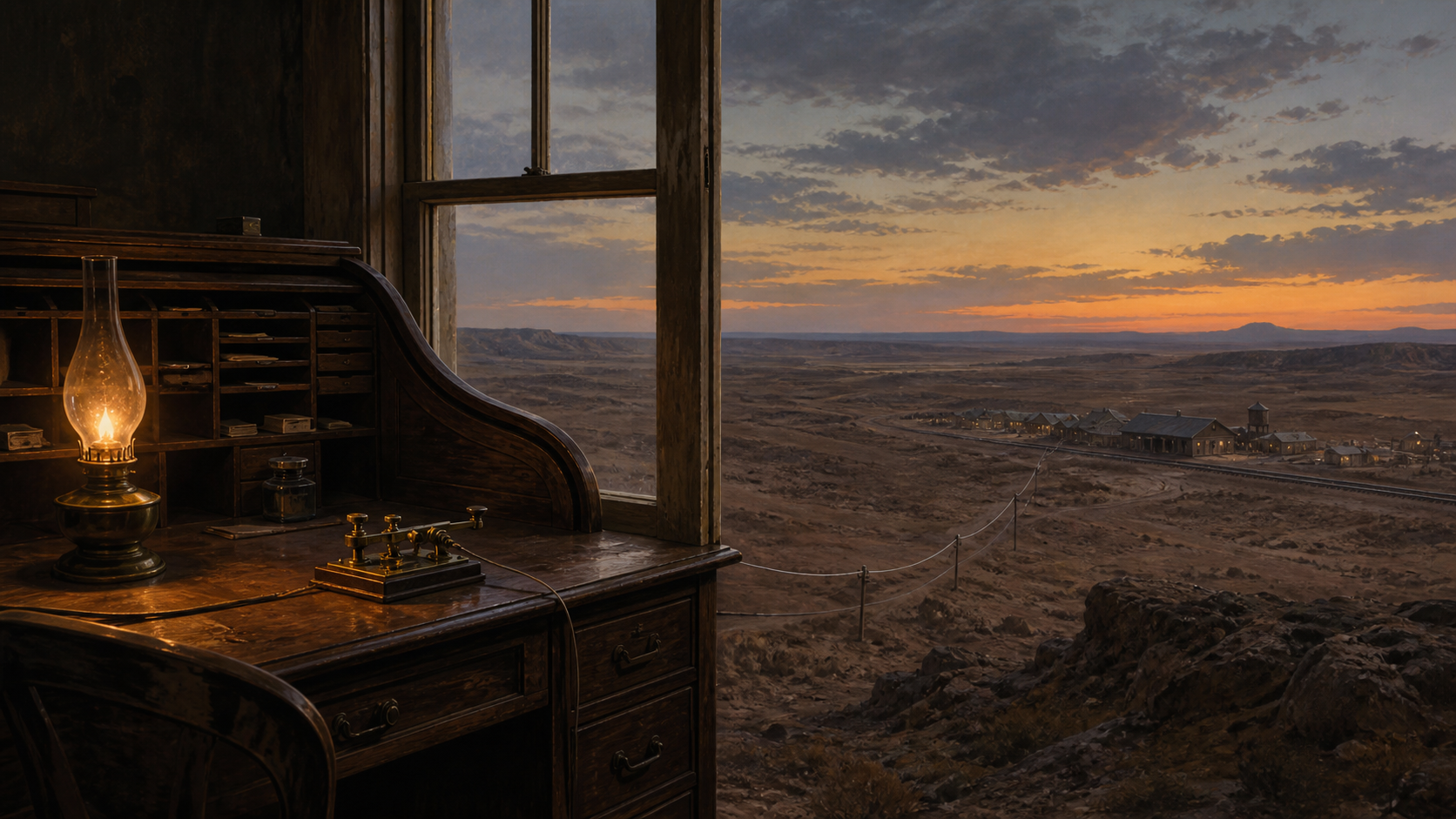
- The receiver. The aircraft's receiver can be repaired by day 3 to 6 with salvaged tubes and wire (it receives only, and the transmitter is unrecoverable). Listening to the evening coordination net costs 1 of 30 battery minutes and tells you the next sector letter. A hand-crank charger can be built from the ruined generator from about day 9. Without the receiver you're guessing, and a guess costs a whole pyre.
- Water and travel. The lake chain is the map. A salvaged float converted into a punt, and later a birchbark canoe, moves you about 4 km in 3 real minutes. Portages cost warmth and food. A capsize in cold water drops warmth by 40 at once, so loading the canoe means choosing between carrying more wood and riding lower in the water.
- Body. Calories (2,500 a day) come from fish nets, snared grouse, and berries that are gone by day 12. A calorie deficit reduces carry weight by 10% per day in deficit and slows chopping. There is no health bar. Cold, hunger and exhaustion feed into the warmth meter and how steady your hands are.
- Crafting. About 40 recipes, and nearly every one points outward at the aircraft: tarp covers for pyres (from wing fabric), fire carriers so you can move embers between sites, a signal mirror ground from instrument glass, marker buoys for the landing lane, the canoe, snares, the charger. There's no base-building tree in the usual sense, just a camp you can move.
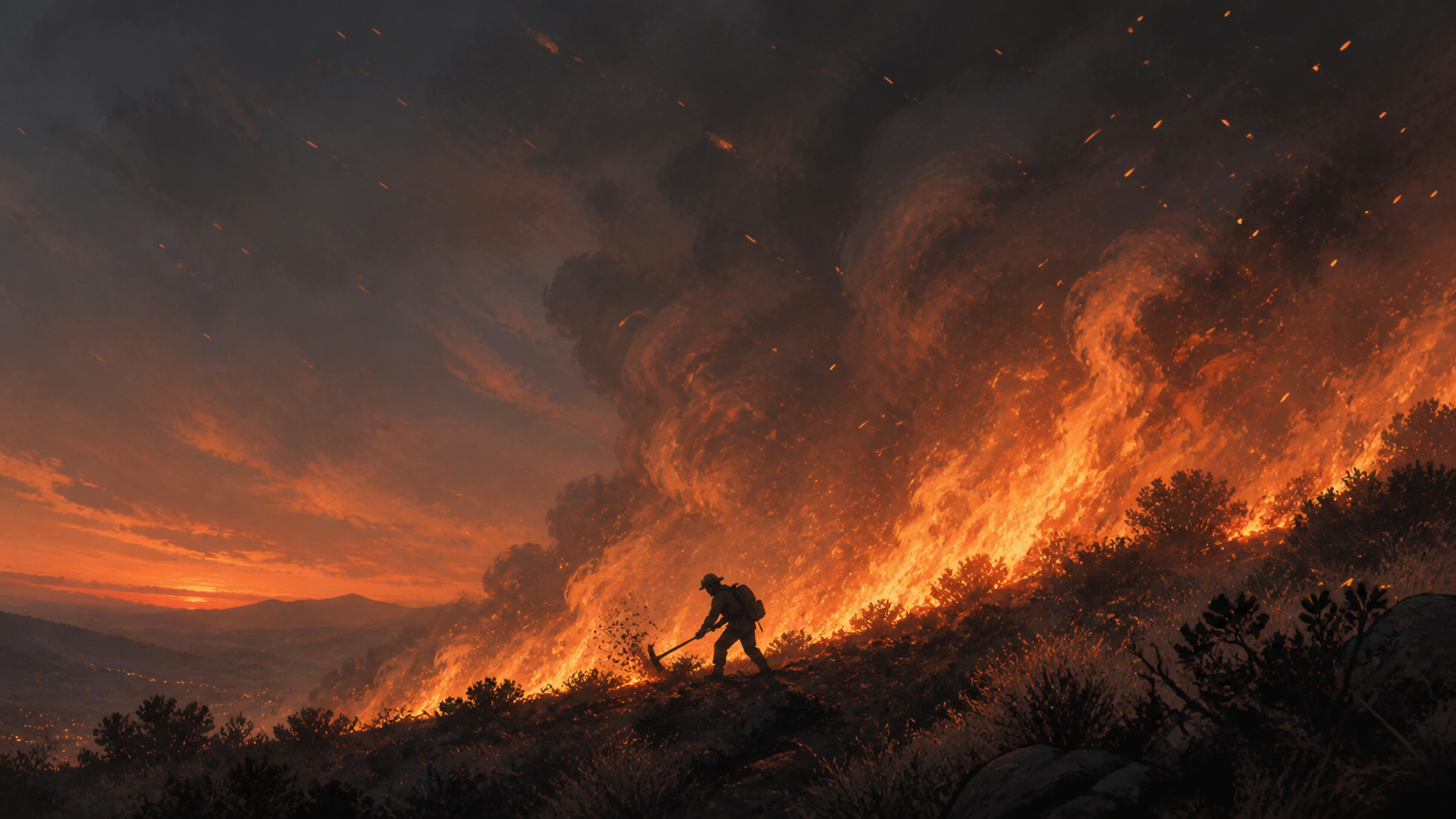
- The ridge gamble. On days when the dryness index is high and wind is above 30 km/h, you can set the ridge itself on fire. That guarantees attention (a fire patrol flies over within one pass, whatever the schedule says). It also spreads at a rate the player can see from smoke direction, can burn your camp and your timber, and kills you if you misjudge the wind. It's the late-game move for a run that's out of days.
Progression
There are no stat unlocks. What the player gains is knowledge and gear, and the calendar takes things away.
Inside a run the difficulty changes kind every few days instead of turning one dial up:
| Days | New pressure | What it asks of the player |
|---|---|---|
| 1–4 | Cold and hunger, daily passes nearby but in the wrong place | Basic economy: keep warm, build the first pyre |
| 5–10 | Receiver online, passes every 2 days, sectors farther away | Travel planning: be in tomorrow's sector with a dry pyre |
| 8+ | Home stand of deadfall exhausted | Range further for timber, carry fire between sites |
| 11–17 | One aircraft, passes every 3 days, berries gone | Fewer chances, so each pyre has to clear T by a margin |
| 18–freeze-up | Passes every 4 days, skim ice mornings, 10-minute days | Compound pressure: the landing lane needs open water and ice is closing it |
Only one new pressure arrives per step. Freeze-up is seeded between day 22 and day 26, and the player can read it coming: skim ice at dawn from day 18, geese leaving, the barometer's falling floor.
Fairness guarantees. The engine is audible 60 seconds before any pass. The receiver names the sector before you commit to it. The plane always tells you the outcome: wing waggle and a tin means seen, a level turn away means not seen, and a slow orbit then departure means it logged a glimpse. The post-pass search log shows your V against T, broken down by smoke, sign and mirror. No pass ever flies a sector the receiver didn't name. The player should always be able to say why they weren't seen.
Across runs the field notebook keeps the recipes you've worked out and the ground-sign contrasts you've tested. Four crash sites unlock in order (September lake country, a river delta, a burnt-over plateau, a bay coast with tides). Each changes the timber, the water and the sectors. Three search-effort settings change pass frequency and how much the glimpse penalty costs. The scoring line is "Rescued on day N," and the best day for each site is shown on the title screen.
The buildability check. Second 5: the floatplane is nose-down in the reeds, the engine is ticking as it cools, and there's one prompt: hold E to climb out. Second 30: you're on shore, soaked, warmth 62 and falling, and you can hear an engine far off. Second 90: a plane crosses the far ridge, three ranges away, and doesn't turn, and the first journal line appears: "Day 1. They're looking in the wrong place." The number that goes up is the day count, and the run is graded on how early you were rescued. Clearing T by a wide margin on the first sighting is what pulls that number down fastest. The instant before a loss, the player sees either their hands shaking over a stove gone dark, or a plane flying level away from a pyre that wasn't quite big enough.
World & setting
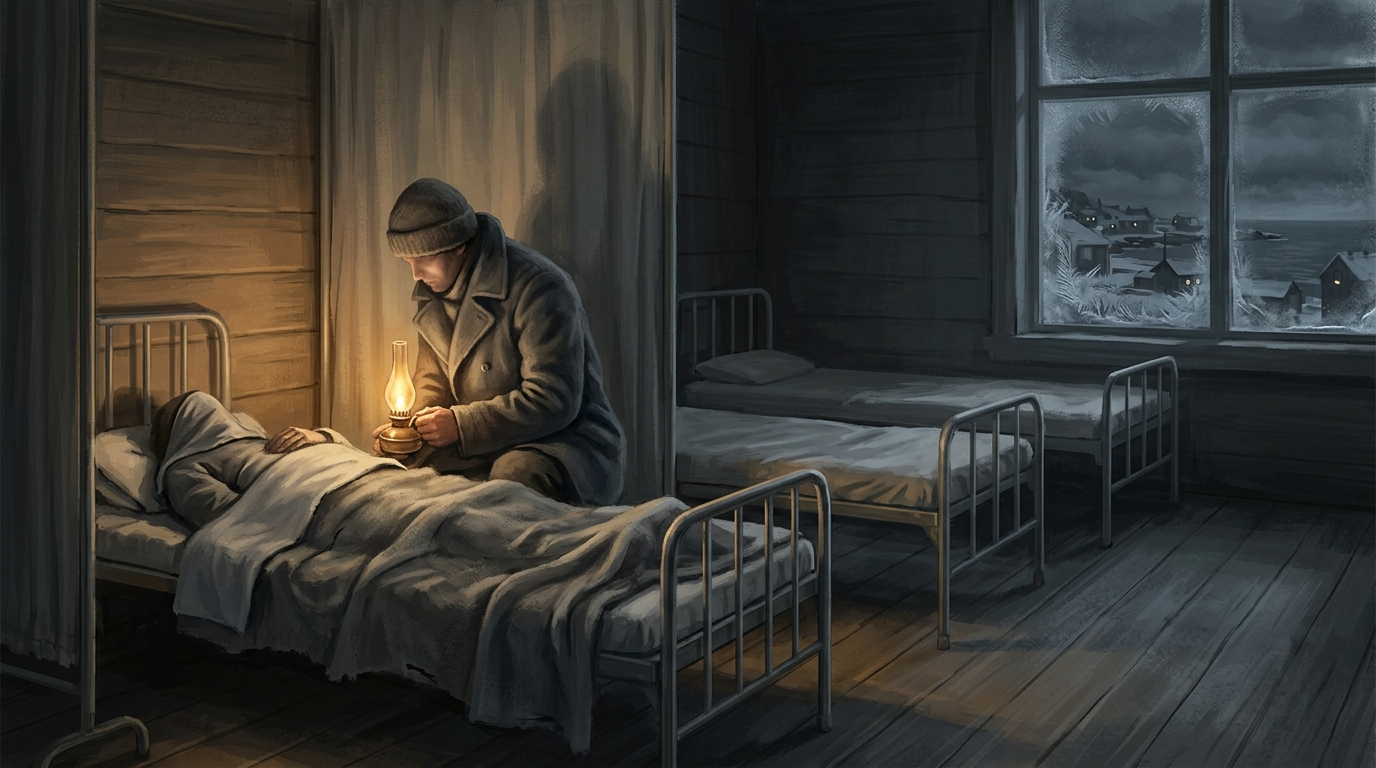
Autumn, 1957, in a fictional chain of lakes in the northern boreal forest. You were a passenger on a bush floatplane that went down in fog. The pilot's last radio report put the aircraft 30 km off course, and the search has already started in the wrong place. The world is quiet and indifferent, with no monsters and no other survivors to fight. Tamarack turns gold in the first week and has dropped its needles by the third. Everything you carry was in the cabin or comes off the land.
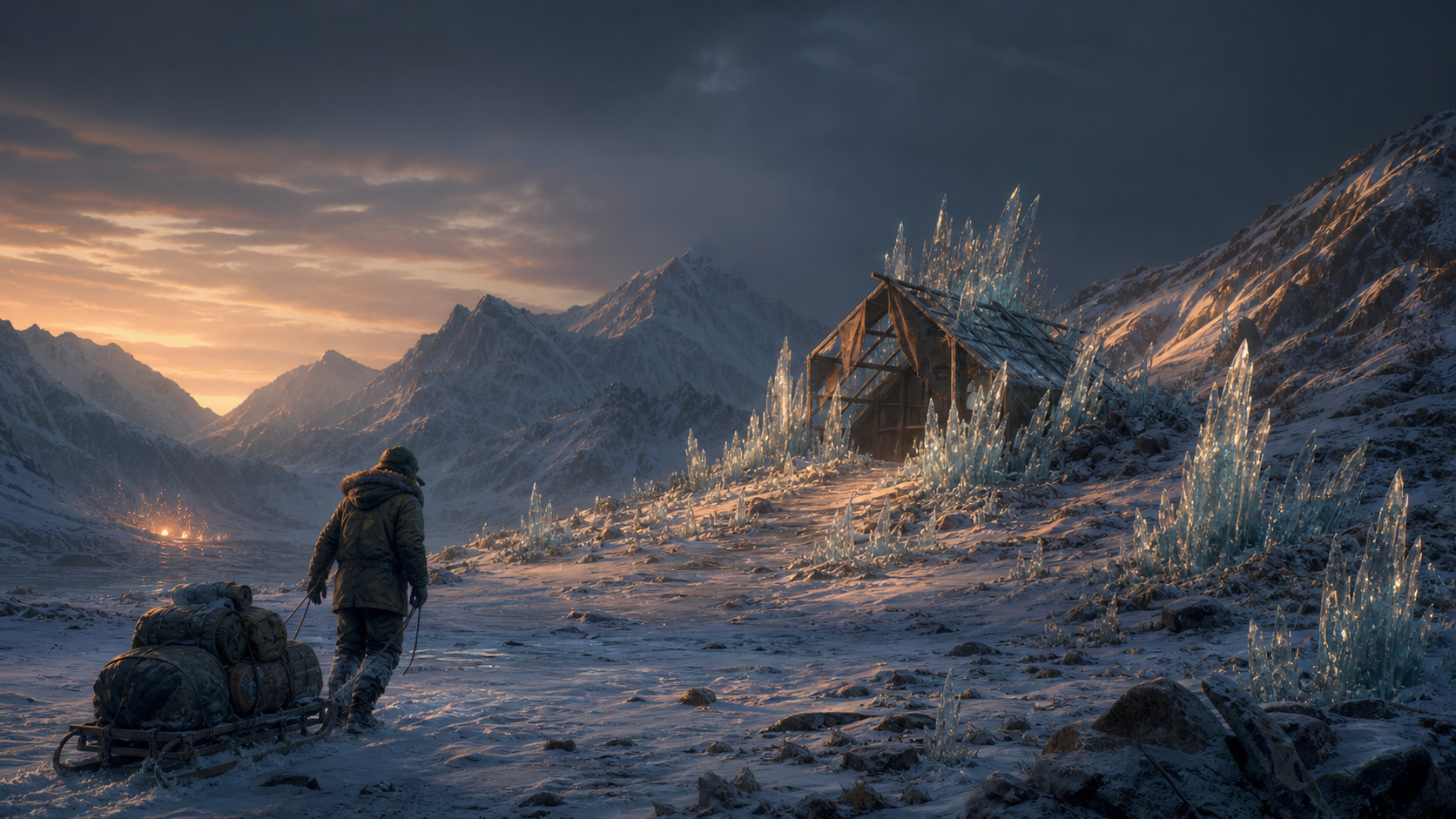
Art direction is painterly and mid-century, close to the gouache of 1950s outdoor-adventure illustration: big flat shapes, strong silhouettes, light that changes over the day. Palette: tamarack gold, slate lake blue, spruce near-black, smoke white. Sound matters as much as sight. The engine drone is the most important cue in the game and gets its own mix bus, so wind, rain and the stove crackle duck under it.
Differentiators
- Winning means being seen by someone else: the crafting tree points out at an aircraft, and every item you make is weighed against the stove that keeps you alive tonight.
- A weak signal is worse than none, because a half-seen smoke column gets logged as a trapper's camp and pushes the search away from your sector for two cycles, so restraint is a real skill.
- The threat is a schedule you can overhear, not a monster: the salvaged receiver tells you tomorrow's sector, and being in the right place with a dry pyre replaces base defence as the core problem.
- Runs end. Freeze-up closes the window between day 22 and day 26, so a full attempt takes 8 to 10 hours and has a result, which is the direct answer to the complaint that survival games just go on until you lose interest.
Monetization notes
Premium, $19.99, released straight to 1.0 after a public demo in a Steam Next Fest. Early Access fits badly here: Subnautica 2's Early Access build was widely praised and still criticised for running out after about a dozen hours, and a game sold on a finished arc can't ship half an arc. Later crash sites can be $6.99 DLC, but the four launch sites have to stand on their own.
The opportunity is real and narrow. Steam's PvE Survival Crafting Fest (1–7 September 2026) put 14 established games side by side, including The Long Dark, Subnautica and Sons of the Forest, and Subnautica 2 sold over 2 million copies in its first 12 hours of Early Access. The genre has plenty of players. It also has very large competitors, and Flyover can't match them on content. It's aiming at the slice of The Long Dark's audience that wants a solo, deliberate game that ends. A realistic target for a team of 3 to 5 is 60,000 to 120,000 units in the first year. That figure is a guess, and the demo's wishlist count is the first real check on it.
Accessibility notes
- Every input is remappable on keyboard, mouse and controller, and hold actions (ignite, chop chains) can be switched to toggles.
- The engine cue also appears as a directional on-screen indicator with a distance ring, for players who can't rely on audio. This matters more here than in most games, because hearing the engine is the core trigger.
- The mirror minigame has three timing-window widths and an auto-aim option. If auto-aim is on, the mirror's maximum contribution drops from 25 to 18, and the game says so.
- Ground-sign contrast is calculated on luminance, not hue, and the contrast preview uses patterns as well as colour, so colour-blind players can read it.
- Subtitles for the radio net with speaker labels, a scalable UI from 80% to 200%, and an option to turn off screen-edge frost and hand shake.
- A "Long Season" assist pushes freeze-up out by 6 days and halves the glimpse penalty. It's marked on the run summary but never locked away.
Risks
- Waiting can turn into the whole game. Days between passes may feel like dead time. Mitigation: playtest the day 11–17 band first, and if it drags, shorten in-game days in that band rather than add busywork.
- The glimpse penalty may read as cheap. Players may feel punished for trying. Mitigation: the plane's slow-orbit departure and the search log have to make the cause readable in under 5 seconds, and testers should be able to explain it unprompted by session two.
- One setting may not carry four sites. Mitigation: each site has to change at least two systems (timber type, water layout, tides, sector geometry), and any site that doesn't gets cut before launch.
- Market crowding. Mitigation: market the deadline and the plane, not the crafting. The trailer is one pass: engine heard, pyre lit, wing waggle.
- Ridge fire as a dominant strategy. If setting the forest on fire is too reliable, every run ends with it. Mitigation: it's available only on high-dryness, high-wind days, and its spread rate is tuned so it kills a careless player about one time in three.
6-week prototype plan
- Week 1: Graybox one lake, one camp, one signal point. Chopping, the two wood piles, the warmth meter and the day/night clock. Deliverable: a player can freeze to death or survive 5 nights.
- Week 2: The visibility model and one scripted pass. Smoke, ground sign and mirror add into V and are checked against T, and the plane shows all three outcomes (seen, not seen, glimpse). Deliverable: a debug overlay that shows V against T live during a pass.
- Week 3: The six-sector schedule, the receiver and the punt. Deliverable: a 10-day run where the player has to travel to be seen, and the glimpse penalty reorders the queue.
- Week 4: Weather (wind, haze, rain, barometer), stand depletion and capsize. Deliverable: the same seed played in clear and stormy weather produces visibly different runs.
- Week 5: Confirmation, the landing lane, freeze-up and the end-of-run search log. Deliverable: a complete run from crash to rescue or suspension, about 3 hours at compressed day length.
- Week 6: Vertical slice and playtest. September lake country at target art quality for one lake, audio mix with the engine bus, 8 external testers. Deliverable: a playtest report answering three questions. Did testers understand why they weren't seen? Did days 11–17 drag? Did anyone light a thin pyre twice?
Genre references
- Subnautica 2 (Unknown Worlds), Early Access review — https://www.gfinityesports.com/article/subnautica-2-early-access-review-already-worth-diving-for — Early Access since 2026-05-14 with 2 million sales in 12 hours, and reviews agreeing the build runs out after about a dozen hours. Shapes the decision to ship a finished, finite arc at 1.0.
- The Long Dark (Hinterland Studio), Steam store page — https://store.steampowered.com/app/305620/The_Long_Dark/ — solo survival against cold and weather with "no zombies." Defines the target player and the deliberate pace, and shows how much a quiet game can carry on weather alone.
- "5 Best Survival Games of 2026 (So Far)", SVG, 2026-09-14 — https://www.svg.com/2254839/best-survival-games-2026/ — lists Palworld, Subnautica 2, Snowed Under, Valheim and Enshrouded, which is the competitive field this pitch has to stand apart from.
- Steam PvE Survival Crafting Fest 2026, Gamespace, 2026-09-01 — https://gamespace.com/all-articles/news/steam-kicked-off-pve-survival-crafting-fest-2026/ — 14 established games promoted together from 1 to 7 September 2026. Evidence of a large, crowded audience, and the reason the pitch leans on the deadline over the crafting.
- "I think I've burned out on base building/survival games", Quarter to Three forums — https://forum.quartertothree.com/t/booo-i-think-ive-burned-out-on-base-building-survival-games/157532 — players describe tree-chopping as work, dread restarting from scratch, and complain that the games "just go on until you lose interest." This is where the finite run and the restraint mechanic come from.