Cutline
Design brief
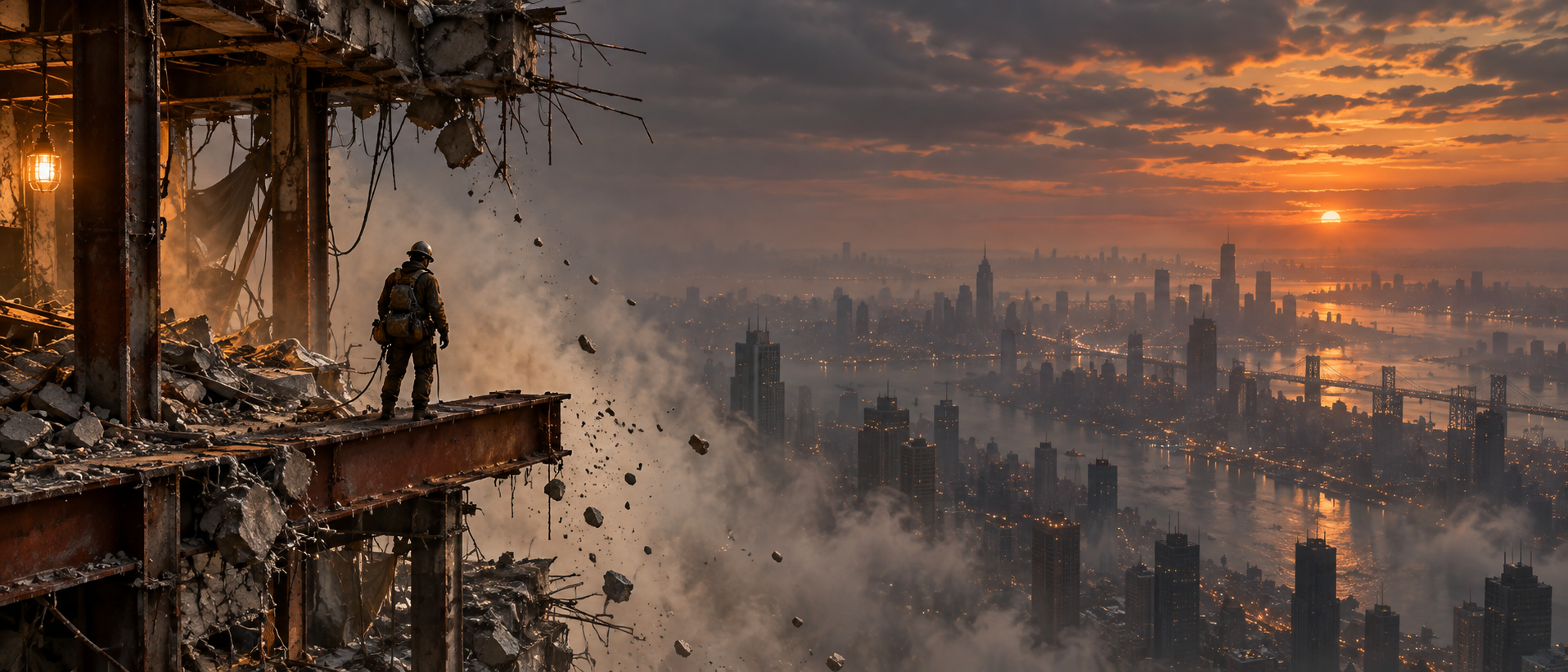
A demolition crew is taking a hyperscale tower apart floor by floor for its rare-earth bones, and the only way in is to outrun the same public countdown every other crew can hear too.
Date: 2026-09-28 Genre: extraction shooter Platform: PC (Windows; keyboard & mouse, full controller support) Status: Concept
Target player
Someone who has put fifty hours into ARC Raiders or Marathon, is good at the genre, and is tired anyway. Tired of sprinting the last two hundred meters to a landing zone only to eat a shotgun blast from someone who has been lying in the grass outside it for ten minutes. They still want the loot-and-live tension; they just want the exit to be a race, not a known camera angle. Secondary audience: players who bounced off Tarkov-style loss but loved what Escape from Duckov proved, that a lower-stakes, PvE-first entry point can still be a real extraction shooter, and want that same on-ramp married to full PvP stakes once they're ready for it.
Core loop
Strip a condemned floor for salvage while a broadcast demolition countdown ticks toward the charge under your feet, then gamble on reaching whichever stairwell or shaft the collapse hasn't sealed yet.
30 seconds: You're on floor 41, prying a server rack out of its housing, when the tower PA cuts in: "Sector clearance, floors 38 through 40, ninety seconds." Floor 39 is one below you. You check the wall panel: the stairwell you came up is already flagged for that sector. There's a second route through a fire door two rooms over, but you haven't opened it yet and don't know what's on the other side. You've got the rack half out. Ten more seconds gets it free. You hear the charge crews sealing the floor below, feel it through your boots. You pull the rack, kick the fire door, and go.
30 minutes: You breach into the tower through the lowest service floor currently open, which drops one level deeper every week as the real demolition front advances. You clear three floors, tracking two numbers the whole time: the public burn schedule (everyone in the tower hears the same warnings) and the structural read on whatever floor you're standing on, which degrades independently and doesn't wait for a scheduled charge. You cut a support beam behind you to drop a floor section and block a crew that's been shadowing your loot line. You call your extraction cage early because the corp just moved a burn up; it's four minutes out and will show up at whichever shaft survives the next detonation, not the one you're standing next to. A rival crew beats you to it and the cage only holds three. You lose that fight, rappel down the outside of the tower to a maintenance platform, and call a second cage from there. You get out with two racks and a pre-collapse painting somebody's going to want. You left your prybar in the stairwell where you lost the fight for the cage.
Where this gets boring around hour three: once a crew has run the same access floor twice, the burn schedule stops feeling like a threat and starts feeling like a metronome. You learn the safe fifteen seconds and stop reacting to the PA at all. The fix has to be structural, not cosmetic: the tower's floor layouts are only ever open for one to two real weeks before the demolition front eats them (see Progression), so the "safe fifteen seconds" you learned is gone before boredom sets in for good. That's a bet, not a guarantee. It only works if new floors ship on schedule, which is why the risk list below treats content cadence as the sharpest operational risk in this brief, not an afterthought.
Systems
- Public burn schedule: A PA countdown broadcast to every player in the tower, naming the next floor sector and the time to detonation. Nobody has private information about the clock — the tension is in what you do with time everyone can see, not in guessing a hidden timer.
- No fixed extraction points: There is no landing pad to memorize and camp. A called extraction cage travels to whichever shaft is structurally intact when it arrives, and which shaft that is changes as the burn schedule closes others off. The cage holds three; rival crews can beat you to a call you placed.
- Independent structural decay: Beyond the scheduled charges, any floor you stand on has its own integrity value that drops from gunfights, explosions, and time spent under a floor that's already taking damage above it. A floor can go before its scheduled burn if enough happens on it.
- Structural sabotage: Cutting a support beam collapses a floor section on command — a deliberate area-denial tool that seals a stairwell behind you or drops a pursuing crew's route out from under them. Costs a charge item and about four seconds standing still to place.
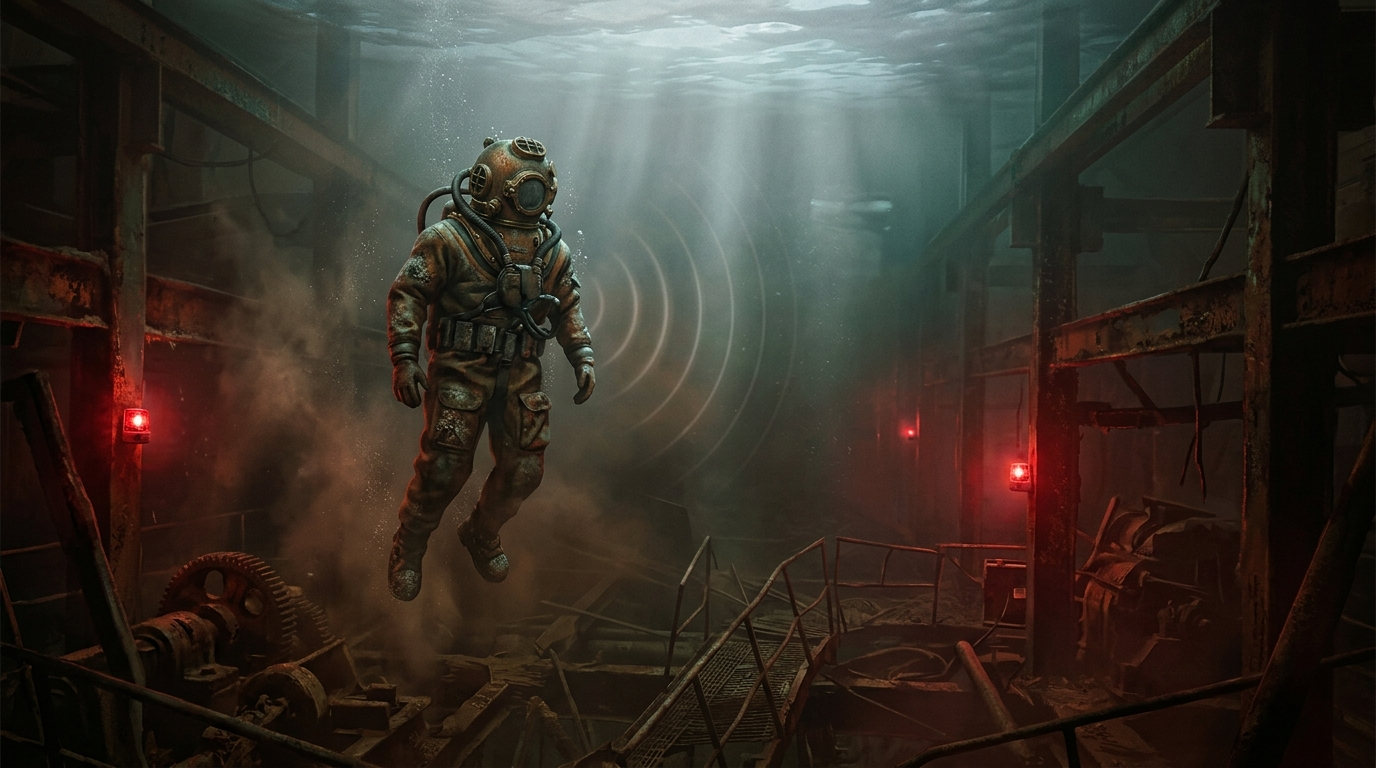
- Vertical traversal kit: Grapple line for gap-crossing between floor sections, an external rappel line for descending the tower's face when internal routes are cut off, and a floor-to-floor climb kit for scaling collapsed sections. These exist so a sealed stairwell is an obstacle, not a dead run.
- Dead-drop caching: Weld a partial cache to a wall mid-run (takes about six seconds, single-use item). It survives your death and can be collected later in the same raid or lost to whoever finds it first. This is the middle ground between full loss on death and full safety — you can bank half a good haul before pushing your luck on the rest.
- Reclamation Ledger: A single corporate progression track, not a faction web. Turning in salvage by category (structural steel, server cores, biological samples, pre-collapse artifacts) raises your access tier, which unlocks entry to floors deeper in the tower before the demolition front reaches them — the tower's own countdown becomes your progression clock too.
Progression
Run-by-run: Ledger currency and access tier from what you extract. Higher tiers open lower, less-picked-over floors before the tower's demolition front reaches them naturally. No stat inflation on the player — a new arrival with a good read on the burn schedule competes with a veteran on knowledge, not gear.
The Long Cut (season-long shared countdown): This is the part that has to work for the hour-three problem above to hold. Over a twelve-week season, the tower is demolished from the top down on a real schedule shared by every player on the server. Not per-match; persistent. Floors razed this week are gone for the rest of the season: their loot pool, their layout, their shortcuts. New floors open at the bottom as the lowest access point drops. A player who cleared floor 41 in week 2 cannot go back to it in week 9. It's gone, and the tower is that much shorter for everyone. This is the honest bet in this brief: it demands a live population willing to treat a floor's disappearance as a reason to show up this week, not a reason to feel like they missed something. If that population doesn't show up, the mitigation is in the Risks section below.
Between seasons: The tower resets to full height with a new interior layout, and the previous season's razed floors get archived into a solo replay mode so players who missed them can still see what was there.
World & setting
The Column is a hyperscale vertical arcology outside Manila, built in the 2030s and decommissioned after its owner went under in 2044. It left behind a kilometer of structural steel, server farms, and abandoned residential decks that a reclamation conglomerate called Halbrecht is now legally entitled to strip for rare-earth content. They're demolishing it from the top down, floor by floor, on a schedule they publish because the alternative is squatters and independent salvagers getting caught in a blast they didn't know was coming. Officially, Halbrecht doesn't want you in there. Practically, they've stopped trying to keep people out and started selling access tiers instead.
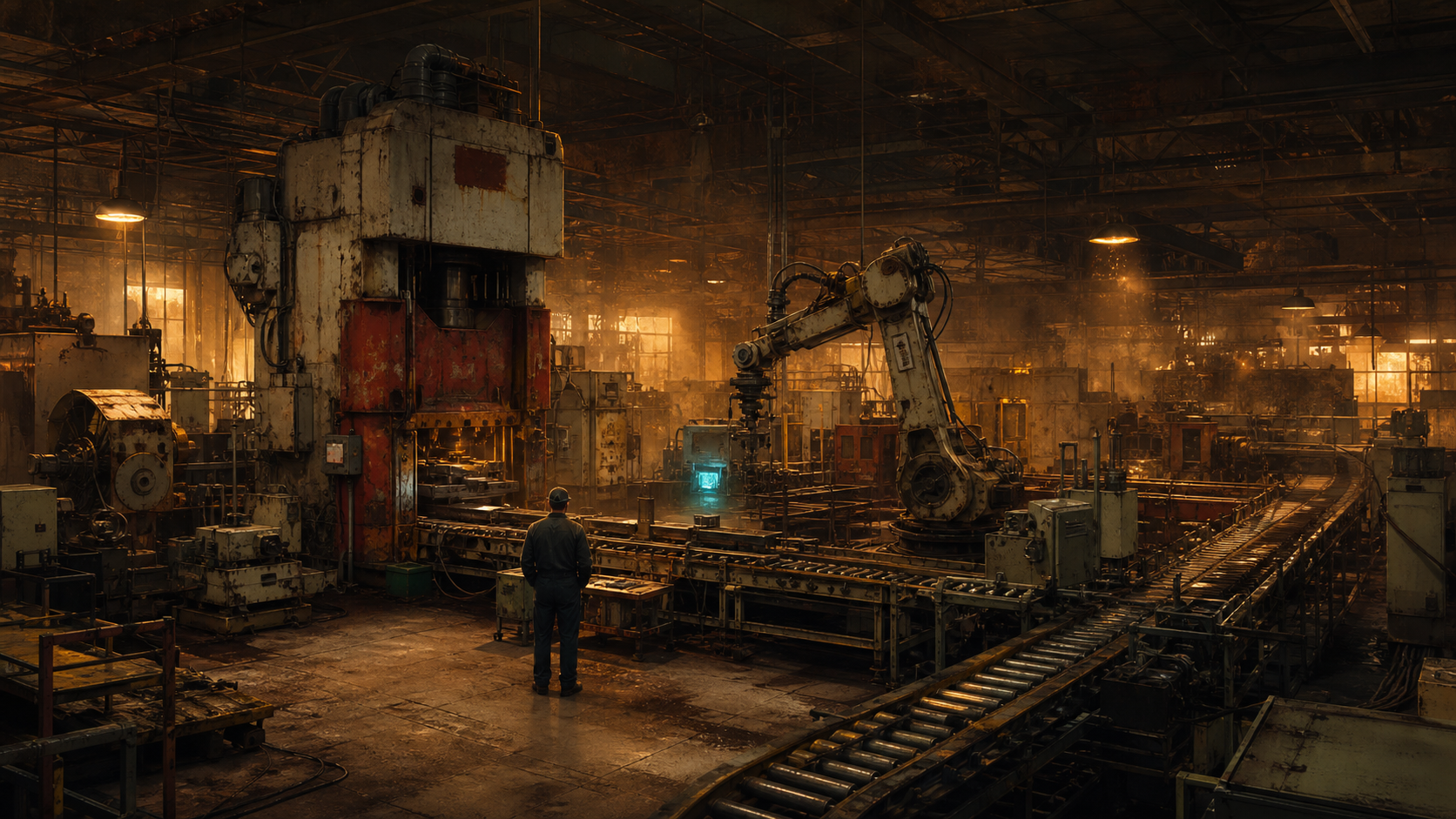
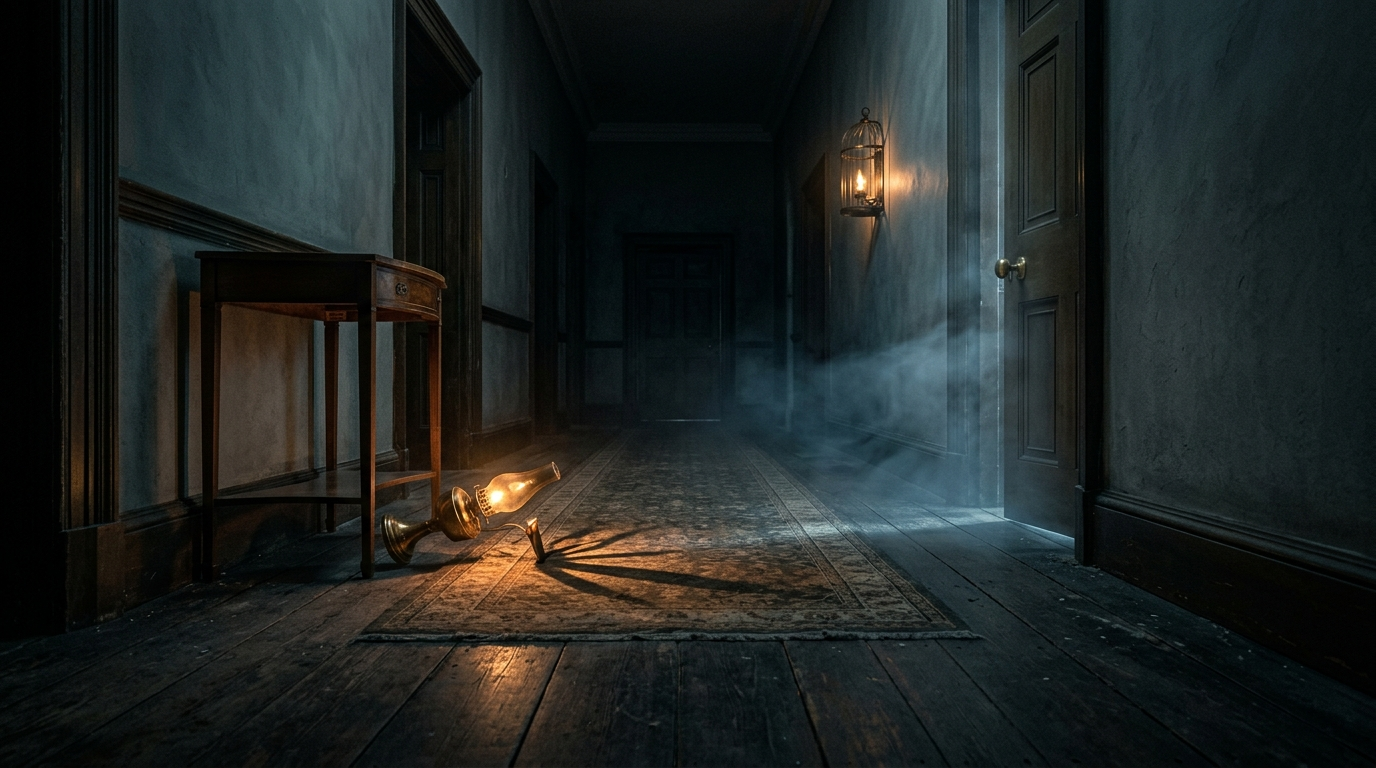
The tone is industrial and specific rather than post-war: halogen work-lights strung on extension cords through dead office floors, condensation running down cracked curtain glass a thousand feet up, the smell (you can't render smell, but the art direction should read like you can) of concrete dust and cut rebar. It's less a warzone and more a controlled disaster you've decided to walk into on purpose.
Differentiators
- No extraction point ever stays put — the cage arrives wherever the shaft survives, which removes the camped landing zone that's the single most-repeated complaint in ARC Raiders' own community right now, not by patching it but by making a fixed camera angle impossible to establish.
- The countdown is public, not personal — every player in the tower hears the same PA warning at the same time, which turns the genre's usual private-timer tension into a shared race where the fight is over what everyone does with information nobody had to earn.
- The map is a countdown too — floors demolished this week are gone for the whole season, for every player, permanently. Most extraction shooters rotate a fixed map pool; this one spends its map and doesn't get it back until the season resets.
Monetization notes
Free-to-play with a premium season pass (roughly $12–15 per twelve-week season) and cosmetic-only shop items: cage liveries, tool skins, salvager outfits, no stat or access advantage for sale. This follows the model ARC Raiders and Marathon both launched with, but the honest read on the market right now is a warning as much as a validation. Both of those titles have seen sharp population drops since launch and are pivoting toward PvE content to keep players engaged, which is exactly the risk a live, population-dependent shrinking map inherits. The mitigation is a genuinely complete solo/duo PvE mode from day one, not a stopgap added after launch, so the game has a floor even if the PvP population thins the way the rest of the genre's has.
Accessibility notes
- Fully remappable keyboard/mouse and controller bindings, no required simultaneous chord inputs
- The public burn countdown is captioned on-screen as well as broadcast in audio, with a colorblind-safe warning border (shape-coded, not color-only) as detonation nears
- Adjustable screen-shake and camera-lean intensity for the structural collapse and rappel sequences, independent of a general motion-sickness setting (FOV slider 60–120°)
- Scalable HUD: burn countdown, structural integrity meter, and cage ETA independently resizable from 50% to 200%
- Photosensitivity option that removes the dust-flash and strobing work-light effects during a floor collapse
- Full subtitles with speaker labels for PA announcements and voice comms
- A guided solo tutorial raid, replayable any time, that never counts against ledger progress if failed
Risks
- Live population dependency: The Long Cut only works if enough players show up each week to make a disappearing floor feel like an event rather than an empty room. Mitigation: a fully-featured solo/duo PvE mode from launch (not added later), AI salvager density that scales up when player population is low, and a hard commitment to shipping new floor content on schedule even in quiet weeks.
- Content treadmill: A season that permanently deletes floors needs a steady supply of new ones or the tower runs out of interesting places to go before the season ends. Mitigation: floor layouts are built from a kit of modular office/server/residential room sets that combine procedurally within hand-placed structural anchors, so new combinations ship faster than fully bespoke floors.
- Extraction fights concentrate anyway: Removing fixed extraction points stops camping a known location, but if only one or two shafts ever survive a given burn sequence, players will just camp the shrinking set of valid shafts instead. Mitigation: every burn sequence is authored to leave at least three candidate shafts standing, randomized per raid, with the vertical traversal kit (grapple, rappel, climb) as an explicit way to reach a shaft that isn't the obvious one.
- Structural sabotage as griefing: A tool that drops a floor on command is also a tool for sealing a solo player inside a dead-end section with no way out. Mitigation: sabotage can only be placed on sections with a verified alternate route already mapped, enforced by the level layout, not by player trust.
- Onboarding load: Public countdown, independent structural decay, cage contest mechanics, and dead-drop caching are four systems to learn before a new player has survived one raid. Mitigation: the guided solo tutorial raid introduces exactly one system per lap — countdown first, then structural decay, then the cage, then caching — before any of them show up together.
6-week prototype plan
- Week 1: Vertical movement prototype — walking, climbing, grapple-crossing gaps, rappelling down an exterior face, and the feel of a floor shuddering underfoot. No combat, no loot. External playtest on movement feel alone before anything else is added.
- Week 2: One graybox floor bank (three floors) with the public burn countdown system running live, basic loot placement, and a first pass on independent structural decay from gunfire.
- Week 3: AI salvager threats (patrol, alert, pursuit), structural sabotage tool with the verified-alternate-route constraint, and the fire-door/alternate-route layout pattern that Week 1's traversal kit needs to matter.
- Week 4: Extraction cage call-in system — travel time, shaft-survival check against the current burn state, three-player capacity, and contest behavior when two crews call it at once.
- Week 5: Dead-drop caching, Reclamation Ledger currency and access-tier gating, and an 8-player network test of the full raid loop end to end.
- Week 6: Vertical-slice playtest with 12 players across a floor bank that includes one live scripted burn event mid-session; tune countdown timing, shaft-survival odds, and cage contest frequency against playtest data before a stakeholder build.
Genre references
- ARC Raiders And Marathon Turn To PvE As The Extraction Genre Wobbles (Forbes, Paul Tassi, 2026-09-25) — https://www.forbes.com/sites/paultassi/2026/09/25/arc-raiders-and-marathon-turn-to-pve-as-the-extraction-genre-wobbles/ — the population-decline and PvE-pivot context behind this brief's honest monetization and PvE-mode-from-day-one commitments.
- "Extraction Camping is Dumb" — ARC Raiders Steam Community discussion — https://steamcommunity.com/app/1808500/discussions/0/681860127366779757/ — direct evidence for the camped-landing-zone complaint that the no-fixed-extraction-point system exists to remove.
- ARC Raiders Dev Has Mixed Feelings About Campers: "It Is A Tactic" (Dualshockers) — https://www.dualshockers.com/arc-raiders-dev-has-mixed-feelings-about-campers/ — the developer-side framing that camping is a byproduct of fixed extraction geography, which shaped the decision to make the geography itself move.
- Escape from Duckov (Team Soda, 2025) — https://en.wikipedia.org/wiki/Escape_from_Duckov — proof that a PvE-first, lower-stakes entry point can carry a genuinely deep extraction shooter to a mass audience; informs this brief's day-one solo/duo mode.
- "I still hate extraction shooters after playing Arc Raiders" (XDA Developers) — https://www.xda-developers.com/i-hate-extraction-shooters-arc-raiders/ — the specific "you lose everything to a stranger, forever" criticism that dead-drop caching is built to answer with a graduated middle ground instead of an all-or-nothing loss.