The Quay Road
What if… On 28 June 1914 Archduke Franz Ferdinand's driver takes the correct route to the hospital in Sarajevo, the assassination never happens, and the July Crisis that started the First World War…
Synopsis
Franz Ferdinand survives Sarajevo and the July Crisis never starts. He opposed war with Serbia, and he inherits the Habsburg throne in 1916 with a plan to turn the Dual Monarchy into a federation. Europe's arms race and alliance system stay in place but never ignite. Russia reforms slowly and keeps its dynasty under strain. Germany's economy outgrows its army. A strained, quarrelsome continent of empires hangs together through the interwar decades, with the Great Depression, a smaller flu pandemic, and a century of nationalism still to come. It is an imperfect peace, and it is still a peace.
The Quay Road
What if… On 28 June 1914 Archduke Franz Ferdinand's driver takes the correct route to the hospital in Sarajevo, the assassination never happens, and the July Crisis that started the First World War never comes.
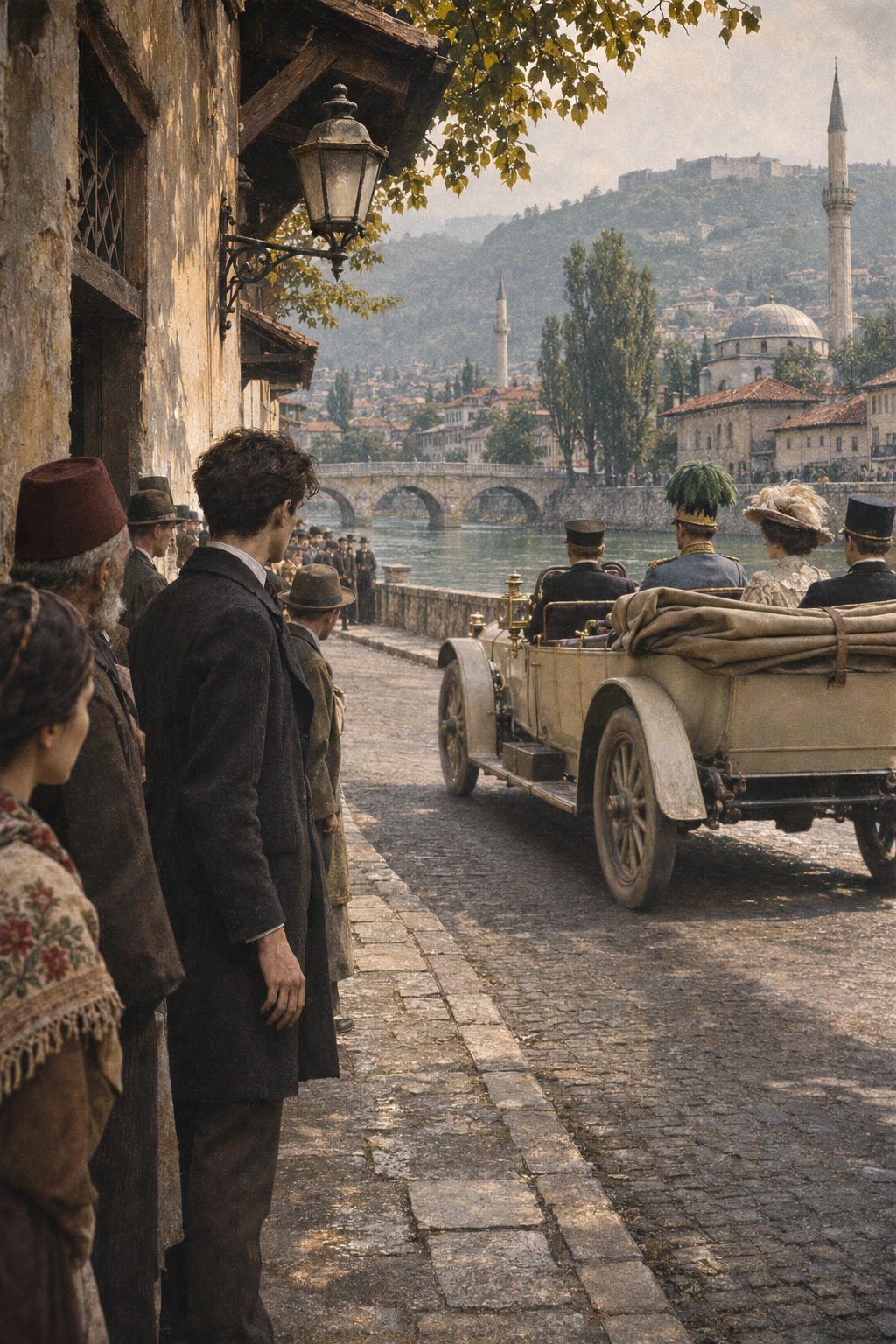
On the morning of 28 June 1914, Archduke Franz Ferdinand, heir to the Austro-Hungarian throne, was driven through Sarajevo in an open car. At 10:10 a conspirator, Nedeljko Čabrinović, threw a bomb that bounced off the folded roof and wounded officers in the car behind. After a stiff reception at City Hall, the Archduke decided to visit the injured in hospital, and the governor, Oskar Potiorek, changed the route to avoid the narrow streets of the old town. No one told the driver. He turned the wrong way, stopped to reverse, and Gavrilo Princip, standing outside a delicatessen, fired twice. Within six weeks Europe was at war. In this account the instruction reaches the driver.
The Road Along the River
At the town hall, Potiorek turns to his aide and repeats the order: the cars will go straight along the Appel Quay to the hospital. This time the aide walks to the first vehicle and says it to Lojka's face. The Archduke's car holds the river road, passes the mouth of Franz Josef Street at speed, and pulls up at the hospital a little after eleven. Princip, waiting at the corner, watches the car go by at forty yards and does not raise his hand. Franz Ferdinand sits at a wounded officer's bed, then returns to his hotel, where his wife, Sophie, is waiting. They take the train out of Bosnia the next morning.
A Quiet July
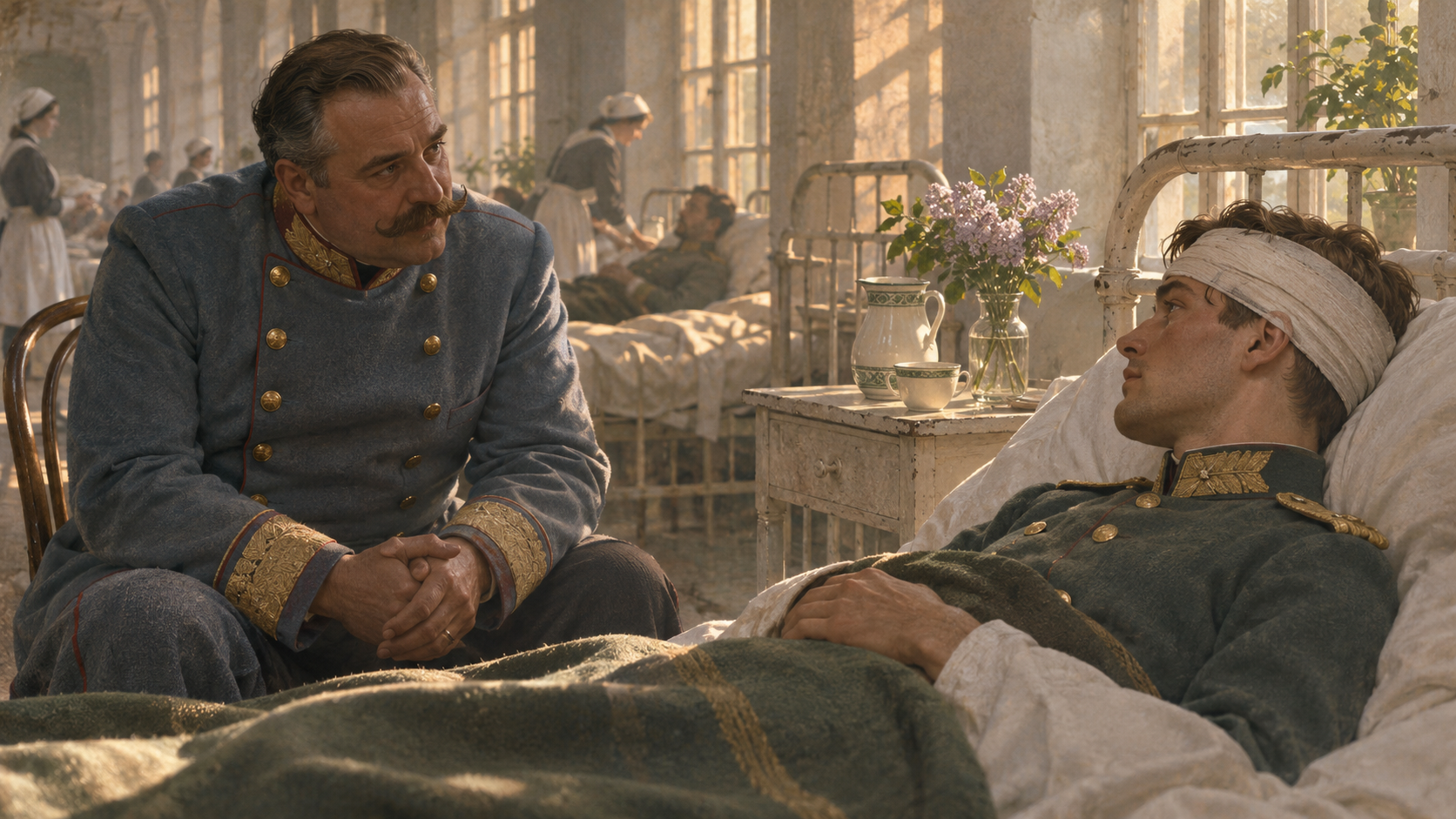
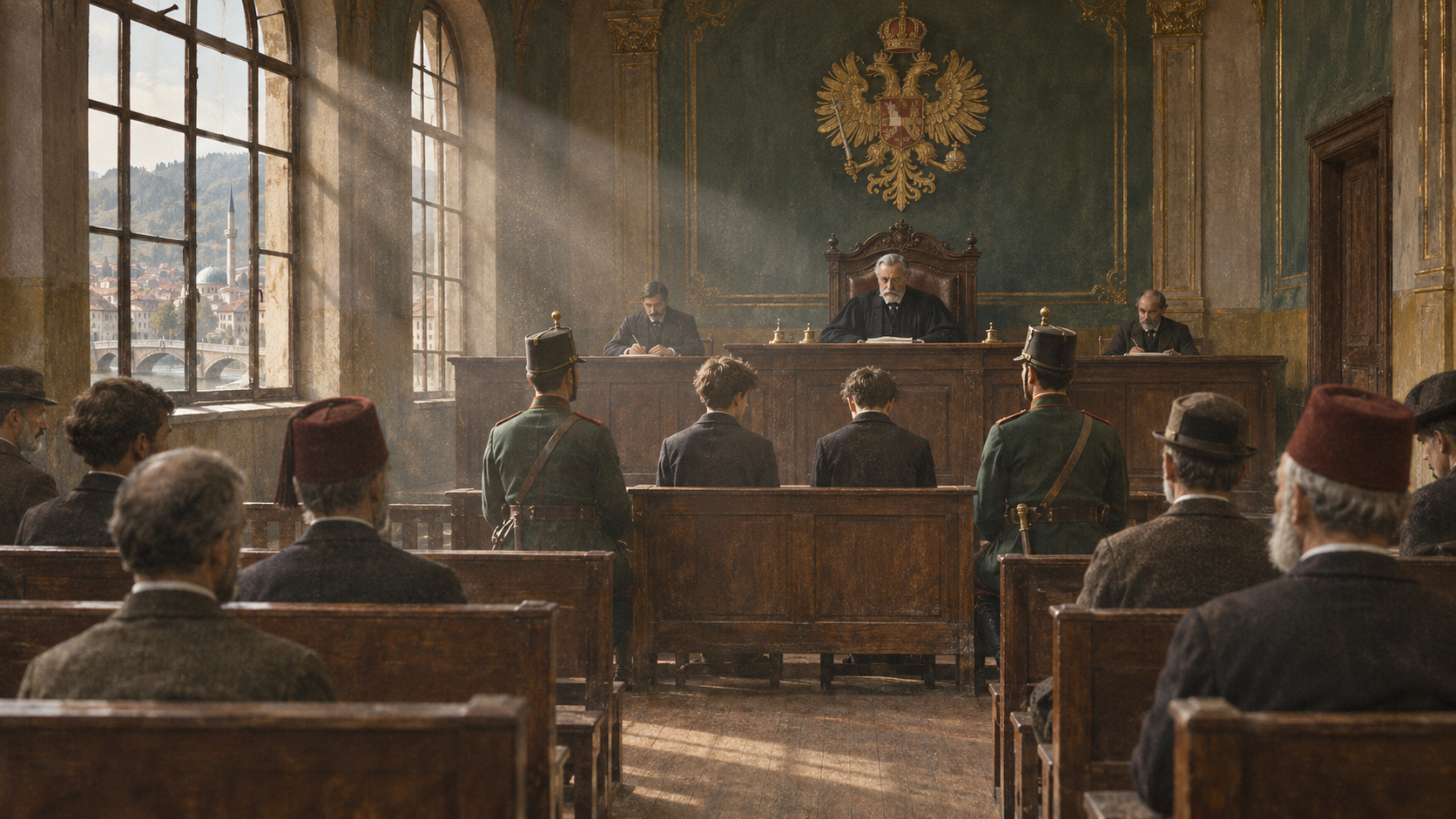
Serbian and Austrian police still link the grenade to a Belgrade network, and Vienna's hawks, led by Chief of Staff Conrad von Hötzendorf, press for a punishing ultimatum. They find Franz Ferdinand against them. He had told the Emperor more than once that a war with Serbia would only help Russia. The conspirators are tried in Sarajevo, and Čabrinović and Princip, both under twenty, receive the maximum twenty-year sentence. Official notes pass between Vienna and Belgrade, a few commentators grumble, and a hot, dull summer goes by. The diplomats who had been bracing for a crisis go on holiday instead. By September the newspapers are back to the harvest, the Balkan frontier and the price of coal.
The Old Emperor's Last Winter
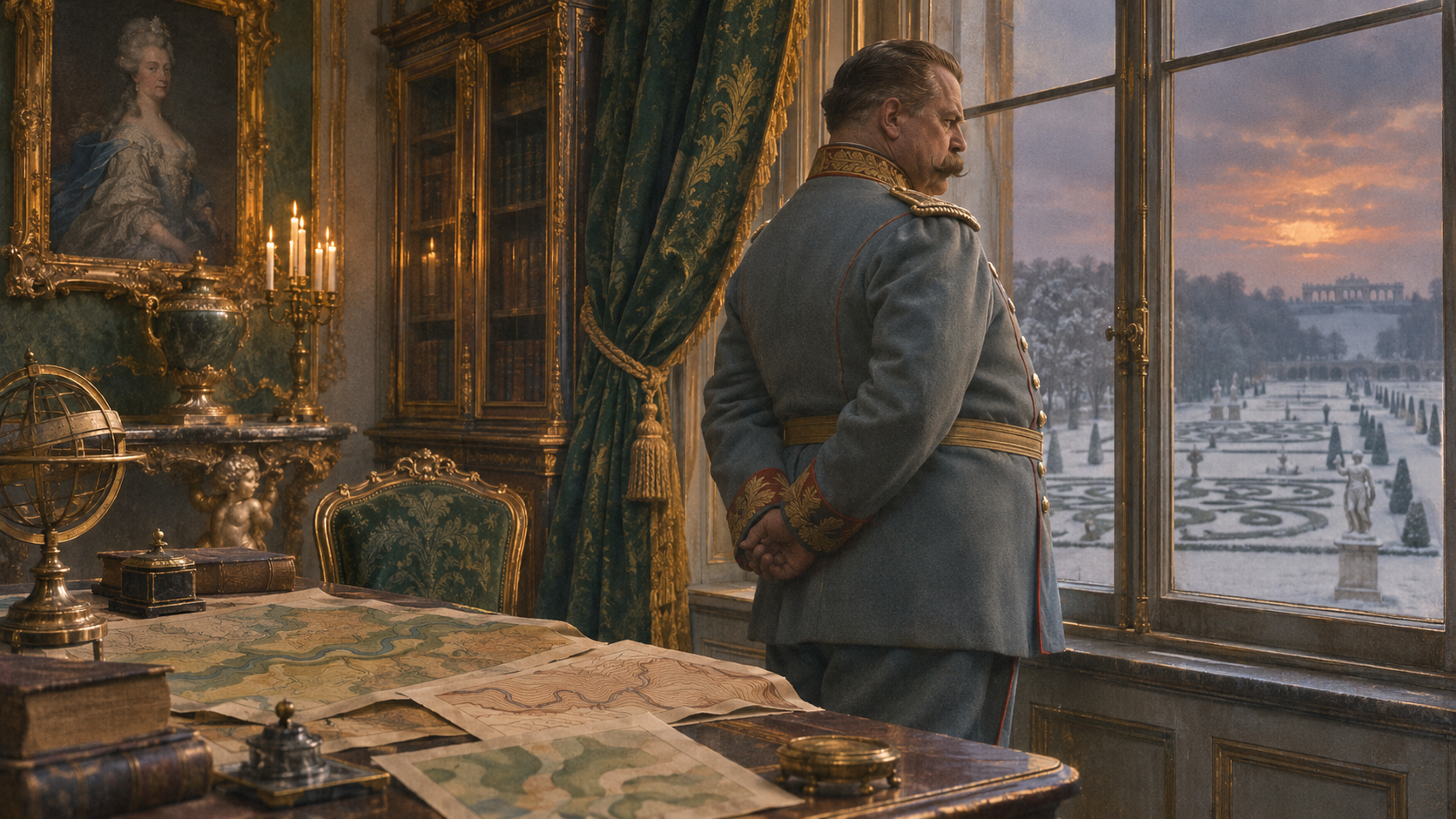
Franz Joseph dies in Schönbrunn in November 1916, aged eighty-six, after sixty-eight years on the throne. His nephew's first act is to rest, and his second is to appoint a commission on the structure of the realm. Franz Ferdinand had long favoured replacing the 1867 Compromise, under which Hungarians ran half the empire, with a federation of national units: a Czech crown, a South Slav state, Galicia, and the old Austrian and Hungarian lands. Budapest hates the plan and says so loudly. The new Emperor, who has been described as stubborn, gruff and fond of his roses, is not moved. He tells his ministers that the Habsburg lands have forty years to either reform or fall apart.
The Arms Race Without a Spark
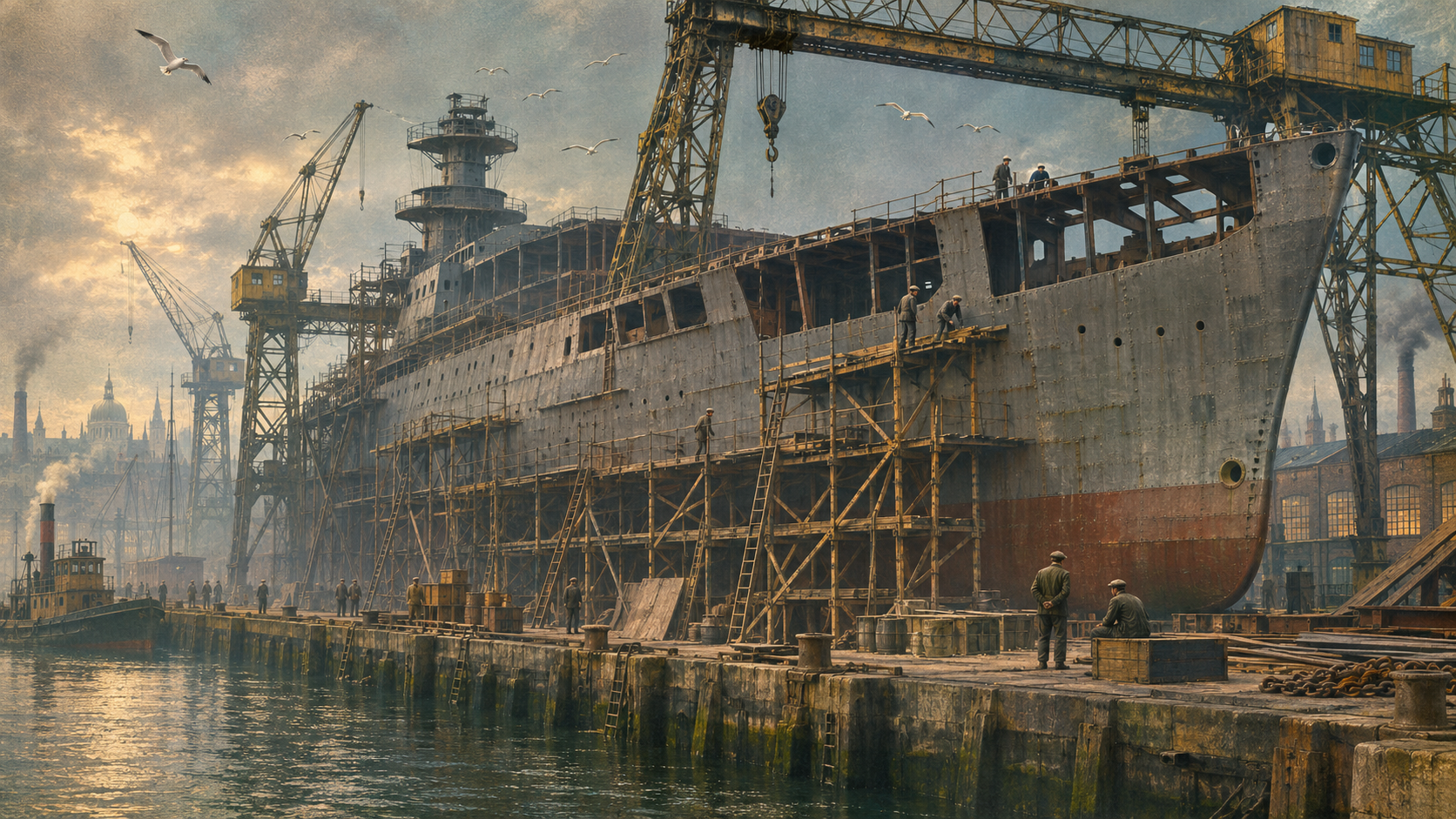
The great powers keep building. Germany's High Seas Fleet grows, and Britain answers with more dreadnoughts. Russia pushes ahead with its Great Military Programme, due for completion in 1917. French railway loans pay for new lines to the Polish frontier. All of it was supposed to end in a collision, but without a trigger the argument turns to costs. By 1917 the Reichstag's budget committee notes that the fleet takes a fifth of the Reich's revenue, and a Social Democrat-led coalition forces the first of several naval limitation talks with London. They end in a modest treaty. Planners in every capital keep their war timetables in a drawer, and the drawer stays shut.
The Federation of the Danube
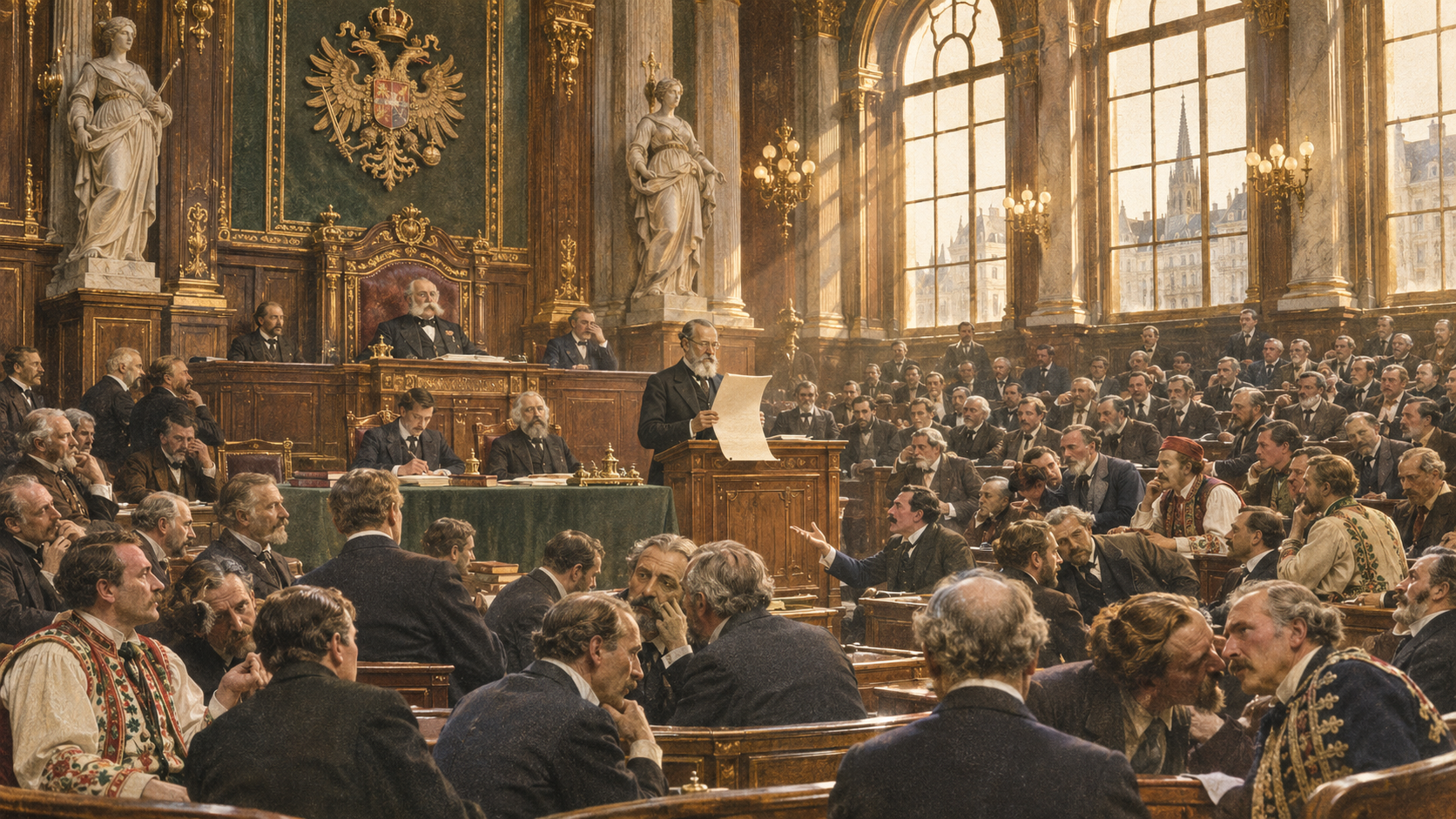
The Federation takes six years of bargaining. A new constitution in 1922 establishes six crowned or chartered states under one Emperor, one army and one foreign ministry. Hungary keeps a large piece of its territory but loses the right to administer Croatia, Slovakia and Transylvania as subordinate lands. Czech and Polish deputies gain their own parliaments. It satisfies almost nobody completely. Magyar nobles call it theft, and Serb nationalists in the new South Slav unit want something more. But the language laws are rewritten, schools open in a dozen tongues, and the empire's minorities find that arguing in a parliament is easier than conspiring in a cellar.
A Different Russia
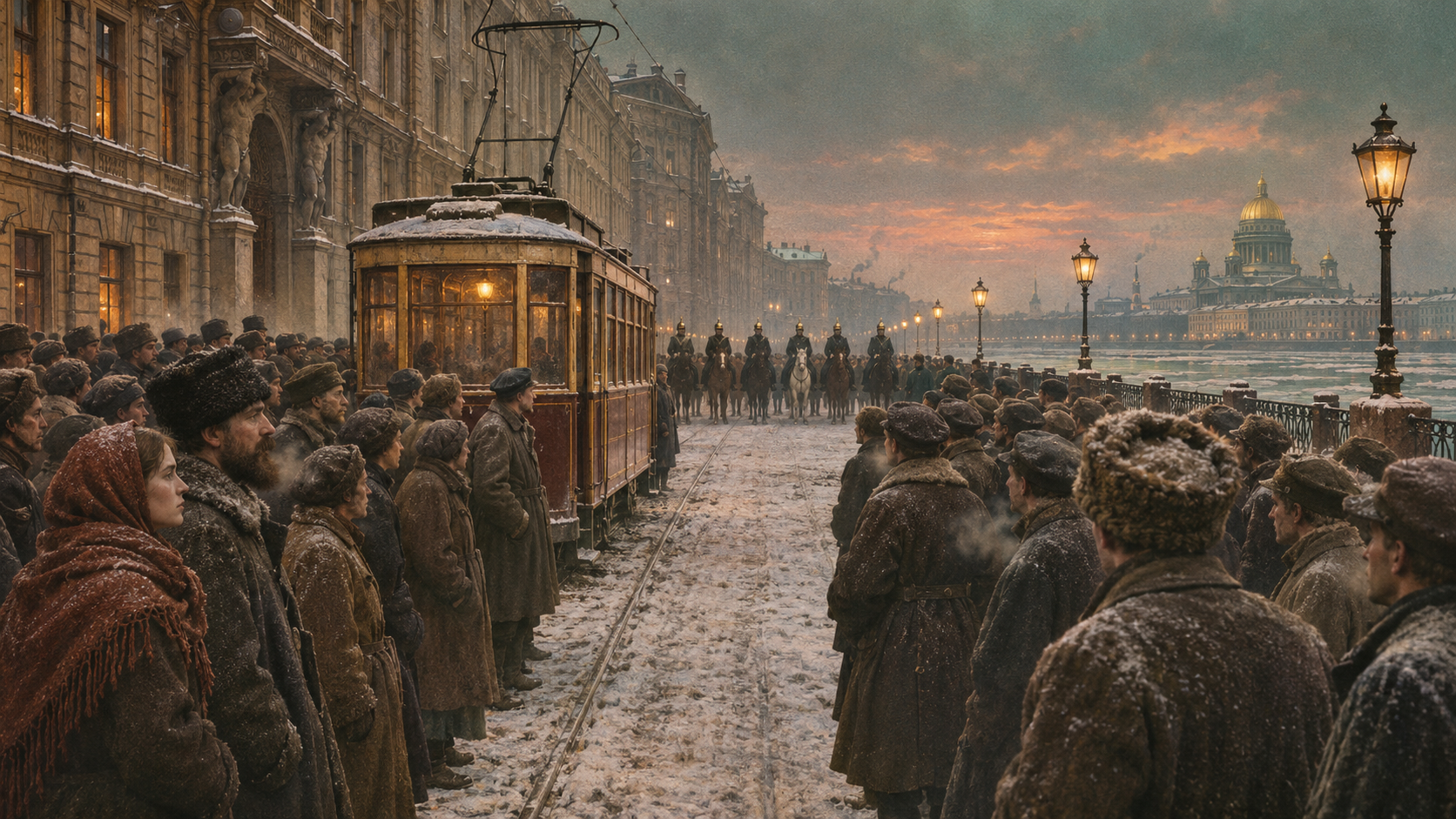
Without the mass mobilisation, defeats and bread shortages of a world war, the Russian state does not collapse in 1917. Nicholas II keeps his throne, though he rules a country in constant turmoil. Strikes in Petrograd, peasant unrest and a restless Duma force a slow series of reforms: land purchase, factory laws, press freedom granted and half-withdrawn. Lenin, who had hoped war would shatter the empire, spends the decade in Swiss exile writing pamphlets that fewer people read each year. Russia's revolution still comes in some form, but later, and as a quarrel over the shape of a constitution rather than a seizure of power by a tiny party.
Ordinary Lives
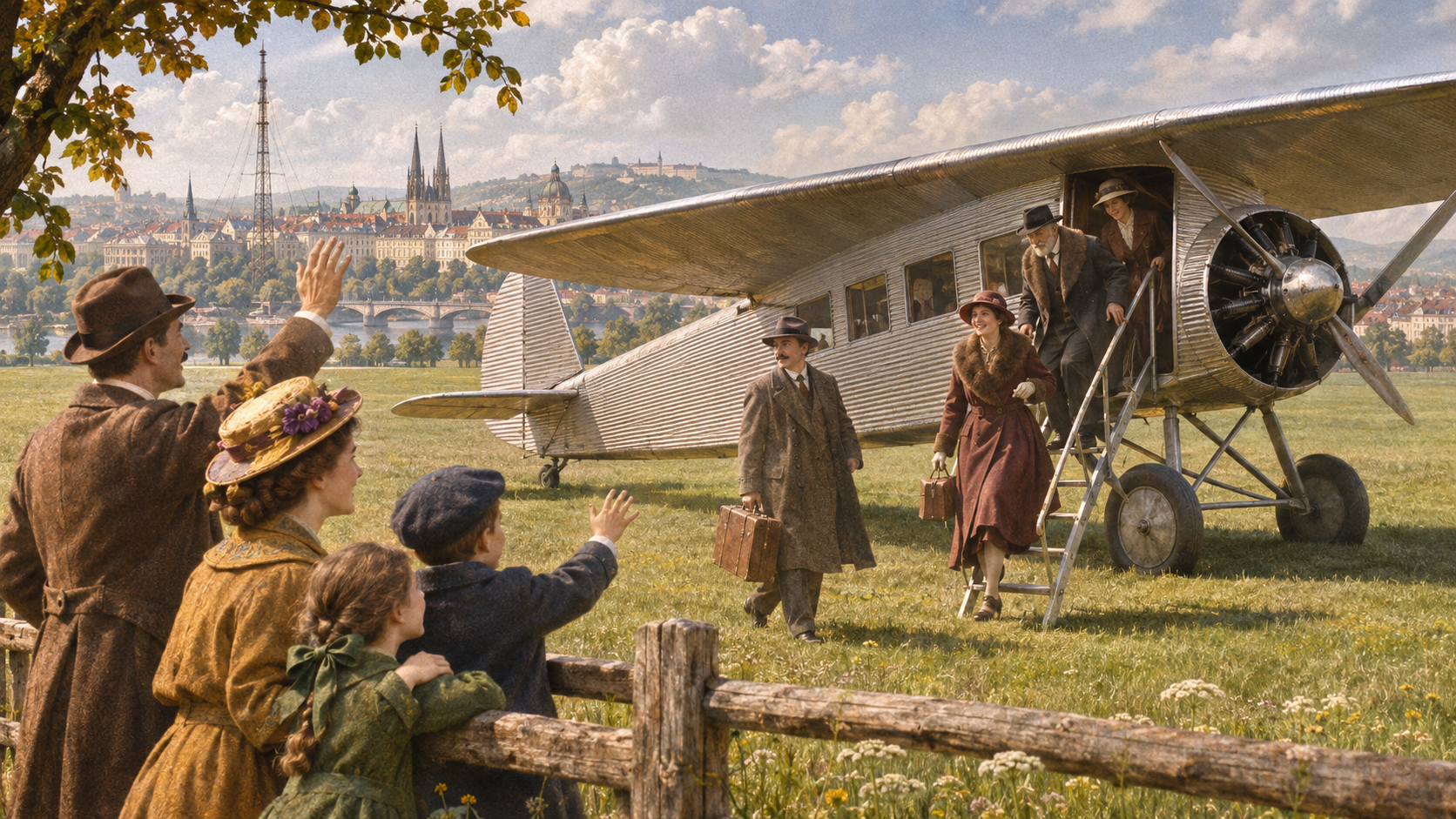
The money that went to shells in our timeline goes to roads, mains and laboratories. Fertiliser from the Haber-Bosch process feeds the continent. By the late 1920s a passenger can fly Vienna to Berlin in four hours in a Junkers, and radio sets sit on kitchen shelves from Lemberg to Lyon. A flu pandemic in 1918 still kills millions, but it moves slowly along railways and shipping lines instead of through crowded troop trains. A tailor's apprentice in Prague, born in 1900, grows up with the same worries as his father: his wages, his language, his landlord. He votes in a federal election in 1923, and he is never conscripted.
The Long Peace and Its Cracks
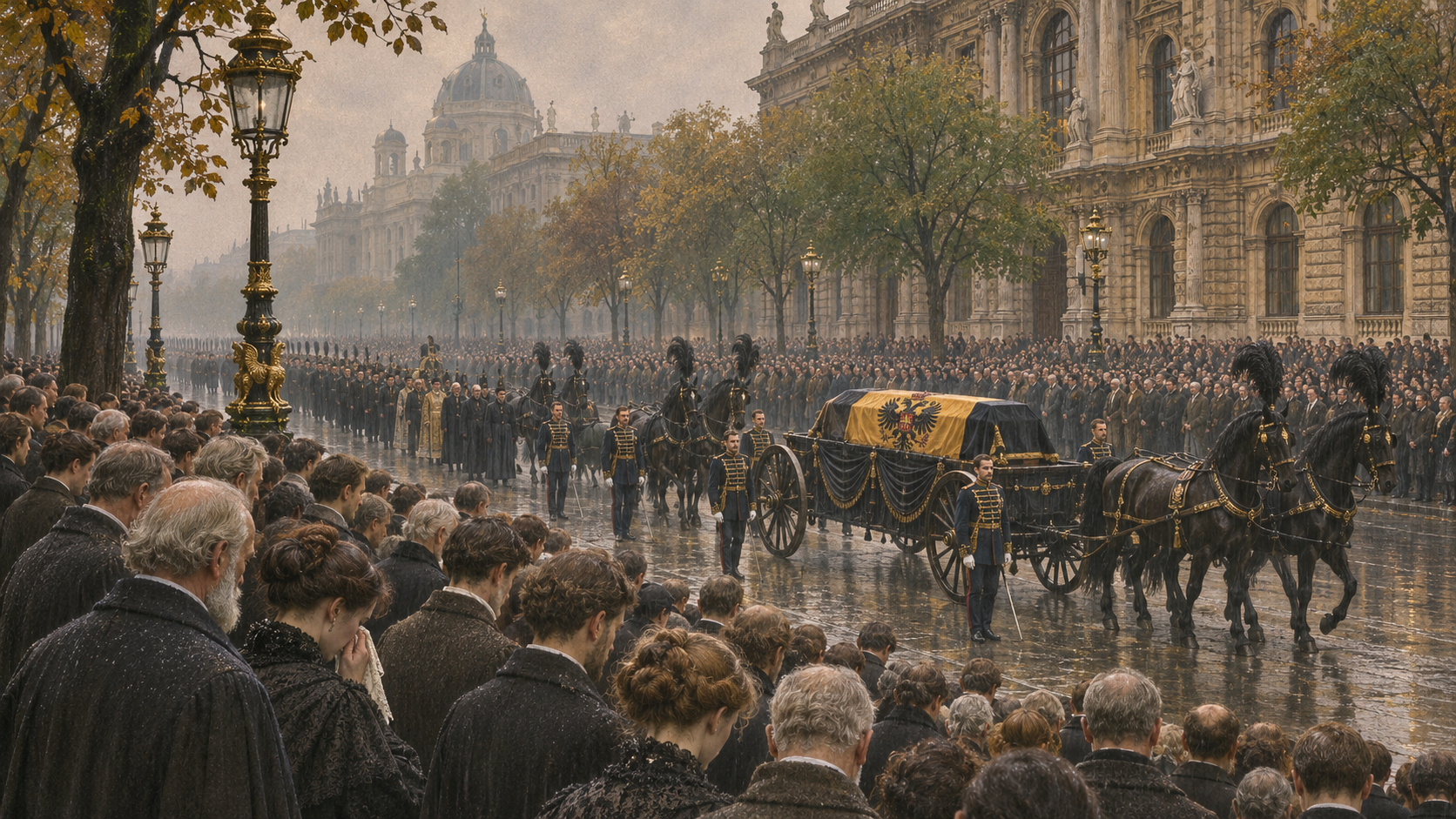
The peace is not painless. The Depression of 1929 collapses banks in Vienna and Frankfurt, and extremist parties of left and right gain seats in every parliament. Mussolini holds Italy, and Germany's Kaiser Wilhelm II is succeeded by a son who is more cautious and more constitutional. But no defeat or humiliation hangs over any capital, and no army is demobilised into unemployment. Franz Ferdinand dies in 1936, aged seventy-two, and his funeral is attended by the crowned heads of Europe, a gathering that had last assembled for Queen Victoria. His successor inherits a federation that is stable, argumentative and underfunded.
The Centenary
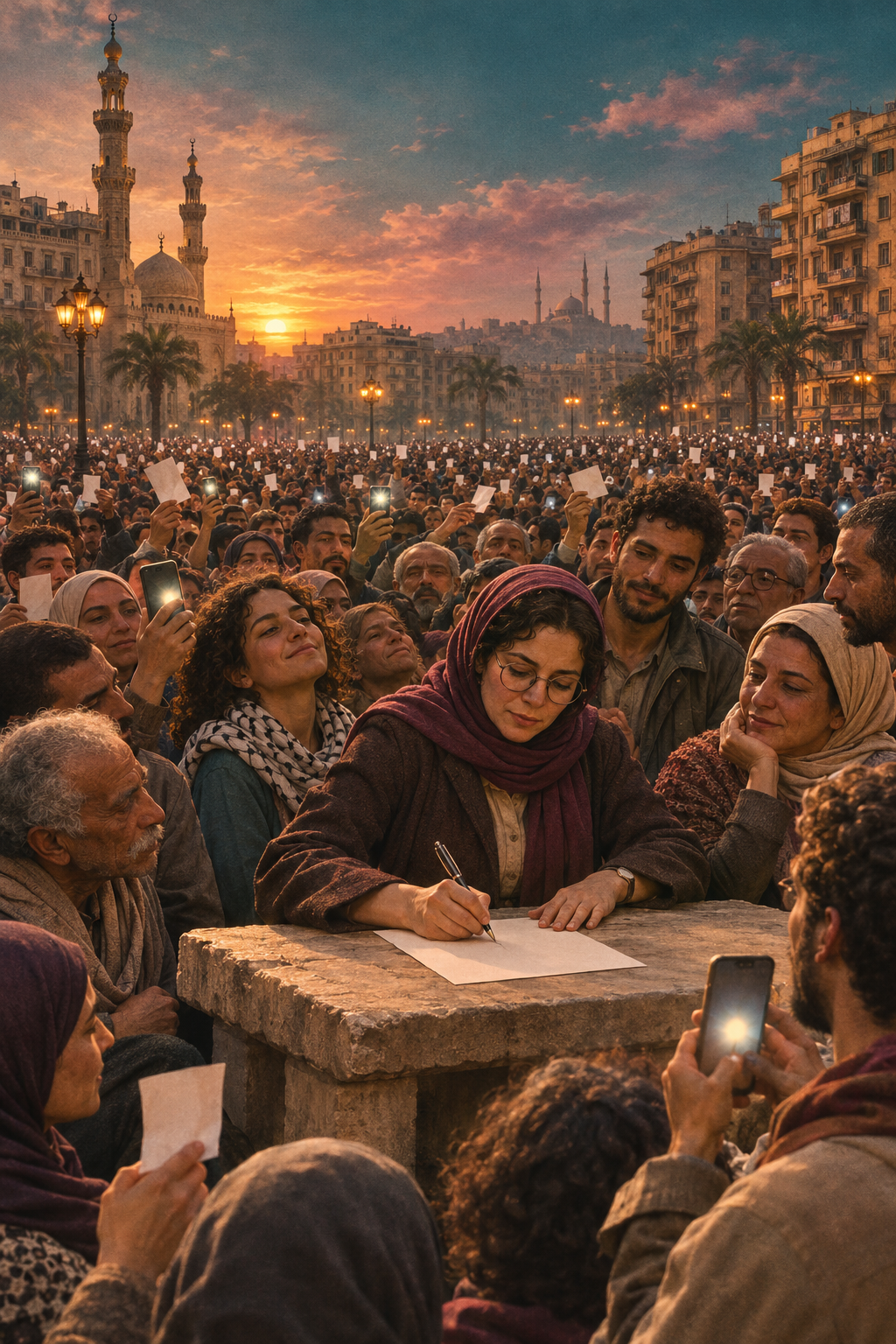
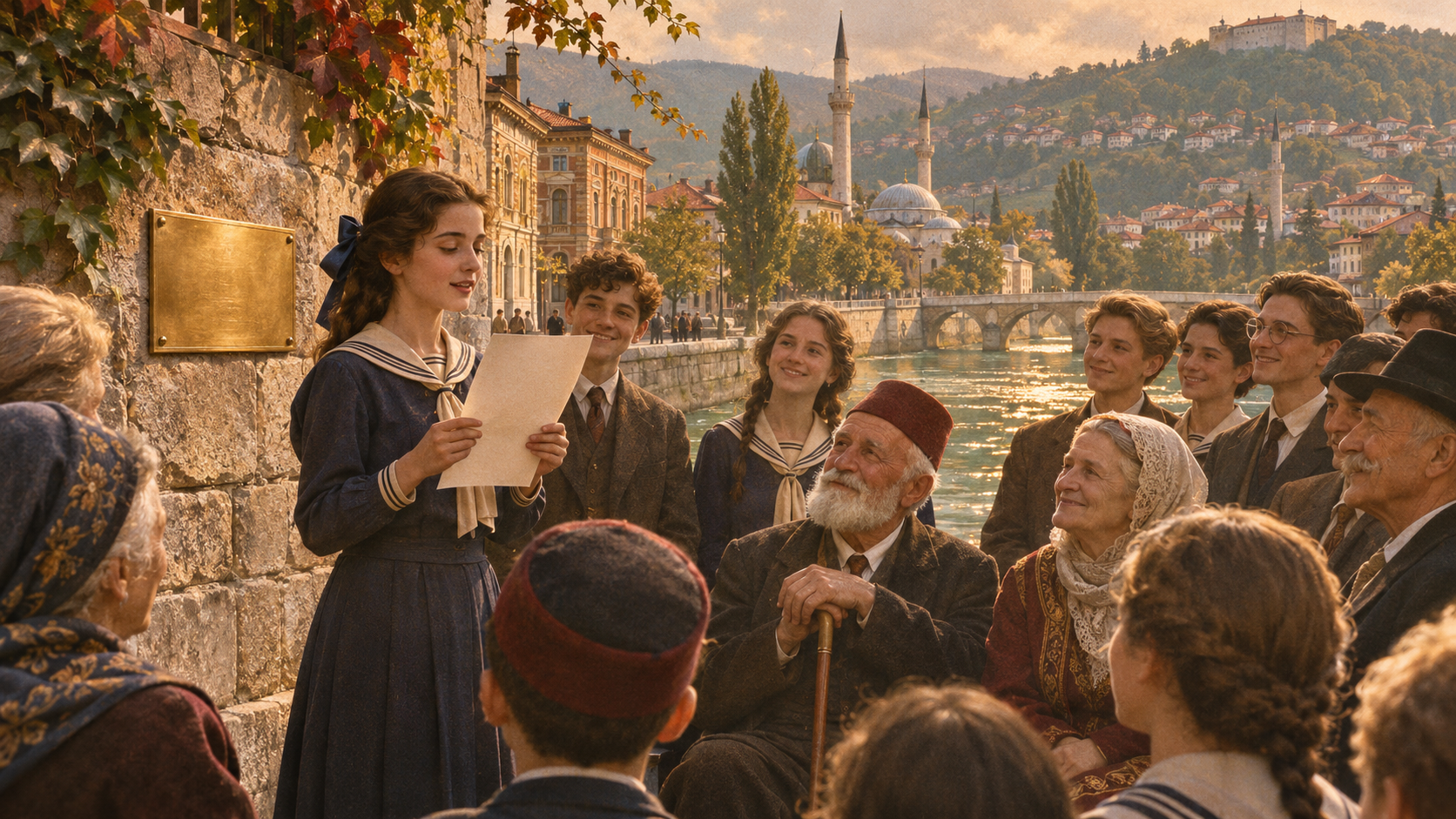
In June 2014 a crowd gathers on the Appel Quay in Sarajevo, now the Bosnian capital of the Danubian Federation's South Slav state. A brass plaque marks the place where, a hundred years earlier, a driver took the right turn. Europe in this world is a continent of crowns and parliaments that never lost its aristocracies and never broke up its empires. It also never had a reckoning with them. Colonial wars in Africa and Asia go on later than in our history, and several old minorities are still waiting for more than they have been given. A schoolgirl reads out the date. Nothing happened here, she says, and the crowd applauds.
More from Alternate History