The Sea of Fertility
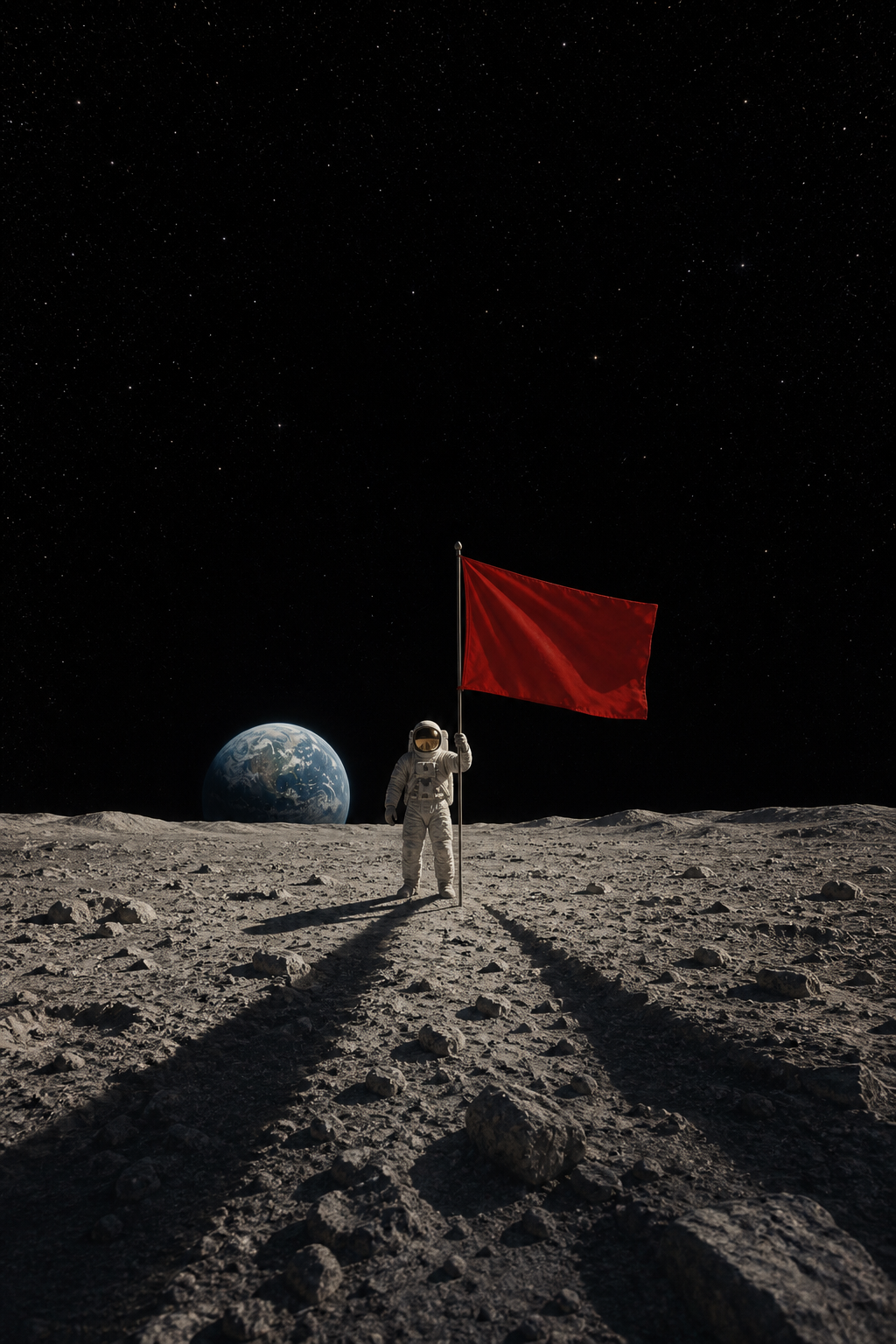
What if… A surgeon's steady hand saves Sergei Korolev in 1966, and the Soviet Union lands a cosmonaut on the Moon seven weeks before Apollo 11.
Synopsis
When Sergei Korolev survives a botched 1966 operation, the Soviet lunar programme keeps the one man who can make its rival bureaus cooperate. The giant N1 rocket is forced to fly, and in May 1969 Alexei Leonov walks on the Moon seven weeks before Apollo 11. America's own landing arrives to a changed meaning, and the shock of coming second keeps Washington in a race it had meant to quit. Both superpowers pour fortunes into the sky through the 1970s and build rival Moon bases, even as the Soviet economy strains under a triumph it cannot afford. The lead does not save the Soviet system, but it slows the unravelling — and when the reckoning finally comes, it ends not in collapse alone but in the first joint crew sharing a lunar airlock.
The Sea of Fertility
What if… A surgeon's steady hand saves Sergei Korolev in 1966, and the Soviet Union lands a cosmonaut on the Moon seven weeks before Apollo 11.
By 1968 the Space Race had a clear favourite. America had spent the decade and a fortune catching up after Gagarin, and Apollo was closing fast. The Soviet lunar effort, meanwhile, had lost its spine two years earlier. On 14 January 1966, Sergei Korolev — the unnamed 'Chief Designer' who had put the first satellite and the first man in orbit — went into a Moscow hospital for scheduled surgery and died on the table, aged fifty-nine. Without him the giant N1 rocket wandered between feuding bureaus and blew apart on every test flight. Here, one thing changes. The surgeon's hand steadies, the bleeding stops, and in February Korolev walks out of the hospital thinner, grimmer, and with a programme still to save.
The Man They Could Not Replace
Korolev came back to work thinner and more driven. He had survived the Gulag in the 1930s, a broken jaw and a winter in the Kolyma gold fields; a hospital was not going to finish him. Through 1966 he did the one thing only he could do — he knocked the feuding design bureaus together and made them share. Valentin Glushko, his old rival, still refused to build the big engines, so Korolev went to the aircraft designer Kuznetsov instead and staked everything on clusters of smaller ones. Ministers who had learned to route around a dead man now had to argue with a living one. The lunar landing, drifting toward quiet abandonment, went back onto the schedule with a date attached.

Thirty Engines
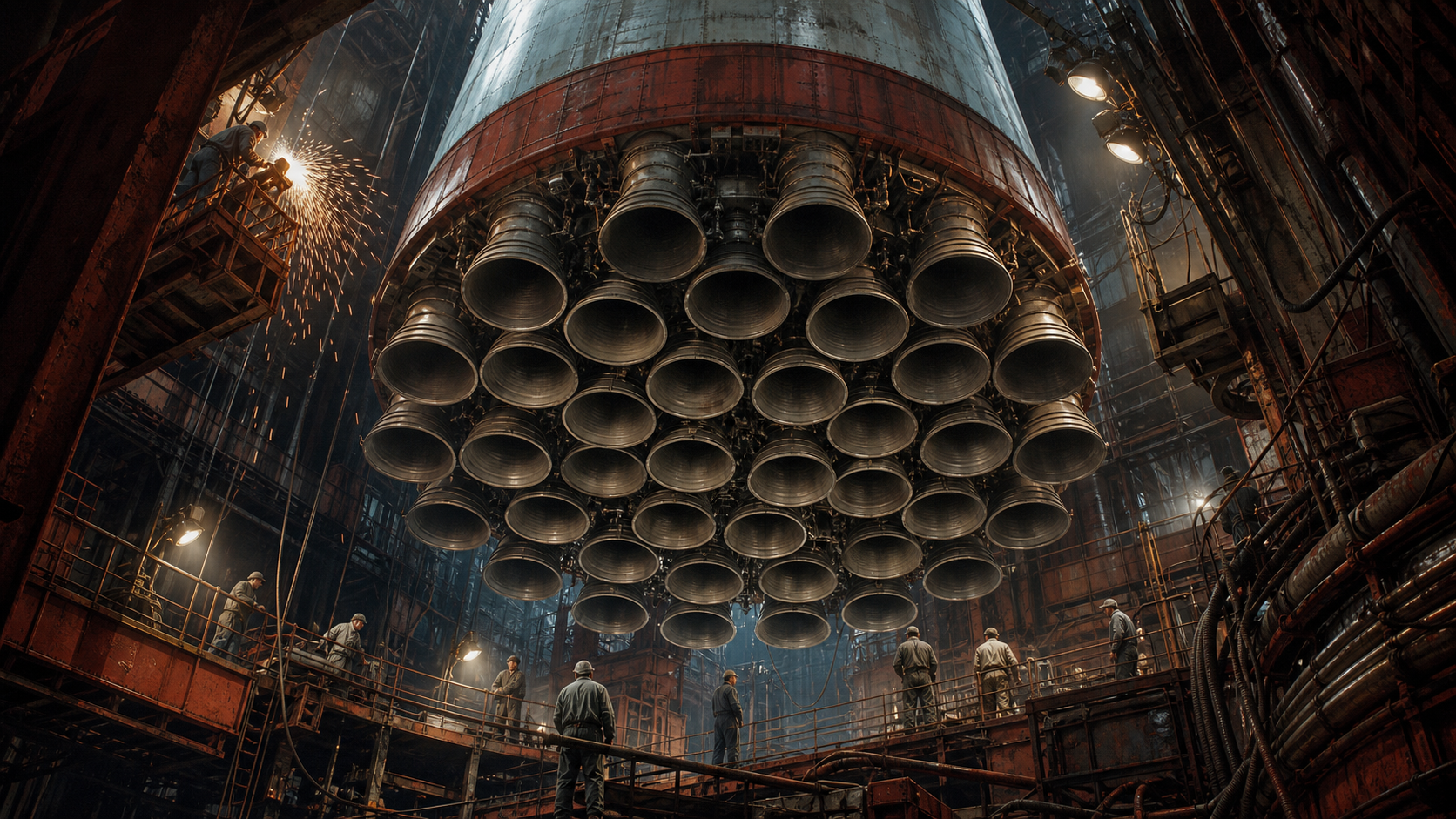
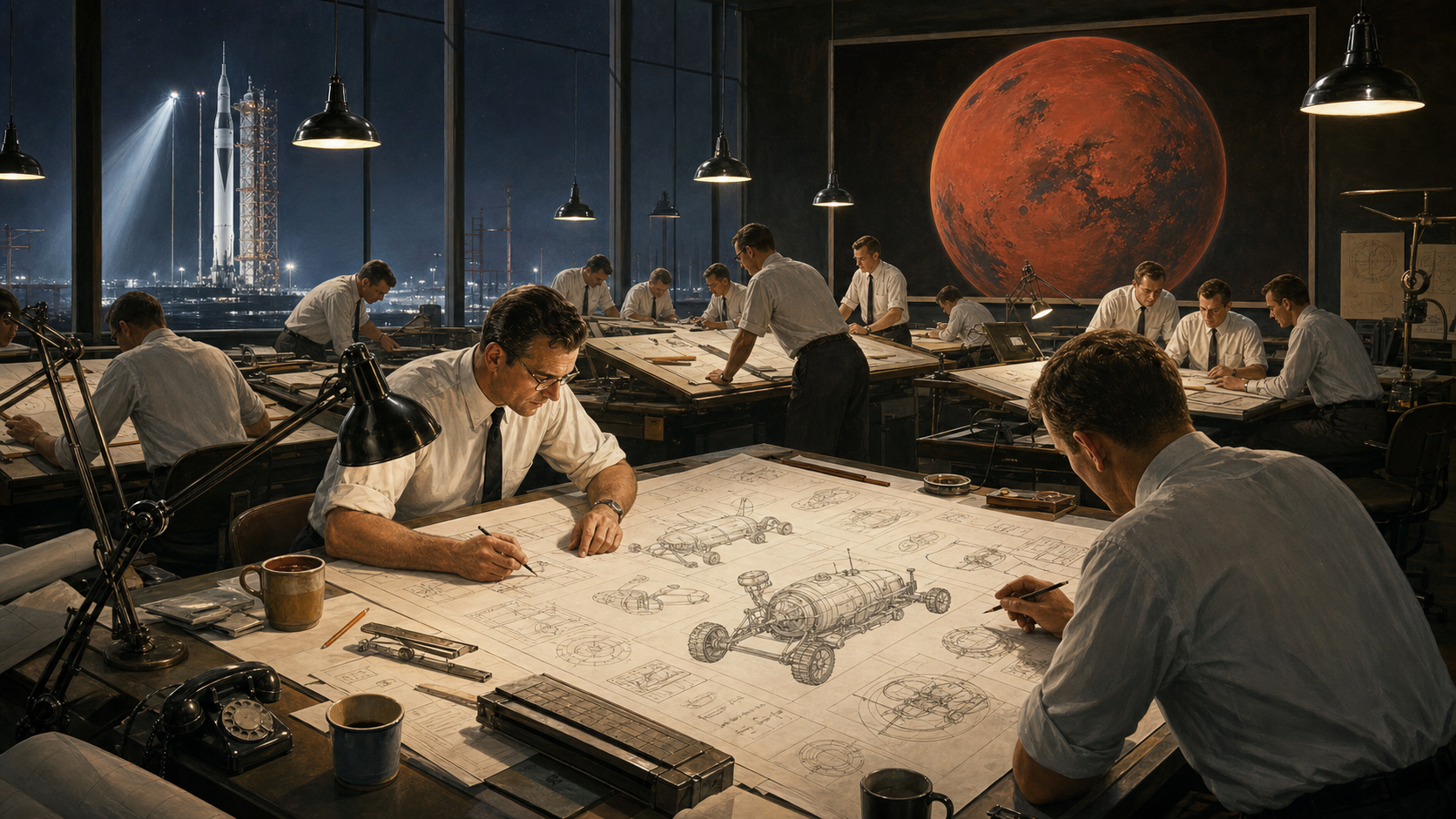
The N1 was a monster: thirty engines ringed around its base, thirty ways to fail. On its uncrewed tests the plumbing shook itself apart, and a control system named KORD panicked and shut down good engines with the bad. Korolev refused to fly on faith. He forced through a ground rig that fired whole engine clusters before launch, the thing the Americans had built and the Soviets had skipped to save money. Kuznetsov's engines came back with welded seams and new sensors. Two more rockets still failed over the Kazakh steppe in 1967 and '68, but each failure was now a lesson written down rather than a mystery. By the winter of 1968, one flew clean.
Sea of Fertility
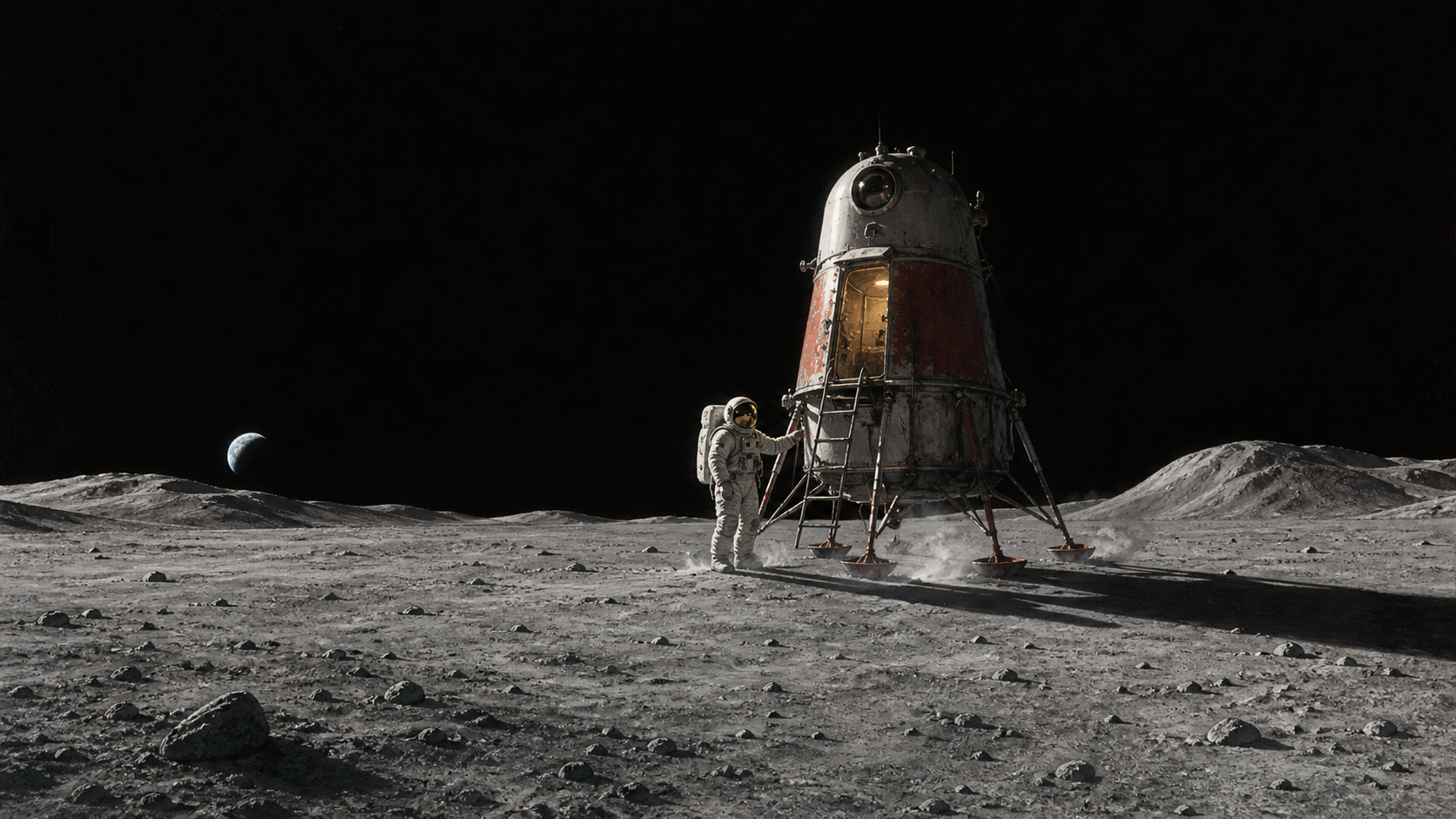
On 27 May 1969, Alexei Leonov rode a lander called the LK down to the Sea of Fertility while his crewmate held orbit overhead. The craft was cramped and spidery, built for one, and he flew it standing up, tethered, watching a grey slope climb the window. The last hundred metres he did by hand, kicking up dust that fell too fast and too straight. When his boot touched, Moscow was already past midnight. He reported only that the ground was firm and the horizon very close. Back home the radios did not stop for two days. A generation of children learned the shape of the Sea of Fertility before they learned the map of their own country.
Second
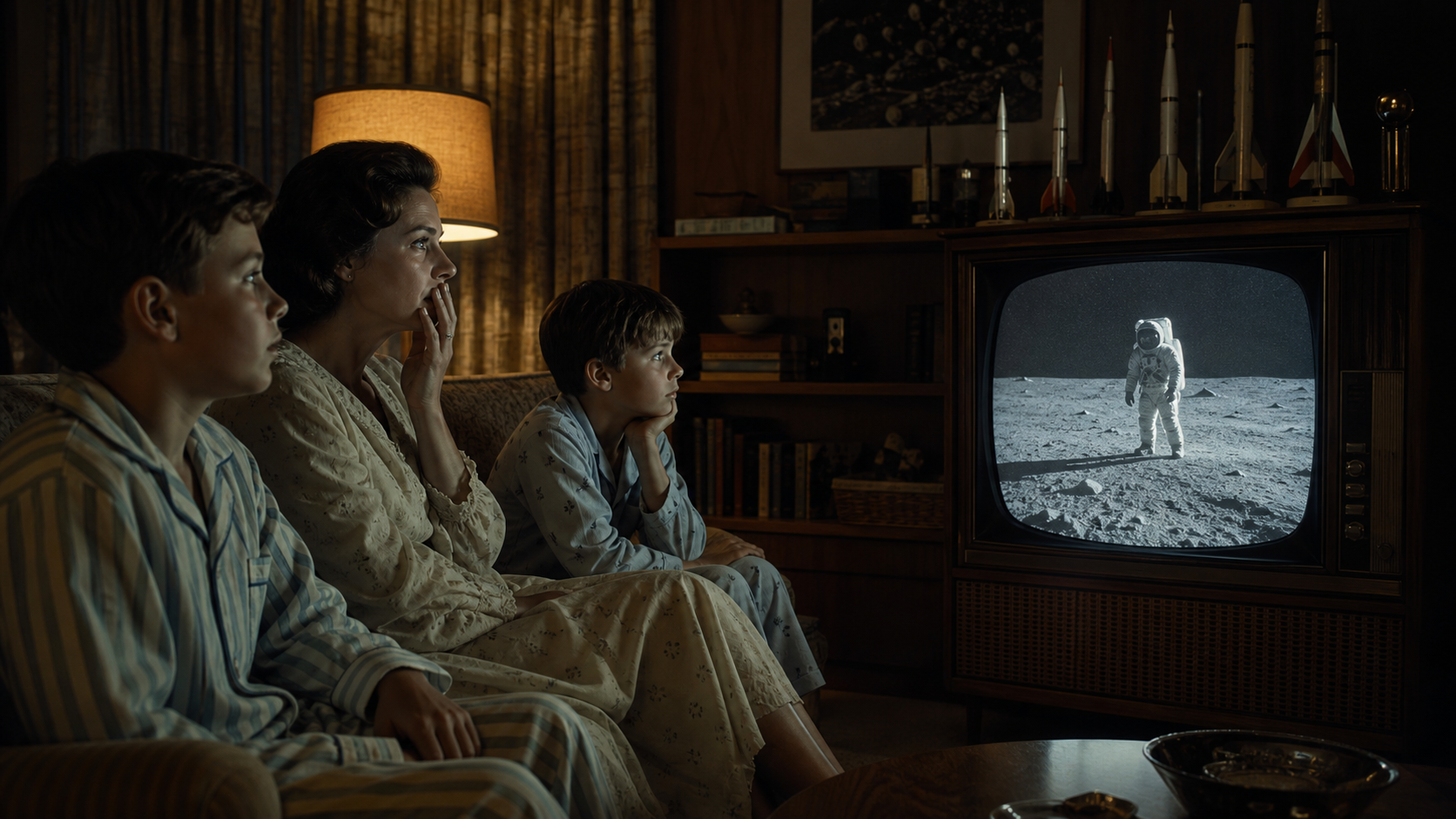
Apollo 11 left Florida on schedule and landed on 20 July, and every word of it was true — the calm voice, the ghost-white images, the flag. It simply was not first. In living rooms across America the triumph curdled into something harder to name. A teacher in Ohio watched the broadcast with her two sons and found she could not explain why the grown-ups had gone so quiet. The astronauts came home to parades that felt like consolation. In the papers the phrase that kept surfacing was 'catch up,' the thing Americans had believed, since 1957, they had finally left behind. Kennedy's promise had been to be first. They had reached the Moon and arrived to find it already walked.
The Red Moon
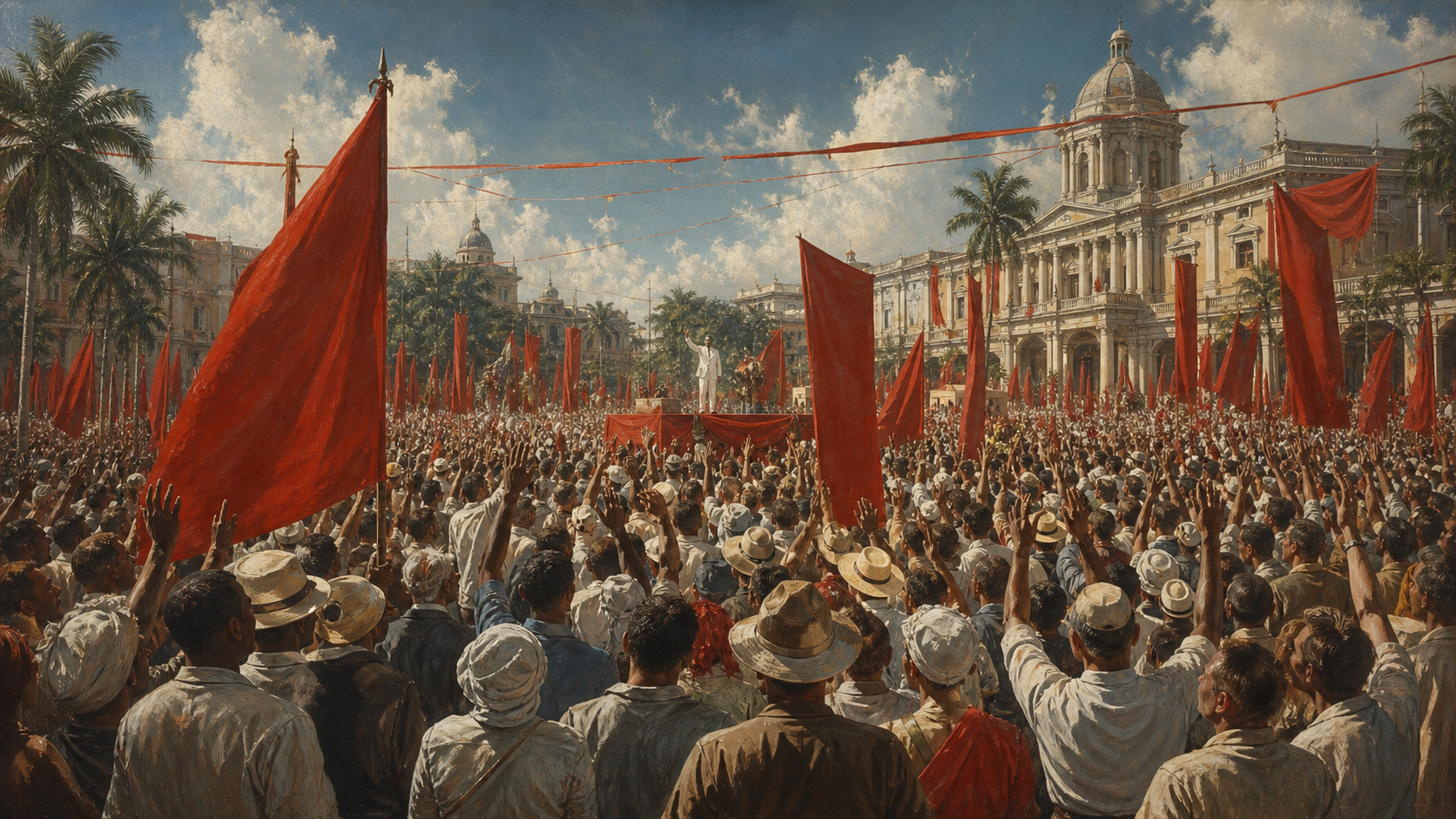
The Soviets spent their lead carefully. Leonov toured Cairo, Delhi, Jakarta, Havana — a plain-faced man from a country that had been peasants in his father's lifetime and now owned the Moon. In capitals still deciding which century to join, that argument landed. Socialism, the posters said, does not follow; it leads. Orders for Soviet dams and steel mills rose on the back of a rocket. At home the effect was stranger. For a few years the shortages felt survivable, because the same system that could not reliably supply meat had put a man on another world. The Moon became the regime's proudest sentence, and, quietly, the standard against which it would be measured forever after.
Washington Doubles Down
Nixon had planned to bank Apollo's winnings and go home. He had meant to cancel the last missions and build a cheaper reusable shuttle. Coming second took that option off the table. A president cannot campaign on a Moon he lost, so the money stayed on. Apollo kept flying, Skylab grew into a real station, and in 1972 Washington announced it would aim past the Moon for Mars in the 1980s. NASA got its Saturn V production line reopened instead of scrapped. The rivalry that both governments had privately hoped to retire now had a second act, more expensive than the first, and neither superpower could afford to be the one that blinked.
Zvezda
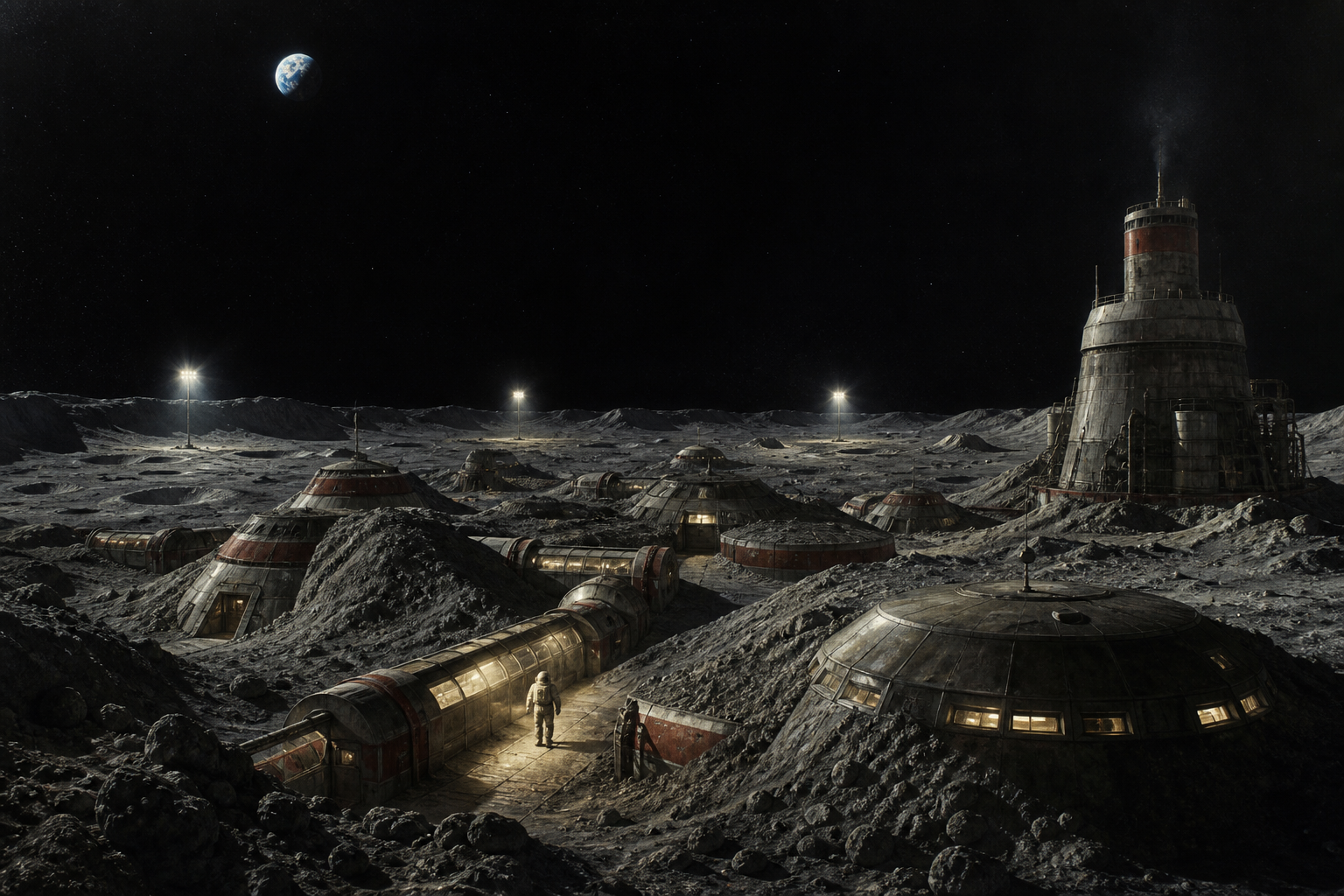
The base was called Zvezda — Star — and it grew on the floor of the Sea of Fertility through the late 1970s: buried modules under mounded regolith, a small nuclear reactor, three cosmonauts at a time on six-month tours. Western analysts fretted that a crater rim could hide a weapon, though the truth was more ordinary. Zvezda cost the Soviet Union more than it could say aloud. Grain was bought from Canada while rubles flew to the Moon. Engineers who might have modernised a failing consumer economy spent their careers keeping men alive through the lunar night. The base was magnificent and the shelves at home were bare, and both facts were true at once, and the second one waited.
What the Craters Kept
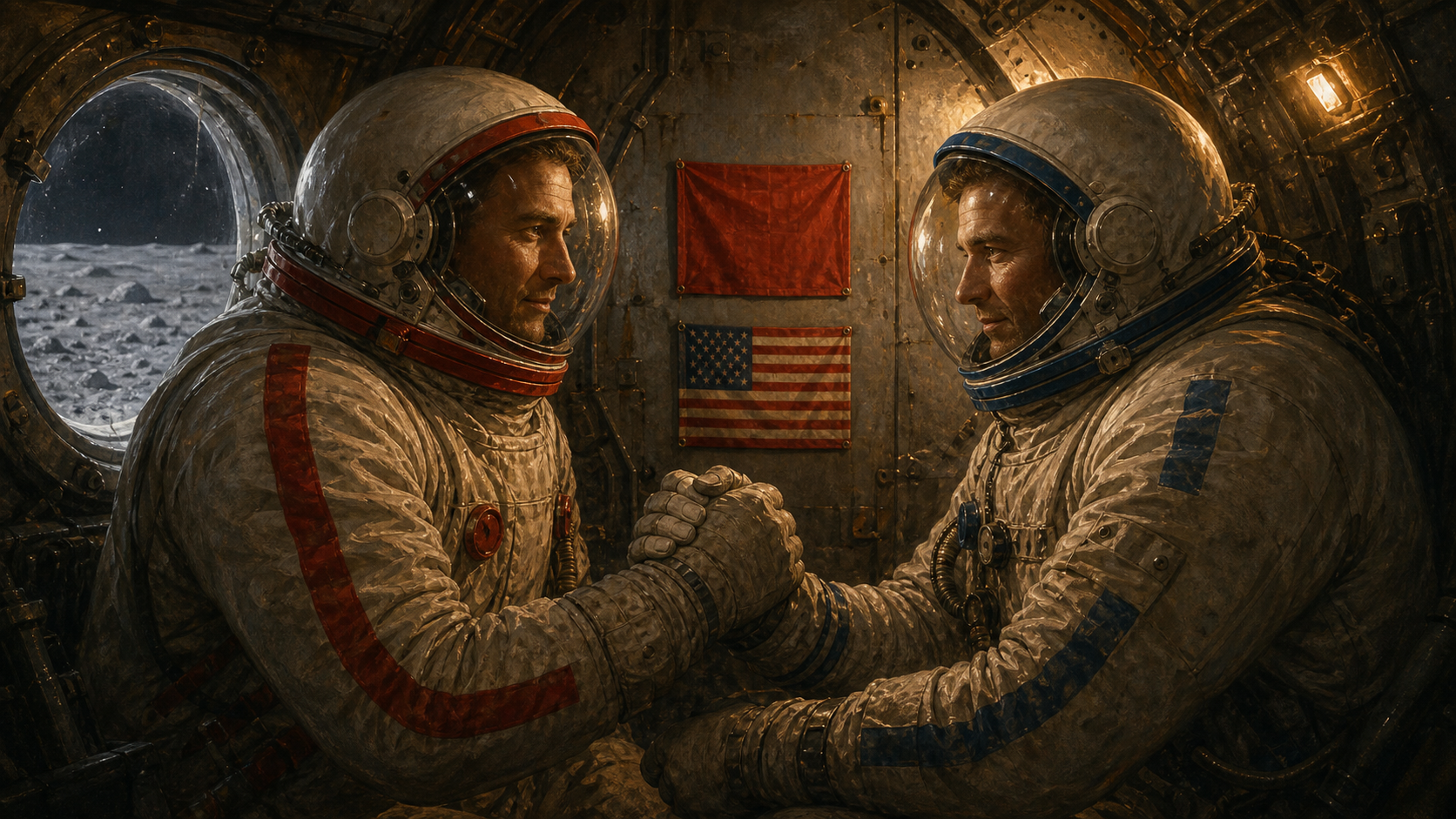
The Moon did not save the men who built the ships from the system that built the men. The economic reckoning still came, later and softer than in our own timeline but real; by the mid-1990s the reformed government could no longer carry Zvezda alone, and it did the one thing the old regime never would — it invited the Americans in. The first joint crew reached the Sea of Fertility in 1998, a cosmonaut and an astronaut sharing an airlock that fit neither of them well. Leonov, old now, watched from a control room in Moscow. The flags on the base were two. Children who had grown up on separate maps of the sky found they had been reading the same one all along.
More from Alternate History