Peace With Honour
What if… In May 1940, Britain's War Cabinet chooses to negotiate rather than fight on after Dunkirk — and the war, and the century, bend around that choice.
Synopsis
Britain steps out of the war in the summer of 1940, keeping its fleet and empire in exchange for neutrality and a free German hand on the Continent. There is no Battle of Britain and no Blitz, but no victory either. Germany turns east at undivided strength; the Soviet war grinds into a vast armed stalemate rather than a German collapse, and Europe hardens into a single occupied fortress. America enters the reckoning late and alone, and the postwar world settles into a nuclear standoff between Washington and Berlin. Britain keeps everything it bargained for in 1940 and spends the next thirty years watching its empire and standing thin to nothing, haunted by the continent it agreed not to see.
Peace With Honour
What if… In May 1940, Britain's War Cabinet chooses to negotiate rather than fight on after Dunkirk — and the war, and the century, bend around that choice.
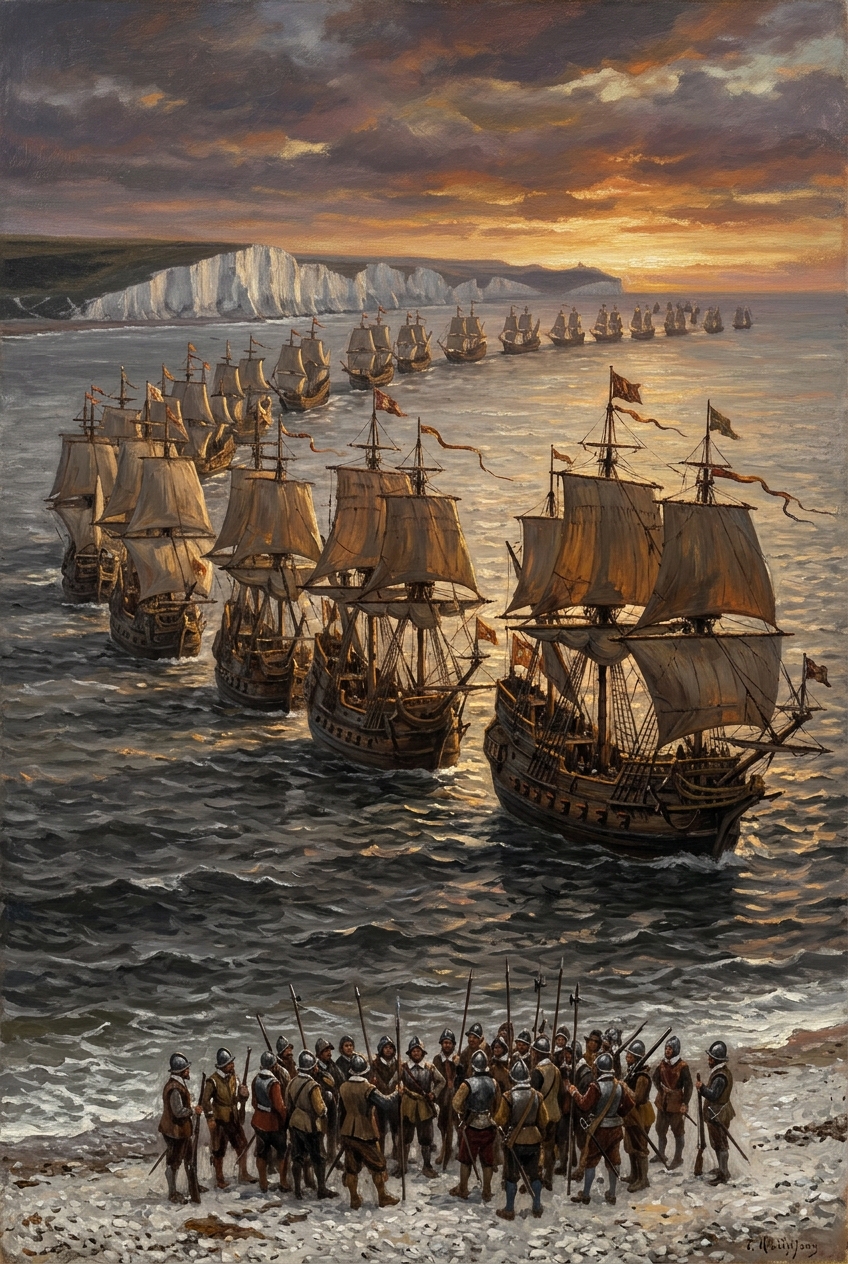
In the last week of May 1940, the British Expeditionary Force was pinned against the sea at Dunkirk and France was folding. For five days Winston Churchill's War Cabinet argued behind closed doors. The Foreign Secretary, Lord Halifax, wanted to test whether Hitler would offer terms, using Mussolini as a go-between; Churchill, barely a fortnight in office, insisted Britain fight on. In our history Churchill won the room and the argument about choking in our own blood. Here he does not. Halifax's caution, the fall of Paris looming, and a War Cabinet frightened of losing its whole army tip the balance the other way. Britain sends word to Rome that it will listen to what Berlin proposes.
The Vote in the Cabinet Room
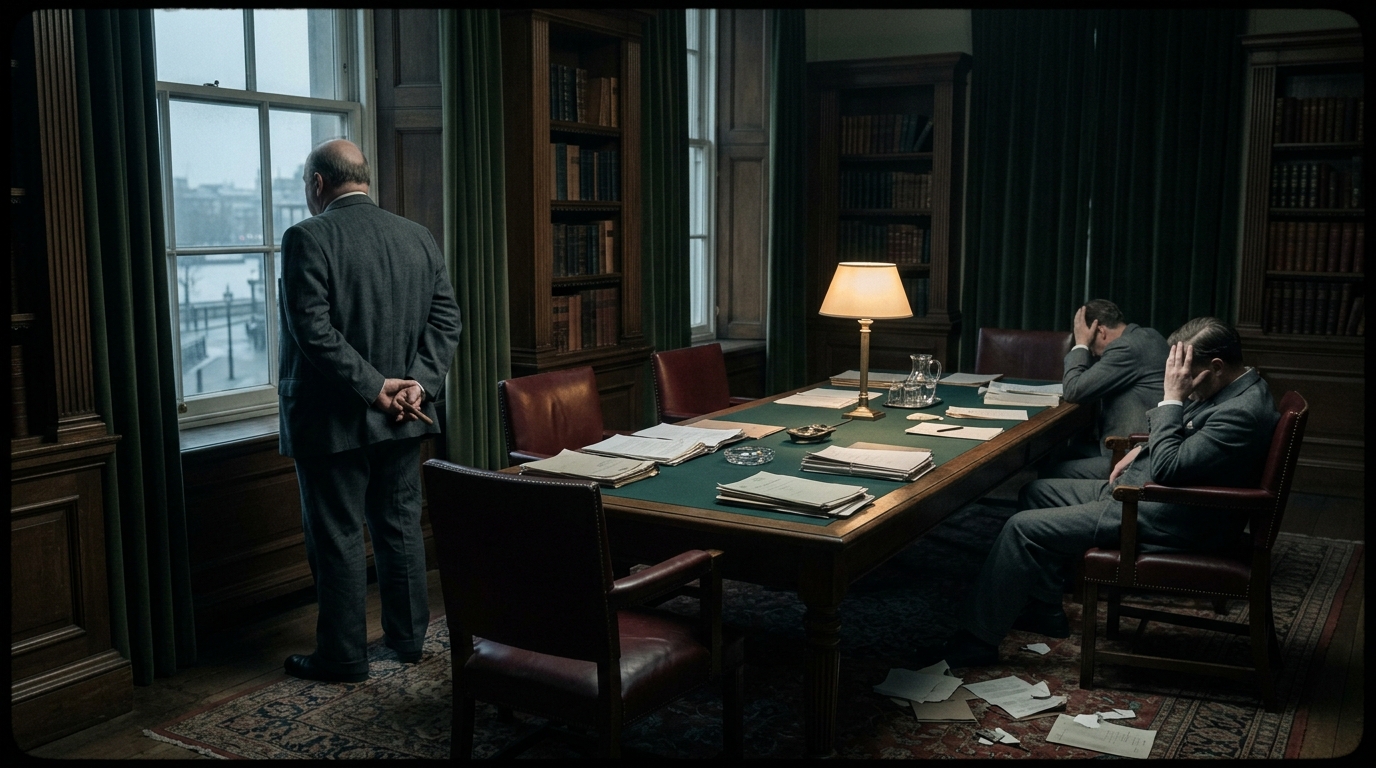
The argument ran for three days. Halifax, tall and cold and certain, put it plainly: the army was trapped, France was finished, and a leader owed his country the courtesy of learning what terms were on offer before he spent it. Churchill answered that nations which went down fighting rose again, and those that surrendered tamely did not. On the first day the room was his. By the third it was not. Chamberlain, dying and cautious, sided with Halifax; two others followed. Word went to Rome that His Majesty's Government would hear what Berlin proposed. Churchill did not shout. He gathered his papers and went to the window, and the men who had beaten him could not meet his eyes.
The Terms
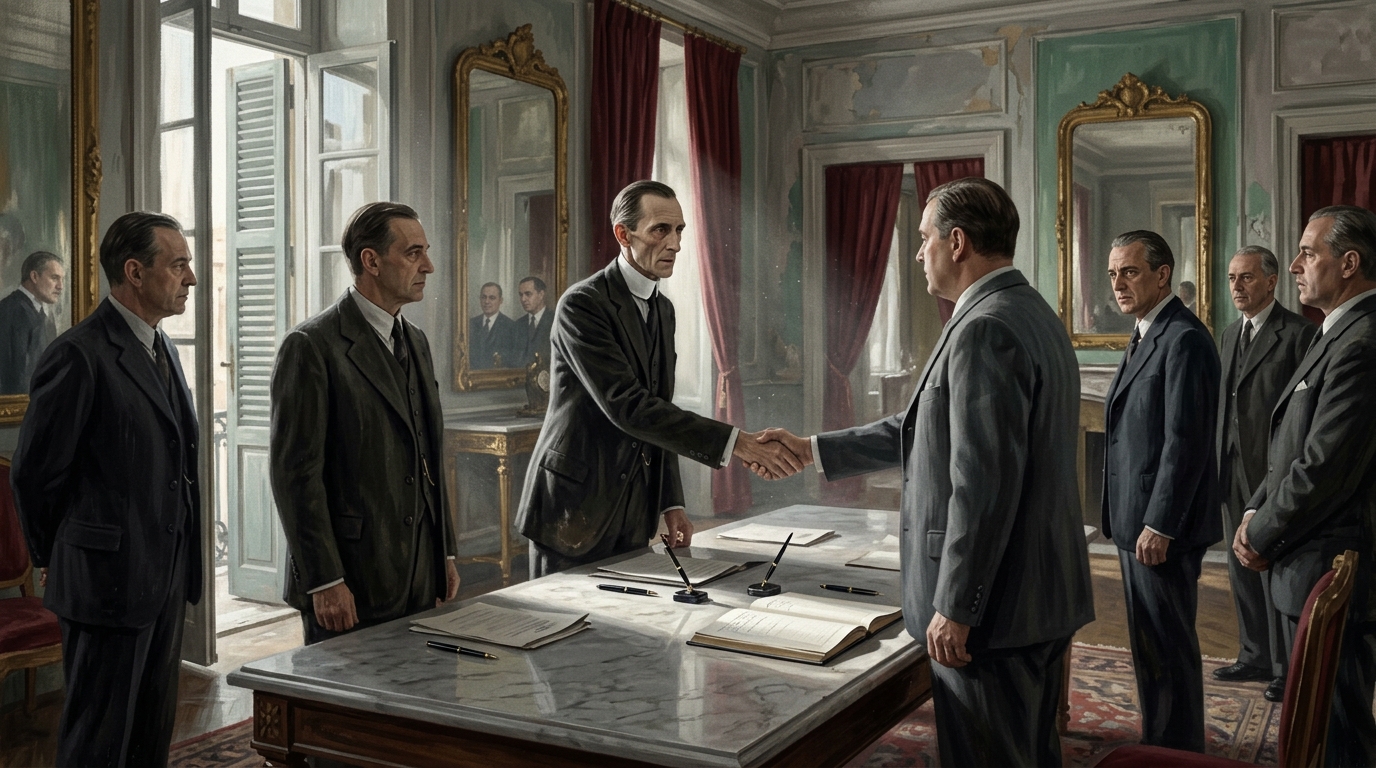
They were not called a surrender. The communiqué spoke of a return to peace between kindred peoples. Britain kept her fleet, her islands, and most of her empire; in exchange she recognised German mastery of the Continent, promised neutrality in any war to the east, and quietly handed back the African colonies taken from Germany a generation before. The blockade was lifted. Interned fascists walked free by Christmas. In the Commons the deal passed on a tired majority, sold as realism, as the saving of a million young men. Halifax, gaunt in his high collar, called it peace with honour. The phrase had been used before, in 1938, and men remembered how that one aged.
The Summer That Didn't Burn
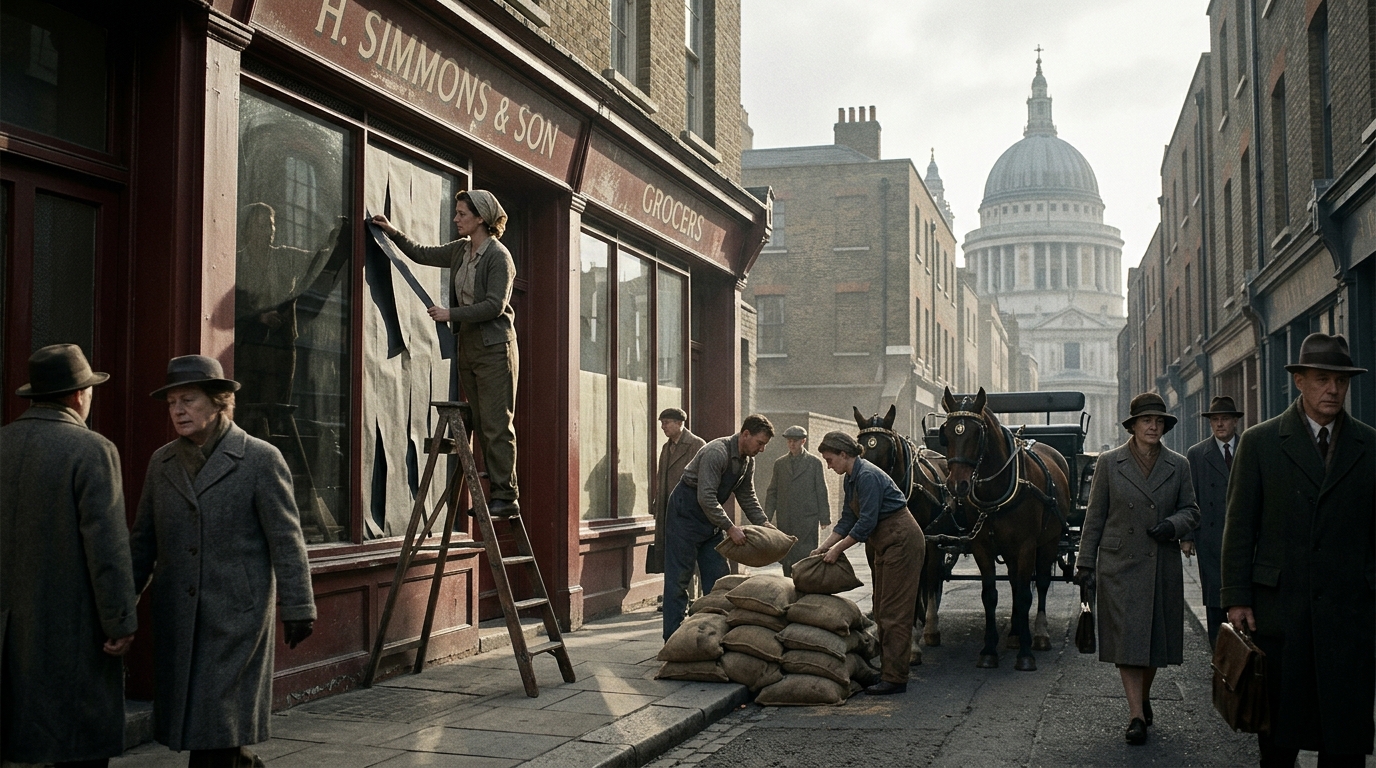
There was no Battle of Britain. Through that hot, clear autumn the sky over Kent stayed empty, and the fighter squadrons sat tarped at the edges of their fields, fuelled and forgotten. In London women scraped the blackout paper from their windows and carted the sandbags away, and the light came back into the shops. It should have felt like deliverance. Instead a strange shame settled over the ordinary day. The men came home from France to a country that had not been invaded and had not won, and did not know what to call them. Mosley's people held meetings again, emboldened, and the newsreels from the Continent grew harder to watch and easier to switch off.
East
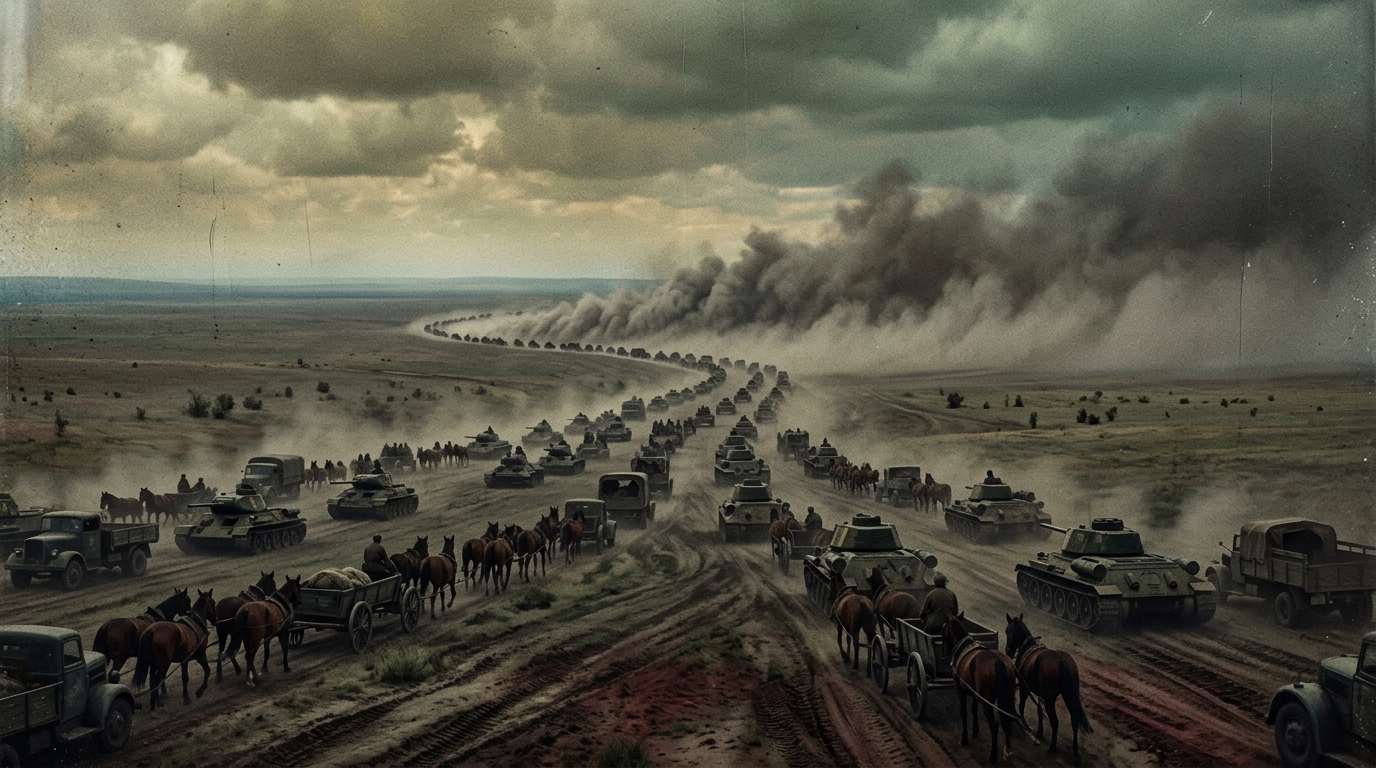
In June 1941 Germany turned east, and this time nothing lay behind it. No bombers troubled the Ruhr, no army waited in the west, no blockade thinned the supply of oil. The full weight of a continent's factories rolled toward the Soviet frontier along roads choked with tanks and horse-drawn guns. Stalin, who had counted on the British to bleed Hitler first, found himself alone against an enemy at its undivided strength. In London the government called it a war between tyrannies and wished both sides ill. Ordinary people read the place-names in the paper — Minsk, Smolensk, Kiev — and felt the distance between those towns and their own quiet streets, and were grateful for it, and ashamed of the gratitude.
The Ships That Were Sent Back
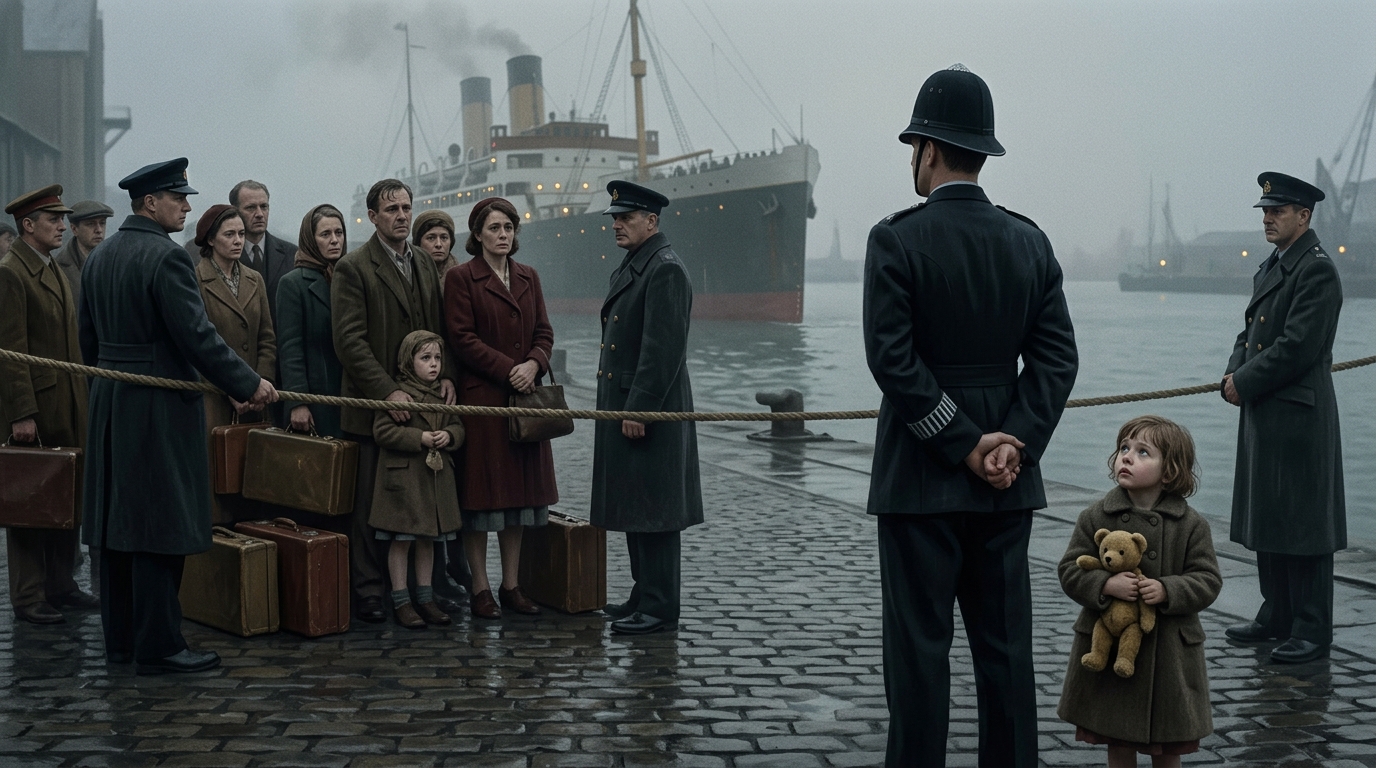
The letters from the Continent came less often, then not at all. In Whitechapel a tailor kept writing to cousins in Poland and kept getting nothing back, and learned not to ask aloud what the silence meant. Ships reached British ports with families and their suitcases, and under the new understanding with Berlin they were turned at the quay and sailed again. A policeman on the Liverpool dockside stood with his back to a crowd he had been ordered not to look at. There were questions in the Lords, and careful answers, and a general agreement that Britain could not take everyone, and behind the agreement a thing no one would name. Peace, it turned out, had a price paid by people no one could see.
Fortress
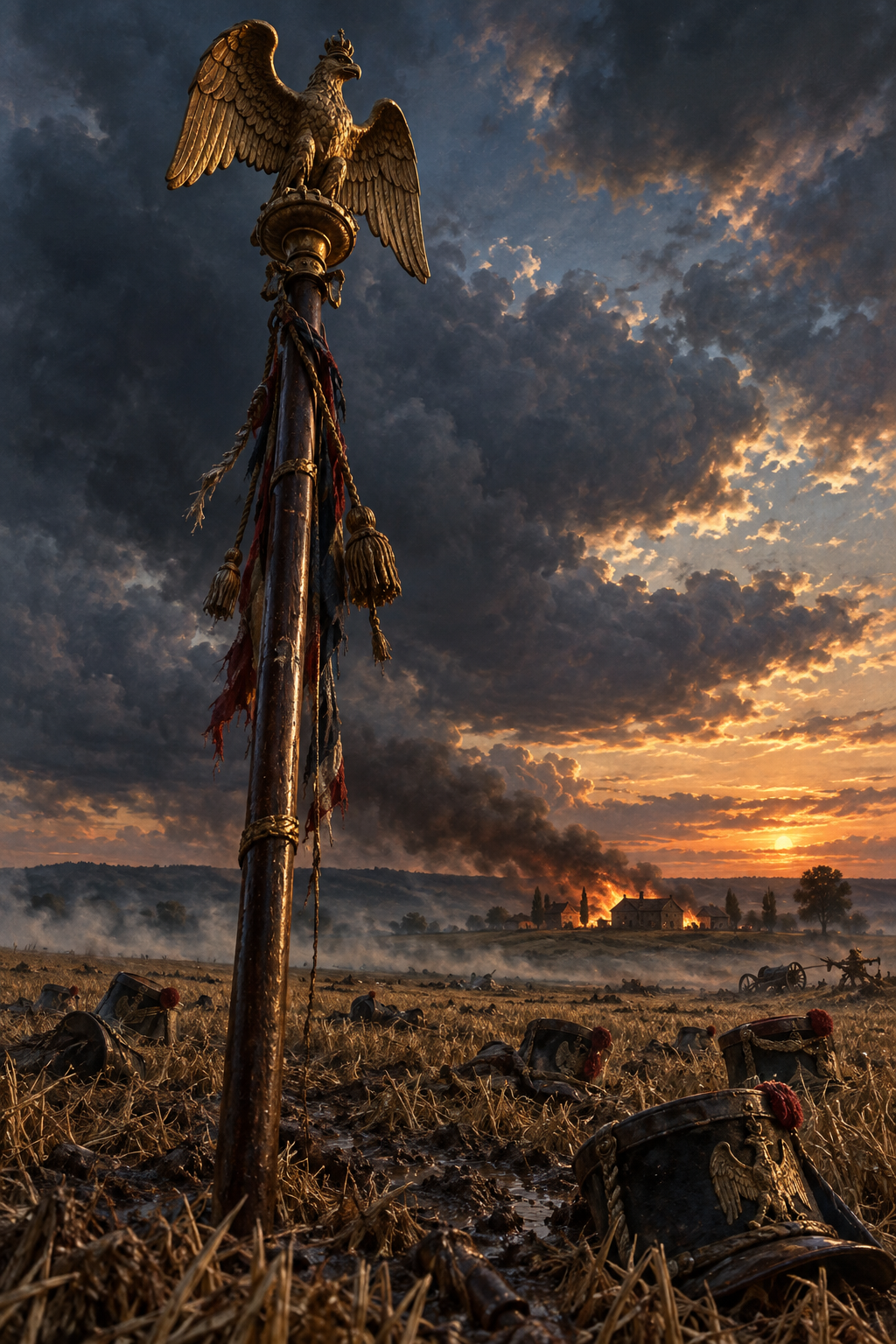
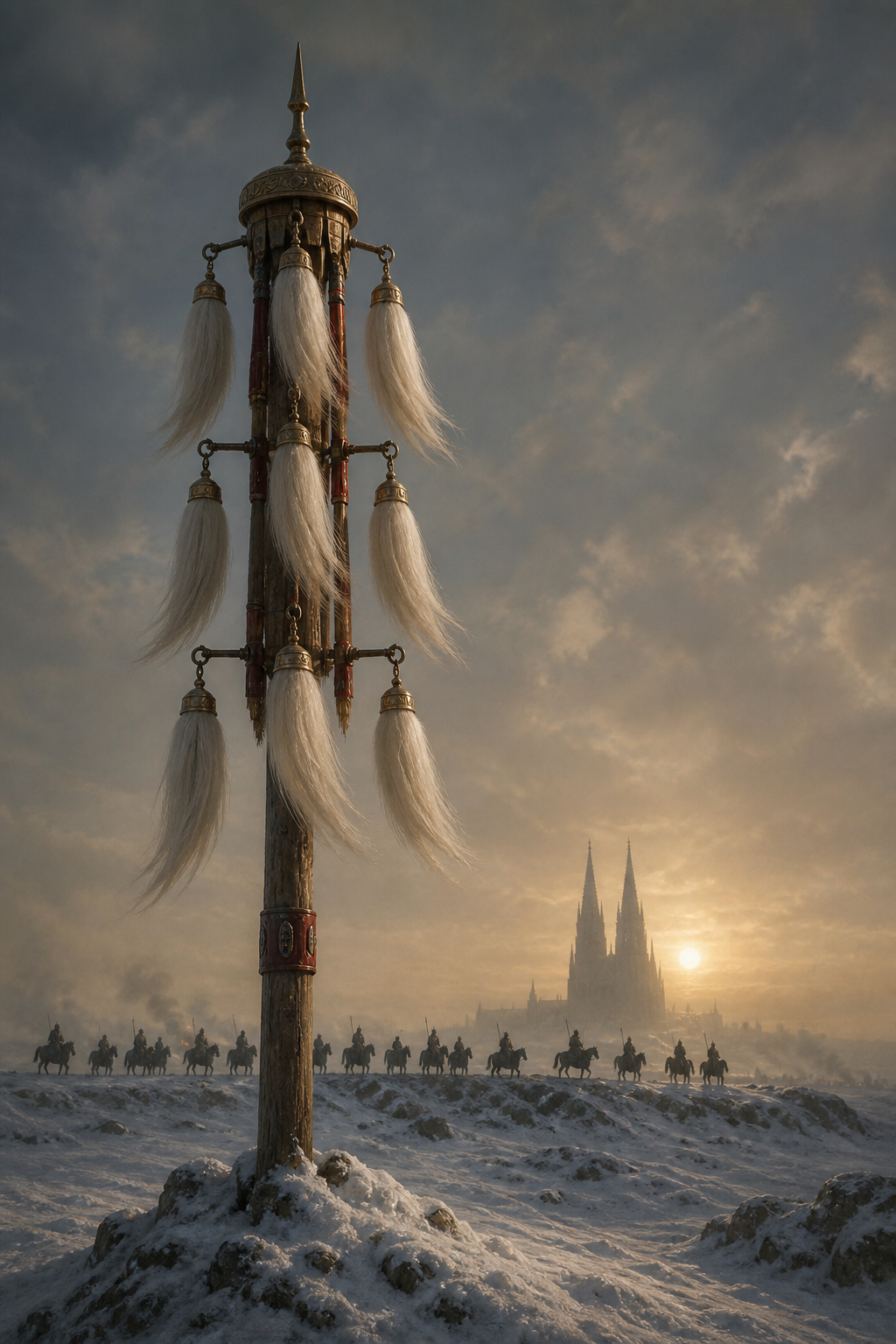
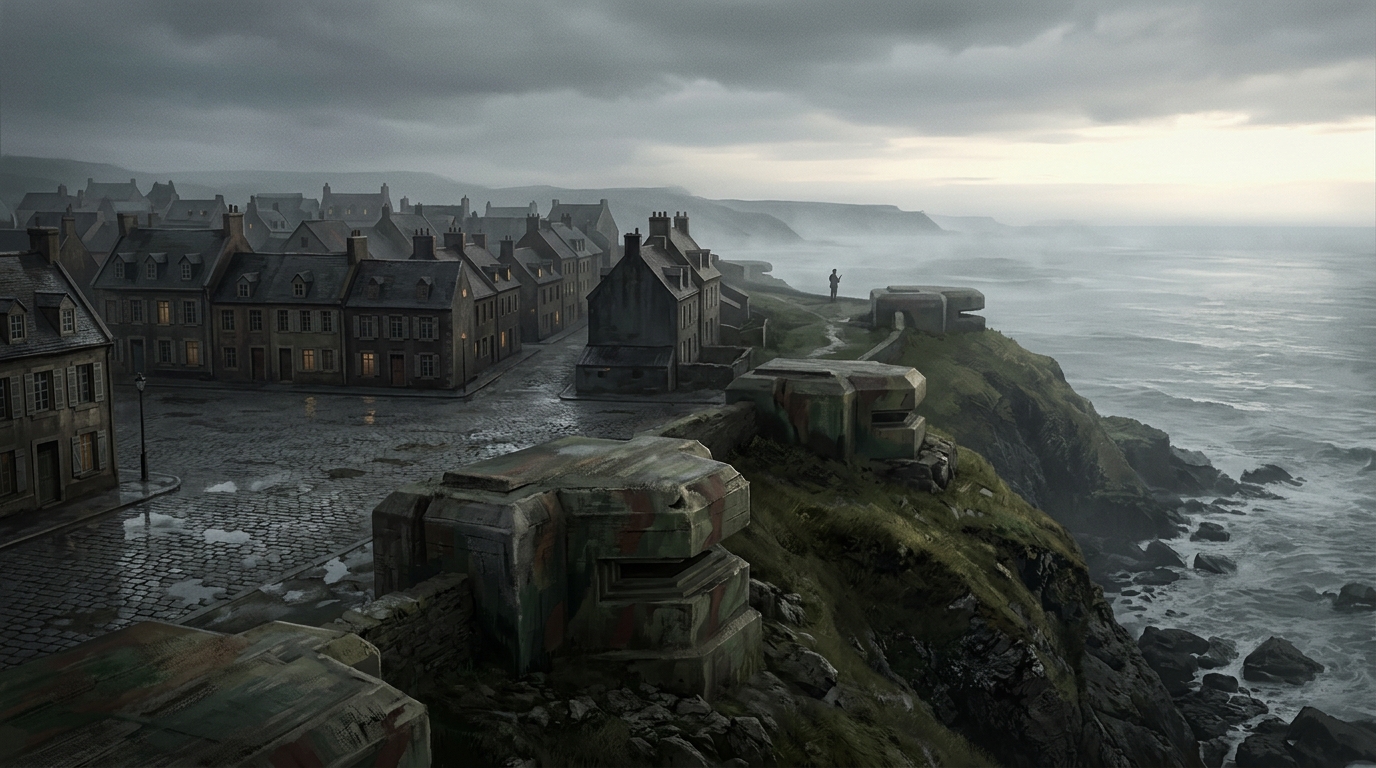
The war in the east did not end quickly, and it did not end cleanly. German armies took vast ground and then stalled in the mud and the cold and the sheer size of the country, as armies had before them. But with no second front and no bombing to divide its strength, Germany did not break where in our history it broke. By 1943 the map showed a continent held down under one order, from the Atlantic wall to a frozen, contested line somewhere past the Volga. Occupied cities kept curfew. Garrisons watched empty squares at dawn. It was not victory so much as a vast, armed exhaustion — a Europe turned into one fortress with the lights kept low.
Two Bombs, No Ocean Between
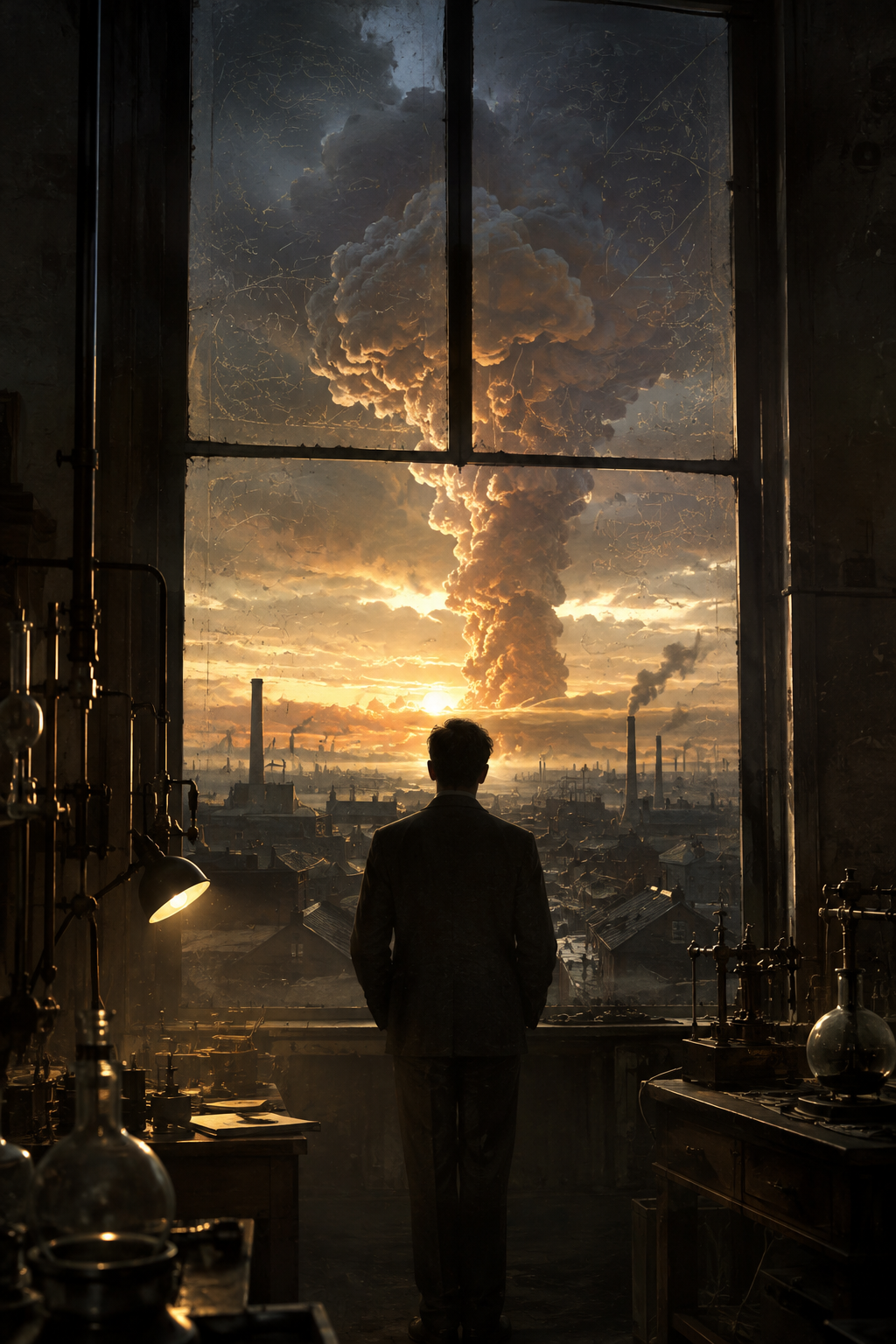
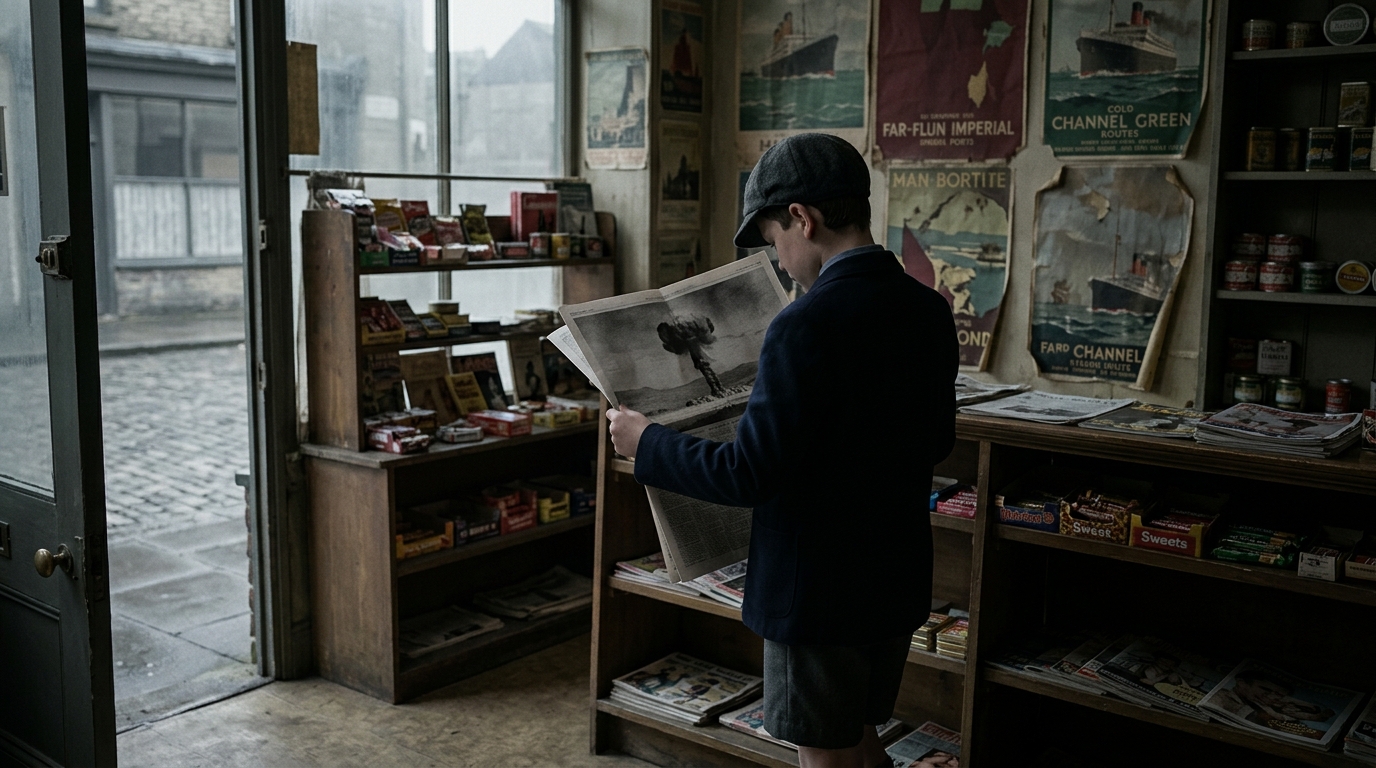
America stayed out, and out, and finally could not. When the reckoning between Washington and Berlin came it came without a British runway or a British ally in Europe, and it came with the bomb. Two great powers now faced each other across a nuclear silence, and Britain sat between them on her islands, neutral, diminished, clutching a fleet that guarded an empire already slipping away. India left anyway. The pound sagged. In the newsagents a boy read of a test firing in a desert and a cloud that climbed for miles, and the faded travel posters behind him promised a world that no longer belonged to his country. Britain had kept everything in 1940, and spent thirty years watching it thin to nothing.
What the Peace Cost
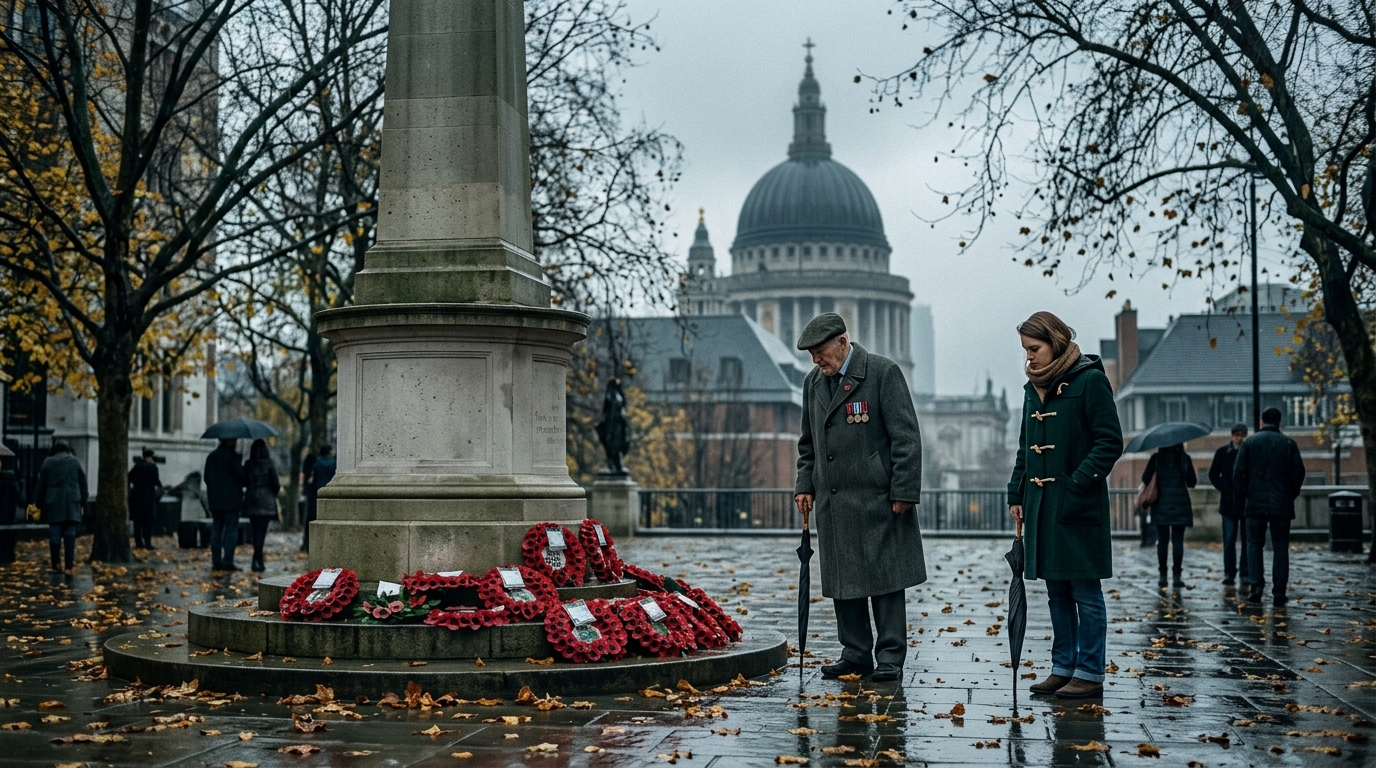
By the sixties the men who had made the peace were old or dead, and their country argued about them the way families argue about a decision no one can undo. At the cenotaph the wreaths were laid for a shorter war and fewer names, and the crowds were quieter for it, unsure what they were mourning. A veteran who had walked off the Dunkirk sand alive stood in the rain beside a student who thought the whole thing a national disgrace, and neither could quite convince the other. Britain had saved a million young men and a familiar way of life, and had let a continent be remade in the dark, and lived ever after in the draught between those two facts.
More from Alternate History