The Second Hand
People bring me broken things and expect miracles, and the embarrassing part is that I can usually supply one.

Synopsis
Vera, a prickly seventy-one-year-old retired watchmaker who volunteers at a weekly church-hall repair café, is baffled and then affronted when the same stopped 1950s wristwatch keeps returning to her table every Tuesday, always halted at ten past four, always with the same quiet man insisting he doesn't know why it stops. Treating the puzzle like any other stuck mechanism, she traces a single strand of navy wool in the hairspring, a scratched inscription in the case back, and a death notice on microfilm to the truth: the man is secretly re-breaking his late wife's watch so that a careful stranger will mend it once a week. Realizing the mending matters more than the running, Vera abandons the kind, tidy speech she'd prepared and instead begins quietly introducing a tiny fault of her own before handing it back, giving him a reason to return.
The Second Hand
Story
People bring me broken things and expect miracles, and the embarrassing part is that I can usually supply one.
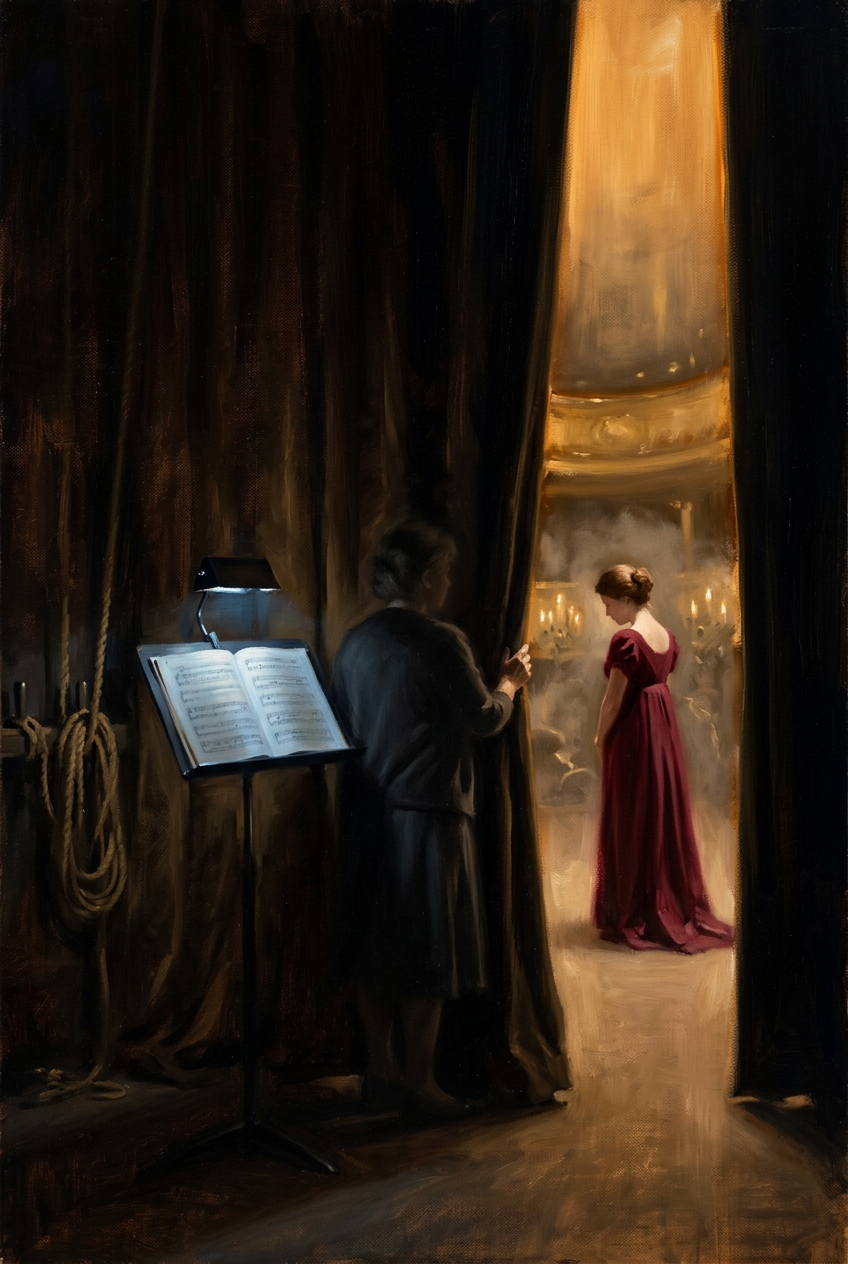
Tuesdays, half past nine, the church hall off Carraway Street. Pam props the double doors with a fire extinguisher she is not supposed to move and sets out the urn, and by ten the trestle tables are full of the town's dead objects waiting to be resurrected. Toasters. A standing lamp with a frayed flex. Last week a cuckoo clock whose cuckoo had gone silent on account of a dead woodlouse lodged in the bellows, which I removed with tweezers while its owner looked at me as though I had performed open-heart surgery on a relative.
I do watches and clocks. I did them for forty-one years from a shop on the high street with my name over the door, until the rent and my knees agreed it was time, and now I do them for free in a hall that smells of floor polish and other people's soup. I am not a charitable person. I want to be clear about that, because of what comes later. I come on Tuesdays because a balance wheel does not care whether you are lonely, and because the alternative is my flat, where the clocks are all mine and all correct and none of them need me.
The repair café has rules, laminated, in Pam's handwriting. Be Kind. We Fix Together Not For. One Item Per Person So Everyone Gets A Turn. That last one is aspirational. Mr. Oduya, who does small electricals, has never once sent a person away with fewer than three appliances, and twice this autumn he has given himself a belt off the mains that lifted what little hair he has. There is a boy called Ryan who comes under duress, something to do with a magistrate and a bus shelter, who is meant to be learning to solder and is in fact learning to film himself not soldering. And there is Pam, who organises, which means she stands in the middle of the room holding a clipboard and radiating.
I tell you all this so you understand the texture of the place. It is not a dramatic room. Which is why I noticed the man.
He came in the second Tuesday of September. Raincoat buttoned to the throat though it was mild, a flat cap he did not remove, a face like a folded map. He went past the toasters, past the lamp woman, straight to my end of the table, and he set down a watch.
A gentleman's wristwatch, 1950s, a Smiths De Luxe on a cracked leather strap gone the colour of a conker. I knew the movement before he opened his mouth. Seventeen jewels, English made, back when English made meant something. The glass had a hairline across it like a river on a map. The hands had stopped at ten past four.
"It's stopping," he said. "I don't know why."
They never know why. That is the whole trade. I turned up my loupe and had a look, and the why was not hard to find. The watch had not been serviced since roughly the Coronation. The oil had gone to varnish, the mainspring was tired, and there was a fibre, a single fibre of something, dark, caught in the hairspring where it had no business being. I picked it out with pegwood. I cleaned what I could without a proper strip-down and I gave it a wind and it ran, sweet as anything, the second hand sweeping round like it had somewhere to be.
"There," I said. "It wants a full service really, but that'll see you a while. Keep it off a radiator."
He looked at the running watch in my palm and his face did something I could not read. Then he thanked me, too much, and he buttoned it into the raincoat pocket over his heart, and he left without a biscuit, which at a repair café is practically a snub to Pam.
The following Tuesday he was back. Same coat, same cap. He set down the watch. Stopped at ten past four.
"It's stopping," he said. "I don't know why."
Now. I am seventy-one and I have been condescended to by three generations of men who thought a woman with a loupe was a novelty act, so I will say that I am not easily made a fool of, and my first feeling, God forgive me, was annoyance. I had fixed the thing. I had fixed it well. A watch I service does not come limping back in a week unless it has been dropped down a well.
I looked again. And there, again, in the hairspring: a fibre. Dark. In the same place.
"Have you had this knocked about?" I asked.
"No," he said. "It just stops."
I picked out the fibre. I regulated it, wound it, watched it run. He pocketed it over his heart and went, no biscuit.
The third Tuesday I was ready to be irritated before he'd sat down, and he did not disappoint me. Coat. Cap. Watch. Ten past four. The same six words, delivered in the same flat way, as if he were reading them off a card. "It's stopping. I don't know why."
This time I did not pick out the fibre. I lifted it onto a slip of paper, under the loupe, and I looked at it properly. It was not a fibre of nothing. It was wool. Navy wool, a single strand, the exact navy of the raincoat he was wearing.
I am slow sometimes, but I am not stupid. You do not get a strand of a man's coat lodged in the hairspring of a sealed watch movement by accident. You get it there because the man has had the back off, with a thumbnail probably, in a kitchen somewhere, and pushed something soft against the balance to stop it, and the coat was what was to hand.
He was breaking it himself. Every week he was undoing my work and bringing it back to me broken so that I would fix it again.
I didn't say anything. That surprised me, afterwards. There was a whole speech available to me, about wasting people's time, about one item per person so everyone gets a turn, and I did not give it. I picked the wool out and I ran the watch and I handed it back, and I watched him button it away, and I thought: I am going to find out what this is.
That is my failing, if you want to know. Not kindness. Curiosity. I cannot leave a stopped mechanism alone. A man who breaks his own watch to have it mended is a mechanism, and he was stopping, and I wanted to know why.
I started, as you do, with Pam.
"The gentleman in the raincoat," I said, over the urn. "Comes to me. Older than me, flat cap. Do we have him on the sheet?"
Pam loves to be consulted and she consulted her clipboard with relish, flipping pages. "No name," she said. "He doesn't sign in. I've asked. He says he's only passing. He's been in, oh, four or five weeks now? Always to you. Never has a tea." She lowered her voice to the pitch she uses for cancer and divorce. "Between us, Vera, I did wonder if he was, you know. One of the lonely ones."
The lonely ones. Pam has a category for everyone. I am, I am fairly sure, filed under Prickly But Reliable.
"He's not lonely," I said, though I had no basis for it. It simply did not fit. Lonely men talk. They tell you about their hip and their daughter in Canada and the government. This man said six words and left. Lonely men want the tea. They want the warm and the noise and the being-among. He didn't want any of it. He wanted the ten minutes of me bent over the watch and then he wanted to be gone.
So it was the watch. Or it was me doing the watch. I couldn't yet tell which.
I did a thing I am not proud of. The fourth Tuesday, while he was settling into the chair and fussing with his coat buttons, I turned the watch over and I looked hard at the back, which I should have done the first day, except the first day I'd been so pleased with myself for the woodlouse.
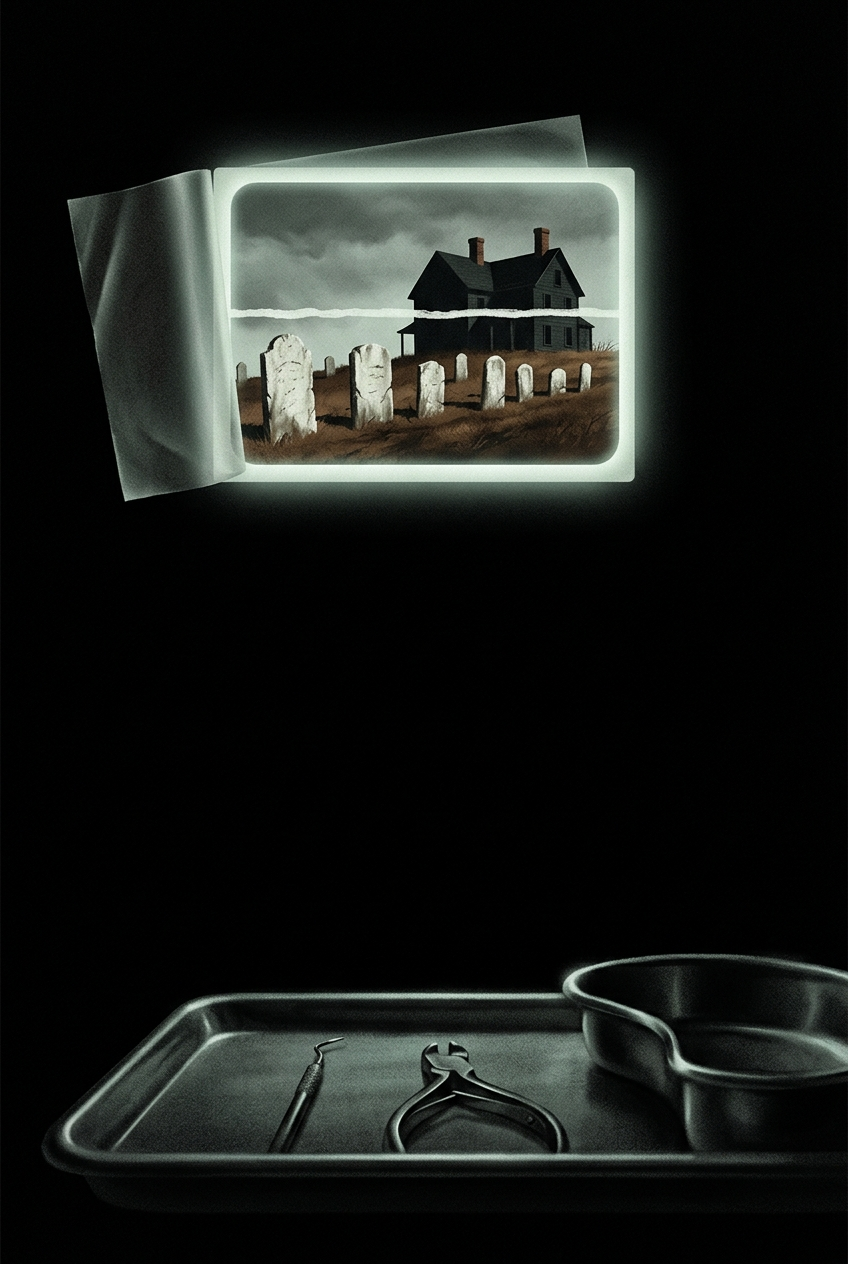
Inside the case back, scratched by a jeweller's hand long ago, faint: a date, and three words.
4 . iv . 58. For my Marion.
The fourth of April, 1958. For my Marion. And the watch stopped at ten past four.
I am a literal woman and my first thought was literal: the stop time has nothing to do with the inscription, ten past four is just where the hands happened to land. A stopped watch is right twice a day and means nothing either time. I believed that for about a day and a half.
Then I went to the library, because the library has the local paper back to the Flood, on a microfilm machine that smells of hot dust and that Ryan could probably fix if he'd film it less and solder it more. I am not going to pretend I knew what I was looking for. I looked for Marion. Deaths. I started that spring and worked forward and it took me the better part of a wet Thursday and I found her in the October.
Peace, suddenly, at home. Marion Howell, beloved wife of Thomas. No flowers by request. Donations to the stroke association. And the date of the notice, and I counted back the way the notices do it, and she had died on a Tuesday.
I sat in the library with the microfilm humming and I felt the whole thing turn over and click into place the way a movement does when you've finally found the fault, that small satisfying seat of it, except there was no satisfaction in it at all.
He wasn't bringing me a watch. He was bringing me a Tuesday. The watch stopped at ten past four because he stopped it there, every week, with a thumbnail and a strand of his own coat, because that was near enough the hour of a morning in October when a clock in his house had, for him, stopped for good. And the repair café met on Tuesdays. And I, with my loupe and my pegwood and my forty-one years, would take the stopped thing in my hands and bend over it and give it my whole attention, and make the second hand sweep round again, and for ten minutes a week a careful woman would hold the last thing his wife's wrist had worn and coax it back to life while he watched.
And then he'd take it home and stop it again. Because a watch that runs is a watch that has left her behind. And a watch that is broken is a reason to come back.
I did not want it fixed. That was the part I'd got wrong from the first Tuesday, the part my whole trade had got wrong. I'd thought he was a man with a broken watch. He was a man who needed a broken watch, and needed, just as much, someone to mend it, and could not have both unless he broke it himself and brought it to a stranger who wouldn't ask.
I'm telling it to you tidy. It did not arrive tidy. It arrived over about three days in the ugly jumps that understanding actually comes in, and in between the jumps I was cross with him, and then cross with myself, and once, washing up, I stood with my hands in the water gone cold and thought about my Donald, who did not leave me a watch, who left me a shed full of screws in jars labelled in a hand I can still read, and I had to sit down on the kitchen stool for a minute. I don't fix the jars. I don't throw them out either. So I am not in a position to be superior about a man and a watch, am I.
The fifth Tuesday I was ready for him, and what I was ready to do, I'm ashamed to say, was Be Kind in the laminated sense. I had a little speech. I was going to gently say that I understood, that there was no need, that he could simply come for the tea, that Pam did a nice custard cream and nobody would mind. I was going to fix the man the way I'd been fixing the watch. Hand him back running.
He came in. Coat. Cap. He sat. He put the watch down on the felt, ten past four, the glass with its river across it, and he drew the breath to say his six words, and I opened my mouth to say my kind clever ones.
And I shut it again.
Because a watch that runs has left her behind. Who was I to make him leave her behind on a Tuesday in a church hall because it tidied things up for me? What a thing that would be to do to someone, in the name of being kind. There's a particular arrogance in the repairing trades, in all of us who can make the broken thing go. We think the running is the point. Sometimes the mending is the point, and the running is just the price you pay to be allowed to mend.
So I did not give my speech. I said, "It's stopping, is it."
"I don't know why," he said.
"Let's have a look," I said, and I turned up my loupe.
I took out the strand of navy wool. I cleaned the pivot. I did my ten minutes, slow, slower than it needed, because the ten minutes were the thing I had to give and I was not going to short-change him on them now I knew their worth. I wound it. The second hand came up off its stop and swept round, one clean revolution, two, and his face did the unreadable thing again, and this time I could read it, and I looked back down at the movement so he wouldn't have to be watched while he did it.
"There," I said. "Good as it'll go. Keep it off a radiator."
He buttoned it away over his heart. He stood. And then he did something he had not done in five weeks. He stopped at the edge of the table, and he looked at me, properly, the folded map of his face, and he said, "Thank you, Vera."
He had never used my name. I don't wear a badge. Pam wears a badge. I thought: he's asked. Somewhere along the five weeks this man who signs no sheet and takes no tea has asked someone what the watch-woman is called, and kept it.
"Same time next week," I said. It was not a question and I did not make it one.
Something moved in the folds. Not a smile. The place a smile comes from. "It does keep stopping," he said.
"They do," I said. "It's what they're for."
After he'd gone I sat for a bit with the felt empty in front of me. Then I did the thing I have done every Tuesday since, the thing I will do again this Tuesday, the thing I will not be explaining to Pam or writing on anybody's laminated sheet.
When he brings it in next week it will be stopped, because he will stop it, with his thumbnail and his coat, in a kitchen I have never seen, under a date scratched by a jeweller sixty-eight years ago. And I will mend it. And before I hand it back I will, very quietly, with a single hair from my own head laid across the balance where no one would ever think to look, give it the smallest, kindest fault a watch can carry. A fault that will bring him back. A reason that is mine to give and his to need.
Mr. Oduya thinks I've gone soft because I let Ryan film me explaining the escapement and I called him son. Pam has, I suspect, moved me out of Prickly But Reliable into some warmer file. They can think what they like.
I fix broken things. People come to me and expect a miracle and I supply one, and the miracle, it turns out, was never the running. It was the coming back. Off a radiator, mind. Always keep it off the radiator.
More from Short Stories