The Concession
Her mother died at the sink with the tap running, which the town took as an insult.
The Concession — Synopsis
For four hundred years the town of Sant'Ambra has sent one person up the volcano to argue for its survival, and for four hundred years it has recorded the speeches in a leather Register. When Assunta Carbone dies at her kitchen sink, her daughter Nunzia, a paralegal who left the island at twenty-three and has not asked many questions since, inherits the office along with a three-page ceremonial speech about households and schoolchildren and a mountain whose wells have already gone warm. Reading the Register the only way she knows how, with a pencil and no faith, Nunzia finds that nine of its successful entries have been cut out with a razor, and that the one catastrophic failure in its history was the year the town hired a professional and sent up nine pages of flawless rhetoric. In her mother's wardrobe she finds the second book the Voices have always kept: the drafts, and in every draft the paragraph the town later excised. The mountain does not want to be persuaded. It wants an admission, and it interrupts anything that is not one. Assunta died mid-sentence drafting this century's, which concerns the basalt quarry chewing into the mountain's north flank, the easement across Carbone ground, and the post office book that paid for Nunzia's education. To be heard at the crater's edge, Nunzia has to finish her mother's sentence out loud, name what her own life cost, and then live in the town that the mountain bills for it.
The Concession
Story
Her mother died at the sink with the tap running, which the town took as an insult. Assunta Carbone had been the Voice of Sant'Ambra for thirty-seven years, and everybody had assumed she would die on the mountain, like a professional.
Nunzia came back on the Thursday ferry with two bags and an unfinished brief about a fishing lease. Eleven years on the mainland, nine of them at Ferrante e Figli, where she was not a lawyer but did a lawyer's work and got paid like a filing cabinet. She could read a contract the way other people read weather.
They buried Assunta on Saturday. Sunday morning Don Peppe Lasso came up the lane with the Register under his arm, wrapped in a dish towel like a fish he wanted kept cold.
"Take a few weeks," he said, and set it on the table.
"For what."
"To get comfortable." Lasso was sixty, a barrel on good legs, mayor for nine years and something else for much longer. "The wells went warm Tuesday night. Nothing dramatic. Bath temperature."
Under the towel the leather had gone the color of a saddle. Nunzia did not touch it.
"How long do I have."
"Nobody has ever known that. Your mother used to say the Vecchia likes to be waited for." He was already at the door. "Vadalà will bring the speech Tuesday. You read it, you learn it, you go up. That's the whole of it."
"That's the whole of it."
"Thirty-seven years and it never took your mother a full morning."
The Register was four hundred and eleven years of Sant'Ambra arguing with the mountain above it, and Nunzia read it the way she read everything, with a pencil and no faith.
The early hands were terrible. Notaries mostly, and one priest with a weakness for the ablative absolute. Every entry followed the same shape: the date, the sign (wells warm, dogs off their food, the Mouth making its noise like a door dragged over gravel), the name of the Voice who went up, the speech as delivered, and at the bottom, in a different ink because it was written afterward, the outcome. Accolta. Accepted. Or, four times in four centuries, Respinta.
She read the rejections first, because that is where the information is.
1743 was the famous one. The Voice had been a lawyer, an actual one, brought over from the mainland at municipal expense because the town felt its case deserved a specialist. His speech ran nine pages. It was, Nunzia had to admit, beautifully built: the antiquity of the settlement, the piety of its people, the orphans it would create, the wine it sent to three dioceses. Every clause landed. At the foot of the page, the notary had written Respinta and then, below that, in the same hand but smaller, and the mountain came down the western channel and took the lower town and two hundred and six souls, and we have buried what we could find.
Nine perfect pages and two hundred and six dead. Nunzia sat with that for a while.
Then she went back to the accepted ones, and after the fourth she stopped and got up and walked around the kitchen and sat down again.
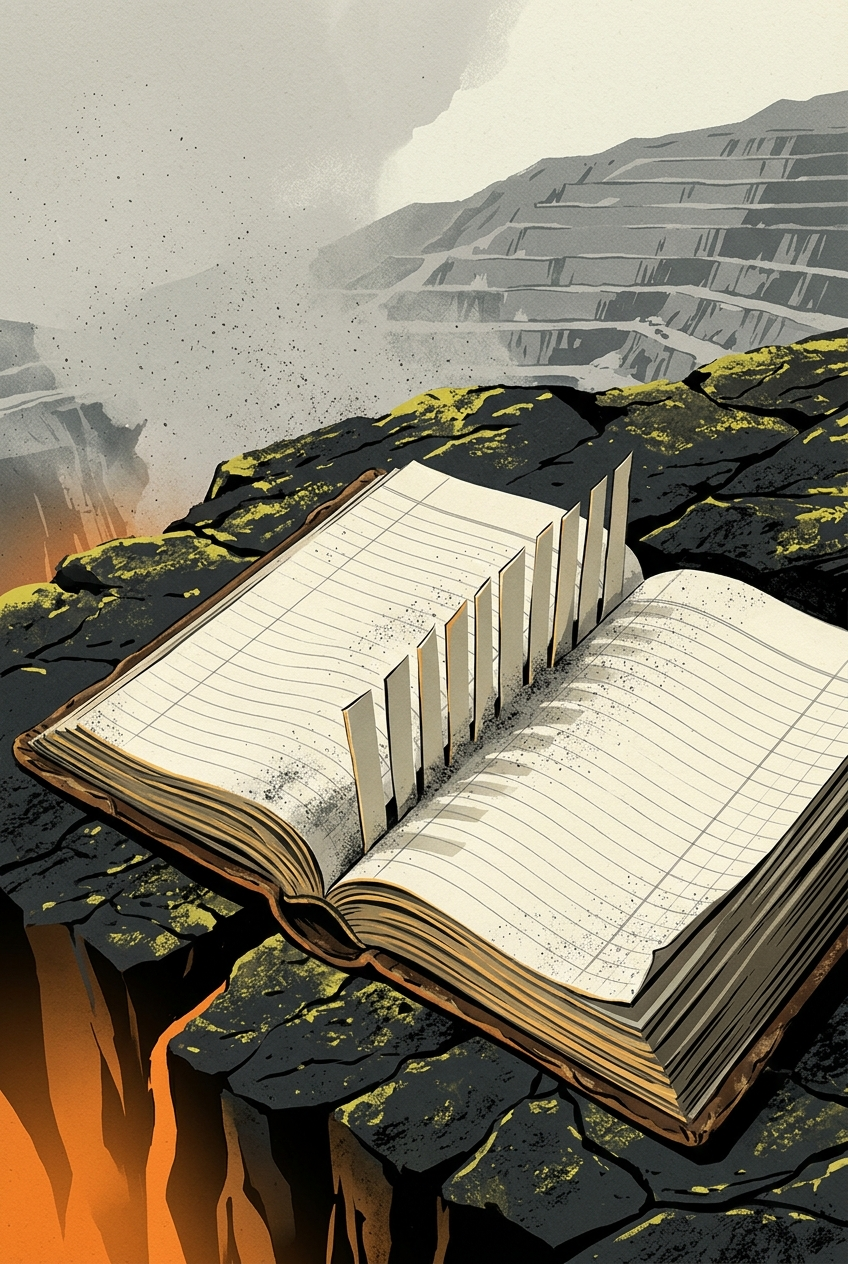
Somebody had been at them with a razor.
It was not crude. Whoever did it had cut along the gutter so the stub sat flush, and in most cases had recopied the surrounding text so the speech read continuously. But the page numbers ran on and the sewing showed and the ink of the repair was always younger than the ink around it. Nine entries. 1804, 1839, 1861, 1902, 1931, 1954, 1968, 1989, 2007. Every one of them Accolta.
Whatever the Voice of Sant'Ambra had said in those nine places, the town had gone back afterward and taken it out with a blade.
Signora Vadalà brought the speech on Tuesday, as promised, in a plastic sleeve. She was seventy-six and had been the notary since her father stopped being it, and she stood in the doorway rather than coming in.
"It's the standard," she said. "Your mother refreshed it every few years. The names change, that's all."
Nunzia read it standing up. It was three pages. It spoke of Sant'Ambra's five hundred households, its patron saint, its unbroken observance, the children in the scuola elementare, the fishermen, the terraces, the old people who could not be moved. It was well made and entirely made of nothing.
"This is what she read? Every time?"
"That's the speech."
"Signora. Somebody has cut nine pages out of the Register."
Vadalà looked at the lemon tree in the yard. "Your mother is four days buried," she said, "and you're doing this."
"I'm asking who held the knife."
"My father held it twice. I held it once." She said it flatly, without any apparent interest in being forgiven. "It's an unpleasant book, Nunzia. It's meant to be read by the town. There are things in it the town does not need."
"The town or the Vecchia?"
"The Vecchia," said Vadalà, "was there."
She found the drafts on the Thursday, in a shoebox on top of the wardrobe, under a bag of buttons and a dead phone charger. Her mother's hand on the top layer, thirty-seven years of it, going from upright to shaky. Drafts of speeches, four or five per occasion, each one worked over until it disappeared under corrections.
Underneath her mother's there were others, in other hands, on other papers, going down through the box the way a tell goes down through soil. Ruled ledger paper. A butcher's wrapping. One on the back of a 1902 pharmacy bill. Nobody had ever mentioned to Nunzia that the Voice of Sant'Ambra kept a second book, and she understood why nobody had: you would mention it when you handed it over, and her mother had handed over nothing, having died in the middle of a sentence.
They all began as the standard. Five hundred households, the saint, the children, the terraces.
And then, near the bottom of each, in the margin or on the back or on a separate scrap pinned on with a straight pin, there was a paragraph that was not in the standard at all. Written, crossed out, written again. In one case written seven times, each version shorter than the last, until it was two lines.
1989. We voted in March to put the sewer outfall at Punta Nera because it was cheaper by eleven million lire, and we knew what was below it, and we sold the fish from there anyway for four years, and we sold it to people who did not know. I voted for it. My brother laid the pipe.
Nunzia read it four times. Then she went through the box and laid them out on the floor in date order, and there they were, one for every ascent, and every single one of them was the same kind of sentence.
Not a plea. Not a promise. A concession.
She got the Register and matched them to the razor cuts and the stubs lined up like teeth in a jaw. 1804: that the town let the quarantine ship anchor off the point and then went out at night and cut its cable and let it drift, with people aboard it. 1861: that the men took the grain from the tax office and let two shepherds hang for it, and knew their names, and still know them. 1931: that they signed the water rights over without reading the instrument, and then took the money, and then complained about the drought as though it had been sent to them.
Four centuries of the same discovery, made over and over by people who could not afford to write it down and could not afford not to say it.
And in 1743 they had sent a lawyer with nine beautiful pages and no concession in any of them, and the mountain had come down the western channel.
She thought about the Mouth making its noise. A door dragged over gravel.
It was not a noise. It was an interruption.
The last draft in the box was unfinished. Assunta had got as far as the standard, five hundred households and the saint and the children, and then at the bottom of the page she had written, in the shaky hand of the last year:
We have been selling her.
And under that, crossed out and rewritten and crossed out again:
The Consorzio Petrella has had the concession on the north flank since 2011. Forty thousand tonnes a year of basalt off her own body, crushed for floor tile, shipped through Palermo. Every household in this town has had money from it. I have had money from it. I took
The sentence stopped there. The pen had gone across the paper and off the edge, and the next thing that had happened was the kitchen sink.
Nunzia sat on her mother's bedroom floor until the light went orange and then blue.
I took. Took what. There were only so many things the woman had ever taken.
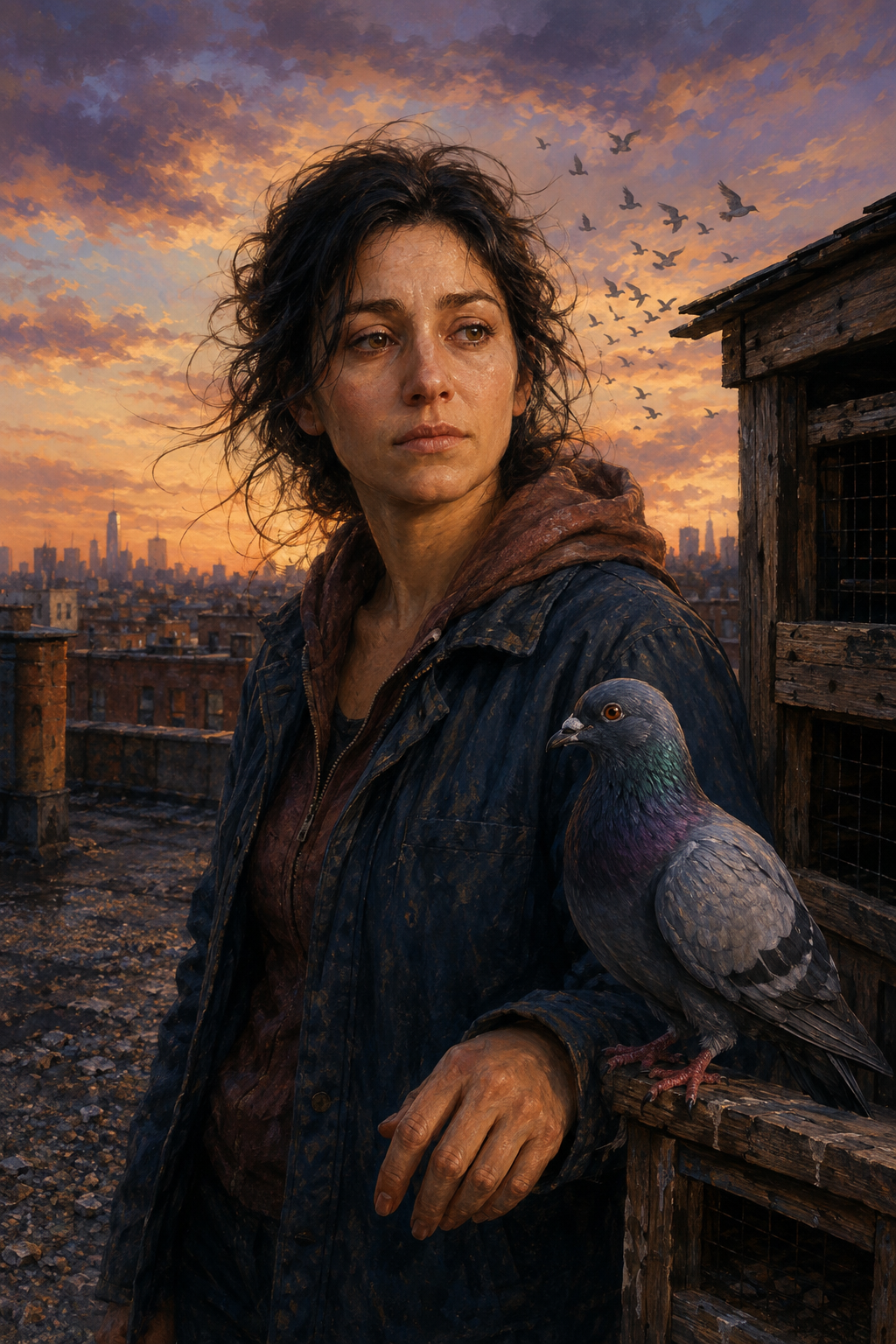
Her brother Ciccio came by that evening because the whole street had been watching her not leave the house. He filled the doorway the way their father used to, and he had come straight from the yard and he smelled like rock dust, which is a smell like nothing, like the inside of a drill hole.
"You're not eating," he said.
"Ciccio. What does Petrella pay you."
"What?"
"What does it pay you."
He stood there. "Nineteen hundred," he said. "Twenty-two if I do the Naples run."
"And what did it pay Mamma."
"Why would it pay Mamma."
"Because the loading yard is on Carbone ground," Nunzia said, "and the access road crosses it, and somebody has been signing an easement every three years since 2011, and I have been on the mainland since 2015, and I have never once asked who paid for the mainland."
Her brother looked at the floor. He was forty-four and he had never been able to lie in a lit room.
"It was three hundred a month," he said. "She put it aside. She said it was for your school, and then after your school she said it was for your school anyway. It's in a post office book. I can get you the post office book."
"I don't want the post office book."
"Then what do you want."
"I want the wells to go cold," Nunzia said, "and they're not going to."
The wells did not go cold. By Friday they were too hot for the animals and the Mouth was going all night, and on Saturday morning at four Nunzia put the Register in a bread bag against the ash and started up.
It is three hours to the Mouth if you know the path, which she did, because Assunta had walked her up it every summer of her childhood and never once said why. Above the chestnuts the ground turns to sciara, the old flows, black and loose and ringing like broken crockery underfoot. Above that there is nothing that wants anything. The wind comes over the rim with the heat already in it and takes the moisture out of your mouth on the way past.
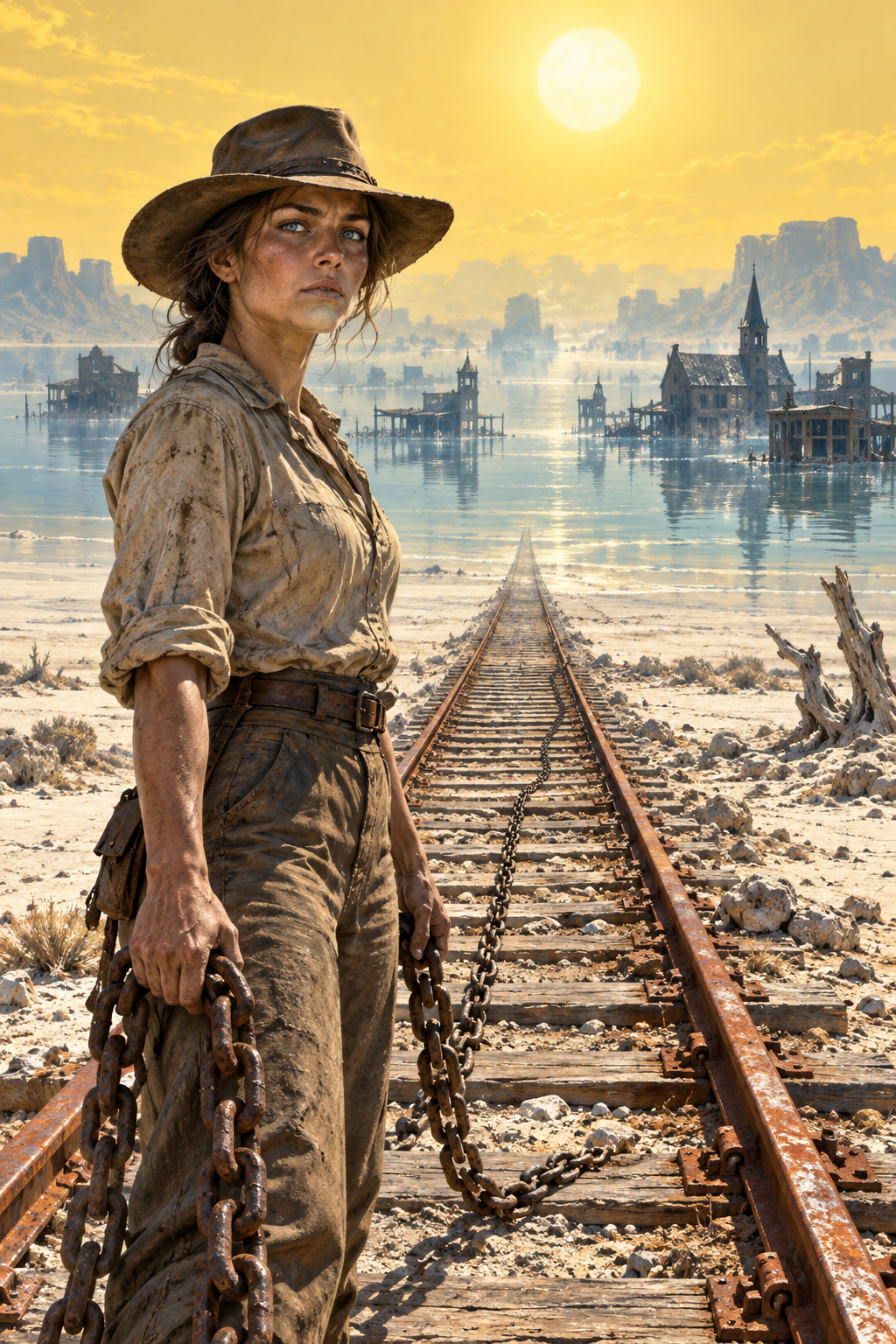
She got to the Mouth a little after seven. The crust at the edge was yellow with sulphur and soft, and she could feel the warmth coming up through her boot soles, not fierce, patient, like standing on the lid of something. Below her the town was still in shadow, five hundred households and the saint and the children, and beyond it on the north flank the quarry benches went down in steps, the fresh cuts paler than the old ones, with the haul road switchbacking up through them and the loading yard at the bottom with its conveyors and its two white silos.
The Mouth was making its noise.
Nunzia took out Vadalà's plastic sleeve and read the standard, because that is what she had been sent to do, and because she wanted to be sure.
"Sant'Ambra," she said, "has five hundred households."
The sound came up over her like a door dragged across gravel, and she could not hear her own voice in it, and it did not stop until she stopped.
"There are ninety-one children in the scuola elementare."
The noise took that too.
She put the sleeve away.
"My name is Nunzia Carbone," she said, "and I have been eleven years on the mainland, and I did not come back for this."
The Mouth went on with its noise, but under it, not over it. She could hear herself. It was the most frightening thing that had ever happened to her.
So she opened the Register and did the only thing she actually knew how to do, which was to read a record into evidence.
She read 1804, the quarantine ship and the cut cable, from her mother's copy of a page the town had razored out. The noise dropped away and did not come back until she had finished, and when she stopped there was a silence that had a shape to it, like a room with someone in it.
She read 1861, the grain and the two shepherds, with the names, because her mother had written the names.
She read 1931, the water. She read 1839 and 1902 and 1954 and 1968, which were shorter, and worse. She read 1989, the sewer at Punta Nera and the fish sold to people who did not know, in her mother's two remaining lines, in her mother's handwriting, standing on top of her mother's employer.
Then she came to the last page, and it stopped in the middle, and there was nothing under it but the paper.
The heat came up through her boots.
"She didn't finish," Nunzia said. "I'll finish it."
She had to start twice.
"The Consorzio Petrella has had the north flank concession since 2011," she said. "Forty thousand tonnes a year, off you, for floor tile. The council granted it in a closed session and published a summary. Don Peppe Lasso's wife's brother holds nine percent. Every household in Sant'Ambra has had money out of it, directly or through the rates, and the ones that complain about the dust take the money too.
"The access road crosses Carbone ground. My mother signed the easement in 2011 and renewed it twice, for three hundred a month, and she put the money in a post office book and spent it on sending me away, and I let her, and I never asked. I have a degree out of your back. I have eleven years of a life somewhere clean out of your back. My brother drives a truck up and down that road and it is the only work there is because we made sure it was the only work there is.
"That's the case. We have been selling her, and we sent a woman up here every few years to tell you about the children."
She had not planned the last two sentences. When she stopped, the noise did not come back.
The silence went on a long time. Long enough that she sat down on the warm ground, because her legs had opinions, and looked at the quarry benches catching the first of the sun.
Then the mountain answered her, which it did in the only language it has.
It did not come down the western channel. It came out of a vent on the north flank about four hundred metres below where she was sitting, without drama, the way water finds a crack in a wall, and it went down the line of least resistance, which is what everyone agrees lava does, and the line of least resistance was the haul road, because the haul road is a cut, and a cut is a channel.
It took the road in about nine hours. It took the loading yard overnight, conveyors, silos and the weighbridge, and it went one hundred and forty metres past the yard and stopped in an almond orchard belonging to nobody, four kilometres from the first house in Sant'Ambra.
Nobody died. The men on the night shift walked out and stood on the ridge and watched their own work burn very slowly, which people said afterward was the worst part, the slowness, the way you could go home and eat and come back and it would only have moved the length of a room.
Petrella's engineers came in October and said the deposit was still there but the access was gone and the reinstatement cost was not proportionate, which is the way people in Nunzia's old profession say that a thing is over.
Don Peppe Lasso came to the house in November with the Register under his arm, in the dish towel, and put it on the table where he had put it in September.
"It needs writing up," he said. "The entry."
"I know what it needs."
"The standard form. Date, sign, Voice, speech as delivered, outcome." He said it like a man reading off a card. "Accolta. Obviously. Accolta."
"And the speech as delivered."
"The speech as delivered," Lasso said, "was the standard. Which is in Vadalà's sleeve, and which the whole town has heard a hundred times, and which nobody is going to argue with." He was not looking at her. "Nunzia. There are two hundred men in this town with nothing to do on Monday. You want to also hand them a book that says it was their own fault and their mothers knew."
"I want to hand them a book that works."
"The book has worked fine for four hundred years."
"The book failed in 1743," she said, "and it failed because somebody sent a professional, and the professional gave a magnificent speech, and the mountain came down the western channel and took two hundred and six people. You've read that page. Your family has been cutting pages out of that book since your great-grandfather. You know exactly what she listens for."
Lasso stood in her mother's kitchen with his hat in his hands and did not say that she was wrong.
"Fifty years from now," Nunzia said, "the wells go warm again and some poor bastard from this family or yours has three days to work out from scratch what we already know. That's what the razor buys you. Thirty comfortable years and then somebody's child up there with nine beautiful pages."
"Write it however you like," Lasso said, and put his hat on. "Nobody reads it."
"You read it."
She wrote the entry in December, with a pencil first and then in ink, in a hand that was more legible than her mother's and much less than Vadalà's father's.
Date. Sign: wells warm 8 September, Mouth in voice from the 11th. Voice: Carbone, Nunzia Assunta. Speech as delivered: she copied the nine razored concessions back in from the drafts, each under its own year, with a note of where the original had been removed and by whom, as far as she could establish it, which in two cases was by name. Then her own, in full, including the three hundred a month and the post office book and the degree.
Outcome: Accolta. The north flank vent opened at approximately 07:40 on 20 September and the flow destroyed the Petrella haul road, the loading yard, the weighbridge and the northern conveyor gallery, and stopped in the Mandorleto Vecchio. No deaths. The concession was surrendered on 14 October.
Under that she ruled a line and left the rest of the page empty, because the next Voice would need somewhere to start, and because the mountain had made it very clear that she would want to know what they did next.
Ciccio came for Christmas with two nephews and a face like a closed shop. He had got on with a crew doing the coast road, three weeks out of every six, and he did not want to talk about it, so they did not talk about it. After the boys went up to bed he sat at the table with his hands around a glass and looked at the Register lying open at the ruled line.
"Is that for me," he said.
"It's for whoever," said Nunzia, and went to get the other bottle.
More from Short Stories