The Weather Room
People think the hardest weather to lend is snow.

Synopsis
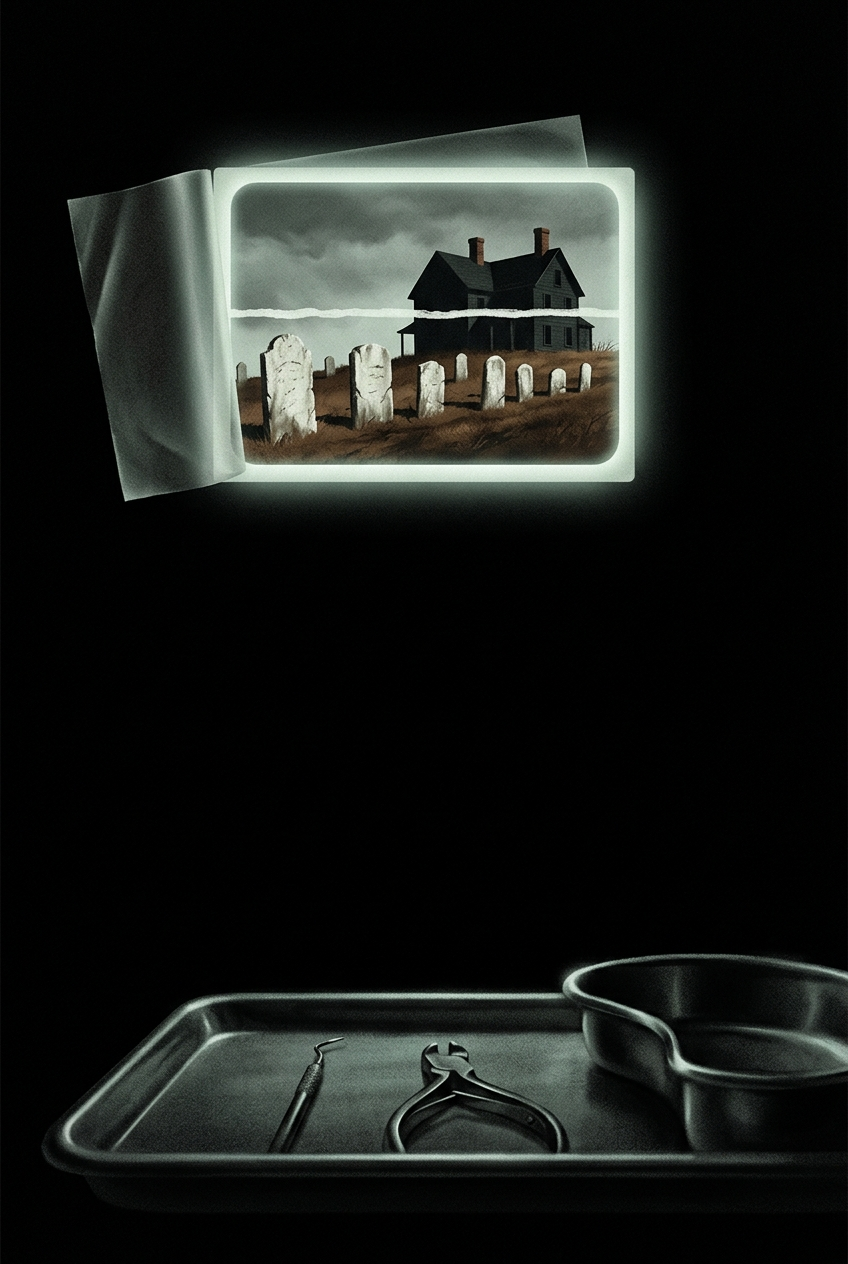
Ruth Aldous runs the Weather Room in the basement of a small coastal library, where patrons check out snow days and heatwaves on their cards and must return them before the borrowed weather spoils the whole block. When the county orders low-circulation weather "released back to the general" to cut overhead, one record is on the list: a foggy November morning that only Mr. Ives, a man slowly going blind, keeps checking out. Ruth assumes he wants the fog to hide his failing eyes, and is gently corrected: the fog still carries the town's decommissioned foghorn, the last place his late wife is still there in the kitchen counting the seconds between its notes. To keep a dead sound alive, Ruth commits a quiet act of bureaucratic love, marking the record permanently "missing" so it can never be found and never be weeded, and the two of them sit in the borrowed fog to wait for the horn.
The Weather Room
Story
People think the hardest weather to lend is snow.
It isn't. Snow behaves. You check out a snow day, you get your snow day, the school closes and the plows come and somebody's grandson breaks his wrist on the Delmar hill, and two weeks later the record comes back to me clean, the way a paperback comes back with the spine barely cracked. Snow is a good borrower. Snow knows it's due.
Heat is the trouble. Heat you have to watch.
The Tuesday I want to tell you about started with Marion Espy returning a heatwave three days overdue, which is exactly the kind of thing Marion Espy does. She came down the basement stairs sideways, one hand on the rail, and set the card on my desk like it was still warm.
"I know," she said. "I know, Ruth. Don't."
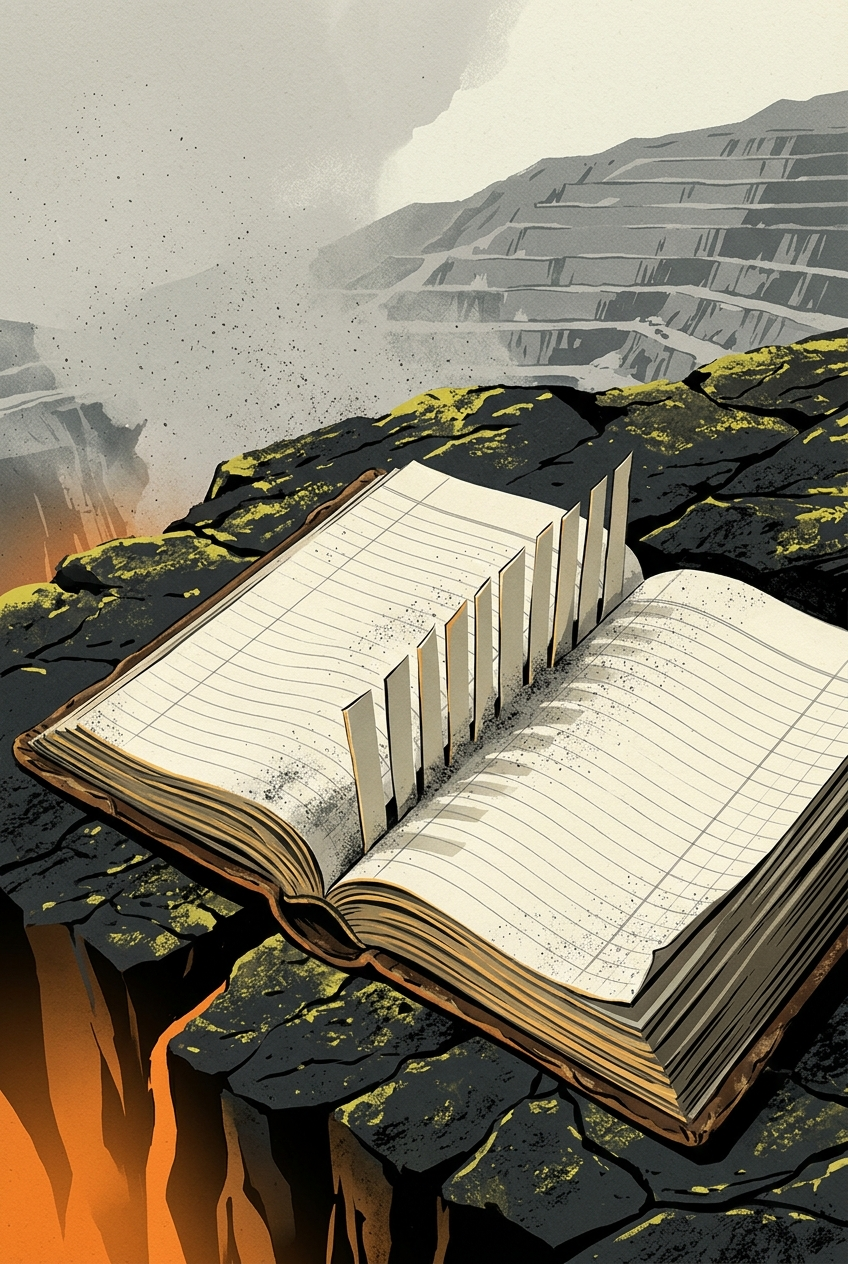
I didn't. I turned the card over. HEAT — Interior — Late July — Dry, it read, in my own handwriting, because I catalog everything in the Weather Room by hand. The county gave me a laptop in 2019. It's in a drawer with the batteries taken out. Weather won't hold in a database. I've tried. You type in a fog and by morning the field's gone gray and meaningless, the humidity reading drifting like it's embarrassed to be pinned down. Index cards it has to be. Weather likes to be written by a person who felt it.
"Your tomatoes," I said.
"My tomatoes are magnificent." Marion is seventy-nine and gardens like she's being timed. "I couldn't bring myself. Three more days, I thought, they'll come in all at once, and then I'll return it."
"They come in all at once, and then the vine's done."
She knew that. Everybody who borrows summer knows that, and everybody borrows it anyway. I ran the card back into circulation and told her the fine, which she paid in nickels she'd clearly been saving in a jar for the purpose, and I didn't charge her the full overdue rate because a heatwave left out too long doesn't just cost the borrower. It cost the whole block. Three days of somebody's private drought in July and the Delmar hydrangeas go crisp, and people start asking why their corner of town feels like it's holding a grudge.
That's the part they don't put on the tote bags. Lend a thing and it circulates. It touches more hands than yours.
Marion went back up the stairs. I logged the heat, shelved the card in the July drawer where it belongs, and looked at the deaccession list, which I had been not-looking-at all morning.
The deaccession list had come down from the county on Friday, printed, with a paperclip and a sticky note in Ms. Byers's handwriting. Ms. Byers came up to us in the spring with a laptop and a lanyard and a phrase she used the way other people use please: going forward. Going forward, the branch weather collections were being reviewed for consolidation. Going forward, low-circulation holdings would be released to reduce overhead. There is overhead in weather. You wouldn't think it. But a record that nobody borrows still has to be kept fresh, aired out, turned over, and if it sits too long it goes flat, the way a snow globe goes cloudy, and a flat weather is worse than no weather at all. So the county's position, going forward, was that anything checked out fewer than four times a year should be released back to the general weather.
Released back to the general weather. That's the phrase. It sounds gentle. What it means is this: the record is retired, and the weather in it stops being a specific thing that a specific person can summon to a specific window, and becomes instead the ordinary stuff that happens to everybody and belongs to nobody. A released fog is just fog. It rolls in when the sea decides and not one minute when you need it. You can't recall it. There's no card. It's gone the way a song is gone when the last person who knew the tune stops humming.
There were eleven records on the list. Ten of them I could let go. A sleet event from a February nobody missed. A muggy, bug-thick evening that only one family had ever borrowed, for reasons I never asked, and had stopped borrowing when the daughter moved to Tucson.
The eleventh was FOG — Harbor — 4 Nov — a.m.
Circulation: seven times in the past year. All seven to the same card.
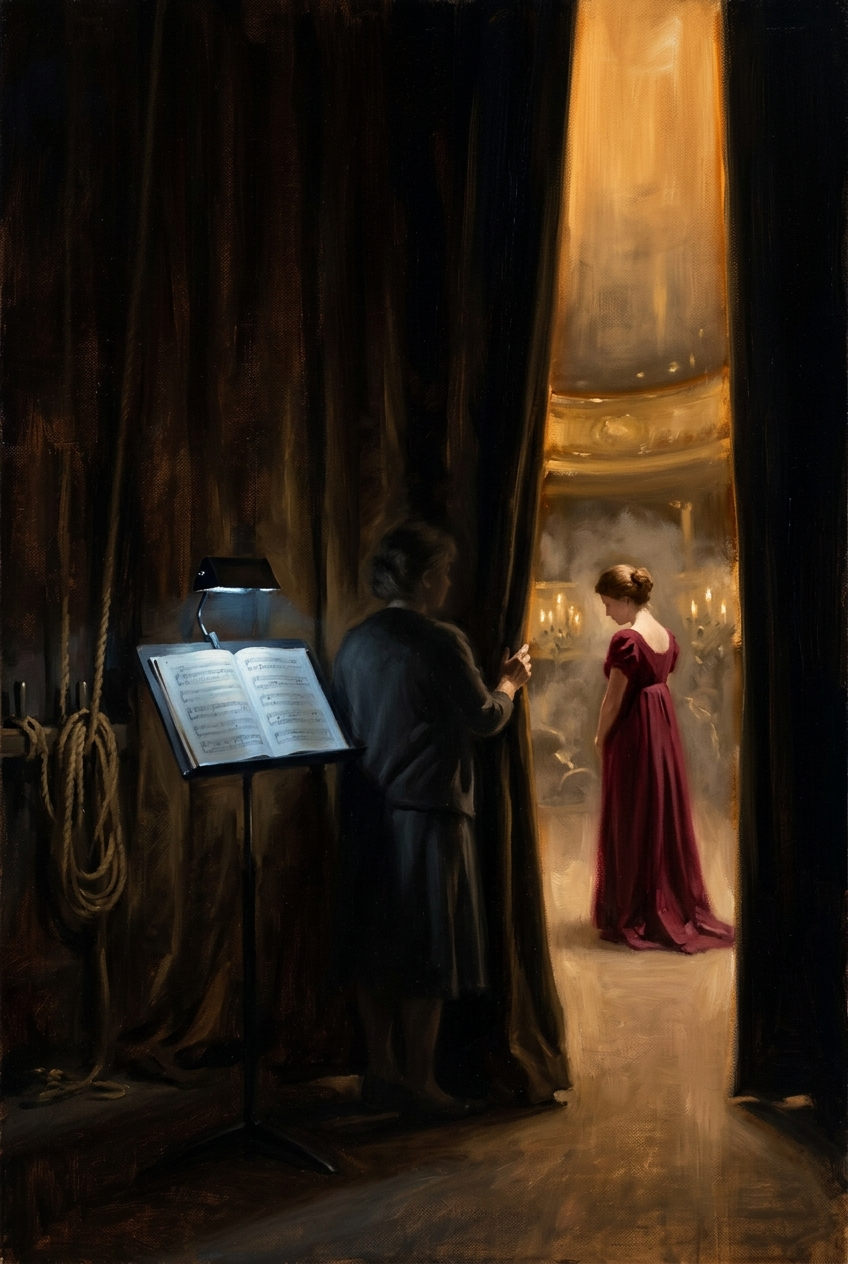
Mr. Ives came in at four, the way he does, which is to say the way the tide does, a little later each week and never announced. I heard the cane first. He's added a cane since summer, aluminum, the kind with the four little feet, and I heard it find each stair before he trusted his weight to it. I came around the desk before he could ask, not so he'd notice me doing it.
"Mr. Ives."
"Miss Aldous." He's the only one who calls me that. To everyone else in this town I've been Ruth since the Ford administration. "Is it shelved?"
"It's always shelved." It's shelved because nobody else on earth wants a foggy Tuesday morning from three years ago. I keep it in the November drawer between a hard frost and a nothing sort of drizzle, and it is the only card in that drawer soft at the corners from handling. "You want it out again."
"If it's no trouble."
It is no trouble. It has never once been trouble. I want to say I hesitated because of the rules, and I did hesitate, but not for that. I hesitated because the deaccession list was face-down under my elbow and I was doing arithmetic. Seven checkouts in a year is more than four. The math said he'd saved it. The math is not the whole county, though. The county reads the numbers a certain way, and one card borrowing one record seven times doesn't read as circulation. It reads as a man and a habit. Ms. Byers has a word for that too. Sentimental hold. It's on the form. There's a box.
"Mr. Ives," I said. "Sit down a minute."
He found the chair by the returns cart, the one patrons aren't supposed to sit in. He sat carefully, both hands stacked on the cane, and turned his face up toward the sound of me, and I understood, the way you understand a thing you've been half-seeing for months, that he wasn't quite looking at me. His eyes went to a point past my shoulder and stayed friendly there.
"How much can you see?" I asked. I don't dress questions up. He seemed to appreciate that about me once, years ago, and I've never had cause to change.
"Enough to get down your stairs. Shapes. Light and the lack of it." He smiled. "The doctor calls it a while yet. I've noticed the doctor's whiles get shorter."
So there it was, I thought, and I felt the whole thing click into an easy shape, the way a drawer clicks shut. He wanted the fog because in fog nobody can see. In fog the world goes soft and uncertain and even, and a man losing his sight is no worse off than anyone else groping along the breakwater with his arms out. In borrowed fog he wasn't the blind one. He was just early, out ahead of everybody in the gray. I thought I'd solved him. I thought I understood, and understanding him made me generous, and being generous made me stupid, which is a sequence I should know better than to trust by now.
"Then let me give it to you," I said. "The fog. Keep it. I'll take it off the shelf and it's yours, no due date, and you don't have to come down these stairs in the dark for it anymore."
I was proud of that for about a second and a half.
He was quiet. Upstairs a chair scraped and the after-school crowd thundered toward the picture books, and down here it was just the dehumidifier ticking and the cold coming up through the floor the way it does in a room built to keep weather from spoiling.
"That's kind," he said. "But you've got it wrong, Miss Aldous. It isn't the fog."
"It's the fourth of November."
"It isn't the day either. Or, it is, but not the way you mean." He shifted the cane. "Do you remember the horn?"
I did. Everybody who's lived here longer than the horn's been gone remembers it. The Prospect Point horn, out on the breakwater, that sounded in fog my whole childhood and half my middle age, one long note every forty seconds, so steady you stopped hearing it until a clear night came and the silence of no-horn kept you awake. They shut it off three years ago. Put in the GPS buoys, the automatic ones, and the Coast Guard sent a man to decommission the horn on a Thursday, and there was a small article, and nobody came to the meeting. You don't come to the meeting for a sound. You don't know to miss it until a fog rolls in clean and empty and you stand at the window waiting for a note that isn't coming.
"That fog," said Mr. Ives, "the fourth of November. It was the last real fog before they shut it down. The horn's in it. It sounds in it still, every forty seconds, because the morning was recorded, or borrowed, or whatever it is you do down here that I've never understood and never wanted to. When I check out that morning, the horn comes with it." He tipped his head. "Cora used to count the seconds between. In the kitchen. She'd stop whatever she had her hands in when it sounded, and count, one, two, and get to about thirty-eight and say it's late today, and it never was. It was exactly forty. But she liked to fuss at it."
I put my hand flat on the deaccession list, on FOG — Harbor — 4 Nov, so I wouldn't have to look at the number by it.
"I don't come down here to hide my eyes," he said, gently, because he'd heard my whole clever theory in the offer I'd made and was letting me down as easy as he could. "My eyes are going with or without the fog. I come down here to hear the horn. It's the only place left it sounds. And the only place left she's late for it."
Upstairs somebody laughed. Down here the dehumidifier ticked, and forty seconds went by, and I noticed I'd counted them.
Here is a thing about my job that I have never told the county, because the county would have a form for it and the form would ruin it. When you release a weather, you don't just lose the weather. You lose everything that was in the air that day. The fog goes back to the general fog. But the horn goes too. And there is no card in any drawer in any branch in this county for the Prospect Point horn, because the horn was never mine to catalog. It was just the sound the town made in weather. It survived, this whole time, by accident, folded inside one foggy Tuesday that one man kept checking out, and I had been about to sign a paper that released the fog to reduce overhead, and the horn would have gone out with it into the general nothing, and Cora would stop being late in the only kitchen where she still was.
"Give me the card," I said.
"You just offered to."
"Not to give it to you. I've a better idea, and it's against about four rules, so I'd take it as a favor if you didn't tell anyone I'm capable of it."
He smiled at the drizzle-colored middle distance. "I can't see the paperwork, Miss Aldous. I'm a terrible witness."
What I did was this, and I'll write it down here plainly since I'll never write it on a form.
A released record is gone. But a missing record is not gone. A missing record is a different animal entirely. When an item is marked MISSING — PRESUMED MIS-SHELVED, it comes off the active collection. It stops accruing overhead, because officially it isn't there to keep fresh. It drops off the deaccession review, because you can't release what you can't find. It goes into a pending state that the county, in thirty-one years, has never once resolved, because resolving it requires somebody to physically walk the stacks and confirm the thing is truly lost, and nobody from the county has walked my stacks since a man named Poirier retired in 2004. A missing record simply waits. Forever, if it has to. Pending is a country with no clock in it.
So I took the pen, and on the deaccession list beside FOG — Harbor — 4 Nov — a.m., in the space for disposition, I wrote MISSING. Then I pulled the card from the November drawer, and I did not put it back. I put it in the breast pocket of my cardigan, where it sat soft against me, and I made a second card, blank on both sides, no accession number, no place, no date, a card that meant nothing to any system anywhere, and I slid that into the November drawer between the hard frost and the drizzle so the drawer wouldn't feel the gap. Weather likes a full drawer. And then the fog belonged to no collection and no county and no going-forward, and it belonged, I suppose, to my cardigan, which is the most secure archive in this building.
"It's missing," I told him. "Officially. Tragic. They'll never find it."
He was quiet for a moment, working it out with the part of him that used to keep books, before the eyes. "And unofficially."
"Unofficially it lives in my sweater and you can come hear it whenever you want, and I'll never once record that you did, so there's no habit and no hold and no box for anybody to tick. You're not a borrower anymore, Mr. Ives. You're a trespasser. Much harder to weed."
I don't know what I expected. Thanks, maybe. He didn't thank me. He did something better and worse, which was to ask, "Would you check it out for me? Just this once. I don't think I want to be the one holding it today."
I understood that too, and this time I think I understood it right. There are days you want the weather and days you want somebody else to be responsible for it, somebody to sign for it so that if it hurts, the hurt is on loan and not something you went and bought.
So I checked out the fog on my own card, the first weather I've put on my own card in longer than I'll admit, and I brought the two chairs together, the returns-cart chair and mine, in the middle of the Weather Room where the light is worst, and we sat.
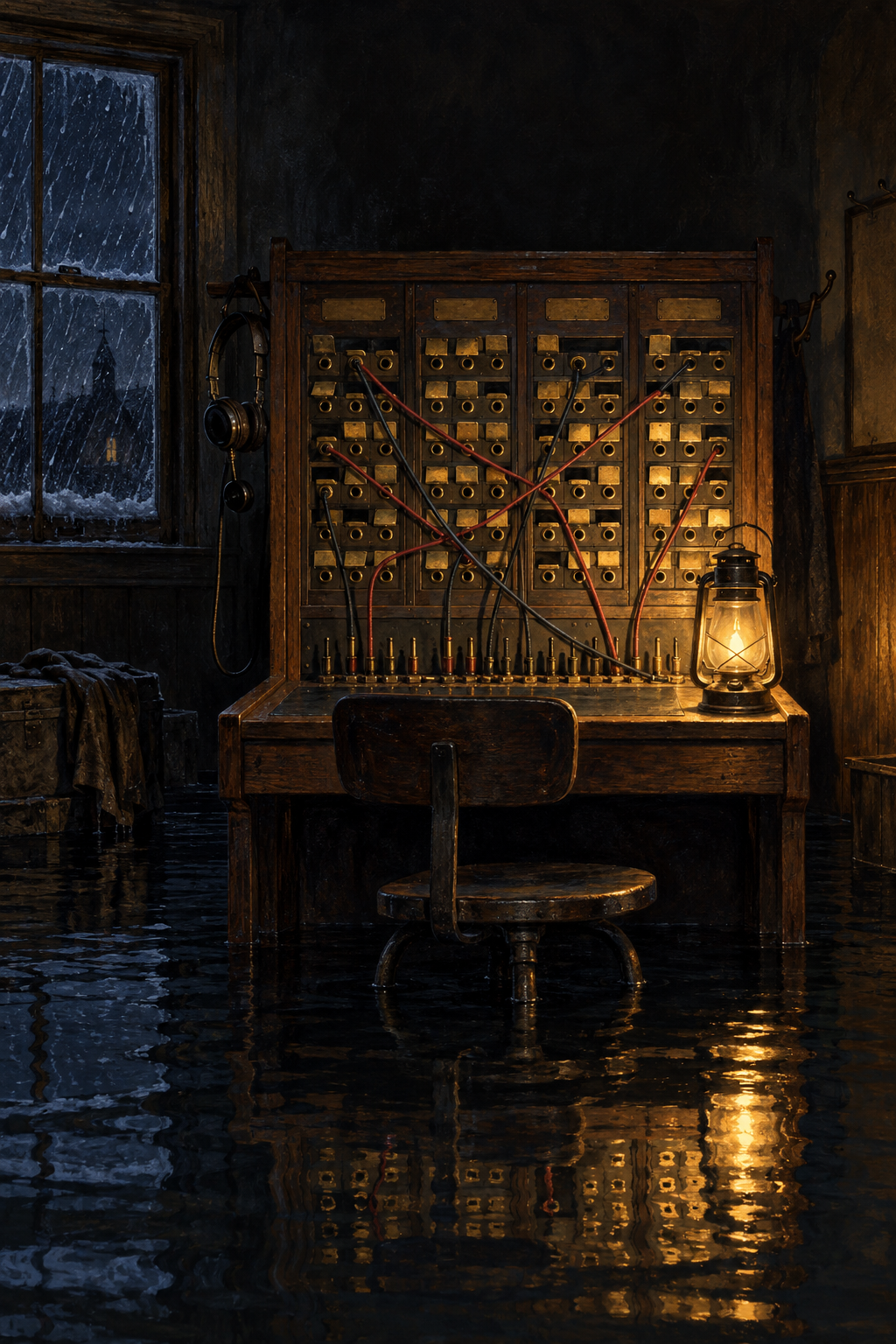
It comes up through the floor first, borrowed fog. Then the temperature drops a few degrees and the air goes to velvet, and the high window at the top of the wall, the one that has no business showing the harbor because it faces the parking lot, went pale and then gray and then that particular gray that isn't a color so much as a distance. The room smelled like the fourth of November. Salt and diesel and wet stone and, under it, somebody's woodsmoke from a chimney three years cold.
We waited. Mr. Ives had his hands stacked on his cane and his blind friendly face turned up toward the window he couldn't see and didn't need to.
The horn sounded.
One long low note out of the gray, exactly as I remembered it and had stopped remembering, the note the town used to make, and it went through the floor and through the chairs and through the two of us, and then it stopped, and the counting started, mine and his, silent, the way you count a thing you love and pretend you're only checking on.
He got to thirty-eight.
"It's late today," he said.
It wasn't. It was exactly forty. I watched the second hand on the wall clock and it was exactly, precisely forty, the way it always was, the way it would be from now on in the only room where it still sounded, for as long as I keep this drawer full and this county too busy to walk its own stacks. But I didn't correct him. You don't correct a man's wife when she's in the room being late.
The horn sounded again.
More from Short Stories