The Sunrise Discovery
What if… Christopher Columbus fails to secure funding in 1492, leaving the Americas uncontacted by Europe until Chinese navigators traverse the Pacific a half-century later.
Synopsis
Without Columbus's voyage, Europe’s maritime powers focus entirely on the African route to India, leaving the Atlantic untraversed. Fifty years later, a Ming Dynasty exploratory fleet navigates the Pacific currents to land on the western shores of North America. Instead of swift conquest, the resulting trans-Pacific relationship is driven by mercantile exchange. By the time Europeans eventually cross the Atlantic in the mid-17th century, they encounter indigenous American empires fortified by Asian trade, ironwork, and diplomatic alliances. The ensuing centuries see the Americas develop into a geopolitical buffer zone, fundamentally altering the global balance of power into a deeply multipolar world.
The Sunrise Discovery
What if… Christopher Columbus fails to secure funding in 1492, leaving the Americas uncontacted by Europe until Chinese navigators traverse the Pacific a half-century later.
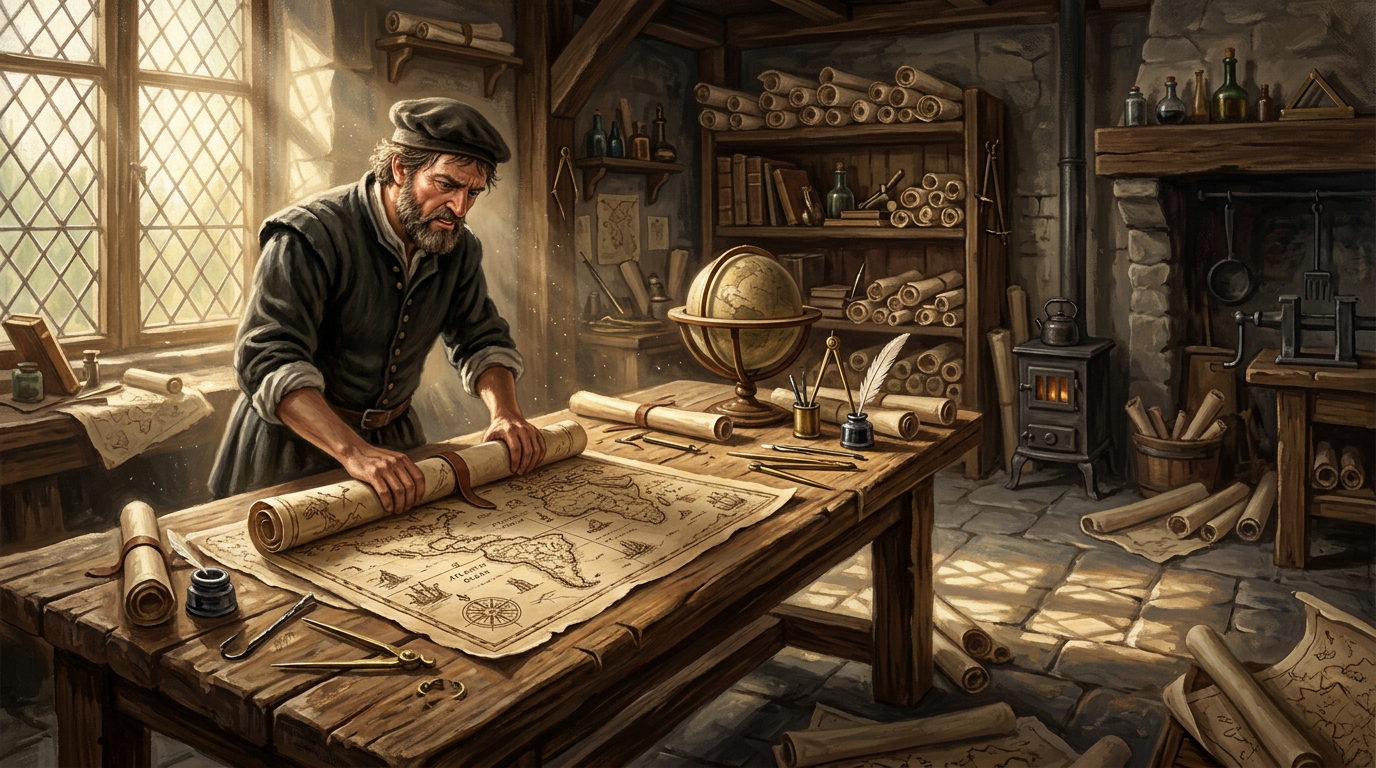
In January 1492, after years of relentless lobbying, the Genoese navigator Christopher Columbus faced the Catholic Monarchs of Spain for a final decision on his proposed westward voyage to Asia. Historically, Queen Isabella and King Ferdinand gambled on the expedition. But in this timeline, the royal accountants hold sway. Deeming the voyage’s calculations hopelessly inaccurate and the crown’s treasury too depleted from the Reconquista, the monarchs issue a definitive, final rejection. Defeated, Columbus fails to secure backing in France or England and dies an obscure cartographer. Consequently, Europe’s maritime energies funnel entirely southward, successfully rounding Africa to reach the Indian Ocean. The vast expanse of the Atlantic remains an uncrossed void, buying the indigenous civilizations of the Americas half a century of undisturbed development.
The Last Rejection
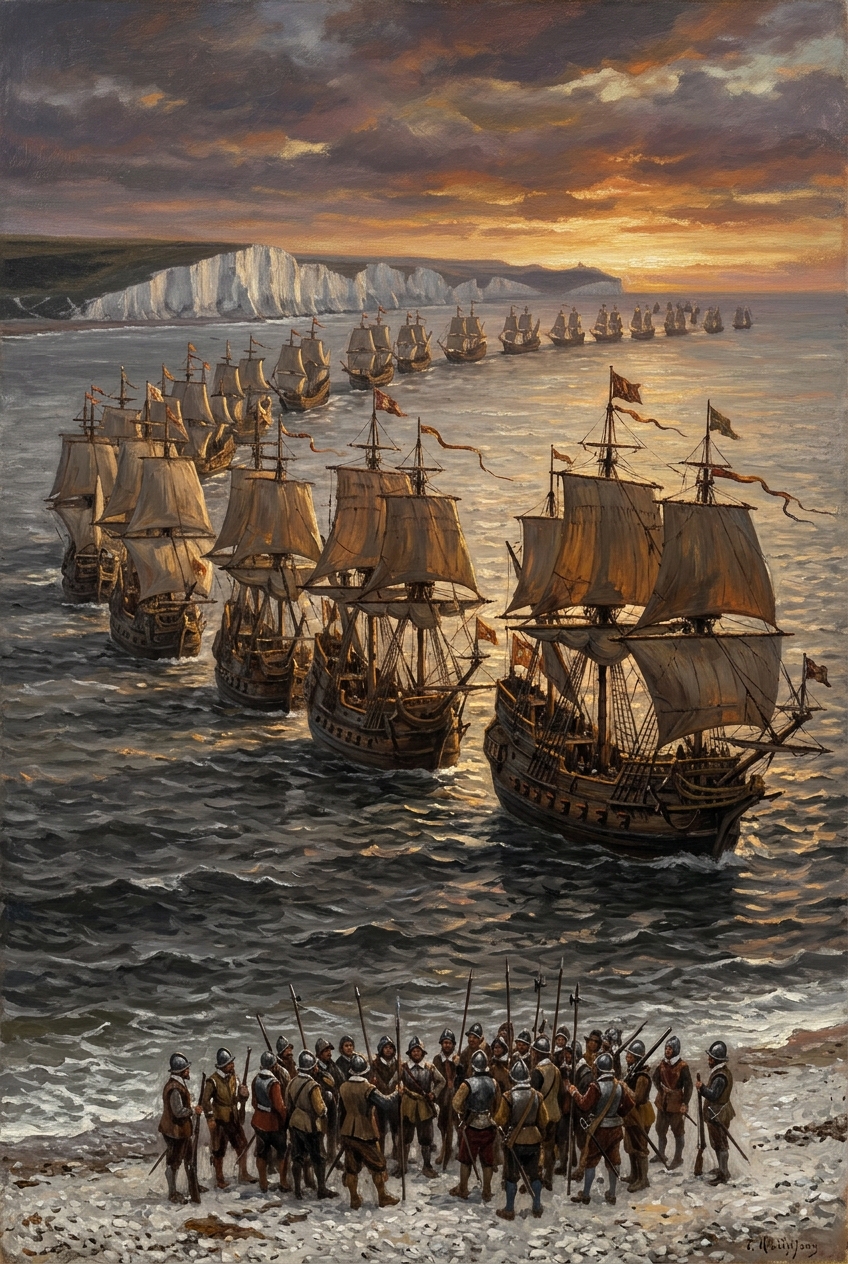
Following his dismissal from the Spanish court, Columbus’s grand ambitions wither. Portugal's Vasco da Gama rounds the Cape of Good Hope in 1498, securing the highly profitable spice trade for Lisbon. Seeing Portugal's immense success, Spain, England, and France pour their resources into tracing the African coast and establishing Indian Ocean outposts. The concept of a westward crossing becomes a discredited fringe theory. The Atlantic is viewed as a vast, impassable barrier rather than a highway. Indigenous empires in the Americas—the Aztec in Mesoamerica, the Inca in the Andes, and the vast confederacies of the North—continue their internal political expansions, blissfully unaware of the Eurasian landmass, spared the sudden demographic shock that would have accompanied a late-15th-century European arrival.
Riding the Black Current
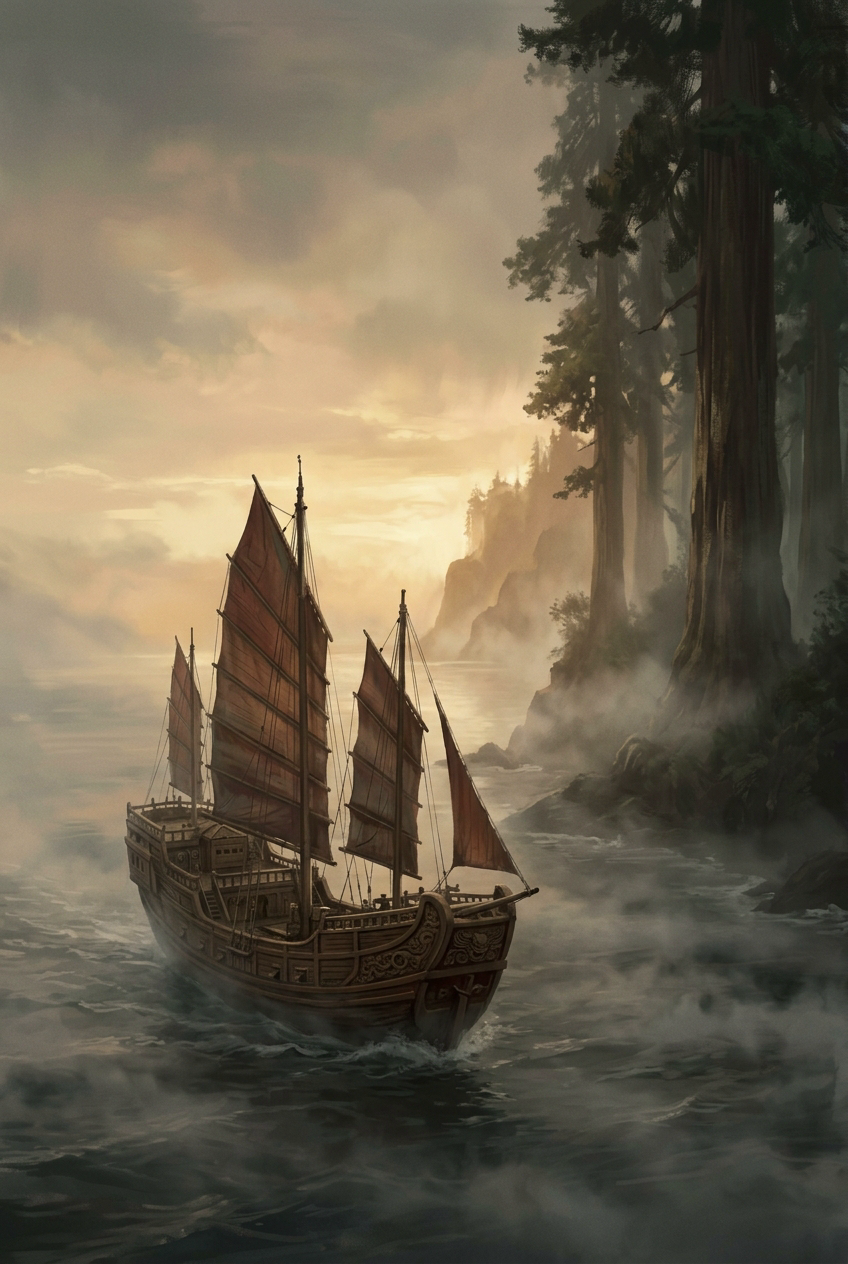
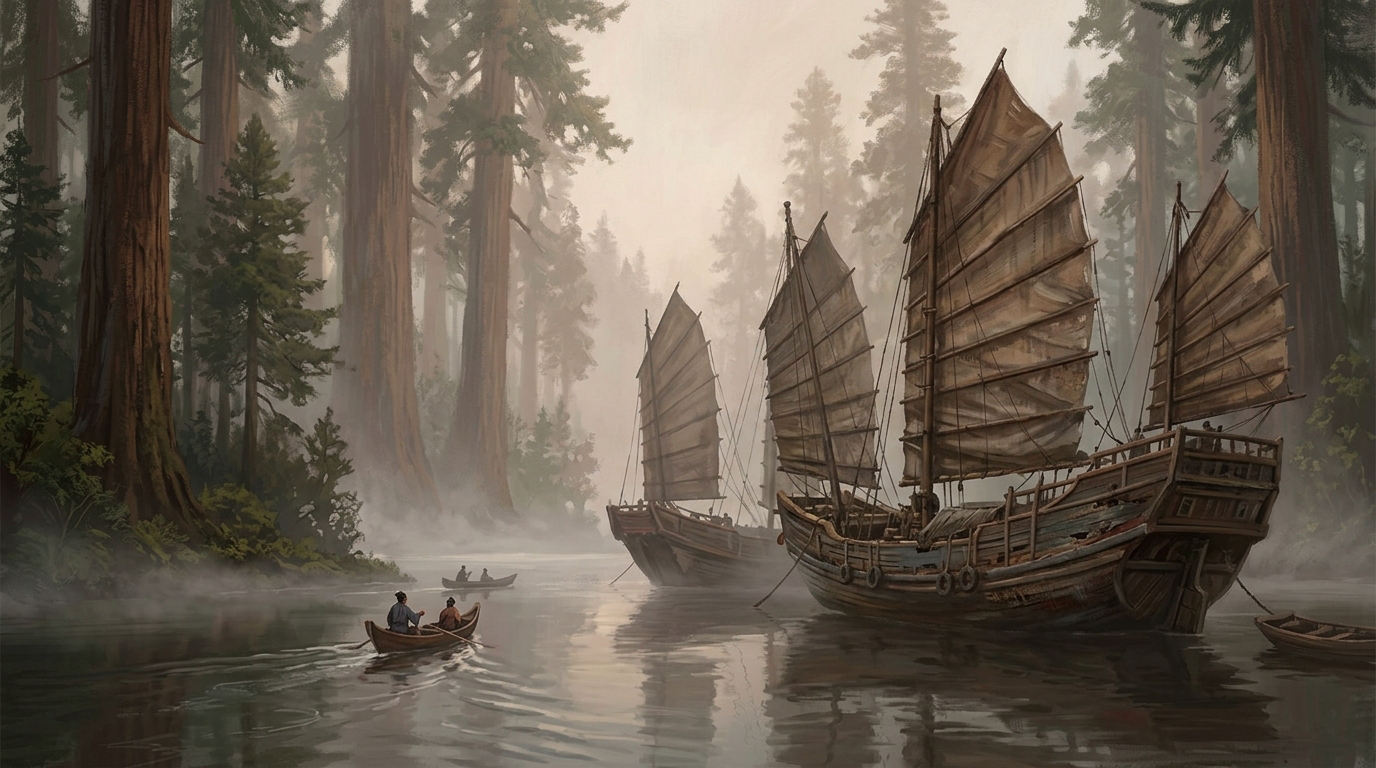
In 1545, the Ming Dynasty, under the Jiajing Emperor, tentatively relaxes its maritime bans to seek new tributary wealth. A heavily armed merchant fleet commanded by Admiral Lin Dao, blown drastically off course by a typhoon, is caught in the Kuroshio Current. Instead of fighting the immense black water, Lin follows it across the northern Pacific rim, passing the Aleutians. After months of grueling travel, the surviving junks drop anchor in a pristine bay bordered by towering redwoods. They make cautious contact with the local Miwok people. Though desperate and battered, the Chinese sailors possess silk, porcelain, and forged steel, initiating the first, tentative barter that will forever link the Eastern Hemisphere to the Western.
The Jade Coast
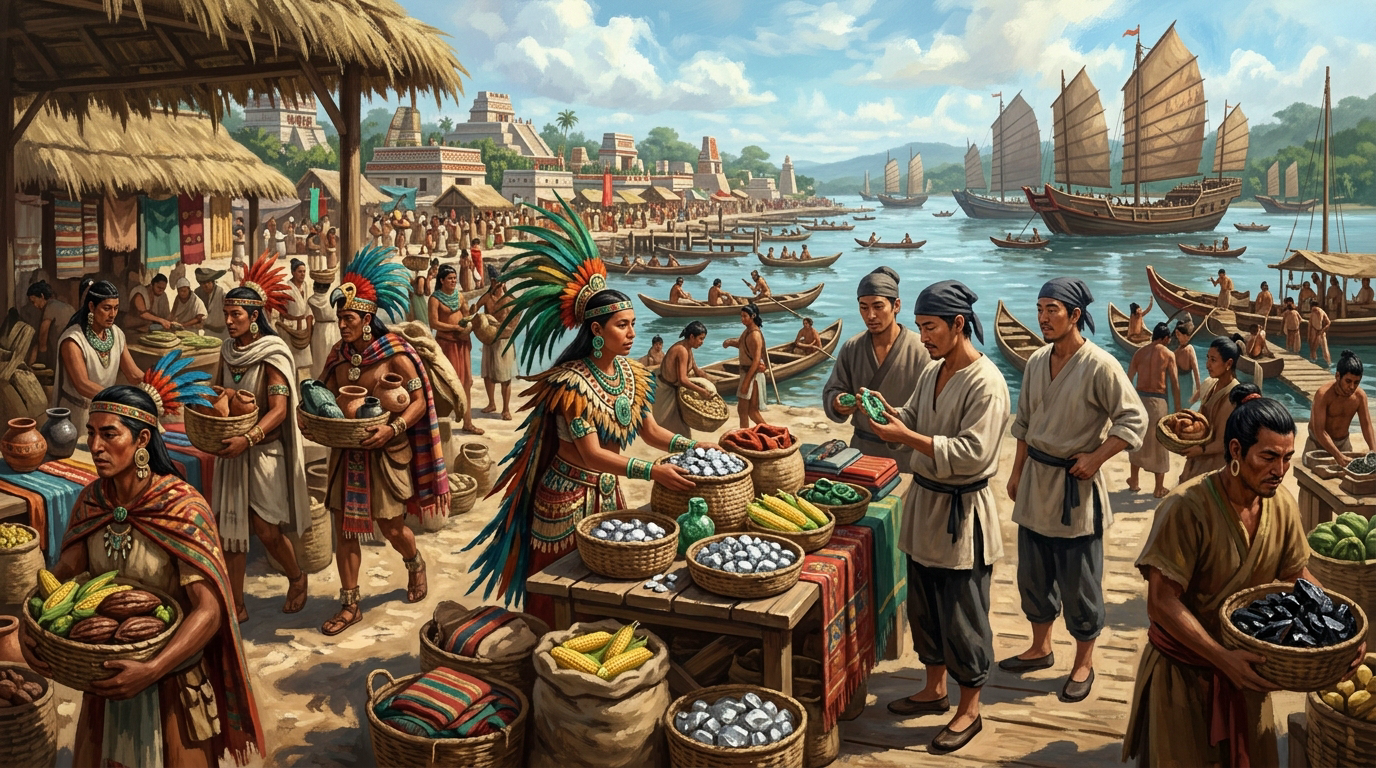
By 1570, the trans-Pacific route is formalized. The Ming court dubs the new eastern lands 'Fusang.' Unlike the European model of extraction and religious conversion, the Chinese approach is predominantly mercantile and tributary. Coastal trading posts spring up from the Pacific Northwest down to the Baja peninsula. News of wealthy, organized civilizations further south prompts Chinese envoys to sail to Mesoamerica. They encounter the Aztec Empire, now under the reign of a mature, culturally established Moctezuma III. Trade flourishes: Mesoamerican silver, maize, and sweet potatoes flow to Canton, while Chinese iron goods, writing systems, and medicinal practices flow into Tenochtitlan. Pathogens are exchanged, causing tragic epidemics, but the slower pace of Pacific travel lessens the sudden devastation.
The Incan Adaptation
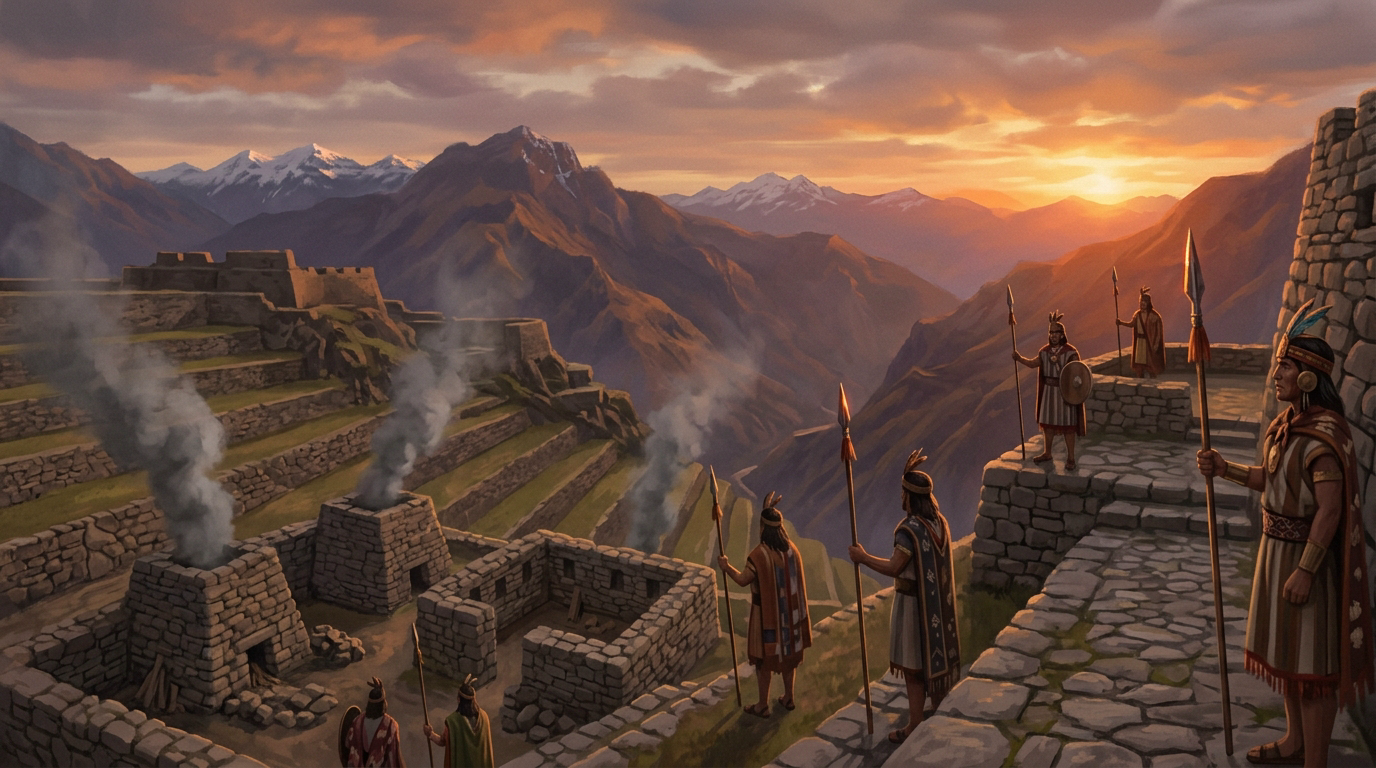
The ripple effects of Asian contact reach the Inca Empire by 1610. Recognizing the immense utility of the foreigners' tools, the Sapa Inca tightly controls the importation of iron-smelting technology and gunpowder. Instead of facing a handful of conquistadors, the Inca face a changing regional dynamic with newly empowered neighbors. The empire endures a period of severe internal strife fueled by introduced illnesses, but the state survives by adopting administrative reforms inspired by translated Chinese texts. By the mid-17th century, the Inca have equipped their vast armies with rudimentary matchlocks and steel-tipped polearms. They begin constructing high-altitude foundries, fortifying the Andes into an impregnable bastion against any future incursions.
A Belated Atlantic Crossing
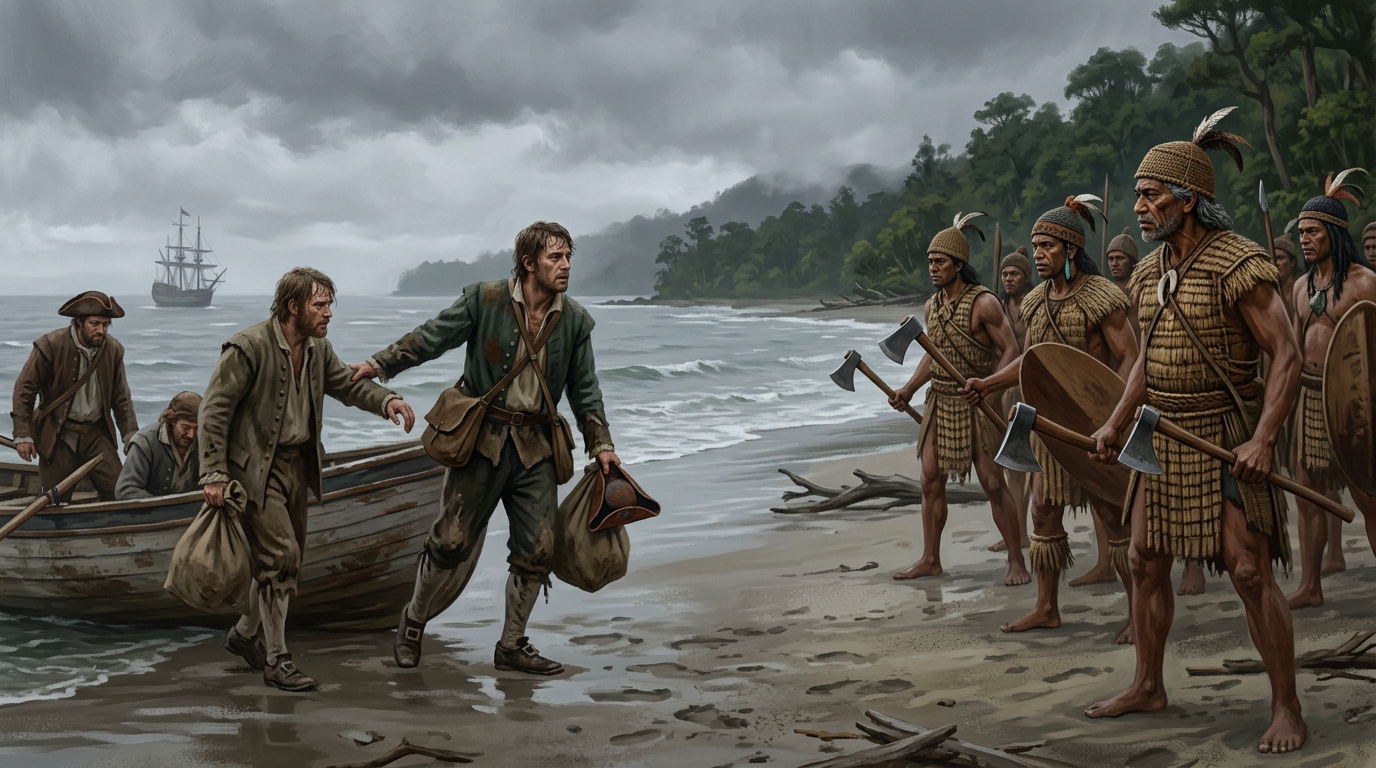
Europe finally bridges the Atlantic in 1638 when an English fleet, seeking a new route to bypass Portuguese-dominated Africa, strikes out due west. They make landfall on the shores of what is historically Virginia. Expecting pristine wilderness, the exhausted English sailors are stunned to find the Powhatan Confederacy armed with steel knives and cultivating hybrid strains of Asian crops. The indigenous populations of the Eastern Seaboard, having recovered from the waves of Pacific-origin diseases decades prior, are robust, diplomatically savvy, and deeply suspicious. The English establish small, heavily fortified footholds, but the prospect of sweeping, continent-wide conquest is an impossibility. The Americas are already tethered to the global economy via the Pacific.
The Continental Divide
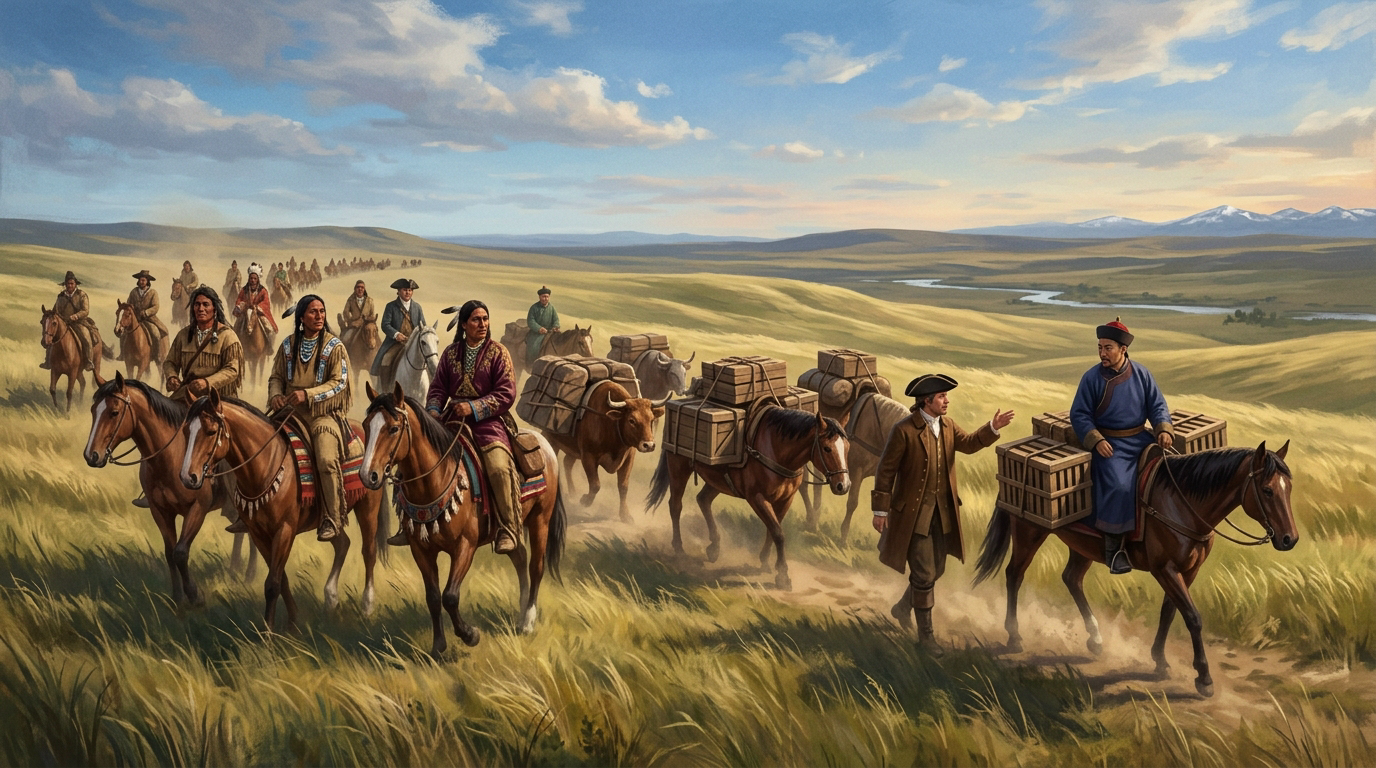
Throughout the 18th century, North America becomes the staging ground for a quiet global standoff. On the Atlantic coast, British, French, and Dutch colonies carve out densely populated, industrializing enclaves. On the Pacific coast, flourishing Sino-Indigenous protectorates blend Ming and Qing architectural styles with native cedar and stone. The vast Great Plains and Rocky Mountains serve as a dynamic buffer zone. Here, nomadic confederacies control the overland trade routes, playing European diplomats off against Chinese and Japanese mercantile lords. Firearms, horses, and printed books flow from both oceans. The continent avoids monolithic colonization, evolving instead into a complex tapestry of indigenous sovereign states, immigrant settler colonies, and hybrid trading republics.
The Treaty of the Two Oceans
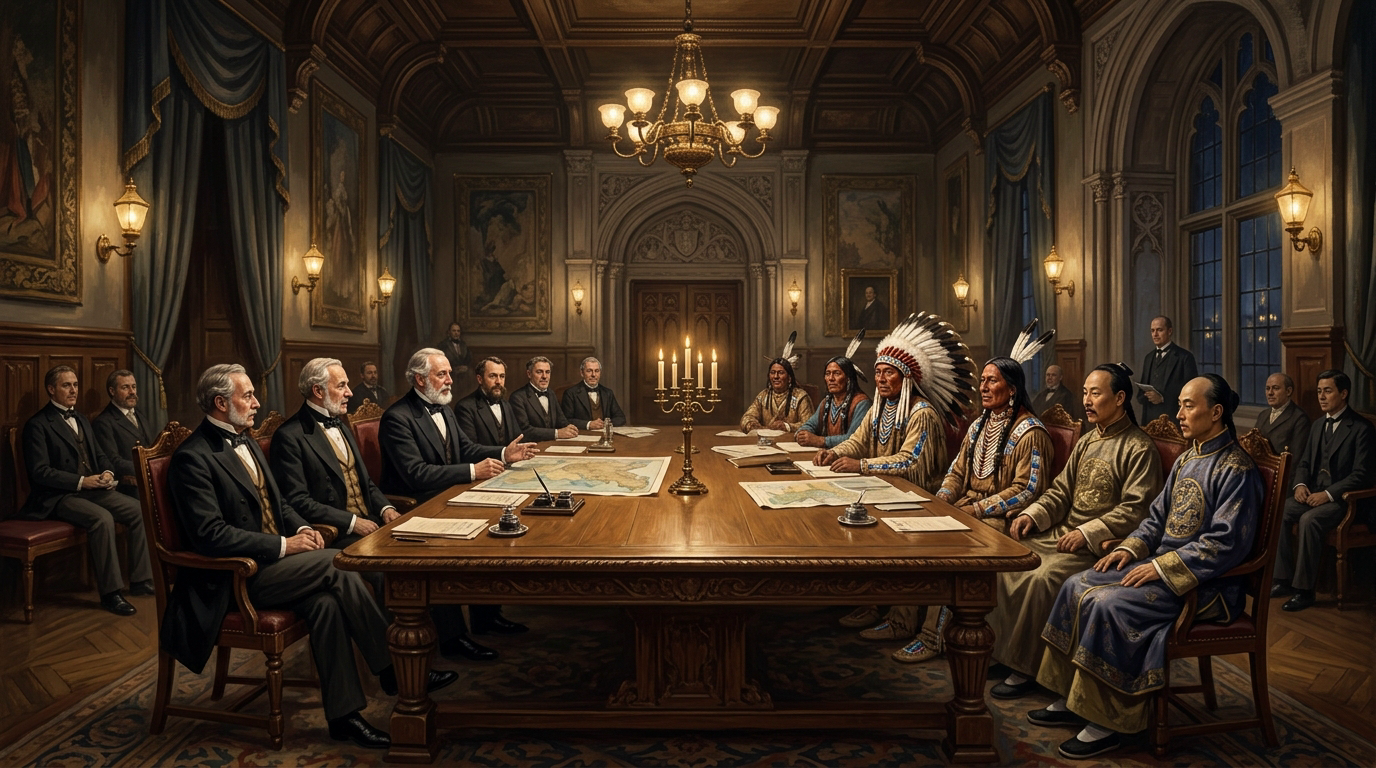
By 1820, the industrial revolution accelerates tensions. European powers seek to expand their western borders to secure raw materials, sparking the brief but bloody Continental War. Confronted by a unified alliance of the Iroquois, the Dakota, and Qing-backed coastal republics, the European advance stalls at the Mississippi River. The conflict concludes with the Grand Meridian Congress in London. Indigenous diplomats, flanked by Japanese and Chinese attachés, negotiate directly with European monarchs. The resulting treaty formally recognizes the sovereignty of the central and western American states. The globe is permanently partitioned into overlapping spheres of influence, proving that the era of uncontested European global hegemony will never come to pass.
The Multipolar Century
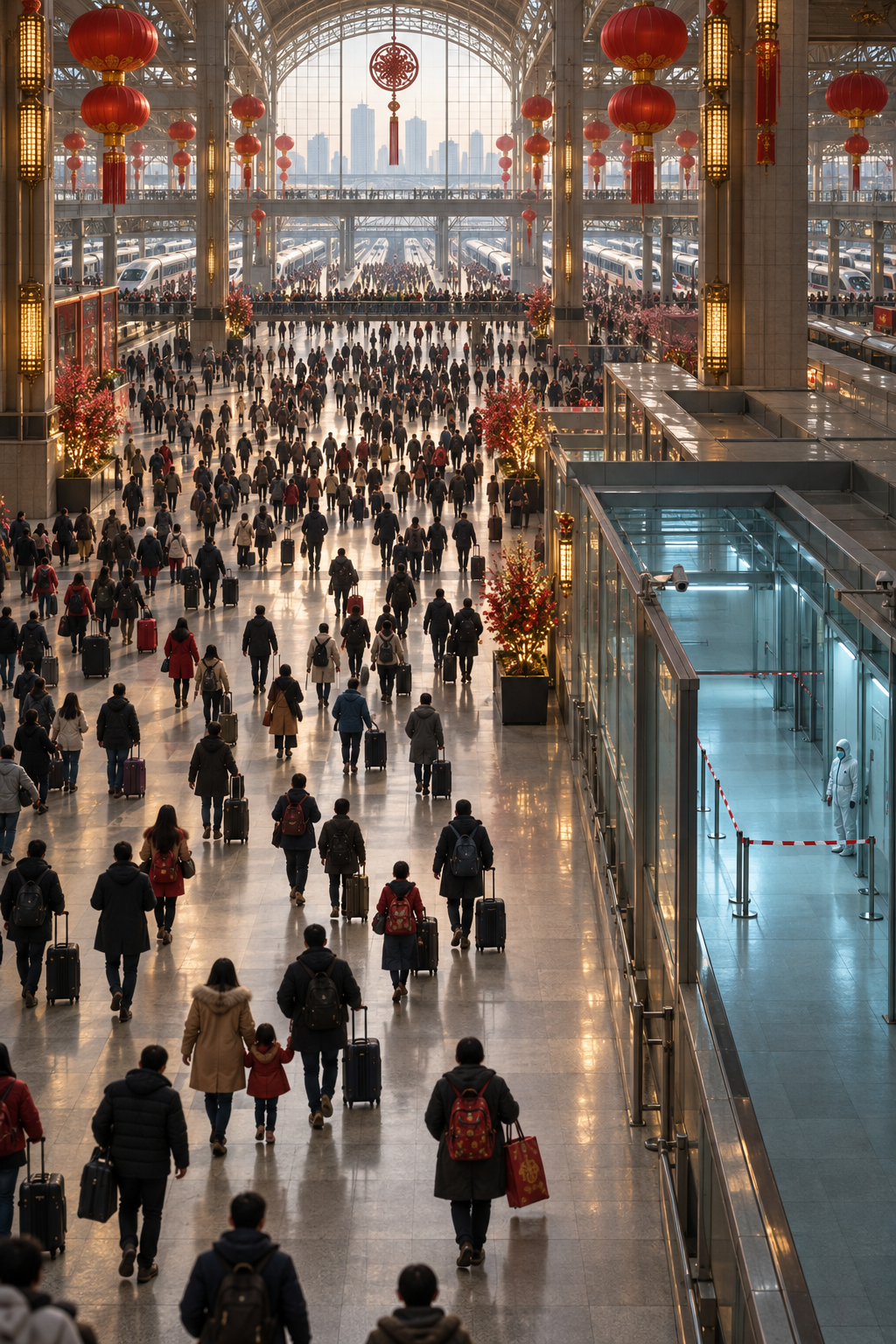
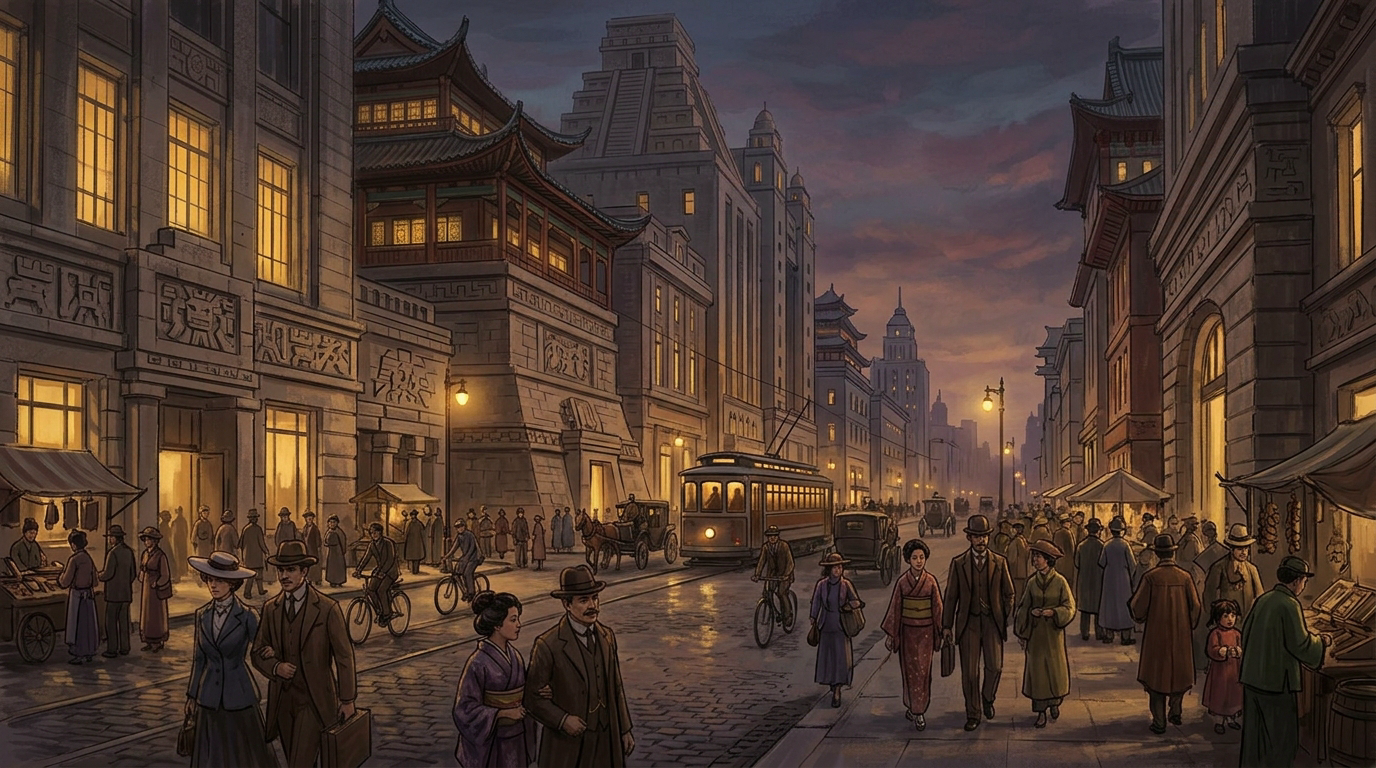
As the 20th century dawns, the world is radically polycentric. The city of Jinshan is a glittering metropolis where Pacific-Rim architecture meets indigenous American motifs. Skyscrapers adorned with stylized thunderbirds and tiled pagoda roofs overlook a harbor filled with steamships. A Nahua diplomat from the sovereign Republic of Mexico reviews trade agreements with a Russian minister over tea. Global conflicts are characterized by shifting economic alliances rather than colonial domination. Because the devastating genocide of the Americas was largely averted and power remained distributed, humanity approaches the modern era with a richer, more diverse tapestry of surviving cultures, ancient philosophies, and unbroken linguistic traditions shaping the global future.
More from Alternate History